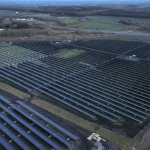
More than 20GW of solar capacity is now operational across Africa, according to the Africa Solar Industry Association (AFSIA).
The figure includes utility-scale, commercial and industrial (C&I), minigrid, and solar home systems (SHS) projects recorded in AFSIA’s database up to the end of the first half of 2025. The database now also contains residential projects in a limited number of countries.
AFSIA previously recorded a cumulative solar capacity of 19.2GW at the end of 2024, indicating that around 0.8GW was added between January and June 2025.
South Africa remains the continent’s leading solar market, accounting for around half of all installed capacity. Egypt, Morocco, and Tunisia complete the top four.
Most capacity added so far in 2025 has come from Southern Africa. While South Africa continues to develop large-scale projects, AFSIA noted that Zambia, Botswana, Zimbabwe, and Namibia “announced and completed notable projects” in the first half of the year.
Outside the region, Senegal is “emerging as a leader in solar deployment,” with 54 MW added year to date.
Nearly 40,000 solar projects are at varying stages of development across the continent, including 10GW under construction.
AFSIA said capacity under construction “is more spread across the continent,” with Algeria, Egypt, Angola, South Africa, Tunisia, and Zambia together accounting for three-quarters of the total. South Africa holds the largest share, at 28%.
Utility-scale projects make up 70% of capacity currently under construction. AFSIA described this as a “solid rebound” for the segment, which was overtaken by C&I projects in the early post-pandemic years.