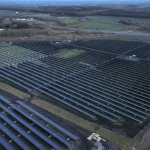
On August 21st, Australia announced successful plans for the “largest solar precinct in the world”, a large solar and battery farm.
The site’s projected 4GWh energy production for domestic use in Australia and an additional 2GW will be exported to Singapore. This will provide 15% of the city’s needs, with batteries potentially storing about 40GW of power.
The Australia-Asia Power Link project is backed by tech mogul and climate activist Mile Cannon-Brookes and led by renewable energy company SunCable. The launch of energy production from the 29,650-acre project is forecasted for 2030.
Australian Environment Minister Tanya Plibersek comments: “It will be the largest solar precinct in the world – and heralds Australia as the world leader in green energy.”
SunCable Australia’s managing director Cameron Garnsworthy says: “SunCable will now focus its efforts on the next stage of planning to advance the project towards a final investment decision targeted by 2027.”
Ongoing conversations
Approval processes for the project still need to be completed, involving Singapore’s energy market authority, the Indonesian government, and Australia’s Indigenous communities.
Director of the Energy Change Institute at the Australian National University Ken Baldwin notes that, despite the project being a “world first” for exporting solar energy on such a scale, it will only contribute 4GW to Australia’s race to meet 100GW by the 2030s.
He adds: “Australia has, over the last five years, invested heavily in solar and wind, but it needs to double and triple that investment to reach its climate trajectory towards a net zero future by 2050.”
On Australia’s journey towards a net zero future via projects such as The Australia-Asia Power Link, Amanda McKenzie, Climate Council Chief Executive concludes:
“With the closure of coal-fired power stations on the horizon, Australia needs to accelerate the roll-out of solar and storage at every level – rooftops, large-scale projects, and everything in between.”