by Regan Slaymaker | Jan 8, 2024 | Innovation, Large Scale Utility Solar
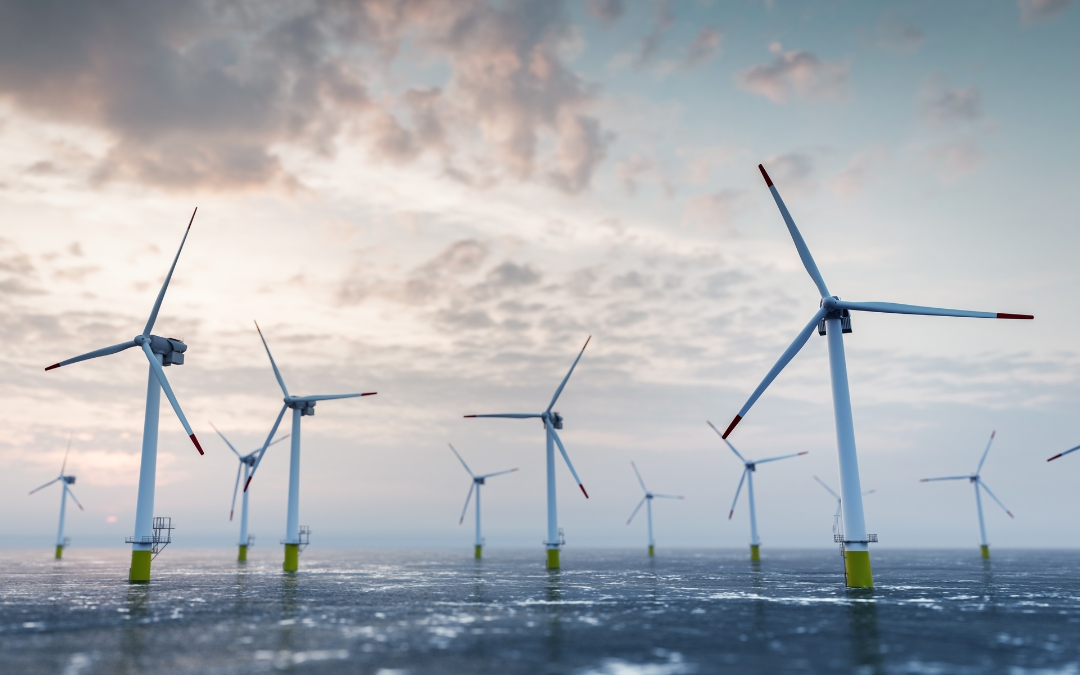
Renewable energy research outlet Carbon Brief have published a document highlighting the reduction of electricity generated by fossil fuels in the UK.
In 2023, electricity generated by fossil fuels fell by 22% based on year-on-year figures. These are the lowest levels since 1957.
Electricity generated from fossil fuels has fallen by two thirds since its peak in 2008, reaching 104terawatt hours (twh) in 2023. Coal has dropped by 115twh and Gas by 80twh.
This reduction has been caused by the rapid expansion and deployment of renewable generation as well as lower electricity demand.
Renewable energy generation has exceeded 2008 levels by six times to 113twh, with demand for electricity decreasing by 21% by the same levels.
In 2023, fossil fuels contributed to only 33% of the UK’s electricity supply.
Electricity generated by gas made up 31% with coal and oil both only 1% each.
Electricity generated from low carbon sources made up 56% of the total, with electricity from renewables making up 43% and nuclear making up the remaining 13%.
Energy from imports and waste incineration completed the remaining percentage of the UK’s electricity generation.
There is still a long way to go for the UK government to reach its target of 95% low carbon electricity by 2030 and a fully decarbonised grid by 2035.
However, the UK is moving in the right direction.
Electricity demand has reduced in the UK because of more energy efficient appliances and lighting being installed. Increased gas prices have also decreased demand.
Overall, the decarbonisation of the UK’s electricity grid is moving in the right direction with more fossil fuel-based sources being removed from the grid each year. However, more renewable sources must be installed into the grid, and at pace, to reach net zero by 2035.
For more interviews from Solar&StorageXtra and to keep up to date with all NEW content, subscribe to the Solar&StorageXtra YouTube channel and Newsletter!
Our next event is Solar and Storage Live London, April 29-30 2024!
To enquire about interviews, submit news and press releases please contact our Editor, Regan Slaymaker, regan.slaymaker@terrapinn.com.
For sponsorship and exhibition enquires please contact Tom Moon, tom.moon@terrapinn.com.
by Regan Slaymaker | Jan 5, 2024 | Commercial & Industrial Solar, Innovation
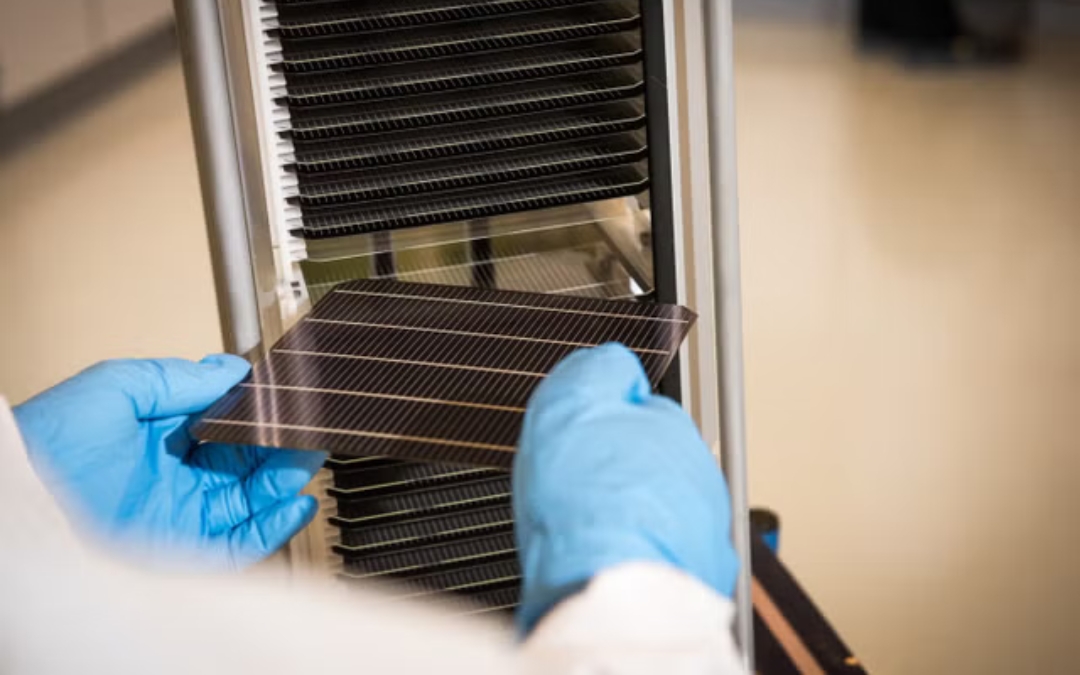
(Image credit: Oxford PV)
Chinese solar technology firm Longi have set a new world record of efficiency for a Silicon-Perovskite tandem solar cell.
Perovskite cells have also passed the theoretical efficiency limit of standard solar cells.
The revolutionary material has allowed the solar cells to reach 33.9% efficiency. Reaching this level of efficiency also broke the theoretical limit of 33.7% efficiency for the first time of a standard single junction cell, which are found in commercial solar panels.
The developments in cell technology have allowed more electricity to be generated from the same area of light as before.
Silicon (mono-si) and standard Perovskite solar cells registered 26.1% efficiency, significantly less than Perovskite-tandem cells.
Researchers at Nanjing University have explained that mass production of these cells are possible.
The researchers continued to explain that Solar panels using Perovskite-tandem cells will be 50% cheaper and 50% more efficient than traditional silicon cells.
Oxford PV, a UK based start-up, have begun commercialising the technology and are hopeful of beginning full scale production at their German facility later this year.
Chris Case the Chief Technology Officer of Oxford PV told The Independent:
“Current silicon solar panels have reached their physical limits. We’ve got a way to transform the efficiency of these solar cells with perovskite… The biggest challenge by far is durability and reliability. We already have great efficiency – much greater than current silicon cells – so most of our research and development is spent enhancing reliability, not efficiency.”
The revolutionary material has started being used in the creation of other renewable technologies; these include:
- Self-healing solar panels.
- These panels maintain efficiency levels for tens to hundreds of years.
- Double sided solar panels.
- Building integrated solar panels.
- Spaced based electricity generation.
For more interviews from Solar&StorageXtra and to keep up to date with all NEW content, subscribe to the Solar&StorageXtra YouTube channel and Newsletter!
Our next event is Solar and Storage Live London, April 29-30 2024!
To enquire about interviews, submit news and press releases please contact our Editor, Regan Slaymaker, regan.slaymaker@terrapinn.com.
For sponsorship and exhibition enquires please contact Tom Moon, tom.moon@terrapinn.com.
by Regan Slaymaker | Jan 4, 2024 | Commercial & Industrial Solar, Everything Installer, Innovation, Large Scale Utility Solar, Storage
In 2023, Solar and Storage Live in Birmingham had its most successful year registering over 15,000 attendees, 400 exhibitors and 400 speakers. Due to the events success, the Solar and Storage Live event series is expanding with a total of 4 events in 2024.
Here is what is to come for Solar and Storage Live in 2024…
Solar and Storage Live London at the ExCel Centre, April 29-30
Solar and Storage Live London is heading to the ExCel Centre in London on the 29th and 30th of April this year!
Solar and Storage Live’s first event of the year will bring over 150 exhibitors, 250 speakers and 8000 attendees to the ExCel in April.
Our free to attend exhibition and conference brings together all the key players in the solar, storage and renewable energy space. Key participants include Solar Energy UK, MCS, POWERful Women and, our title sponsor, GivEnergy!
At our Birmingham event in 2023, Solar Energy UK launched The Recruitment Zone; a purpose-built stage attracting new job candidates into the solar and storage industries. We are delighted to announce that that this initiative will be returning in London.
With the demand for Solar generation increasing, initiatives like the Recruitment Zone are going to help the Solar industry keep up with the rising demand!
Solar and Storage Live Zurich at the Messe, September 17-18
Solar and Storage Live in Zurich will be our first international event of the year between the 17th and 18th of September.
The reason for the Solar and Storage Live expansion into Switzerland is because the Swiss solar market has shown a significant growth in previous years.
Demand for electricity generated by renewable sources is at an all-time high. Growing concerns around rising carbon emissions have caused the Swiss Government to launch multiple policies regarding the development and deployment of renewable projects in Switzerland.
At its current rate, the Swiss Solar market is expected to register a Compound Annual Growth Rate of 5.1%. A range of policies and objectives have been put into place by the Swiss Government to ensure that this growth continues.
Solar and Storage Live in Zurich is expected to support for the growth of the Swiss Solar market and is expecting over 5000 attendees, 150 exhibitors, 250 speakers and 100 start-ups over the 2 days in September!
Solar and Storage Live Birmingham at the NEC, September 24-26
Our flagship event returns in 2024 between the 24th and 26th of September!
As mentioned, Solar and Storage Live Birmingham reached record numbers in 2023 and 2024 aims to be even bigger.
The exhibition space for the event has doubled in size from 2023, allowing even more of the Solar industry to attend, network and complete negotiations.
Solar Energy UK, GivEnergy, and Aiko Solar are just some of the key sponsors already signed up for this year’s Birmingham event!
Solar and Storage Live Barcelona at the Fira De Montjuic, November 13-14
Similarly to the Swiss solar market, the Spanish solar market is heading for an enormous growth with the region expected to benefit from a huge amount of renewable generation.
In 2021, the International Renewable Energy Agency (IRENA) found that renewable electricity accounted for 61.517mw in Spain, 25.9% of this was from solar PVs.
The potential for Solar energy’s success in Spain is limitless and Solar and Storage Live would like to be a part of and support its growth. In November, Solar and Storage Live Barcelona will be expecting over 8000 attendees, 150 exhibitors, 250 speakers and 100 start-ups over the 2 days in November!
by Regan Slaymaker | Jan 3, 2024 | Innovation, Large Scale Utility Solar
After 10years of international collaboration and 5years of construction, the world’s largest subsea and land interconnector between the UK and Denmark has been turned on.
This is the world’s longest interconnector.
National Grid and Energinet’s electricity link stretches a record breaking 475miles (764km) between Bicker Fen in Lincolnshire and its reverting substation in the Southern Jutland area of Denmark.
When the Viking Link is at full capacity it will enable the sharing of enough clean energy to power 2.5million homes in the UK.
The link is also expected to save more than 600,000 tonnes of carbon emissions, the equivalent of taking 280,000 cars off the road.
UK consumers will receive benefits of over £500million in the first 10years by importing cheaper electricity.
Denmark has the highest proportion of electricity generated by wind in the world, the UK collaborating with Denmark will help meet its 2050 Net Zero emissions target.
The link will also strengthen the UK’s energy security as it connects the UK to a broader and more diverse source of energy. Interconnectors play a vital role in this around the world.
Key stakeholders in the Viking Link’s construction include:
- National Grid
- Energinet
- Siemans Energy
- Prysmian Group
- Balfour Beaty
- NKT
- Monck
For more interviews from Solar&StorageXtra and to keep up to date with all NEW content, subscribe to the Solar&StorageXtra YouTube channel and Newsletter!
Our next event is Solar and Storage Live London, April 29-30 2024!
To enquire about interviews, submit news and press releases please contact our Editor, Regan Slaymaker, regan.slaymaker@terrapinn.com.
For sponsorship and exhibition enquires please contact Tom Moon, tom.moon@terrapinn.com.
by Regan Slaymaker | Jan 2, 2024 | Large Scale Utility Solar
EDF Renewables UK have received approval to build a 49.9MW solar farm on Tye Lane in Suffolk.
After an ‘extensive consultation’ between the developer and the Mid Suffolk District Council planning committee, approval was granted in December 2023 for the Tye Lane solar farm.
The solar farm will be connected to the UK electricity grid via the Bradford substation.
EDF Renewables confirmed the project will create a community benefit fund worth £20,000 which will be paid every year throughout the project’s 35year lifetime. The community benefit fund will help support more social, environmental and community projects.
Construction of the Tye Lane solar farm will begin later this year and will take between 6-9months to complete.
Darren Cuming, Head of Development at EDF Renewables UK, revealed that EDF Renewables are “very pleased” to be granted planning permission for the Tye Lane solar farm.
“In addition to the community fund, we also plan to deliver other benefits as part of the project; we will plant extensive species-rich wild flower and grass margins to enhance local biodiversity, provide further woodland blocks, new hedgerows, and install bird and bat boxes.”
For more interviews from Solar&StorageXtra and to keep up to date with all NEW content, subscribe to the Solar&StorageXtra YouTube channel and Newsletter!
Our next event is Solar and Storage Live London, April 29-30 2024!
To enquire about interviews, submit news and press releases please contact our Editor, Regan Slaymaker, regan.slaymaker@terrapinn.com.
For sponsorship and exhibition enquires please contact Tom Moon, tom.moon@terrapinn.com.
by Regan Slaymaker | Jan 2, 2024 | Innovation
The RePower Ukraine Charitable Foundation has initiated the ground breaking initiative “Solar Start: an educational course for veterans and IDPs.” Its primary objective is to equip Ukrainian veterans and internally displaced persons (IDPs) with the essential skills to embark on careers in the renewable energy sector, specifically focusing on the design and construction of PV plants.
This course is designed for war veterans and individuals who have been displaced as a result of the Russian aggressive invasion in Ukraine on February 24, 2022. These individuals have endured significant suffering due to the horrors of war and are now actively seeking opportunities to rebuild their lives and start anew.
The Repower Ukraine Charitable Foundation initiated this project within the “Support to Civil Society Organizations (CSOs)” Program, generously supported by the British Embassy in Ukraine. The educational course is designed to be inclusive and welcoming for individuals with various needs, including those with concussions or amputations. The goal is to provide a comfortable and successful learning experience for all.
Within the project, all participants not only acquire new skills in green energy but also receive psychological support. Sessions with psychologists help people overcome the challenges of the learning process and adapt to their experiences and new lives. Additionally, remote learning allows participants to gain new knowledge and skills without leaving their jobs or responsibilities for their children and loved ones.
All participants have unique and challenging life stories, but they share an incredible strength of will and a desire to contribute to Ukraine’s victory and recovery. Today, we would like to share the story of Oleksandr Donchuk, a veteran residing in Berdychiv, Zhytomyr Region.
Oleksandr served in a combat unit, where he faced the most challenging trials, and was discharged due to health reasons. Afterward, he decided to redirect his efforts toward civilian endeavors.
Oleksandr shared his story: “I served in a combat unit, which meant direct contact with the enemy. I saw a lot of human experiences, fear, and more. War brings nothing useful to the world; it only destroys everything, and Ukraine will need to rebuild. Someone will have to do that in the future.”
Despite lacking prior experience in green energy, Oleksandr enrolled in the “Solar Start” educational course. His determination and hard work led to remarkable success on this path. Oleksandr understands that solar energy is not just an economic sector but also an opportunity for Ukraine to become more environmentally friendly and less reliant on imported energy resources.
“We realized back then that, given the number of destroyed cities in Donetsk, Luhansk, and other regions, they would need to be rebuilt anyway. And a field like green energy can be very helpful in this regard. When we were stationed in Kherson, we saw many solar panels on the roofs of farms. During frequent power outages, thanks to solar panels, we could charge our radios and power banks, which allowed our unit to stay connected. Solar energy is such a powerful alternative that doesn’t require significant financial investments,” Oleksandr explains.
Oleksandr, along with the other participants of the “Solar Start” educational course, serves as an example of how one can change their life, even in the most challenging circumstances.
“I absolutely appreciate the organization of the learning process in this course and the high quality of educational materials. The structured and logical approach to teaching stands out. All topics and materials are presented sequentially, making it easier to understand and absorb the information. Instructors use interesting examples and practical exercises, making the learning process more effective and engaging. For me, this is not just gaining knowledge but also an opportunity to develop skills and expand career horizons. I’m grateful to the RePower Ukraine Charitable Foundation for the opportunity to participate in this educational project and acquire new knowledge,” adds Oleksandr.
We believe in our participants, in their strength of will, determination, and potential to achieve great results. We wish them all inspiration and great success on this journey. May our collective efforts benefit Ukraine and lead to a sustainable green future.
The RePower Ukraine Charitable Foundation expresses its deepest gratitude to esteemed donors and partners, particularly the “Support to Civil Society Organizations (CSOs)” Program in Ukraine, which is implemented with financial support from the British Embassy, by Crown Agents in partnership with International Alert and in cooperation with Crown Agents in Ukraine. Thanks to your invaluable support, this project has become a reality, and people not only have the chance to improve their lives but also to contribute their efforts to the sustainable recovery of Ukraine.
For more information about Repower in the UK or to support our solar projects contact nick@repowerua.org / pr@repowerua.org.uk
This project was created by the RePower Ukraine Charitable Foundation under the “Support to Civil Society Organizations (CSOs)” Program in Ukraine with financial support from the British Embassy. The program is implemented by Crown Agents in partnership with International Alert and in cooperation with Crown Agents in Ukraine.
The content of the course information page does not necessarily reflect the views of the British Embassy, Crown Agents, International Alert, or Crown Agents in Ukraine.
For more interviews from Solar&StorageXtra and to keep up to date with all NEW content, subscribe to the Solar&StorageXtra YouTube channel and Newsletter!
Our next event is Solar and Storage Live London, April 29-30 2024!
To enquire about interviews, submit news and press releases please contact our Editor, Regan Slaymaker, regan.slaymaker@terrapinn.com.
For sponsorship and exhibition enquires please contact Tom Moon, tom.moon@terrapinn.com.
by Regan Slaymaker | Dec 22, 2023 | Innovation
Energy network operator E.ON has partnered with Solar technology developer Naked Energy to deploy their Solar, Heat and Hybrid solutions for commercial and industrial scale projects across the UK and Europe.
The collaboration is a part of E.ON’s group wide innovation programme. This aims to test and deploy new technologies that can accelerate decarbonisation efforts in Europe.
Mark Ritzmann, Managing Director of E.ON Group Innovation, has praised the collaborators involved in the programme as they are essential in enabling the transition to renewable energy.
Naked Energy offer a variety of solar technologies including their VirtuPVT collector which generates electricity and heat from a single collector by combining Solar PV and Solar thermal technology. Their integrated solar technology for flat roof tops can utilise solar heat collectors, saving customers four times the amount of carbon as standard for a Solar PV panel.
The solar technologies being distributed as a part of E.ON and Naked Energy’s partnership will be deployed through E.ON’s Energy Infrastructure Solutions (EIS) business unit.
E.ON’s EIS business unit is currently present in 16 countries, serves 1.5million customers through 4500 energy plants and helps produce 19TwH of heating, cooling and steam as well as 12TwH of electricity.
Christophe Williams, CEO and Co-Founder of Naked Energy had this to say about E.ON and Naked Energy’s partnership:
“It’s an honour to partner with E.ON and support their customers to become climate neutral. “The need to decarbonise urban and industrial heating has never been more urgent, and the team at EIS share our vision for ambitious energy solutions that are future-proof, smart and efficient. This deal marks an exciting step forward in Naked Energy’s journey as we scale our operations globally. We look forward to beginning our work together.”
The partnership presents Naked Energy dedication to decarbonising Europe’s energy generation and continued expansion into European markets.
For more interviews from Solar&StorageXtra and to keep up to date with all NEW content, subscribe to the Solar&StorageXtra YouTube channel and Newsletter!
Our next event is Solar and Storage Live London, April 29-30 2024!
To enquire about interviews, submit news and press releases please contact our Editor, Regan Slaymaker, regan.slaymaker@terrapinn.com.
For sponsorship and exhibition enquires please contact Tom Moon, tom.moon@terrapinn.com.
by Regan Slaymaker | Dec 21, 2023 | Innovation
Nesta, a registered charity focused on supporting innovation in the UK, have collaborated with Kensa to explore and deliver different models for delivering Networked Heat Pumps as a part of decarbonising UK homes.
What are Networked Heat Pumps?
The technology is focused on switching streets to low carbon heat, installing low temperature heat networks with a shared infrastructure in a road that is connected to an individual heat pump in each home.
This is also known as a ‘shared loop heat pump network’.
Kensa have already carried out the UK’s first in-road networked heat pump installation as a part of their Heat the Streets initiative.
The scheme replaced an upfront cost with a fixed standard charge for households. The initiative was supported by the European Regional Development Fund.
Nesta have explained that tenements, terraced streets and other homes in medium density are most suited to this project. Any building where heat pumps are difficult to install or where district heating schemes have not been built.
For Networked Heat Pumps projects to be successful, appropriate individual household decision making and planning must be coordinated with government policy.
Nesta have established three models that can help deliver Networked Heat Pump projects:
Number One: The Coordinated Commitment model
This model involves multiple homes, thirty at a minimum, working together to get infrastructure installed on their street. Once the model is in place, more homes can connect.
Number Two: The Infrastructure Led model
The Infrastructure Led model involves the infrastructure being installed into streets in anticipation for the use of networked heat pumps, like installing broadband ahead of homes using it.
Households can then connect their new heat pump to the network at their convenience. The already built infrastructure will be sufficient until more homes are added and targets are met.
Once this has happened, a planned system upgrade will then occur.
Number Three: The Hybrid model
The Networked Heat Pump project only needs a small number of homes to commit the initiative to commit to the start.
It can be facilitated by a single property. These homes act as ‘anchor properties’ allowing for the initial installation of required infrastructure.
After that, homes can connect at their own pace.
by Regan Slaymaker | Dec 20, 2023 | Innovation, Storage
UK renewable energy think tank, Carbon Tracker, have found that inadequate grid connections for wind power has cost UK consumers approximately £590million since the start of 2023. Subsequently adding £40 to the average consumer’s bill.
Wasted wind power is one of the reasons causing electricity bills to rise in the UK, with the figure potentially rising to £150 by 2026 according to Carbon Tracker.
When it is excessively windy, the grid cannot handle the extra energy being generated.
The increase on customer’s bills come when wind farms are paid to switch off and gas power stations are paid to switch on… This process is called ‘wind curtailment’.
To combat this, the UK Government has announced major reforms that will half the time taken to build energy networks to manage peak generation times.
Ofgem, the UK’s energy regulator, also announced new regulations in November that will speed up grid connections.
The majority of the UK’s offshore wind farms are in England with the largest in the world, Daffer Bank, being located off the coast of Yorkshire. In addition to this, half of the UK’s onshore wind farms can be found on Scotland but most if the electricity generated is consumed in the south-east of England.
Wind curtailment and inadequate grid connections are causing all consumers a financial burden.
At their current rate, wind farms are being built faster than the infrastructure needed to transmit the energy.
Renewable UK, UK’s leading not for profit renewable energy trade association, described current grid constraints as ‘reflecting a chronic lack of investment.’
The major issue in the UK is that it takes between 10 and 15 years for new transmission cables to be approved.
The Energy Networks Association explained that ‘urgent action is needed to address planning challenges.’
In 2022, to speed up grid connectivity, Ofgem approved of four projects that will ease future transmission issues across the UK. Along with this, the regulator has implemented new rules that will allow them the power to remove stalled or potential ‘zombie’ projects from innovation pipelines. This will allow viable projects to receive funding and connect to the grid faster.
by Regan Slaymaker | Dec 19, 2023 | Innovation, Video
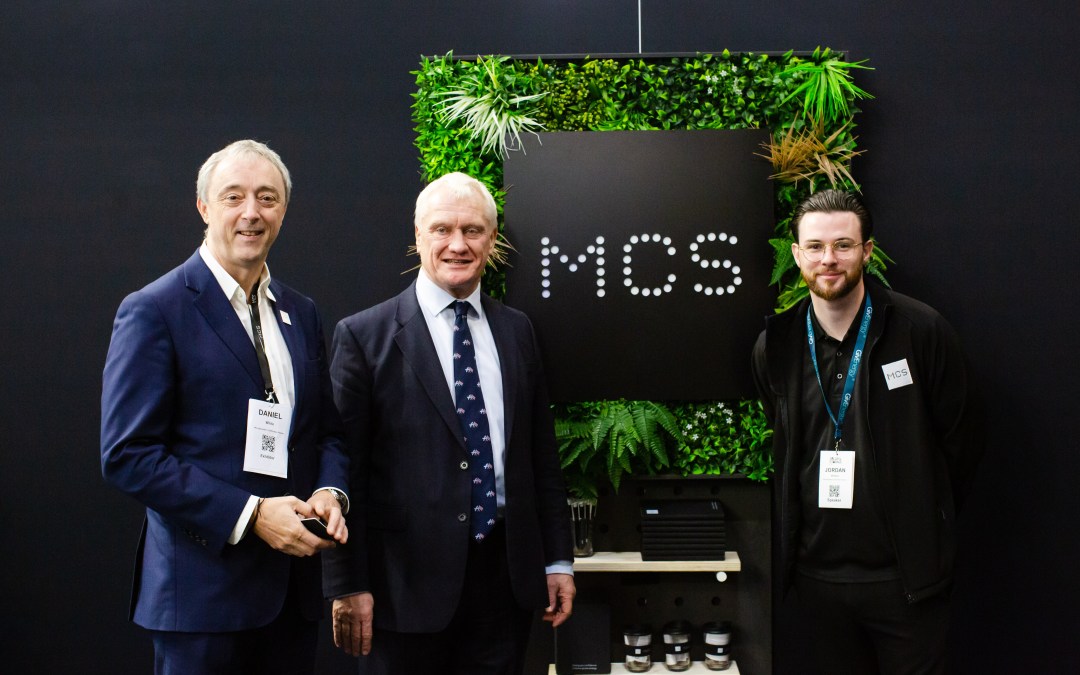
MCS certified have confirmed a record number of installations for domestic Solar PV, heat pumps, and battery storage technologies in 2023.
On the 13th of December, MCS released data highlighting the increased renewable energy and heating installations to a total of 220,500.
Solar PV technology topped MCS installations, registering 183,022 across 2023. Which is a 42,022 from 2022.
Chris Hewett, Chief Executive of Solar Energy UK, explained the reason for Solar PVs growth is because the technology is a key investment for both homeowners and businesses. Whilst electricity bills remain high, Solar PVs provide cheap decarbonised power that end up paying for itself a few years after installation.
Heat pumps were the second on the year-on-year increase for MCS installations.
In 2023, the UK has seen 35,000 installations of both air source and ground/water source technologies. Since 2008, the total of heat pumps installed increased to 200,000.
A huge part of this is due to the Boiler Upgrade Scheme grant increasing its support from £5000 to £7500 in October. From this, applications from the scheme increased from 331 to 1772.
Battery storage technology experienced the third highest increase in installation.
Of the 4700 MCS certified battery storage technologies installed in 2023, 800 of these were in November alone.
More importantly, the number of MCS certified contractors increased drastically from 50 in 2022 to 850 in 2023, allowing for more battery storage technologies to be installed at a faster rate in years to come.
Ian Rippin, Chief Executive Officer of MCS, reacted to the growth in MCS installations and increase in certified contractors:
“It’s a pleasure to report on another record-breaking year for small-scale renewables, illustrating the sector’s sustained upward growth. We had an incredibly busy 2023 and the data confirms the progress we’ve made. The future of small-scale renewable installations is becoming increasingly important, and we continue to play a crucial role in the decarbonisation of the UK’s homes. The growth we’ve seen in domestic renewable electricity systems over the past year may also give some insight into the growing consumer reliance on home-grown energy in the UK during the cost-of-living and energy crises. As electricity prices skyrocket, more people are turning to renewable solutions to generate their own power at home, secure energy independence, decrease their electricity bills, and reduce their carbon footprint.”
For more interviews from Solar&StorageXtra and to keep up to date with all NEW content, subscribe to the Solar&StorageXtra YouTube channel and Newsletter!
Our next event is Solar and Storage Live London, April 29-30 2024!
To enquire about interviews, submit news and press releases please contact our Editor, Regan Slaymaker, regan.slaymaker@terrapinn.com.
For sponsorship and exhibition enquires please contact Tom Moon, tom.moon@terrapinn.com.
by Regan Slaymaker | Dec 19, 2023 | Commercial & Industrial Solar, Innovation
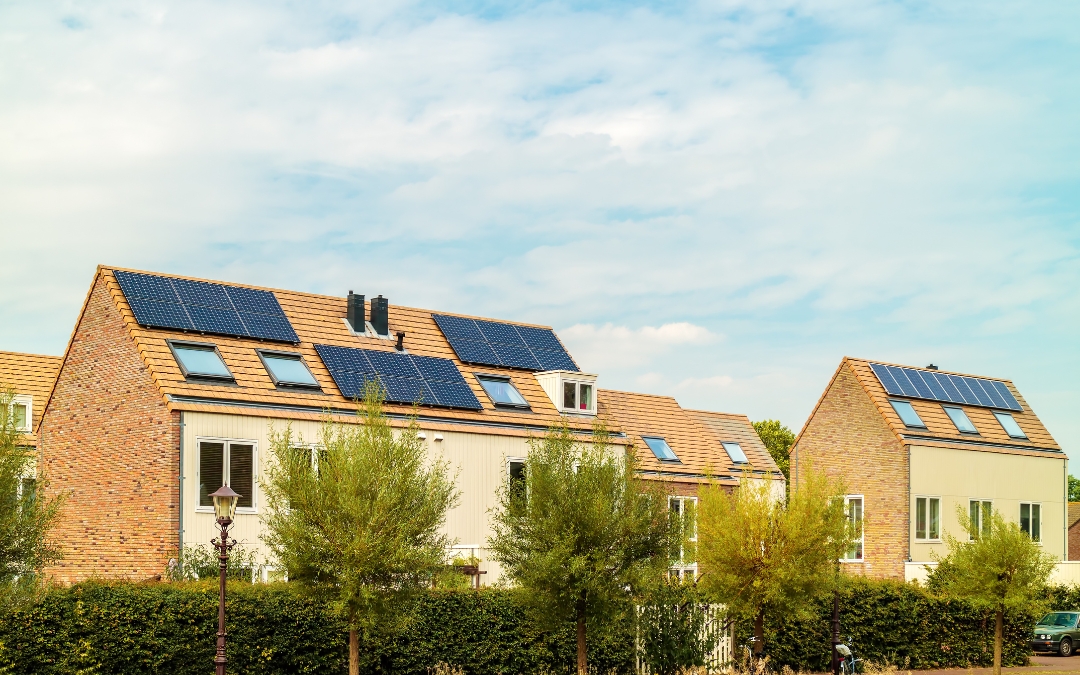
Solar Energy UK have highlighted that Solar PV panels are expected to be included in new regulation to meet energy efficiency targets of homes and buildings in the UK, per Government plans.
Published on the 13th of December, the consultation on the Future of Homes Standard and Future Building Standard says that revisions in legislation will deliver ‘significant carbon savings, affordable running costs over time and prevent the use of gas or fossil fuels for heating and hot water. Therefore, avoiding costly retrofits in the future.’
These new standards must be affordable, practical, and safe. Solar energy meets these requirements.
The possibility of Solar PV panels not being set as a mandatory requirement on new houses has been condemned by the industry.
What the consultation does suggest, however, is two options for new build homes.
Both options could result in lower bills for consumers due to the use of Solar PV panels, wastewater heat recovery systems, high efficiency air source heat pumps and good fabric standards that minimise heat loss from windows, walls, floors and roofs.
Of the two options, it doesn’t say which is preferred but the adoption of Solar generation is highlighted as a minimal option for both.
Option One:
This proposal balances higher additional build costs against lower consumer bills. With this option, homebuilding costs may increase by £62,000 (on average) but costs of heating and hot water bills could decrease between £910-£2120 per year.
Installation of Solar PV, wastewater heat recovery systems, increased airtightness and decentralised mechanical ventilation will help lower consumer bills.
The second proposal does not include the use of the technologies in option one but does focus on lowering additional build costs of homes.
Option two is £1000 more expensive but will save £210-£1420 in overall running costs. For context, the cost to retrofit on existing homes to meet Net Zero standards (before subsides) would be about £12,000.
The consultation explained:
‘We have found no practical way to allow the installation of fossil fuel boilers while also delivering significant carbon savings and ‘zero carbon ready’ homes. We do not expect fossil fuel heating, such as gas, hybrid heat pumps and hydrogen ready boilers to meet these standards.’
How to implement the new regulations found in the Future of Homes Standard and Future Building Standard consultation are expected to be published next year to then be enforced in 2025.
The government have provided recommendations that non-domestic buildings adopt the use of Solar PV and have the panels span 40% of the buildings foundational area and include heat pumps for buildings lit from the side (e.g., offices, hotels, schools). For top lit buildings (warehouses, sports hall, etc), 75% of the buildings foundational area should be covered with Solar PVs or heat pumps.
Cost increases would occur for non-domestic buildings, but these would be minimal. Taking recommendations from option one would be a 2.1% increase, option two would be 1.9%.
The recommendations for non-domestic buildings are a step in the right direction but Chris Hewett, Chief Executive of Solar Energy UK, explained Solar PV on domestic homes must become mandatory.
“In all, the plans are another welcome step towards a truly solar nation. Although we are pleased that the Government is minded to make solar energy effectively mandatory on new non-domestic buildings, it is shocking that not doing so for homes is even on the table. Almost two decades after the Zero Carbon Homes policy was put forward and eight years after it was scrapped, the Government again runs the risk of a massive own goal. Solar Energy UK will press vigorously for solar to be applied to new build housing – cutting bills, saving carbon and helping us all move towards net zero.” – Chris Hewett
To read Solar Energy UK’s full report, click here.
For more interviews from Solar&StorageXtra and to keep up to date with all NEW content, subscribe to the Solar&StorageXtra YouTube channel and Newsletter!
Our next event is Solar and Storage Live London, April 29-30 2024!
To enquire about interviews, submit news and press releases please contact our Editor, Regan Slaymaker, regan.slaymaker@terrapinn.com.
For sponsorship and exhibition enquires please contact Tom Moon, tom.moon@terrapinn.com.
by Regan Slaymaker | Dec 13, 2023 | Commercial & Industrial Solar, Innovation
(Image Credit: IAEA (Flickr)
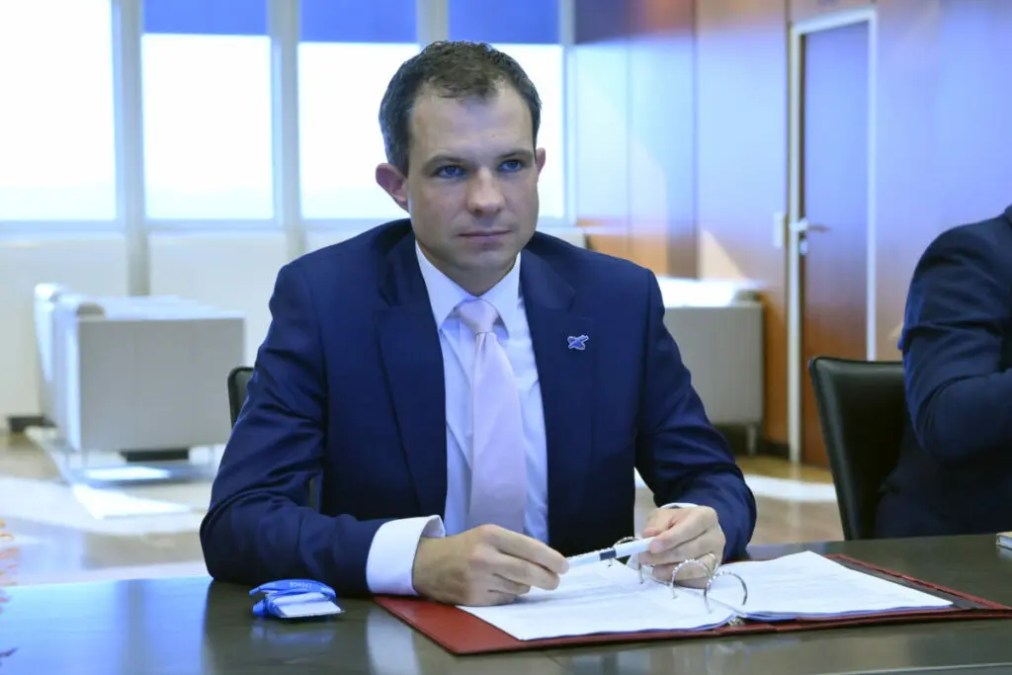
Andrew Bowie MP has been unveiled as the new co-chair of the UK’s Solar Taskforce.
Bowie will now take over from the Rt Hon Graham Stuart as the co-chair of the Solar Taskforce following a reshuffle at the Department of Energy Security and Net Zero.
In previous roles Bowie has lead projects on nuclear and international energy, energy investment and supply chain projects.
At Solar and Storage Live Birmingham 2023, fellow co-chair of the Solar Taskforce and Chief Executive of Solar Energy UK, Chris Hewett explained that the creation of the Solar Taskforce is to create a “genuinely joint” industry and government initiative to work together and achieve the 70GW target of Solar generation in the UK by 2035.
The UK’s Solar Taskforce is currently tackling to develop a roadmap for delivering the UK target of 70GW of Solar generation which will be published prior to Solar and Storage Live London in 2024.
Chris Hewett, Chief Executive of Solar Energy UK, said:
“The news of Graham Stuart’s change of duties is unfortunate timing, but I would like to thank him for being a most effective co-chair of the Solar Taskforce alongside me and a genuinely enthusiastic champion of solar energy. We look forward to engaging with Andrew Bowie as the taskforce begins to conclude its work, as well as continuing to work with Minister Stuart as he takes on the critical brief of addressing network issues.”
For more interviews from Solar&StorageXtra and to keep up to date with all NEW content, subscribe to the Solar&StorageXtra YouTube channel and Newsletter!
Our next event is Solar and Storage Live London, April 29-30 2024!
To enquire about interviews, submit news and press releases please contact our Editor, Regan Slaymaker, regan.slaymaker@terrapinn.com.
For sponsorship and exhibition enquires please contact Tom Moon, tom.moon@terrapinn.com.
by Regan Slaymaker | Dec 13, 2023 | Innovation
The latest draft of the United Nation’s COP28 climate agreement has removed the phaseout of fossil fuels.
The document explains that countries ‘could’ cut the consumption and production of fossil fuels amongst other suggestions.
The wording of the document has received backlash from some countries that are accusing Saudi Arabia and other Nations from pushing out efforts to tackle global warming.
Even with the backlash, the COP28 document will need to be agreed by almost 200 countries at the summit in Dubai.
The document highlights multiple actions that countries ‘could’ take to cut greenhouse gas emissions to meet Net Zero targets by 2050.
The document includes reducing the “consumption and production of fossil fuels, in a just, orderly, and equitable manner so as to achieve Net Zero emissions by, before, or around 2050 in keeping with the science.”
The criticism comes from the document implying there is a choice on whether you should phase out fossil fuels, rather than a mandatory agreement to phase out fossil fuels indefinitely.
European Union (EU) Climate Commissioner Wopke Hoekstra described the draft the document as “clearly insufficient” explaining “for the vast majority of our emissions we have no alternative other than to drive them down and out as soon as possible.”
A lot of the negotiations and ministers from Nations opposing the draft document have accused Saudi Arabia of pressuring Sultan al-Jaber, COP28 president and the Head of the Abu Dhabi National Oil Company, to shift focus on any agreement away from fossil fuels.
Sultan al-Jaber, COP28 president and the Head of the Abu Dhabi National Oil Company said:
“We have made progress but we will have a lot to do… I want you to develop the highest ambition on all terms, including the fossil fuel language.”
The German Foreign Minister Amalena Baerbach explained that it is “misleading” to argue that fossil fuels could play an essential role in energy as it contradicts EU energy policy and allows for new coal power plants to be built.
The UK Government described the draft as “disappointing and did not go far enough” explaining an explicit call to phase out fossil fuels must be included in the document to achieve climate goals.
The document must be agreed by all Nations attending COP28 in Dubai.
by Regan Slaymaker | Dec 12, 2023 | Market Reports
(Image Credit: South EU Summit)
The Spanish Solar market is heading for an enormous growth with the region expected to benefit from a huge amount of renewable generation.
The Spanish Solar market is on course to register a compound annual growth rate of 8%, now reaching the same levels from before the pandemic.
A combination of supportive government policies, incentives and a community wide acceptance of renewable electricity generation are expected to be the driving factors of the growth of Solar PV in Spain.
Spanish Government Policy for Solar Growth
To meet Europe’s energy and climate targets by 2030, European Union state members (including Spain) established the National Energy and Climate Plans to address climate change between 2021-2030. Their main objectives are:
- A 21% reduction in greenhouse gas emissions in comparison to 1990 levels.
- 42% increase of end-use energy used to be from renewables.
- 70% of electricity used to be from renewables.
In 2018, the Spanish government scrapped the ‘Sun Tax’ to increase the installation of residential Solar. The ‘Sun Tax’ was originally charging homes that were fitted with Solar PV an additional 7% to stay connected to the grid.
Abolishment of this tax is expected to increase public support of Solar and increase installation of Solar PV. After the Russian invasion of Ukraine, the Spanish government actively encouraged the Spanish public to install Solar PV and generate their own electricity.
The Spanish government also formed The Strategic Energy Technology Plan and The Low Carbon Emission Strategy 2050. Both initiatives have led to Spain becoming a global leader in reducing their carbon footprint and in the renewable energy market.
The International Energy Agency (IEA) released the ‘Spain Energy Policy’ review, highlighting that Spain is targeting 75% of electricity to be generated from renewables by 2030. This target will total 61.5gw of total renewable energy capacity with a annual growth rate of 7%.
Spanish Solar Market Trends
In Spain, Solar PV is expected to dominate the renewable energy market. The significant decrease in global cost of Solar has led to an increase in installation. So much so, distributed Solar PV systems for commercial and industrial sectors in Spain have caught up with the utility sector systems.
In 2021, the International Renewable Energy Agency (IRENA) found that renewable electricity accounted for 61.517mw in Spain, 25.9% of this was from Solar PV.
Spain showed a historic compound annual growth rate of 14.69% in terms of Solar energy capacity installed between 2015-2021. Net capacity equalled 15.9gw in 2021.
The Spanish government are likely to reward 1.8gw of Solar PV energy, to interested parties, through renewable auctions until 2025. Spanish Solar projects are targeted to achieve 31gw by 2030 with a total of $302million to be invested into the projects. Construction of projects are set to begin in 2025.
Compañía Española de Petróleos announced 3 Solar PV projects equating to 400mw of capacity in Spain.
Catalonian Solar Market Report
In addition to the Spain’s rapid growth in Solar, the region of Catalonia has also shown impressive growth.
With a current GDP of 270.7billion, and a per capita GDP of 31.531, Catalonia’s 7.89million strong population are expected to feel the full benefit of increased use of Solar.
The government in Catalonia have set a region wide target of 12gw of renewable energy by 2030 with the region targeting to reach carbon neutrality by 2050.
Catalonia’s renewable capacity currently stands at 3gw with the objective to increase the share of electricity in energy demand to 34% by 2030 and 76% by 2050.
Additional targets include reducing final energy consumption by more than 30% and cut energy intensity by 57% by 2050 relative to 2017 levels.
39,118 new Solar panels were installed in Catalonia alone in 2022, which is more installations than the previous 20years.
Conclusion
The Spanish Solar market is achieving renewable energy targets at an impressive rate. A combination of government policy, community engagement and achievable targets have led to an incredible increase in the installation and use of Solar PV. Spain achieving its renewable targets ahead of schedule have allowed the country to become a global leader in Solar PV and achieving net zero targets.
To enquire about interviews, submit news and press releases please contact our Editor, Regan Slaymaker, regan.slaymaker@terrapinn.com.
For sponsorship and exhibition enquires please contact Tom Moon, tom.moon@terrapinn.com.
by Regan Slaymaker | Dec 6, 2023 | Commercial & Industrial Solar, Video
As the Solar industry continues its unprecedented growth, a lot of information about Solar’s deployment has become misrepresented.
It is the Solar industries job to disprove any myths and inaccuracies. This article will explore and bust the most common myths in the Solar industry.
Myth 1: Solar Panels depend on good weather to work efficiently.
Solar panels are designed to be operational in all types of weather conditions.
- During the testing period of a Solar PV, panels are subjected to temperatures between 65 and minus 10 degrees and winds of up to 140miles per hour.
- As well as this, it is proved that panels work completely fine when it is cloudy, snowy or hailing.
It is important to know that Solar PVs do not need direct sunlight to work, all they need to get the photons operational and electricity generated is sunlight.
The only weather condition that decreases a Solar PVs efficiency is extreme heat, but panels are only affected in temperatures above 40 degrees.
Myth 2: Installing Solar panels reduce the value of your house.
- This is untrue, quite the opposite happens.
The first worry consumers have is that Solar panels damage their homes and reduce their value. However, Solar PVs design frames are designed to fit perfectly on your roof. As well as this, the company you use should send a representative to carry out a visual check and ensure a safe installation.
Once Solar PVs, or another renewable generation, are installed this will only increase the value of your house.
House prices fluctuate due to a variety of factors (location, market, trends, inflation) but government figures have proved that Solar can increase a house’s value. In 2013, Solar was shown to increase house prices by 14%.
In the present day, Rightmove are reporting Solar can increase a house price by 25%.
Myth 3: Solar deployment damages the local environment.
- Again, the opposite is the truth.
Solar Energy UK have released an article explaining there is clear evidence that ‘well designed, well managed Solar can support wildlife habitats and can contribute to contribute to achieving national bio-diversity targets.
Land used for solar power can still be used for all farming and agricultural needs with little to no impact on yields.
Companies have now established AgriPV.
AgriPV are Solar systems that work in synergy with agricultural processes. This technology provides a lot of opportunity for the decarbonisation of agriculture as it integrates the electricity generation with day-to-day business of agriculture.
Once myths like these have been debunked, the Solar industry can continue its growth at a more impressive rate.
If the industry does not address these misconceptions faster, the industry will come across avoidable barriers to deployment.
For more interviews from Solar&StorageXtra and to keep up to date with all NEW content, subscribe to the Solar&StorageXtra YouTube channel and Newsletter!
Our next event is Solar and Storage Live London, April 29-30 2024!
To enquire about interviews, submit news and press releases please contact our Editor, Regan Slaymaker, regan.slaymaker@terrapinn.com.
For sponsorship and exhibition enquires please contact Tom Moon, tom.moon@terrapinn.com
by Regan Slaymaker | Dec 5, 2023 | Commercial & Industrial Solar, Large Scale Utility Solar
Energy company Centrica Business Solutions are on their way to agreeing a Solar based Power Purchase Agreement (PPA) with Smart Agricultural Aluminium.
Construction has already begun on the 2.9MW solar installation that can be found on the rooftops of three buildings at a site in Southwest Wales.
Centrica will provide Smart Agricultural Aluminium with 2.7GW of renewable energy each year over a 25-year period.
This means 20% of the sites energy requirements will be supplied by the 7000 strong solar panel site.
“The project with Smart Architectural Aluminium represents one of our largest roof top solar arrays to date and we’re delighted to help them to meet their decarbonisation ambition. We want to continue supporting organisations with their sustainability challenges, this in turn creates more resilient businesses that can stand the test of time as well as reducing the UK’s reliance on fossil fuels – accelerating our journey towards net zero. To be able to finance this deal in a zero-capital way, is an incredibly attractive package for many businesses, who are wrestling with the balance between planet and profit, our message is you don’t need to make it a binary choice, you can do both.” – Justin Jacober, Managing Director, Centrica
The long-term PPA has been signed for the Solar project. The projects will be complete in 2024 and will see Centrica lease the roof space, finance the project, and agree the PPA for onsite energy generation.
“We’re excited to be working alongside Centrica to facilitate a significant portion of our energy demand from the roofs over our heads. Our net zero ambitions are at the heart of our growth strategy, and once construction is complete it will be great to know that a huge proportion of our future energy use will be both carbon neutral and affordable.” – Dean Thomas, Managing Director, Smart Architectural Aluminium
Centrica’s deal with Smart Agricultural Aluminium isn’t the only PPA the energy company has finalised.
In February 2023, Centrica and Mytilineos signed a corporate PPA with telecommunications company Vodafone UK.
The deal covers five sites, located in Norfolk, Nottinghamshire, Staffordshire, Buckinghamshire, Dorset, generating 232MW of electricity.
by Regan Slaymaker | Dec 4, 2023 | Commercial & Industrial Solar, Large Scale Utility Solar, Video
It was a pleasure to interview Jason Kirrage, Technical Marketing Manager for SolarEdge Technologies, at Solar and Storage Live in Birmingham this year!
Solar&StorageXtra is the new publishing part of the Solar and Storage Live event series where we will be interviewing our esteemed speakers, exhibitors, sponsors and attendees to get their live reactions to the event and the important discussions within the industry.
SolarEdge are a technology company that were founded in 2006 with the first of their products being available in the UK in 2010. At Solar and Storage Live, SolarEdge were showcasing their innovative new product, the SolarEdge1!
The SolarEdge1 is a new ‘amazing product’ that combines both innovations in software and hardware. Jason explained in the panel discussion before his presentation on the SolarEdge1, the speakers were complaining that ‘no one integrates Solar PV, heat pumps, and electric vehicle (EV) technology together and the technology is difficult to install.’
The SolarEdge1, Jason explained, joins all of these technologies together; any third party or SolarEdge device will now work together. The technology allows for the control and scheduling of electricity generation, the charging and discharging of EVs, all the while taking into account the use of dynamic tariffs.
The SolarEdge1 can adapt to all their customers needs.
SolarEdge also offer a range of residential, commercial, and utility battery energy storage systems. Whether each system includes a battery, back-up, or EV charging system, all of which use the same technology contributing to SolarEdge’s commitment to safety.
“We have no competitors to be honest. SolarEdge are the standard (for safety) everyone should adhere and raise up to.” – Jason Kirrage, Technical Marketing Manager, SolarEdge
SolarEdge offer safety as standard. Optimisers can be lowered to one volt, allowing maintenance to be carried out as easy as possible.
For more interviews from Solar&StorageXtra and to keep up to date with all NEW content, subscribe to the Solar&StorageXtra YouTube channel and Newsletter!
Our next event is Solar and Storage Live London, April 29-30 2024!
To enquire about interviews, submit news and press releases please contact our Editor, Regan Slaymaker, regan.slaymaker@terrapinn.com.
For sponsorship and exhibition enquires please contact Tom Moon, tom.moon@terrapinn.com.
by Regan Slaymaker | Dec 1, 2023 | Innovation, Storage, Video
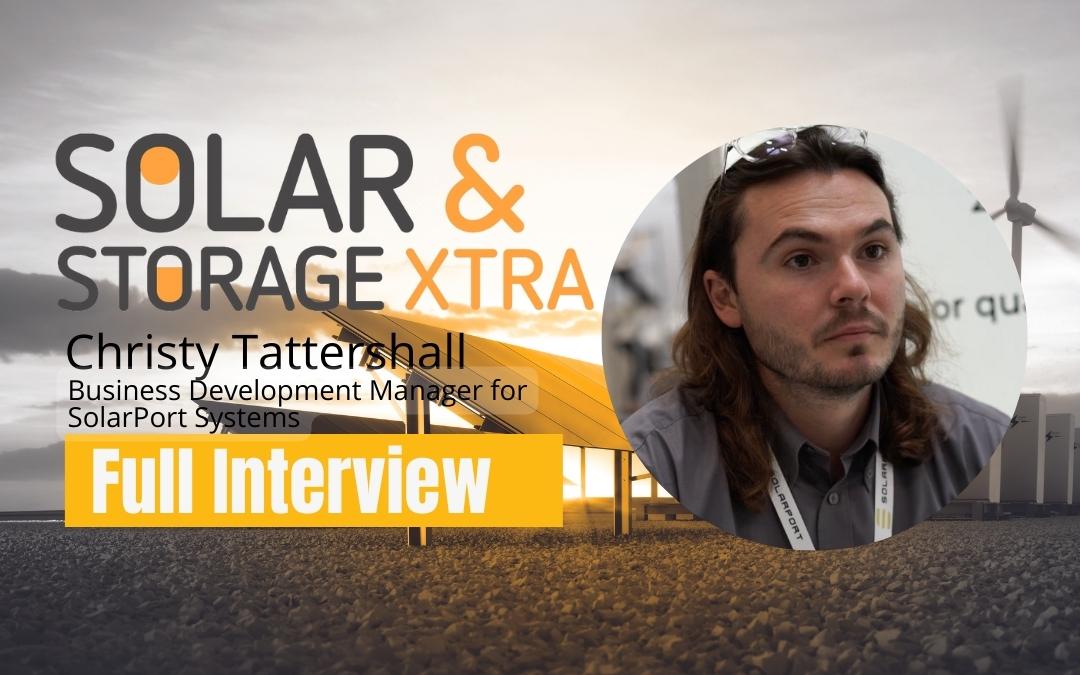
It was a pleasure to interview Christy Tattershall, Business Development Manager, for SolarPort Systems at Solar and Storage Live in Birmingham this year!
Solar&StorageXtra is the new publishing part of the Solar and Storage Live event series where we will be interviewing our esteemed speakers, exhibitors, sponsors and attendees to get their live reactions to the event and the important discussions within the industry.
Christy Tattershall joined Solar&StorageXtra to discuss SolarPort Systems’ experience at Solar and Storage Live in Birmingham this year and the benefits of SolarPort being a family run business.
The Tattershall family are the masterminds behind the UK’s leading design and manufacturer of Utility-Scale, Modular, Battery Energy Storage and mounting systems. Bringing this family dynamic into the Solar industry is incredibly important to SolarPort, Christy explained that they like to project this dynamic onto their customers and highlight they are dealing with people and not a faceless organisation.
“If someone has a problem, that is our problem. We want to deal with that. It starts with the family, it is the beating heart of our business!” – Christy Tattershall, Business Development Manager, SolarPort Systems
Each of the Tattershall’s have worked in different areas of the Solar industry allowing for SolarPort to benefit from different perspectives and assist their customers in the best way possible.
Christy explained SolarPort had a very successful three days at Solar and Storage Live. The event allowed SolarPort to meet old, new, and present customers and discuss how each stakeholder can benefit from each other. Year after year, Christy said, the conversations at Solar and Storage Live have become more and more fruitful, giving the industry and ‘injection of buzz’ until the next event.
For more interviews from Solar&StorageXtra and to keep up to date with all NEW content, subscribe to the Solar&StorageXtra YouTube channel and Newsletter!
Our next event is Solar and Storage Live London, April 29-30 2024!
To enquire about interviews, submit news and press releases please contact our Editor, Regan Slaymaker, regan.slaymaker@terrapinn.com.
For sponsorship and exhibition enquires please contact Tom Moon, tom.moon@terrapinn.com.
by Regan Slaymaker | Dec 1, 2023 | Commercial & Industrial Solar, Large Scale Utility Solar
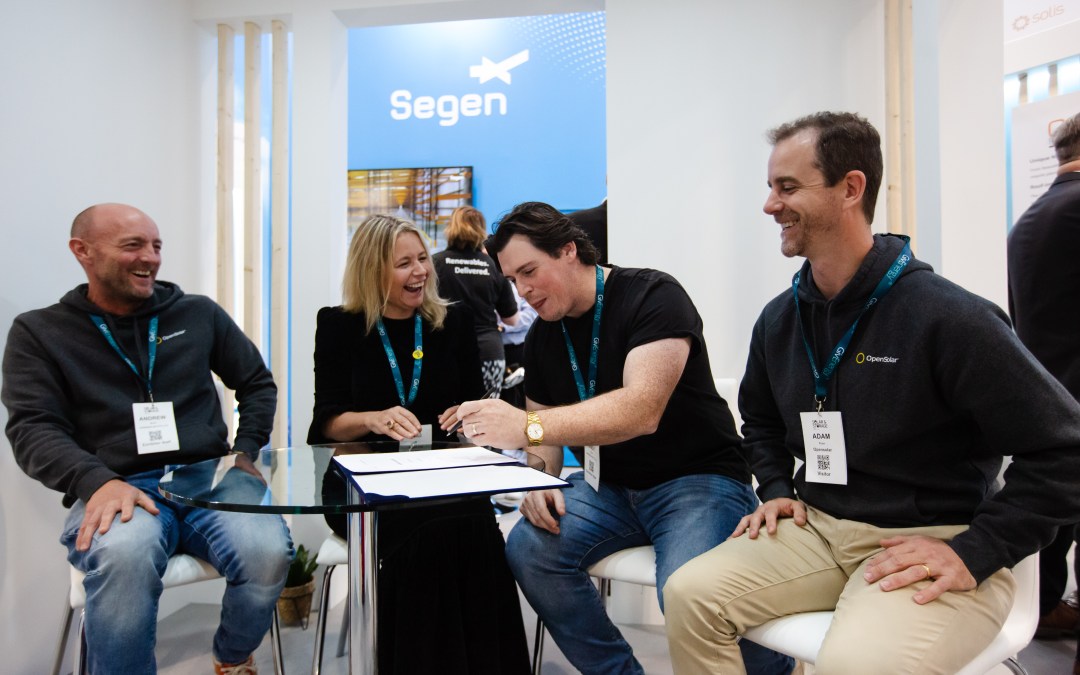
In 2023, Aiko Solar and Segen announced their partnership to push the deployment of renewable generation in the UK and Europe.
Marina Shi, Head of Aiko Solar UK, explained that Aiko only started the sale of Solar modules two years ago and 2023 began the first year the clean energy technology company started selling into European and UK markets.
The partnership with Segan allows Aiko to benefit from the leading renewable energy distribution services Segen offer and create a one-stop shop for solar solutions for all businesses.
Segen introducing Aiko’s products provides various technological benefits, one of these is the improvement in system efficiency for both residential and commercial rooftops.
“In both residential and commercial rooftop solar, there’s an increasing need for higher efficiency panels as well as improved aesthetics. Those are two really important customer requirements, especially aesthetics in residential, where the look of the house is an important factor for homeowners.” – James Galloway, European Technical Director, Segen
Many renewable projects are based off finances, therefore having high efficiency is very important in improving and delivering an improved return on investment and project yield.
What Segen are looking for are their products and services to go beyond their customer’s basic needs.
Aiko’s products are known for demonstrating high levels of robustness, high product performance and low annual degradation. Subsequently creating value for their customers throughout their products lifecycle.
Pushing new Solar cell technologies and improving its efficiency remains one of Aiko’s top priorities.
High levels of efficiency are particularly important for rooftop PV in the UK, this is because space for Rooftop PV is already limited. Aiko’s ABC panels deliver up to 24% of panel efficiency on commercial panels and 23% on residential panels.
Aiko Solar’s goal is to become a market leader in the UK but Marina Shi is very aware their journey into this new market has only just begun.
“I think right now, for the UK market, we have just started. We are focusing more on the module side at the moment but there are some innovations with the modules that we are still looking to explore and we actually have a light module that is very exciting in our roadmap.” – Marina Shi, Head of Aiko Solar UK
Once Aiko have established themselves fully into the UK market, they will be able to bring new innovative technology to the market and support the regions decarbonising journey.
For more interviews from Solar&StorageXtra and to keep up to date with all NEW content, subscribe to the Solar&StorageXtra YouTube channel and Newsletter!
Our next event is Solar and Storage Live London, April 29-30 2024!
To enquire about interviews, submit news and press releases please contact our Editor, Regan Slaymaker, regan.slaymaker@terrapinn.com.
For sponsorship and exhibition enquires please contact Tom Moon, tom.moon@terrapinn.com.
by Regan Slaymaker | Nov 30, 2023 | Storage, Video
It was a pleasure to interview Jeremy Yapp, Policy and Regulation Director for ev.energy, at Solar and Storage Live in Birmingham this year!
Solar&StorageXtra is the new publishing part of the Solar and Storage Live event series where we will be interviewing our esteemed speakers, exhibitors, sponsors and attendees to get their live reactions to the event and the important discussions within the industry.
Throughout our interview, Jeremy discussed how the UK can unlock domestic flexibility and drive electric vehicle (EV) uptake within the UK.
What Jeremy wanted to make clear regarding unlocking domestic flexibility was that we must move away from the thought that the consumer is the only stakeholder responsible when unlocking domestic flexibility. There are various policies and technical challenges that must be correct and they are not…
Jeremy explained, in order to unlock domestic flexibility the community must move away from the notion that ‘your flexibility provider must be the same as your electricity provider’, this is not the case.
ev.energy involve consumers in a virtual EV power plant that can engage customers in managing fluctuations in the grid and allow for more renewable generation.
Driving EV uptake is essential when reaching net zero. Jeremy explained once a customer has driven an EV, very few go back to an Internal Combustion Engine (ICE) vehicle. In order to increase the consumer uptake of EVs, car companies must create more EVs because, Jeremy explained, companies can sell them as fast as they can make them.
With more EVs on the market, uptake of these vehicles will increase; as will the secondary market, creating a more accessible and affordable EV market.
For more interviews from Solar&StorageXtra and to keep up to date with all NEW content, subscribe to the Solar&StorageXtra YouTube channel and Newsletter!
Our next event is Solar and Storage Live London, April 29-30 2024!
To enquire about interviews, submit news and press releases please contact our Editor, Regan Slaymaker, regan.slaymaker@terrapinn.com.
For sponsorship and exhibition enquires please contact Tom Moon, tom.moon@terrapinn.com.