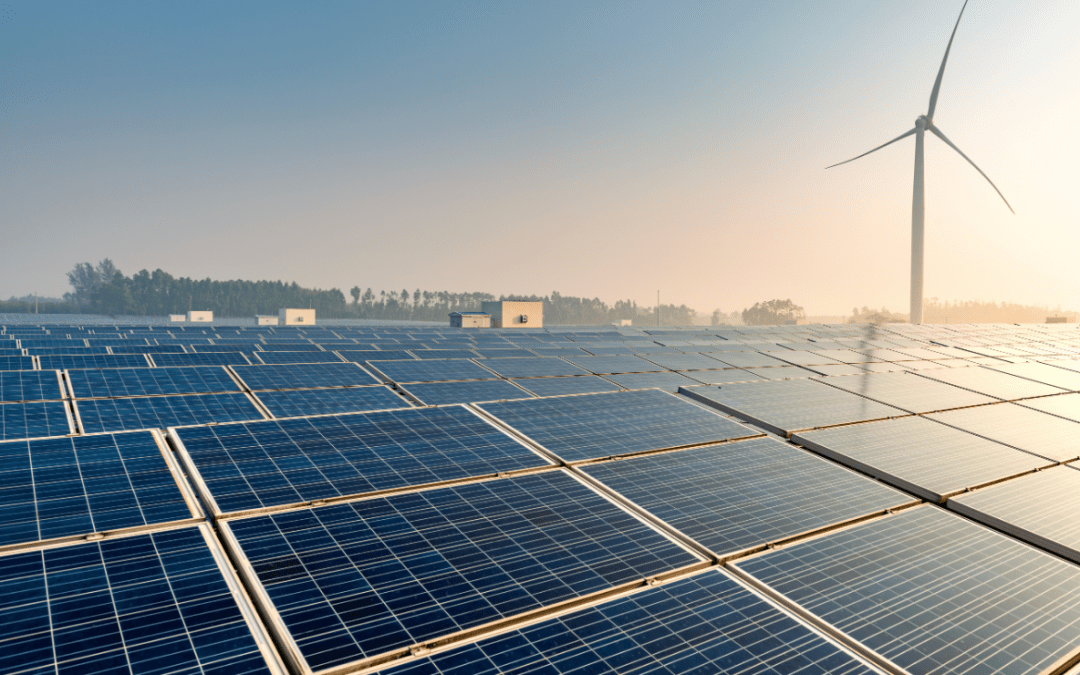
A recent study published on Thursday 11th July by US think tank Global Energy Monitor revealed that nearly two-thirds of the world’s large wind and solar energy production plants are located in China.
Currently, China has 339 gigawatts (GW) of capacity under construction, comprising 180GW of solar and 159GW of wind. This is almost double the combined capacity under construction in the rest of the world, according to the think tank.
In comparison, the USA (which ranks second), is constructing a total of just 40GW.
China’s surge for green energy suggests that the global goal of tripling renewable capacity by the end of 2030 is “well within reach,” even without additional hydropower.
The study encourages Beijing to enhance its climate targets in its upcoming pledges to the United Nations.
China’s solar landscape
Despite being the largest emitter of greenhouse gases, China’s expanding renewable capacity has reduced coal’s share in electricity generation to record lows. The country aims to peak carbon emissions by 2030 and achieve net zero emissions by 2060.
However, the renewable energy boom faces challenges as the national grid still relies on coal plants to meet rising power demands. The country struggles with transmitting renewable energy, including solar, from its remote northwestern regions to the eastern economic and population centres.
China’s combined solar and wind capacity is expected to surpass coal this year, according to Global Energy Monitor’s report. In May, coal accounted for 53% of China’s electricity generation, a record low and a decrease from 60% in May 2023, as per an analysis by Carbon Brief.
According to Lauri Myllyvirta, a senior fellow at the Asia Society Policy Institute, 44% of electricity was generated from non-fossil fuel sources, indicating that China’s carbon emissions may have peaked last year if this trend continues.