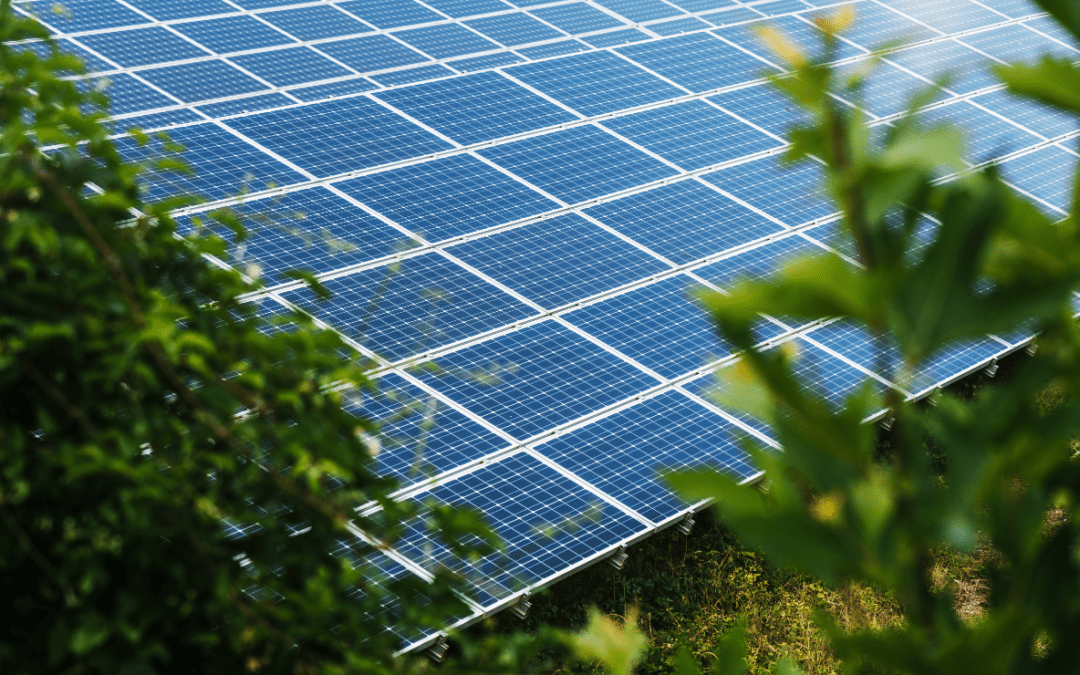
The Minister for Energy, Michael Shanks, has reaffirmed the Government’s commitment to scaling up solar energy, pledging to install solar panels on “every possible rooftop” across the United Kingdom.
Addressing the House of Commons, Mr Shanks emphasised the administration’s ambition to maximise the deployment of rooftop solar, noting that public sentiment strongly favours the expansion of renewable energy.
“If there is a rooftop upon which solar panels can be installed, we are keen to pursue that opportunity,” the Minister stated. “This is not a matter of choosing between alternatives – we believe there is significant potential to utilise rooftops throughout the country for solar power generation.”
Earlier this month, the Government announced its intention to require the installation of “solar carports” over car parks at commercial premises, including supermarkets, shopping centres, and office complexes. Furthermore, from 2027, all newly constructed residential properties will be mandated to incorporate solar panels as part of broader environmental legislation.
During the debate, Mr Shanks reiterated the Government’s position: “We have already outlined our aspirations for new housing and industrial buildings, and recently launched a consultation on car park installations. Wherever a rooftop can accommodate solar panels, we are prepared to act. Ground-mounted solar installations will also continue to play a role.”
The Minister also highlighted public backing for solar power, citing recent survey data: “Eighty-eight percent of respondents in the most recent poll expressed support for solar energy, and that figure has consistently remained above 80 percent. This reflects a strong national consensus.”
He added: “Our objective is to establish a clean energy system that enjoys the support of local communities. That requires a balanced approach, utilising a variety of technologies in appropriate locations. However, it is not credible to claim support for energy infrastructure while opposing its development within one’s own constituency.”
The debate also featured contributions from Members of Parliament expressing concern about the impact of large-scale solar developments on rural communities.
Labour MP Terry Jermy, who represents South West Norfolk – the former constituency of Prime Minister Liz Truss – voiced his objections to a proposed solar farm in his area. Denying claims of nimbyism, Mr Jermy stated: “There has been a marked increase in solar farm applications locally, and the issue has become highly contentious. While I fully support the Government’s growth agenda, and am not opposed to solar energy or solar farms per se, it is vital that we approach this matter with pragmatism and due consideration for local communities.”
He also raised concerns regarding the siting of solar developments on high-grade agricultural land: “There is three times more grade five farmland in the UK than grade one. Yet, installations disproportionately occupy grade one land – by a factor of 20. This is clearly unsustainable. In my view, agricultural land graded two and above should be protected and prioritised for food production.”
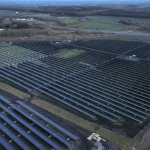
Former Conservative Minister Sir David Davis expressed similar concerns about the planning process, citing a recent approval in his Goole and Pocklington constituency: “Last Monday, a 3,150-acre solar farm in East Yorkshire was approved with minimal scrutiny. The so-called consultation process was cursory at best, disregarding the legitimate concerns of local residents. This scheme will cover an area equivalent in size to the city of Durham. If we were proposing to build a town of that magnitude, the planning process would be vastly more rigorous.”
In response, Mr Shanks maintained that the planning framework is robust and inclusive: “Communities are regularly consulted, and their input is integral to the final decisions regarding these projects.”