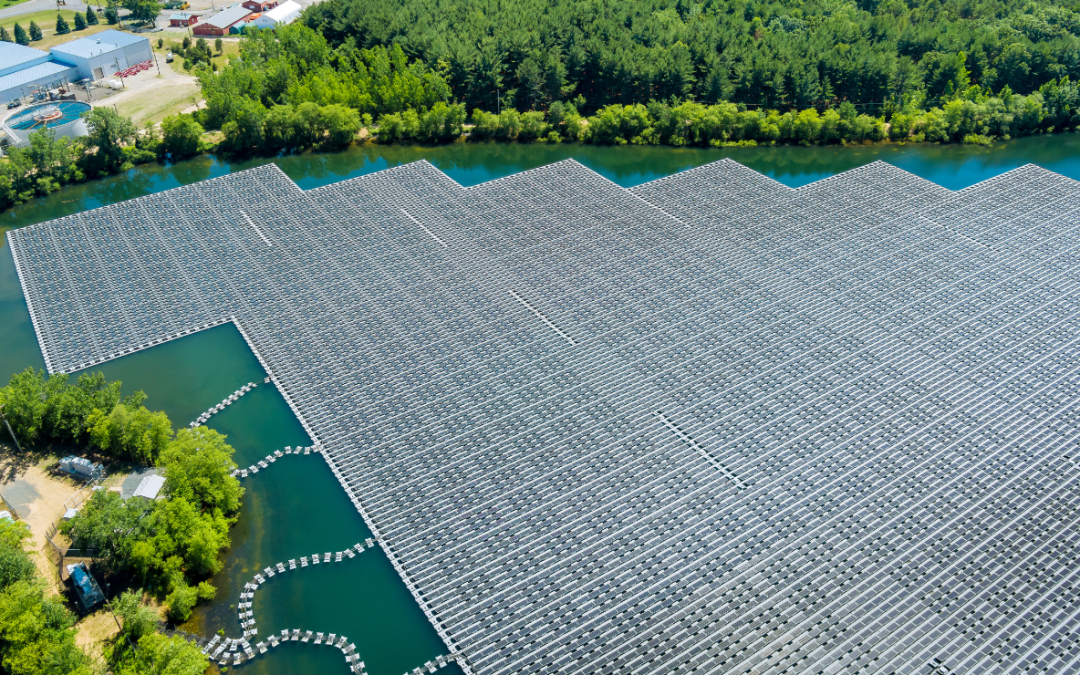
HelioRec, a French offshore floating PV developer, has launched a project backed by the European Union and the Pays de la Loire government through the Clean Energy Transition Partnership (CETPartnership).
As described in a LinkedIn post from the company, the STEWART project will:
- Establish a protocol to monitor environmental impacts across various FPV systems.
- Analyse economic and legal frameworks to support sustainable FPV deployment.
- Develop new design guidelines and technical improvements to minimise ecological impact.
The company commented: “We are committed to driving innovation in floating solar technology, ensuring sustainability and efficiency go hand in hand.”
Partners on the STEWART project include: INNOSEA, Sapienza Università di Roma, Middle East Technical University, Tonucci & Partners, BayWa r.e. Global, Ege University and Fraunhofer-Institut für Solare Energiesysteme ISE.
Environmental impact
The ecological impact of floating solar systems has been a recent hot topic, with the International Energy Agency (IEA) subsequently releasing a report demonstrating their slightly larger carbon footprint.
However, The Zurich University of Applied Sciences saw different results when they investigated the entire life cycle of Switzerland’s high-altitude Alpine floating PV system.
The researchers found that it had a lower environmental impact than other systems – and outperformed them. This was despite the floating array’s larger need for raw materials.
Overall, stakeholders and researchers alike have called for more research into floating solar, its environmental impact, its effectiveness, and how we can decrease the former while also increasing the latter.
Looking to get a foothold in France’s solar market? Explore the benefits of attending Solar & Storage Live Paris – taking place 5-6 November 2025. Or find a Solar & Storage Live event near you.