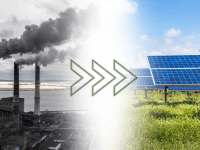
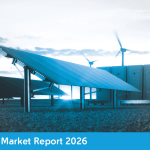
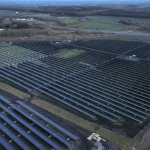
Eurostat, a statistics and data site officially owned by the European Union, has reported that 2022 saw solar energy overtake hard coal for the EU’s total electricity production for the first time.
Solar energy accounted for 210 249 GWh and hard coal generated 205 693 GWh.
The report notes that Poland and Czechia are the EU’s two last hard coal producers. However, nine EU countries used brown coal, which has a lower energy content, for electricity generation. This accounted for 241 572 GWh.
Regarding 2023, EU data demonstrates that Union coal production and consumption decreased to the lowest levels on record: a -22% and -23% reduction respectively.
The reduction seen in 2022 possibly signals an increasing trend of interest and investment in renewable energy such as solar over the last few years.
As a culmination of this trend, in July independent thinktank Ember reported that solar and wind farms in the EU accounted for a record 30% of the EU’s electricity generation in January – June 2024 – overtaking fossil fuels for the first time.
Imports
Eurostat’s report explains that hard coal imports increased in 2022, despite reduced reliance from EU countries in favour of solar energy. The hard coal import dependency rate increased by 74.4% – a 15% increase in 2021’s numbers.
Oil and natural gas remained in high demand. The dependency rate for these in 2022 registered above 97%.
Russia, the USA, and Australia appeared as the largest suppliers of hard coal (24%, 18%, and 17% respectively). However, in 2022 the EU additionally banned hard coal imports from Russia following the country’s invasion of Ukraine.
This led to Russian imports falling to 27m tonnes – a 45% decrease from 2021.