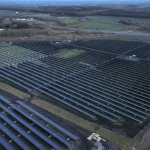
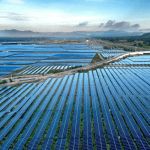
On Tuesday, Hungary’s green energy production reached record levels. According to data from Mavir, the electricity system operator, industrial facilities generated an all-time high of 3,747 megawatts in the fifteen-minute period starting at 11 a.m. When combined with household and self-generating power plants, total solar energy production reached 6,178 megawatts, the Ministry of Energy (ME) announced on its Facebook page on Wednesday.
It was also reported that as of early March, the total installed capacity of solar power plants had reached 7,831 megawatts. For the first time, this substantial capacity was utilised during Tuesday’s record-breaking solar production of over 6,000 megawatts. Industrial solar power plants, with a total capacity of 4,389 megawatts, alone generated electricity equivalent to 84% of the current gross system load during the peak period.
Officials highlighted that Hungary had initially aimed to reach 6,000 megawatts of installed solar capacity by 2030, a target that was already exceeded last year.
According to the latest data, solar panels accounted for a quarter of Hungary’s domestic electricity production in 2023, the highest proportion in Europe. With the contribution of the Paks nuclear power plant, the country is increasingly capable of covering domestic electricity needs solely from carbon-free sources and is even able to export surplus energy.
The number of solar power plants, including industrial facilities, surpassed 300,000 in February. It is expected that household-sized installations, primarily located on the roofs of family homes, will reach this milestone on their own by March. As capacity continues to expand rapidly, domestic solar energy production is likely to hit new record highs in the coming weeks and months.