Global renewable energy capacity is expected to more than double by 2030, led by strong growth in solar photovoltaics (PV), according to the International Energy Agency’s (IEA) Renewables 2025 report.
The report forecasts that renewable power capacity will expand by 4,600GW by the end of the decade – equivalent to the total power generation capacity of China, the European Union and Japan combined.
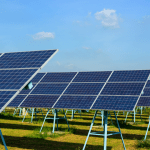
Solar PV is expected to account for around 80% of this increase, driven by falling costs and faster permitting, followed by growth in wind, hydropower, bioenergy and geothermal.
“The growth in global renewable capacity in the coming years will be dominated by solar PV – but with wind, hydropower, bioenergy and geothermal all contributing, too,” said IEA Executive Director Fatih Birol.
“As renewables’ role in electricity systems rises in many countries, policy makers need to play close attention to supply chain security and grid integration challenges.”
India is projected to become the world’s second-largest market for renewable expansion, after China, supported by cost competitiveness and strong policy targets.
Growth is also accelerating in emerging markets across Asia, the Middle East and Africa, where governments are rolling out new auction programmes and increasing renewable ambitions.
While most major developers have maintained or raised their 2030 deployment targets, offshore wind faces headwinds, with growth forecasts around a quarter lower than in last year’s report due to policy changes, supply chain issues and rising costs.
The IEA slightly revised its overall forecast downward compared with last year, citing regulatory changes in China and the United States. However, these reductions are partially offset by stronger expectations in India, Europe and other developing economies.
Despite progress, challenges remain. The IEA warned that concentrated supply chains – particularly for solar PV and rare earth elements used in wind turbines—pose ongoing risks, while grid integration issues and curtailment highlight the need for investment in storage and flexibility.
Renewables’ role in transport and heating is also set to increase modestly by 2030, with renewable electricity for electric vehicles and biofuels driving growth in several key markets.