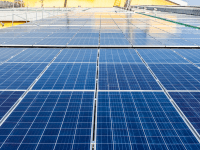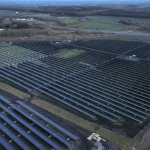
India’s solar energy capacity is projected to reach 250 GW by March 2026, up from 201 GW in September 2024, according to Indian credit rating agency ICRA.
This growth is supported by an 80 GW project pipeline and improved tendering activity in 2024.
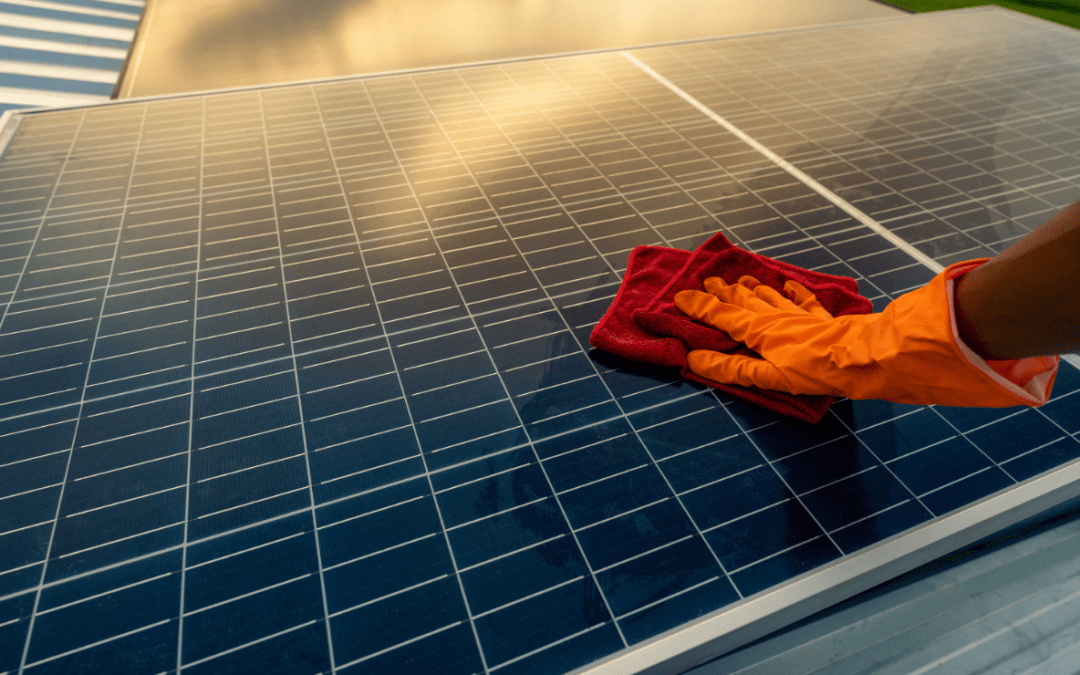
Solar energy will play a key role, with capacity expected to rise from 91 GW in September 2024 to 132 GW by March 2026, driven by annual additions of 22 GW in 2025 and 27.5 GW in 2026.
“Strong project pipelines and favourable solar module prices will drive renewable capacity additions, particularly ahead of the June 2025 end of inter-state transmission waivers,” said Girishkumar Kadam, Senior Vice President at ICRA.
However, challenges such as delays in land acquisition and transmission connectivity may hinder progress.
India’s renewable and large hydro energy share in electricity generation is expected to rise from 21% in 2024 to over 35% by 2030. To integrate this growth, ICRA estimates the country will need 50 GW of energy storage by 2030, supported by battery energy storage and pumped hydro projects.
Kadam noted a decline in battery prices has significantly reduced tariffs for battery energy storage systems (BESS) over the past eight months, boosting adoption.
To address intermittency issues, central agencies are prioritising renewable energy projects offering round-the-clock, dispatchable power, often through hybrids with storage.
Auctions for nearly 14 GW of projects have been completed, with competitive tariffs ranging from INR 4.0 to INR 5.0 per kWh, compared to over INR 6.0 per kWh for coal-based power.
These hybrid projects may also generate surplus power for merchant markets due to their oversizing, ICRA stated.