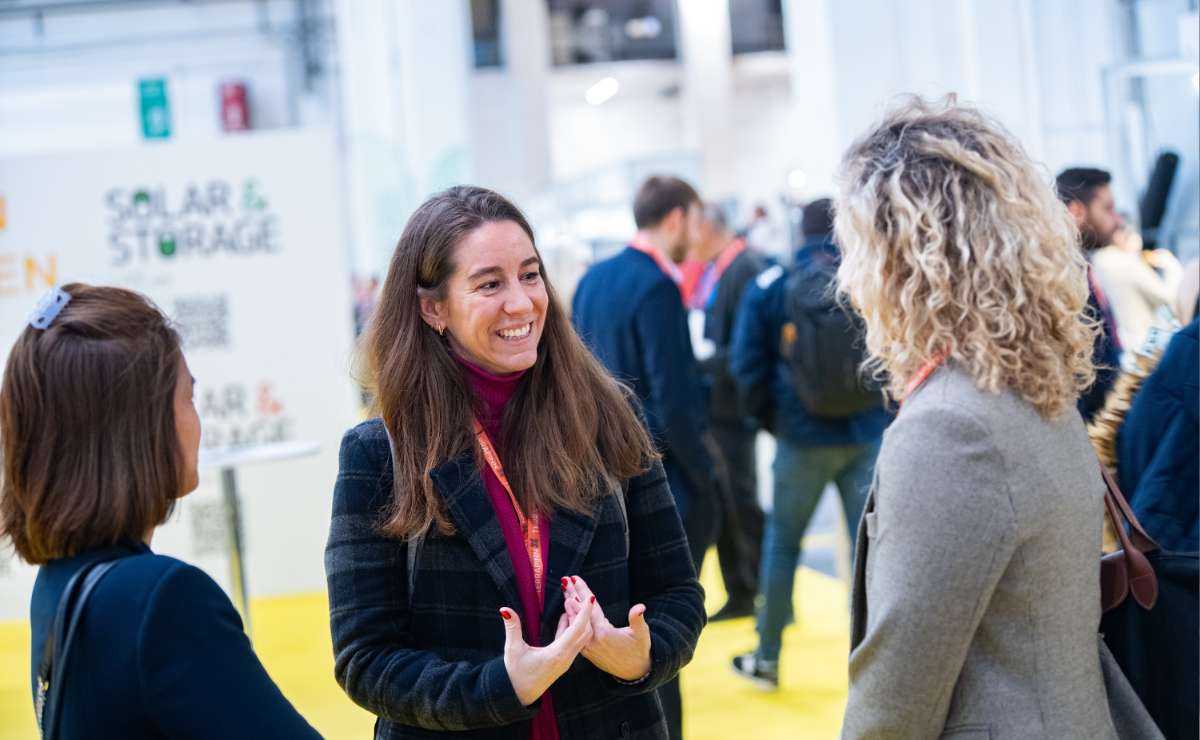
Women continue to make up 32% of full-time employees in the renewable energy sector, according to a new report by the International Renewable Energy Agency (IRENA).
While this figure is higher than in fossil fuel industries, it has not increased since IRENA’s first gender analysis in 2019 – signalling little progress towards gender equality.
The second edition of Renewable Energy: A Gender Perspective provides IRENA’s most comprehensive assessment of women’s participation in the renewables workforce and the barriers they face.
It warns that without greater equality, the global energy transition risks being neither fair nor sustainable, citing potential labour shortages and a lack of diverse perspectives.
Disparities in workplaces
The study reveals significant disparities between job types. Women hold 45% of administrative roles but just 28% of science, technology, engineering and mathematics (STEM) positions, and 22% of technical trades such as installation and electrical work.
Representation is lowest in senior leadership, where women account for only 19% of roles.
Private companies were found to have the lowest levels of female participation at 25%, compared with 48% in non-governmental organisations and 37% in government or non-commercial institutions. In off-grid and community-based projects, women account for 35% of employees.
Disparities in sectors
In a SolarPower Europe report for International Women’s Day 2023, the trade organisation cited IRENA’s 2019 report, which demonstrates that the solar industry employs proportionally more women than the traditional energy and fossil fuel sectors.
“Advancing gender equality in the renewable energy sector depends on robust data, targeted policy interventions and active collaboration of all stakeholders,” said IRENA Director-General Francesco La Camera in response to the new report.
“Unfortunately, despite performing better than in fossil fuel industries, little progress has been made. The sector still has a lot of work to do. To realise the energy transition’s full potential, women must be recognised as equal partners and leaders in shaping the renewables-based future.”

Solving a systemic problem
The report attributes the lack of balance to systemic barriers at every stage of professional development. It cites cultural stereotypes, bias in recruitment, difficulties balancing work and caregiving, and limited advancement opportunities as key obstacles.
It also explains that women are often the primary users and managers of household energy systems, which means that they unfairly take on the “greatest burden” of energy poverty in developing countries.
IRENA calls for both top-down and bottom-up action to address the issue. It recommends that governments enforce equal pay and anti-discrimination laws, while employers introduce flexible working, transparent promotion systems and mentorship opportunities.
The agency adds that education providers and civil society groups also have a role in dismantling stereotypes and holding institutions accountable.
The full report can be found here.