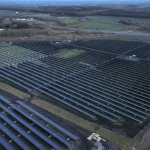
The global renewable energy sector continues to expand, with solar energy leading the way in capacity growth.
According to the report Renewable Capacity Statistics 2025 from the International Renewable Energy Agency (IRENA), renewable power capacity reached 4.448 GW in 2024, with solar accounting for over 75% of the expansion.
Despite this progress, current growth rates fall short of the 11.2 TW needed to meet the global goal of tripling renewable capacity by 2030.
The solar photovoltaic (PV) sector saw record-breaking additions, increasing by 451.9 GW last year. China contributed the most, adding 278 GW, followed by India with 24.5 GW.
Expansion
Declining costs and technological advancements continue to drive solar adoption, making it the dominant renewable energy source in new capacity additions.
“The continuous growth of renewables we witness each year is evidence that renewables are economically viable and readily deployable,” said IRENA Director-General Francesco La Camera.
However, the expansion remains geographically uneven. Asia, particularly China, led the global increase, accounting for nearly 64% of new capacity, while Central America and the Caribbean contributed only 3.2%.
The G7 and G20 countries added 14.3% and 90.3% of new capacity, respectively.
“The shift to clean energy must be faster and fairer – with all countries given the chance to fully benefit from cheap, clean renewable power,” said UN Secretary-General António Guterres.
Challenges
Despite the strong growth, challenges persist, including a growing skills gap in the solar job market and the need for stronger policy commitments.
With solar PV now 56% cheaper than fossil fuels or nuclear power, experts emphasise the importance of supportive policies and international cooperation to accelerate the transition.
As La Camera urged, governments should use “the next round of Nationally Determined Contributions (NDCs 3.0)” to outline clear renewable energy ambitions and drive global progress.