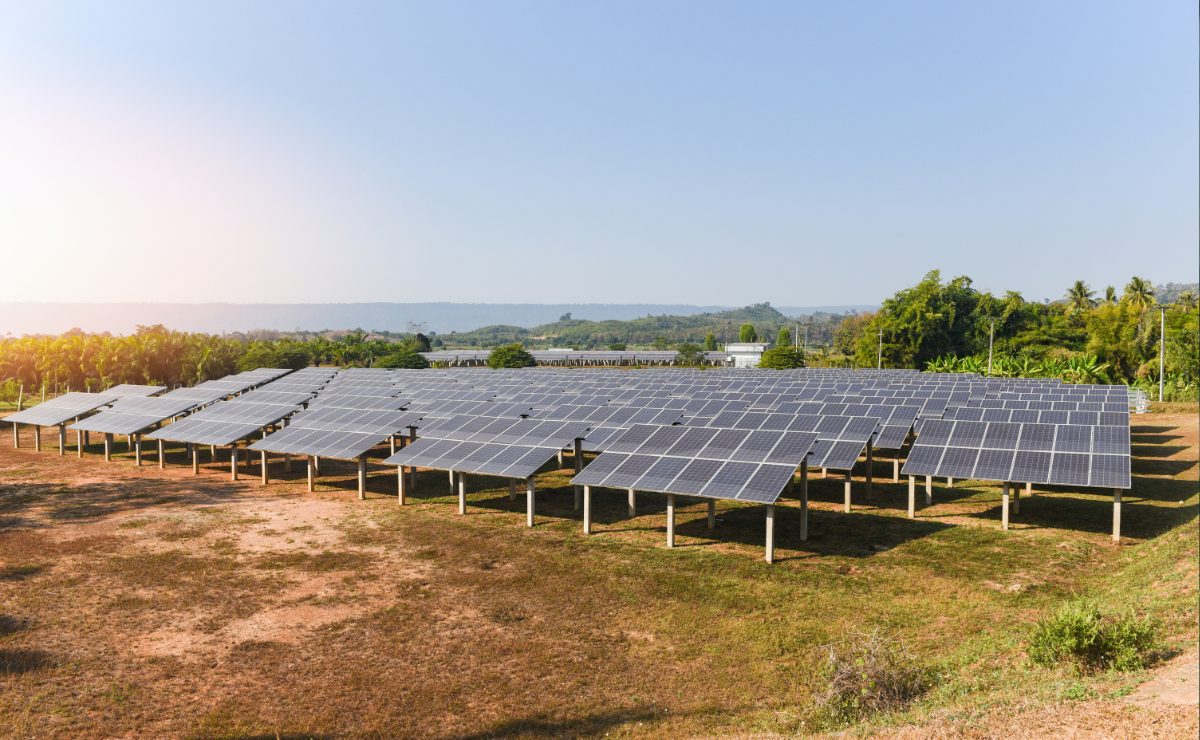
Solar curtailment – when electricity generation from PV systems is intentionally reduced due to grid limitations or oversupply – is often a last-resort measure to maintain grid stability. But when curtailment is used, it results in wasted renewable energy and lost revenue.
The problem is only expected to grow as solar capacity expands. In the UK, grid delays and technical limits mean some projects face curtailment rates above 90%, or even 100%, until infrastructure upgrades are completed.
Similar issues have been reported across Europe, where industry bodies warn that rising curtailment and negative pricing threaten investor confidence.
As the industry hunts down a solution that mitigates the impact of electricity curtailment, particularly in solar, energy storage has taken the stage as a major contender.
What causes curtailment?
Several factors cause electricity curtailment as a whole: usually, either grid capacity or economic factors are involved.
Oversupply can overwhelm the grid, prompting grid operators to intervene and limit supply. This can be due to limited grid capacity or a disconnect between regions that have a large supply and those that don’t.
Good weather and sunshine mean abundant energy and minimal demand: a combination that can cause oversupply. Alongside threatening to overwhelm the grid, oversupply can drive prices into negative territory. The more energy is fed to the grid, the more producers lose money.
Tackling the oversupply conundrum is where energy storage steps in.

The role of energy storage
Energy storage provides a direct means of mitigating curtailment by capturing surplus solar energy for use during periods of low generation or high demand.
By capturing excess solar generation during periods of low demand or grid congestion, storage enables energy to be shifted to times when it is most valuable – such as after sunset or during peak demand events.
The most common storage technology deployed today is lithium-ion batteries, which dominate the grid-scale market due to their relatively high efficiency, rapid response times, and falling costs.
However, reliance on lithium-ion has limitations, including material supply constraints and degradation over time. This has spurred investment in alternative solutions such as:
- Pumped hydro storage: which stores energy by pumping water uphill and releasing it through turbines when needed.
- Flow batteries: where energy is stored in liquid electrolytes that can be scaled independently for power and energy capacity.
- Thermal storage: which captures heat for later conversion to electricity or direct use in heating systems.
- Vehicle-to-grid (V2G) systems: which leverage the growing number of electric vehicles as distributed energy storage assets.
Short-duration storage – particularly systems offering between two and four hours of capacity – has been shown to deliver the largest reductions in curtailment for the lowest cost.
This is because most curtailment events are driven by daily supply, where demand mismatches rather than seasonal imbalances.
In the U.S. National Renewable Energy Laboratory’s modelling, adding four hours of storage to a high-renewables grid significantly lowered wasted solar and wind generation without the need for expensive long-duration systems.
Beyond energy shifting, storage plays an important role in grid stability. Batteries can provide frequency regulation, voltage support, and ramping capability, enabling operators to integrate higher shares of variable renewables without compromising reliability.
They can also participate in market arbitrage, buying power during low-price periods and selling when prices spike, which can improve project economics.

Economic considerations
While storage can be more expensive than curtailment in some cases, falling battery costs and market incentives are narrowing the gap.
The choice between curtailment and storage often depends on electricity price patterns, grid constraints, and policy support.
In Switzerland, modelling found that curtailment was currently cheaper than installing batteries in certain medium-voltage networks, but cost declines could reverse this.
The report, published in Applied Energy, notes:
“A sensitivity analysis showed that decreasing costs of energy storage technologies could make installing energy storage cost-competitive compared to curtailing PV generation.”
Policy and infrastructure needs
In a joint letter titled It’s not curtailment. It’s waste, SolarPower Europe raised its concern about curtailment during Europe’s “era of solar abundance”.
Written in 2023, the letter notes that over 40GW of solar energy was installed in Europe during the previous year. This number has only increased, with the EU seeing 65.5GW of new installations in 2024 – according to figures released this April.
As such, the “suite of solutions” SolarPower Europe outlines in its joint letter is all the more pressing:
- Grid investment and expansion to handle renewables’ accelerated pace.
- Regulatory and economic incentives to both integrate storage into existing and future projects and protect prices.
- Flexible demand-side management, including dynamic tariffs and hybrid solar–storage configurations.
- Faster permitting and digitalisation of grid operations to match renewable deployment rates.
Without these interventions, rising solar capacity may be undermined by wasted energy and weakened project returns. When paired with grid upgrades and smart market design, energy storage could be part of the solution to the curtailment conundrum.
While energy storage is not a cure-all, it is a critical tool to ensure that abundant solar generation is fully utilised in the transition to a low-carbon power system.
Solar & Storage Live in Birmingham is on the horizon, so don’t miss out on your free ticket to the UK’s largest solar and storage show. Or, find a Solar & Storage Live event near you.