Solar and wind power grew fast enough to keep pace with rising global electricity demand in the first three quarters of 2025, leading to a stagnation in fossil fuel growth for the period.
The analysis, laid out in Ember’s Q3 Global Power Report, forecasts no growth for fossil fuels in the power sector in 2025.
Record growth in solar power, combined with moderate wind growth, meant that total solar and wind growth (+635 TWh) exceeded the increase in demand (603 TWh) in the first three quarters of the year.
The surge in clean power led to fossil generation remaining similar to 2024 levels, showing a minor fall of -17 TWh (or -0.1%).
Solar dominance and global trends
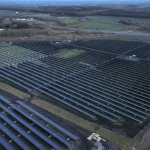
Solar generation rose by 498 TWh (+31%) in the first three quarters of 2025 compared to the same period in 2024, representing the largest increase ever over nine months.
This record increase was more than three times larger than the next biggest increase from wind power (+137 TWh). The report states that “Solar has become the dominant driver of change in the global power system”.
This growth in solar and wind power pushed their share in the global electricity mix from 15.2% in Q1-Q3 2024 to 17.6% in Q1-Q3 2025. Conversely, the share of fossil generation dropped from 58.7% to 57.1%.
Key regional shifts
Declines in fossil generation in China (-52 TWh, -1.1%) and India (-34 TWh, -3.3%) were instrumental in tipping the balance of the global trend.
- In China, the decline was driven by “fast-growing renewables meeting all new demand”. The report notes that “China is now structurally meeting all new demand with clean power”.
- In India, the fall resulted from renewables growth combined with “unusually low demand growth driven by mild weather conditions”.
These decreases “even balanced out fossil increases in the EU and US”. Ember forecasts that 2025 will be “the first year without notable fossil fuel growth in global electricity generation since the Covid-19 pandemic, when global demand fell”