A new study shared by Lightsource bp has found that grazing sheep on solar farms may improve soil health and pasture quality. Lightsource bp’s research was conducted in part at the company’s Nittany 1 solar site in Pennsylvania.
The findings were published in early 2025 by the American Solar Grazing Association (ASGA), offering insights into agrivoltaics – the practice of combining solar energy production with agriculture.
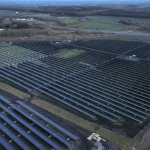
The 70MW Nittany Solar project spans three sites and powers Penn State University through a 25-year agreement.
All three locations support sheep grazing, and the land is seeded with “Fuzz and Buzz,” a custom mix developed by ASGA, Ernst Conservation Seeds and Pollinator Service to benefit both sheep and pollinators.
Lightsource bp first partnered with ASGA at Nittany 1 in 2022 for a two-year study examining the environmental impact of solar grazing.
The project was one of 28 northeastern US solar grazing sites included in the research, sponsored by the New York State Energy Research and Development Authority and led by American Farmland Trust.
ASGA collected data before and after the 2022 and 2023 grazing seasons to assess soil carbon, compaction, plant nutrition and species diversity. The study reported three key findings:
- Healthier soil: Grazed solar farms had more organic matter and a more neutral pH than non-grazed sites. ASGA noted, “This study is one of the first to publish soil testing methodology for operational solar farms.”
- More nutritious forage: Vegetation beneath solar panels had higher protein content and was more digestible than vegetation in open areas, likely due to shading from the panels.
- Improved pasture conditions: Most pasture health metrics increased between 2022 and 2023. While the 3% rise in pasture condition score was not statistically significant, ASGA said it “shows that grazing may have the potential to improve solar site pasture quality over time.”
Lightsource bp stated it is “proud to provide site data for these important inquiries and to continue measuring the impacts of solar grazing at our operational sites over decades.”
The study can be found here.
[Image credit: Lightsource bp]