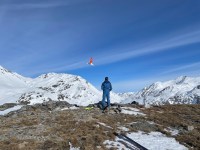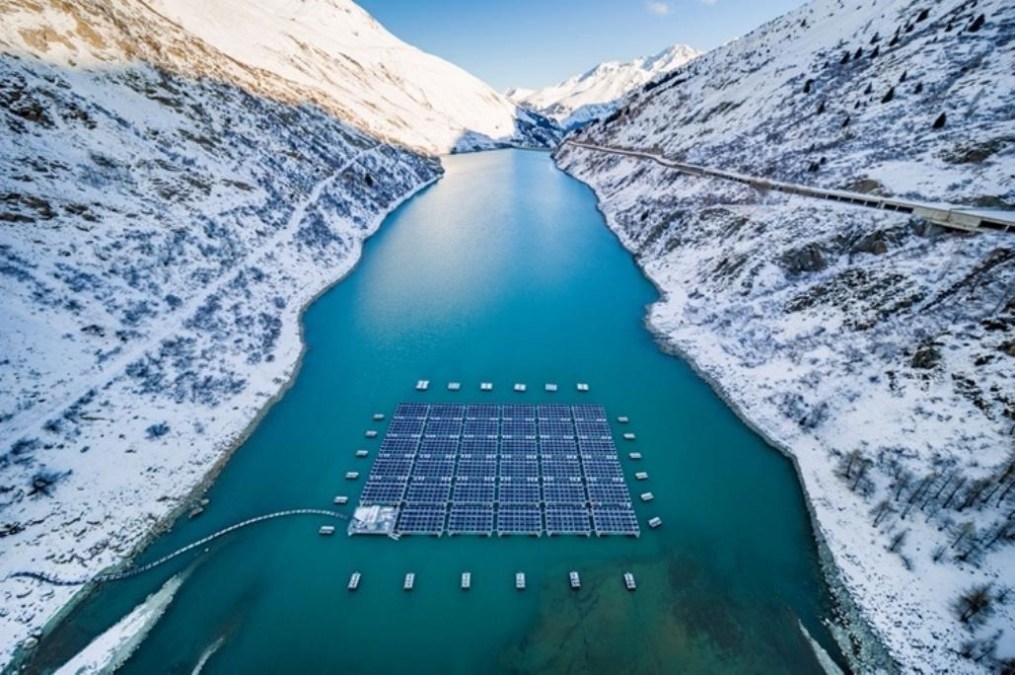
[Image: The FPV system on the Lac des Toules reservoir. Image credit: Romande Energie]
New research from the Zurich University of Applied Sciences has been released and explores the life-cycle environmental impact assessment (LCA) of an Alpine floating PV system.
Researchers found that the world’s first high-altitude floating installation has an energy payback time of only 2.8 years. According to the report, primary data from the Alpine array was provided by the “energy company concerned” and covered the entire lifecycle of the FPV system.
The 448kW installation itself was built in 2019 by Switzerland-based Romande Energie on the Lac des Toules reservoir in the Alps – at an altitude of 1,810 metres. The installation comprises 35 platforms with bifacial PV panels, covering 2% of the lake’s surface and 2,240m2 total.
This LCA also included considerations of the processes required to extract raw materials, used in the system from construction to obsoletion, followed by comparisons of the installation’s environmental impact against lowland structures in different scenarios.
Findings demonstrated that the FPV installation emits 94g CO2-eq per kWh of produced electricity over its life cycle. The researchers concluded that the array had a lower environmental impact compared to other systems, as they also have a lower energy yield and increased land use.
However, the array’s mounting systems were labelled “environmentally intensive” due to their complex design requiring up to 8x more aluminium than their ground-mounted counterparts.
To combat this, the researchers suggest reducing the amount of aluminium in the mounting system for both environmental benefits and cost savings: “This can either be done by reducing general amounts of aluminium, focusing on the use of recycled aluminium or replacing aluminium with an alternative material.”
In conclusion, the researchers said: “The present study adds to the scarce knowledge regarding the environmental performance of FPV systems and gives an insight into the environmental impacts of such installations at high altitudes.”
“The study thereby identifies leading points for the improvement of environmental performance while highlighting the potential that this technology holds.”
The full report can be read on ScienceDirect: Are alpine floatovoltaics the way Forward? Life-Cycle environmental impacts and energy payback time of the Worlds’ first High-Altitude floating solar power plant
Stay in touch with Switzerland’s solar industry by attending Solar & Storage Live Zurich, September 17-18 2024