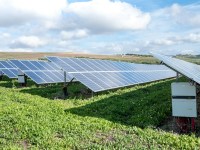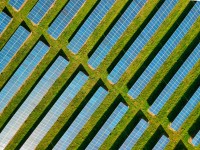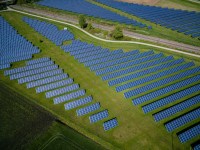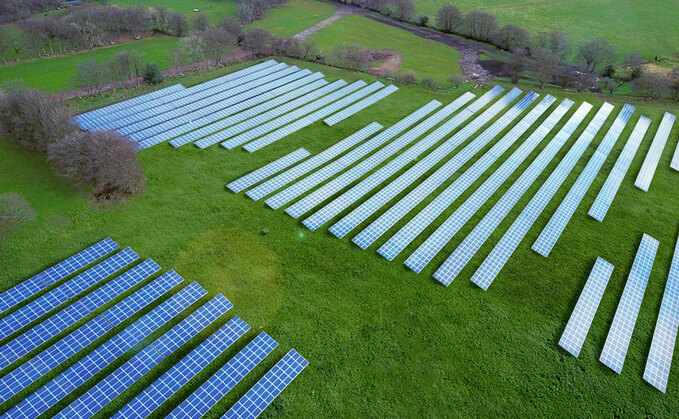
A new agreement between The National Farmers Union Scotland (NFUS) and solar developer Igony Solar Energy Solutions (SENS UK) aims to accelerate Scotland’s transition to Net Zero while making sure that projects do not encroach on productive farmland.
According to NFUS, the partnership will help foster the rollout of solar farms across Scotland and provide farmers with an additional income generator without impacting arable land. This will be achieved through SENS UK’s work with the union to identify suitable land for solar and battery projects.
Renewable projects will then be developed on selected sites that avoid agricultural land, in line with the union’s criteria, enabling landowners to receive 40 years of competitive market rent.
The right site
The chosen sites will be:
- Low flood risk
- At least 80 acres in size
- Not be too rocky or steep
- Most will be classified as grade 3 under the Agricultural Land Classification
- Be available to lease, with potential for a connection to the National Grid
The deal follows statements from Energy Security and Net Zero Secretary Claire Coutinho earlier this month, warning that large-scale solar farms could threaten food security by occupying valuable productive farmland.
Campaigners dubbed the announcement as “nonsensical” arguing that solar farms provide low-cost clean power, provide an additional income stream for farmers, and have a minimal impact on food security and land use. They also noted that planning guidance already restricts the development of solar farms on arable farmland.
NFUS reassured landowners and farmers that solar installations would not significantly reduce the UK’s available productive farmland. The union added that, to reach the UK’s net zero goals, solar arrays would only require 0.29% of available land – 0.51% of all available agricultural land.
On the partnership, NFU Scotland’s Commercial Manager Tom Graham said Scotland’s farming sector would be “at the forefront of new solar technology … [it] will help NFU Scotland’s members build sustainable and profitable businesses by creating additional income on what they do for years to come”.
“We’ve seen how impactful and innovative our members can be when they are supported by reliable renewable services, and we expect many of them will want to explore this opportunity to grow their businesses without using up productive agricultural land, still facilitating grazing and thus create a stable economic future for Scottish agriculture.”
James Bracegirdle, Managing Director at SENS UK, concluded:
“Although it’s clear that our projects will help Scotland advance its Net Zero goals, we also hope that our involvement and our financial capability will give Scottish farmers a solid alternative option to generate long-term, stable income.”
[Image credit: SENS]