Solar Energy UK has released a statement regarding the National Planning Policy Framework (NPPF), welcoming proposed changes to the framework to boost renewable energy projects.
The consultation aims to streamline the approval process for renewable energy, contributing to cheaper energy and lower greenhouse gas emissions.
The proposed changes instruct: “direct decision-makers to give significant weight to the benefits associated with renewable and low carbon energy generation, and proposals’ contribution to meeting a net zero future.
“In doing so, this aims to increase the likelihood of local planning authorities granting permission to renewable energy schemes and contribute to reaching zero-carbon electricity generation by 2030.”
Agrivoltaics
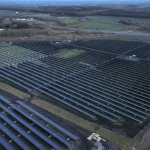
A key proposal addresses the use of agricultural land for solar farms. This seeks to resolve inconsistencies between central and local governments on solar farm applications.
In doing so, this could potentially reduce refusals and appeals, and speed up the decarbonisation of the power system.
Current regulations, under the EN-3 document, classify large-scale solar farms as “Critical National Priority” infrastructure. They prioritise the benefits of solar farms over the impacts, arguing that the grade of agricultural land “should not be a predominating factor” in approving or rejecting applications.
Meanwhile, the existing NPPF allows local authorities to refuse solar projects on agricultural land considerations.
Chris Hewett, Chief Executive of Solar Energy UK, comments: “The industry will be glad to see the back of this provision in the NPPF, which was used a pretext for planning refusals.
“As Energy Secretary Ed Miliband said recently, solar farms do not pose a threat to the nation’s food security – and never will.”
Raising thresholds
The consultation also includes the proposal to raise the Nationally Significant Infrastructure Projects (NSIP) threshold from 50MW to 150MW.
Applications for NSIPs entail higher costs and resource commitments than those under the Town and Country Planning Act (TCPA), making projects in the 50-150MW range less attractive to developers. The proposed threshold increase aims to make these projects more viable by reducing the burden of NSIP applications.
However, while NSIP applications offer clarity, TCPA-based decisions can be inconsistent, leading to costly appeals.
Despite the positive outlook on these changes, Solar Energy UK remains cautious about the impact of raising the 50MW threshold, explaining that the industry will assess the proposals’ potential to accelerate solar deployment in the coming decade.
There’s precedent for reclassifying infrastructure projects, as seen in 2020 when battery energy storage systems were transferred to the TCPA to reduce costs and encourage larger projects, aiding the decarbonisation and resilience of the UK’s energy system.