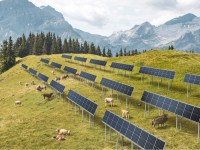
According to research and energy intelligence company Rystad Energy, renewable energy capacity in the Middle East is set to expand significantly in the coming years.
The findings show that green energy sources are set to surpass fossil fuel usage in the power sector by 2040. Solar photovoltaic (PV) is expected to become the dominant source, providing over half of the region’s power supply by 2050 – up from 2% in 2023.
Additionally, in 2050 renewables including hydro, solar, and wind, are expected to comprise 70% of the Middle East’s power generation mix. This is a dramatic increase from 5% at the end of 2023.
Despite this surge, natural gas will remain significant in the short term for the region, peaking around 2030.
Historically dominated by oil and gas, the Middle East is shifting towards renewables due to rapid industrial growth, a rising population, electrification of transport and other sectors, and global carbon reduction efforts.
The region, home to over 280 million people with a 60% increase in population since 2000 – which has doubled power demand over the past 20 years. By 2050, power demand is projected to reach 2,000 TWh, up from the current 1,200 TWh.
The green future
At the end of 2023:
- Fossil fuels were 93% of the region’s power generation
- Renewables accounted for 3%
- Nuclear and hydro each contributed 2%
- Natural gas represented nearly ¾, making up 40% of the overall gas demand
By 2030, about 30% of the region’s installed capacity is expected to come from renewable sources, potentially rising to 75% by 2050. Battery energy storage is anticipated to grow, supporting the intermittency of solar and wind power and aiding the transition to renewable energy.
Due to limited hydropower potential and low gas prices, the Middle East will continue to rely on gas-fired power, eventually serving as a transitional fuel. At the end of 2030, the share of gas in the power generation mix is expected to decrease from 74% to 46% in 2040, then 22% by 2050.
Nishant Kumar, Renewables and Power Analyst for Rystad Energy, explained:
The Middle East trails behind in the renewable energy shift, overshadowed by Asia and Africa where renewable power is expected to surpass fossil fuel generation by 2032. With nearly 40% of its power consumed by a growing residential sector, the Middle East faces surging power demand.
This, coupled with the need for economic diversification and freshwater through desalination, underscores the urgency for a transition to renewables.”
Solar energy is becoming increasingly important in Middle Eastern energy policies. Solar PV in Saudi Arabia has achieved a world record-low levelized cost of electricity (LCOE) of $10.4 per MWh, thanks to favourable conditions.
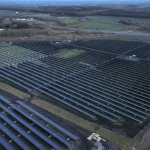
By the end of 2023, the total solar capacity in the Middle East exceeded 16GW and is expected to reach 23GW by 2024. By 2030, capacity is projected to surpass 100GW, with green hydrogen projects contributing to an annual growth rate of 30%.