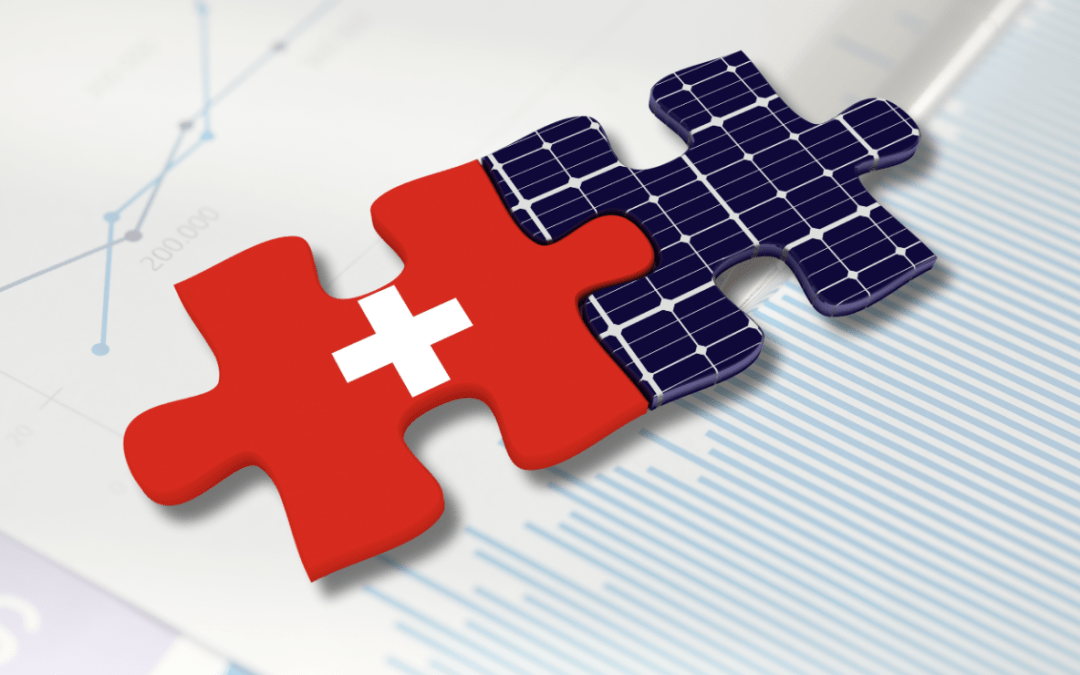
In September 2023, the International Energy Agency (IEA) released a report on Switzerland’s energy policies – as it does for all its member countries.
Switzerland’s low-emissions electricity system positions the country favourably to achieve its climate goals for 2030 and beyond but accelerating the development of renewable energy is crucial as it plans to phase out nuclear power, according to the report.
Switzerland has committed to reducing greenhouse gas emissions by at least 50% by 2030 and achieving net-zero emissions by 2050. To facilitate this, the government has introduced new legislation and updated existing laws to drive progress.
However, significant work is still needed in sectors like buildings and transport, which missed the 2020 emission reduction targets.
Previous results
Since the IEA’s previous review in 2018, Switzerland has made progress in its energy transition, particularly with the updated Energy Act. This law prioritises new hydropower and wind projects as matters of national interest.
The latest IEA review recommends expanding this designation to all renewable energy plants and their grid connections, which would help attract investment in new energy capacity.
Renewable energy projects and grid extensions in Switzerland frequently encounter long delays, with legal proceedings sometimes stalling initiatives for decades. Administrative challenges related to planning and execution are slowing down the rollout of new projects, which, if not addressed, could jeopardize Switzerland’s 2030 climate goals and create concerns about energy security.
Following a 2017 national referendum, Switzerland will gradually phase out nuclear energy, which could increase reliance on electricity imports until new low-emissions capacity is brought online.
“Switzerland’s efforts to mitigate the impact of the global energy crisis while advancing towards its net-zero targets are admirable,” said IEA Deputy Executive Director Mary Burce Warlick, who presented the report in Bern at an event with Federal Councillor Albert Rösti, Head of the Federal Department of the Environment, Transport, Energy and Communications (DETEC).
“The gradual phaseout of nuclear power and increased electrification of the energy system will pose challenges. Switzerland must ensure that new renewable energy capacity is developed in a timely and orderly manner to reduce dependence on electricity imports and stay on course to meet its long-term decarbonisation targets.”
Recommendations
To help Switzerland meet its targets, the IEA’s review provides several key recommendations. A primary suggestion is for federal and regional authorities to streamline lengthy approval processes for critical infrastructure projects, including hydropower, wind, and solar PV installations, clearing obstacles to a clean energy future.
The review also encourages Switzerland’s regions, or cantons, to harmonise approval procedures and improve spatial planning for energy projects and supporting infrastructure.
Additional recommendations include preparing climate legislation for the post-2030 period, focusing on energy efficiency measures, accelerating digital transformation, and aligning electricity market regulations with those of the European Union.
The global energy crisis also underscored the importance of basic gas market regulation in Switzerland, including the creation of an independent gas regulator. These reforms would help prepare Switzerland for potential integration into the EU’s internal energy market.
Energy efficiency plays a key role in Switzerland’s strategy to meet its 2030 climate goals. The country has a strong record of decoupling economic growth from energy use, significantly outperforming the IEA average on a per capita basis.
However, missed targets in key sectors show the need for stronger energy efficiency measures. As such, the IEA suggests that energy efficiency be treated as the “first fuel” and integrated into all new energy and climate legislation.
Close cooperation between federal and regional governments will be essential to driving the energy transition, given the decentralised powers that cantons hold over energy policy.
Switzerland Energy Week marks the leadup to Solar & Storage Live Zürich, taking place 17-18 September. Haven’t registered yet? Don’t miss out on your free ticket by securing your place here.