by Regan Slaymaker | Feb 8, 2024 | Commercial & Industrial Solar
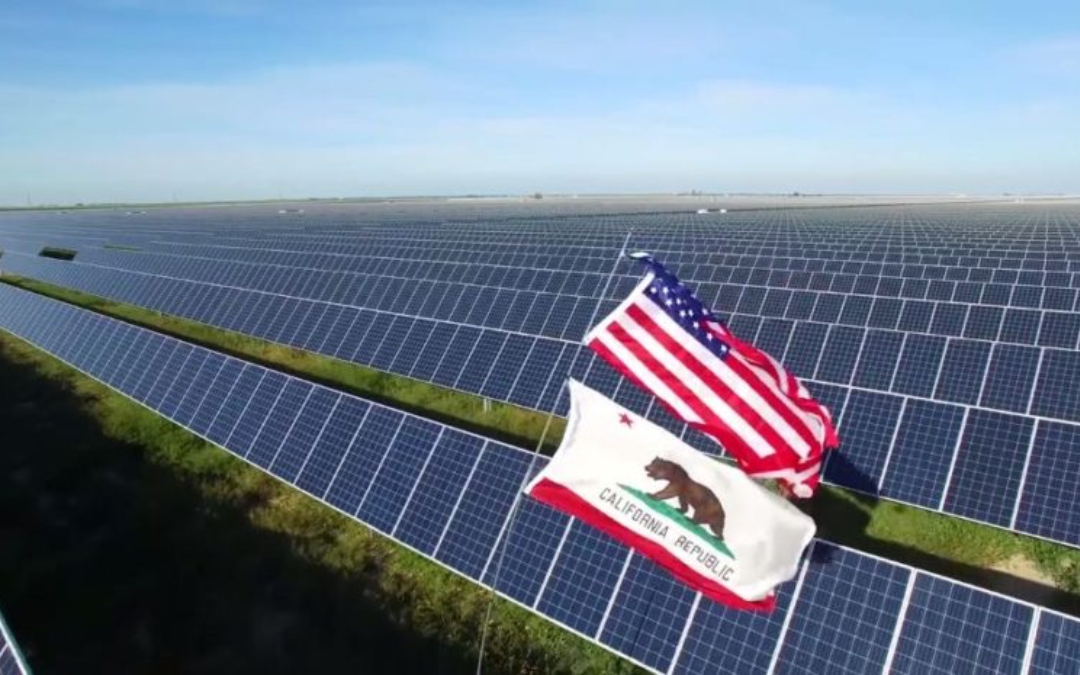
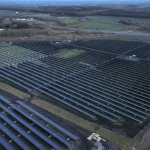
(Image: Recurrent Energy)
Solar PV technologies are leading the energy sector in decreasing carbon emissions coming out of the United States (US).
2023 saw Solar PV projects deployed at record levels in the US.
In total 184TWH of electricity was generated by utility scale solar projects in the US.
This amount produced by large scale solar projects is 130% higher than what was generated in the US 5 years ago.
This is enough electricity to power 14,000,000 homes and equal to 4% of the US’ total generation.
Utility scale solar saw a steep rise in 2023. 20.8GW worth of new utility scale solar projects were installed in 2023.
Another 8.8GW should have been installed in December 2023 alone, subsequently allowing Solar’s new capacity installations to overtake gas.
Partnering the rise of solar installations in the US was an increase in installed energy storage solutions.
14GW of storage installed in the US were driven by electricity markets with large amounts of solar.
The US installed 5GW of energy storage in November 2023. This meant more storage was installed in 11months of 2023 than the entirety of 2022.
The continued rise of solar has mean the amount of coal used by power companies and the amount of CO2 emitted has shown a continuous decline.
by Regan Slaymaker | Jan 22, 2024 | Commercial & Industrial Solar
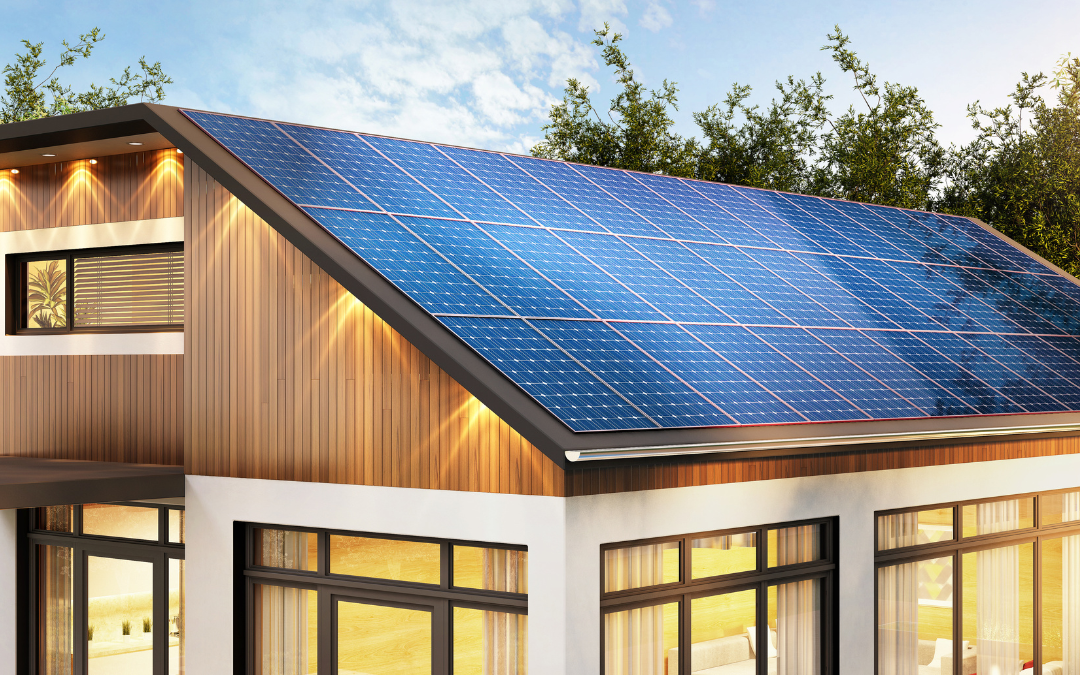
As with all rooftops, various creatures can create a home on top of yours.
Whilst this can be an annoyance, animals nesting on your rooftop can rarely cause damage to you or your home.
However, as solar PV installations increase, wildlife nesting on your rooftop in and around your panels could cause damage to yourself and your property.
Overall, wildlife nesting in and around Solar PV can decrease the system’s efficiency.
Natural movement of birds can loosen wiring connections to Solar PV. Squirrels are also known for biting into electricity cables.
Nesting build-up can also interfere with panel ventilation.
The gaps between the roof and other panels act as ventilation to keep the electricity system cool. Nesting build-up can interfere with the ventilation system, heat up and cause an electrical fire. The nest will also, unfortunately, acts as kindling for the fire.
However, the largest problem facing Solar PV efficiency is not an obvious one… no guesses?
That’s right… bird poo.
Bird poo reportedly accounts for anywhere between 46.42% and 89.18% of efficiency lost in solar PV. When left to fester, it can cause permanent damage to the panel.
Lovely…
Ultimately, surrounding wildlife to your home can undo the hard work and precision taken by installers and, therefore, lead to expensive repairs.
What consumers need to do is address these potential issues before they occur.
Some of the solutions that can prevent damages caused by wildlife to your solar PV include:
- Kites and robotics in the shape of predator birds to scare away nesting wildlife.
- Installing audio components of high pitch frequencies to deter creatures.
- Putting up fencing or netting to prevent wildlife from returning to your roof.
These are just some of the solutions that can prevent your rooftop solar pv from becoming damaging or needing replacement.
For more interviews from Solar&StorageXtra and to keep up to date with all NEW content, subscribe to the Solar&StorageXtra YouTube channel and Newsletter!
To enquire about interviews, submit news and press releases please contact our Editor, Regan Slaymaker, regan.slaymaker@terrapinn.com.
For sponsorship and exhibition enquires please contact Tom Moon, tom.moon@terrapinn.com.
by Regan Slaymaker | Jan 15, 2024 | Market Reports
(Source of information: Mordor Intelligence / Image credit: Enel Spa)
The first event of the Solar and Storage Live calendar in 2024 is Solar and Storage Live Africa in Johannesburg between 18-20 March 2024.
South Africa is experiencing a rise in the deployment of solar generation but the continued potential of solar in the country is particularly exciting.
South Africa receives sunshine for more than 2500 hours per year. Subsequently becoming a focal point for developing the solar market in Africa and the Middle East.
The current market size of solar is estimated at 6.68gw (in 2024) with this expected to increase to 11.03gw by 2029.
At its current rate, South Africa is expected to register a Compound Annual Growth Rate of 10.56% during the forecast period of 2024-2029.
Increased demand for clean energy generation is expected to stimulate market growth of South Africa’s solar energy market.
In order to increase Solar’s impact on the country, South Africa must reduce their reliance on fossil fuels. Only then will renewable energy experience a significant market growth.
Industry Action and Government Policy
The South African government have set an industry target of generating 18gw of renewable energy by 2030 with solar expected to make a significant proportion of this target.
The Renewable Energy Independent Power Producer Procurement Programme was established to help facilitate reaching this target.
This programme has successfully attracted investment and support with over 600mw worth of renewable energy projects being allocated to bidders. Most of these projects will be focused on wind and solar generation.
In 2022, South Africa also launched a 300mw renewable energy programme. The first round of funding focused on procuring independent power producer projects with capacity ranges between 5mw and 20mw. The second funding round focused on projects on over 20mw.
South Africa’s efforts to reduce its reliance on fossil fuels and increase market growth of renewables is moving in the right direction. However, South Africa is still the 7th largest coal producer in the world with coal-based thermal power plants accounting for 76% of electricity generation in 2021.
The Climate Commission of South Africa have set out to transition the country from a fossil fuel-based system to a renewable power system.
To do this, a deployment of 150gw of wind and solar capacity is needed by 2050. Registering an increase of 4gw per year.
According to the Blended Finance Taskforce and Slettenbrook University Centre for Sustainability Transitions, South Africa will need approximately $260billion over the next 3 decades to transform to a renewable energy system. This is 3% of South Africa’s annual gdp.
The deployment of Solar PV has become a significant focus for the energy industry in South Africa with solar PV segments expected to dominate the market. In 2022 total installed capacity is estimated at 5.826mw.
Since 2022, energy companies have pledged to commit to a significant increase in the deployment of solar.
Solar provider Solana Energy announced that households in South Africa imported over $120,648million worth of solar PV panels.
6 private renewable developers signed 20year PPAs with South African utility Eksom Holding to construct 13 solar PV plants. These plants will have a combined capacity of 957mw.
According to South Africa’s Photovoltaic Industry Association, once capacity is installed it will surpass over a decade worth of government action regarding Solar energy procurement.
Market Leaders in the South African Solar Market:
- Canadian Solar inc.
- IBC Solar AG.
- Segen Solar (pty) ltd.
- ART Solar (pty) ltd.
- Energy Partners Holding.
What is happening in South Africa?
Solar Capital has connected a 86mw solar PV plant to the grid in South Africa’s Northern Cape. This new solar farm will generate enough energy to provide thousands of homes and businesses in the region.
In 2023, South African construction company Concor announced it is expanding into solar power.
The project will provide an additional 5.74mw of solar power to the existing 1mw grid-tied plant adjacent to a shopping centre.
Projects like this align with the 2030 net zero targets arranged to reduce energy reliance on South Africa’s unreliable, fossil fuel heavy grid.
Conclusion
Overall, the South African solar market is registering increases in deployment and market growth. Government policies are in place and are contributing to the shift to a renewable energy system. However, industry specific bodies seem to be facilitating the majority of this change. South Africa must increase their efforts, at both industry and government level, to move away from their unreliable fossil fuel based system to a fully renewable electricity grid.
For more interviews from Solar&StorageXtra and to keep up to date with all NEW content, subscribe to the Solar&StorageXtra YouTube channel and Newsletter!
To enquire about interviews, submit news and press releases please contact our Editor, Regan Slaymaker, regan.slaymaker@terrapinn.com.For sponsorship and exhibition enquires please contact Sara Atwi, sara.atwi@terrapinn.com.
by Regan Slaymaker | Jan 2, 2024 | Innovation
The RePower Ukraine Charitable Foundation has initiated the ground breaking initiative “Solar Start: an educational course for veterans and IDPs.” Its primary objective is to equip Ukrainian veterans and internally displaced persons (IDPs) with the essential skills to embark on careers in the renewable energy sector, specifically focusing on the design and construction of PV plants.
This course is designed for war veterans and individuals who have been displaced as a result of the Russian aggressive invasion in Ukraine on February 24, 2022. These individuals have endured significant suffering due to the horrors of war and are now actively seeking opportunities to rebuild their lives and start anew.
The Repower Ukraine Charitable Foundation initiated this project within the “Support to Civil Society Organizations (CSOs)” Program, generously supported by the British Embassy in Ukraine. The educational course is designed to be inclusive and welcoming for individuals with various needs, including those with concussions or amputations. The goal is to provide a comfortable and successful learning experience for all.
Within the project, all participants not only acquire new skills in green energy but also receive psychological support. Sessions with psychologists help people overcome the challenges of the learning process and adapt to their experiences and new lives. Additionally, remote learning allows participants to gain new knowledge and skills without leaving their jobs or responsibilities for their children and loved ones.
All participants have unique and challenging life stories, but they share an incredible strength of will and a desire to contribute to Ukraine’s victory and recovery. Today, we would like to share the story of Oleksandr Donchuk, a veteran residing in Berdychiv, Zhytomyr Region.
Oleksandr served in a combat unit, where he faced the most challenging trials, and was discharged due to health reasons. Afterward, he decided to redirect his efforts toward civilian endeavors.
Oleksandr shared his story: “I served in a combat unit, which meant direct contact with the enemy. I saw a lot of human experiences, fear, and more. War brings nothing useful to the world; it only destroys everything, and Ukraine will need to rebuild. Someone will have to do that in the future.”
Despite lacking prior experience in green energy, Oleksandr enrolled in the “Solar Start” educational course. His determination and hard work led to remarkable success on this path. Oleksandr understands that solar energy is not just an economic sector but also an opportunity for Ukraine to become more environmentally friendly and less reliant on imported energy resources.
“We realized back then that, given the number of destroyed cities in Donetsk, Luhansk, and other regions, they would need to be rebuilt anyway. And a field like green energy can be very helpful in this regard. When we were stationed in Kherson, we saw many solar panels on the roofs of farms. During frequent power outages, thanks to solar panels, we could charge our radios and power banks, which allowed our unit to stay connected. Solar energy is such a powerful alternative that doesn’t require significant financial investments,” Oleksandr explains.
Oleksandr, along with the other participants of the “Solar Start” educational course, serves as an example of how one can change their life, even in the most challenging circumstances.
“I absolutely appreciate the organization of the learning process in this course and the high quality of educational materials. The structured and logical approach to teaching stands out. All topics and materials are presented sequentially, making it easier to understand and absorb the information. Instructors use interesting examples and practical exercises, making the learning process more effective and engaging. For me, this is not just gaining knowledge but also an opportunity to develop skills and expand career horizons. I’m grateful to the RePower Ukraine Charitable Foundation for the opportunity to participate in this educational project and acquire new knowledge,” adds Oleksandr.
We believe in our participants, in their strength of will, determination, and potential to achieve great results. We wish them all inspiration and great success on this journey. May our collective efforts benefit Ukraine and lead to a sustainable green future.
The RePower Ukraine Charitable Foundation expresses its deepest gratitude to esteemed donors and partners, particularly the “Support to Civil Society Organizations (CSOs)” Program in Ukraine, which is implemented with financial support from the British Embassy, by Crown Agents in partnership with International Alert and in cooperation with Crown Agents in Ukraine. Thanks to your invaluable support, this project has become a reality, and people not only have the chance to improve their lives but also to contribute their efforts to the sustainable recovery of Ukraine.
For more information about Repower in the UK or to support our solar projects contact nick@repowerua.org / pr@repowerua.org.uk
This project was created by the RePower Ukraine Charitable Foundation under the “Support to Civil Society Organizations (CSOs)” Program in Ukraine with financial support from the British Embassy. The program is implemented by Crown Agents in partnership with International Alert and in cooperation with Crown Agents in Ukraine.
The content of the course information page does not necessarily reflect the views of the British Embassy, Crown Agents, International Alert, or Crown Agents in Ukraine.
For more interviews from Solar&StorageXtra and to keep up to date with all NEW content, subscribe to the Solar&StorageXtra YouTube channel and Newsletter!
Our next event is Solar and Storage Live London, April 29-30 2024!
To enquire about interviews, submit news and press releases please contact our Editor, Regan Slaymaker, regan.slaymaker@terrapinn.com.
For sponsorship and exhibition enquires please contact Tom Moon, tom.moon@terrapinn.com.
by Regan Slaymaker | Dec 13, 2023 | Commercial & Industrial Solar, Innovation
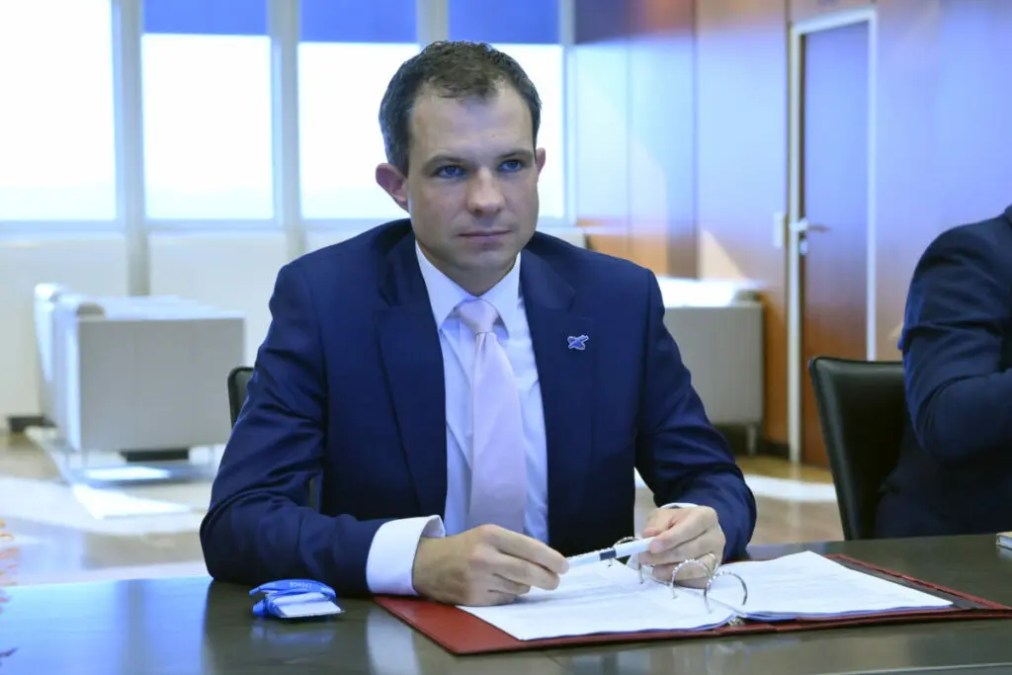
(Image Credit: IAEA (Flickr)
Andrew Bowie MP has been unveiled as the new co-chair of the UK’s Solar Taskforce.
Bowie will now take over from the Rt Hon Graham Stuart as the co-chair of the Solar Taskforce following a reshuffle at the Department of Energy Security and Net Zero.
In previous roles Bowie has lead projects on nuclear and international energy, energy investment and supply chain projects.
At Solar and Storage Live Birmingham 2023, fellow co-chair of the Solar Taskforce and Chief Executive of Solar Energy UK, Chris Hewett explained that the creation of the Solar Taskforce is to create a “genuinely joint” industry and government initiative to work together and achieve the 70GW target of Solar generation in the UK by 2035.
The UK’s Solar Taskforce is currently tackling to develop a roadmap for delivering the UK target of 70GW of Solar generation which will be published prior to Solar and Storage Live London in 2024.
Chris Hewett, Chief Executive of Solar Energy UK, said:
“The news of Graham Stuart’s change of duties is unfortunate timing, but I would like to thank him for being a most effective co-chair of the Solar Taskforce alongside me and a genuinely enthusiastic champion of solar energy. We look forward to engaging with Andrew Bowie as the taskforce begins to conclude its work, as well as continuing to work with Minister Stuart as he takes on the critical brief of addressing network issues.”
For more interviews from Solar&StorageXtra and to keep up to date with all NEW content, subscribe to the Solar&StorageXtra YouTube channel and Newsletter!
Our next event is Solar and Storage Live London, April 29-30 2024!
To enquire about interviews, submit news and press releases please contact our Editor, Regan Slaymaker, regan.slaymaker@terrapinn.com.
For sponsorship and exhibition enquires please contact Tom Moon, tom.moon@terrapinn.com.
by Regan Slaymaker | Dec 13, 2023 | Innovation
The latest draft of the United Nation’s COP28 climate agreement has removed the phaseout of fossil fuels.
The document explains that countries ‘could’ cut the consumption and production of fossil fuels amongst other suggestions.
The wording of the document has received backlash from some countries that are accusing Saudi Arabia and other Nations from pushing out efforts to tackle global warming.
Even with the backlash, the COP28 document will need to be agreed by almost 200 countries at the summit in Dubai.
The document highlights multiple actions that countries ‘could’ take to cut greenhouse gas emissions to meet Net Zero targets by 2050.
The document includes reducing the “consumption and production of fossil fuels, in a just, orderly, and equitable manner so as to achieve Net Zero emissions by, before, or around 2050 in keeping with the science.”
The criticism comes from the document implying there is a choice on whether you should phase out fossil fuels, rather than a mandatory agreement to phase out fossil fuels indefinitely.
European Union (EU) Climate Commissioner Wopke Hoekstra described the draft the document as “clearly insufficient” explaining “for the vast majority of our emissions we have no alternative other than to drive them down and out as soon as possible.”
A lot of the negotiations and ministers from Nations opposing the draft document have accused Saudi Arabia of pressuring Sultan al-Jaber, COP28 president and the Head of the Abu Dhabi National Oil Company, to shift focus on any agreement away from fossil fuels.
Sultan al-Jaber, COP28 president and the Head of the Abu Dhabi National Oil Company said:
“We have made progress but we will have a lot to do… I want you to develop the highest ambition on all terms, including the fossil fuel language.”
The German Foreign Minister Amalena Baerbach explained that it is “misleading” to argue that fossil fuels could play an essential role in energy as it contradicts EU energy policy and allows for new coal power plants to be built.
The UK Government described the draft as “disappointing and did not go far enough” explaining an explicit call to phase out fossil fuels must be included in the document to achieve climate goals.
The document must be agreed by all Nations attending COP28 in Dubai.
by Regan Slaymaker | Nov 10, 2023 | Innovation, Storage
Solar power mini grids have presented rural Africa with an incredible opportunity to benefit from cheap and clean renewable energy.
Sabon Gida, a rural Nigerian village, once relied on diesel generators and lamps to power and light their community. Within a year, a solar powered mini grid has been linked to the north central Nasarawa State supplying clean energy constantly to half of the community and most businesses in the area.
Villages like Sabon Gida, at times, now have more light than Lagos because of the economic capital’s unstable grid connections.
Mini grids are not a new technology but the drop in the price of Solar has propelled a growth in clean energy in Africa. The region is poised to benefit the most from cheap Solar and mini-grid development.
The International Energy Agency (IEA) have found that Africa has the most potential when it comes to Solar generation but where the continent lacks is installed capacity.
Here is where the opportunity lays.
With increased deployment of mini grids, like in Sabon Gida, Africa as a nation could unlock fossil free electricity generation. Both the World Bank and the IEA identify mini grids as the most viable solution to cheap, fossil free and accessible electricity across Africa.
To meet current sustainable development objectives, and bring power to 300million people in Africa by 2030, 160,000 mini grids must be installed.
According to the World Bank’s Energy Sector Management Assistance programme, only 12,000 are set to be installed.
Africa’s current growth in micro-grid deployment is still an achievement.
In a report by the World Bank, mini grid deployment has increased from 500 installations in 2010 to 3000 in 2023 with an additional 9000 coming next year.
Across Africa, deployment of renewable projects have begun to take priority.
Nigeria’s ‘market driven’ approach have brought 100 mini grid projects online. Ethopia and Zambia have passed new regulations to attract private investment of Solar. Kenya have done the same for both public and private investment for 150 mini grids.
Solar power remains the cheapest source of utility scale power but it can come with its challenges when being deployed in Africa. These include:
- Securing appropriate investment.
- Solving equipment issues.
- Securing state financing.
- Clear policies that promote the use of mini grids.
Outside of those challenges, increased deployment of Solar mini grids remain a top priority in securing cheap, clean and accessible electricity across Africa.
“Solar mini grids are integral to Nigeria’s energy transition plan. The government views this model as the most effective means to rapidly increase electricity access. If you remove mini grids from the equation, you remain with the problem of extension of national grids not being available to so many communities. So mini grids are essential.” – Abba Aliya, Representative of Nigeria’s Rural Electrification Agency
For more interviews from Solar&StorageXtra and to keep up to date with all NEW content, subscribe to the Solar&StorageXtra YouTube channel and Newsletter!
Our next event is Solar and Storage Live London, April 29-30 2024!
To enquire about interviews, submit news and press releases please contact our Editor, Regan Slaymaker, regan.slaymaker@terrapinn.com.
For sponsorship and exhibition enquires please contact Tom Moon, tom.moon@terrapinn.com.