On May 15th the UK’s Energy Security Secretary, Claire Coutinho, has told Parliament that the nation’s quality agricultural land must be protected for food security in light of current growing geopolitical tension.
Prime Minister Rishi Sunak explained earlier in the week that, due to heightened global instability, the UK government aims to reinforce food security as part of national resilience.
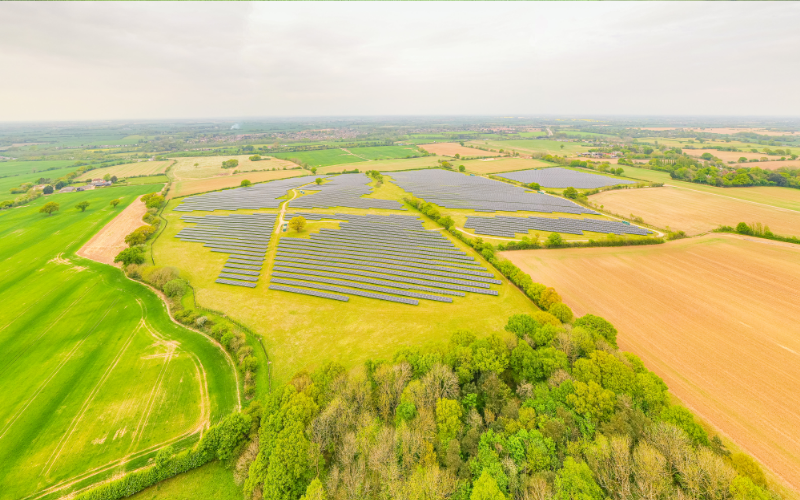
That includes protecting ‘Best and Most Versatile’ (BMV) land, ensuring large solar projects avoid this higher quality land where possible. Solar projects will be pointed towards brownfield land, contaminated land, industrial land, and lower quality agricultural land instead.
Solar power will continue to be pivotal in delivering cleaner, cheaper, and more secure energy to the UK – noting an over 4-fold increase in solar deployment expected by 2035, up to 70GW.
The Energy Security Secretary highlighted planning policy and the need for solar to be delivered sensibly – for developers and planning authorities to consider the overall impact solar projects can have on local communities (especially a high volume of applications).
Coutinho also plans to expand the Renewable Energy Planning Database to include current data on the type of land used by existing and planned solar projects. This will allow the government to track usage of high-quality agricultural land more easily.
The accurate information can then be considered as part of the planning process.
The Secretary said:
“I want to see more solar on rooftops and where that’s not possible, for agricultural land to be protected; and for the cumulative impact on local villages to be considered where they are facing a high number of solar farm applications.
We will make sure we reach our solar targets in a sensible way that delivers clean, cheaper energy but does not compromise our food security.”
Environment Secretary Steve Barclay added:
“We’re committed to protecting and improving the nation’s food security, alongside action that safeguards our energy security.
That’s why we’re ensuring our best agricultural land continues to be used for its core purpose of food production, while helping farmers expand their businesses through farming grants which will enable them to invest in rooftop solar and the generation of renewable energy on their farms.”
Alternatives
The government additionally plans to make deploy rooftop solar easier, releasing pressure from agricultural land. Recent changes to permitted development rights will be used to achieve this for commercial buildings – including farm buildings, warehouses, factories and carparks.
Earlier in 2024 the government launched the Improving Farm Productivity grant’s second round, seeing £15-25m available to farmers for installing rooftop solar and other equipment. The goal behind this is to help farms reduce fossil fuel use and improve their energy resilience.
Solar has seen a large amount of success in the UK – boating about 16GW deployed across the island nation. 99% of of these were installed by 2010.
In December 2023, over 1.2m British homes have solar PV installed. Government data showed that 2023 saw over 160,000 domestic installations: the most in a calendar year since 2015.
The government lso made it cheaper for solar panels to be installed on homes and charitable buildings, which currently benefit from a zero rate of VAT until March 2027.
The upcoming Solar Roadmap will outline plans to roll out more solar across social housing and the public sector. According to the government, this will be with the aim of helping more schools, colleges, hospitals, and other buildings supply themselves with clean and cheap solar power.