Ahead of November’s election, President Joe Biden has announced new tariffs on double-sided solar panel imports, in a step to protect US clean energy manufacturers and jobs.
This move ends an exemption implemented during Donald Trump’s presidency from tariffs on these solar panel units – which are widely used in large solar projects – and sets a new tariff rate of 14.25%.
The tariff increase is part of a broader strategy to address concerns with overproduction from China resulting in cheap exports that undercut U.S. producers. Biden’s administration has also raised tariffs on other Chinese imports, including electric vehicles and solar cells, escalating trade tensions with Beijing.
Ali Zaidi, Biden’s climate adviser, said that “unfair and non-market practices taking place overseas” were threatening the US’ solar “investment boom”.
The US has seen a surge in imports of cheap solar panels and cells, primarily from Southeast Asia. According to BloombergNEF, in 2023 the US imported 55GW of panels and 3.8GW of solar cells, with over three-quarters of these cells coming from Malaysia, South Korea, and Vietnam.
To support domestic developers reliant on these imports, the administration has increased the import quota of tariff-exempt solar cells from 5GW to 12GW. This adjustment excludes China, whose solar cell exports to the US now face a 50% tariff.
However, large U.S. cell manufacturers such as First Solar and Qcells, may be upset by the change as they have petitioned for anti-dumping duties on Southeast Asian solar cells.
Climate talks
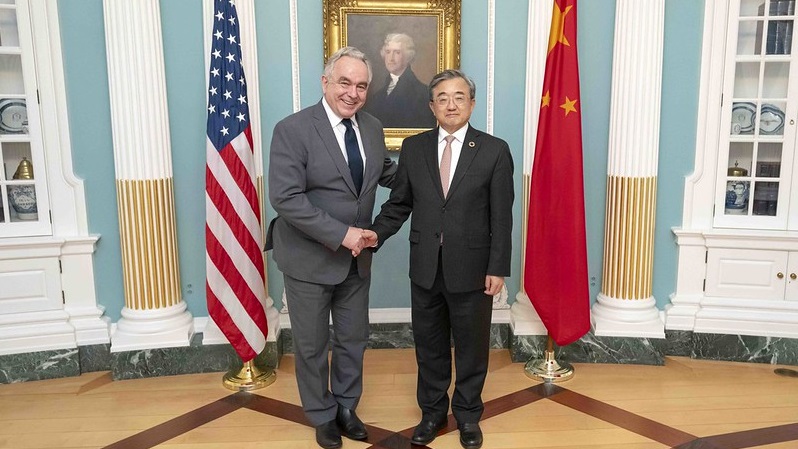
The tariff increase comes shortly after seemingly positive US-China climate talks, where the US noted its concerns about China’s over-production of solar panels and lithium-ion EV batteries.
Chinese officials and industry representatives have condemned the tariffs as protectionist. The China Daily described the tariffs as a clear act of protectionism, while Fu Bingfeng, head of the China Automobile Association, called them “very unreasonable.”
Research from the Centre for Strategic and International Studies suggests that such trade barriers can delay the competitiveness of technologies like solar power and electric vehicles. The U.S. currently imports few electric vehicles from China due to existing tariffs but relies heavily on Chinese lithium-ion batteries, which are crucial for the EV industry.
With China producing most of the world’s EV batteries (about 1/3 worldwide, compared to the US’ output of under 10%), the new tariffs could slow the US energy transition away from fossil fuels by increasing the cost of essential clean energy components.
[Image: US deputy of state Kurt Campbell meets Liu Zhenmin, China’s climate envoy. Credit: US State Department]