According to a report from Bloomberg, a Georgia-based solar plant operated by South Korean company Hanwha Solutions Corp. will receive “hundreds of millions” in USA federal tax credits despite ongoing concerns.
This news comes as the plant sources base components for its panels from China, which the US solar industry distances itself from through tariffs. Not only is this due to a reliance on Chinese imports, but Bloomberg also reports a large concern regarding forced labour.
The Qcells solar plant, in Dalton, Georgia, opened in 2019 and almost doubled its capacity in 2023.
Bloomberg describes unreported filings which show that two of Hanwha’s Chinese suppliers possibly use polysilicon sanctioned by the USA for using forced labour.
Although there is no proof that the compromised components are being used in the plant’s Qcell panels, under federal law products from these sub-suppliers are banned from entering the country.
Bret Manley, Executive Director of the non-profit Energy Fair Trade Coalition, says: “If a Qcells supplier or sub-supplier is on the entity list, then to me it would be really strange for CBP (USA Customs and Border Protection) not to look into Qcells”
Qcells are a key factor in the Biden administration’s plans to develop a fully onshore self-sustaining solar industry, with the company becoming the country’s top provider of solar panels. However, unlike other companies, plant owner Hanwha does not publicly disclose the origin of its polysilicon.
Qcells’ suppliers must demonstrate that they are “compliant with US law” to eliminate forced labour, through affidavits, codes of conduct, and traceability inspections. This is according to Debra DeShong, the company’s VP and Head of Corporate Communications.
DeShong added that, due to these standards, a third supplier was phased out in 2022 as it “failed to meet traceability standards”.
USA import restrictions
USA import restrictions have led to a shakeup of the country’s solar market, as solar panel producers are now working to regulate their supply chains to align with import restrictions.
This is due to the USA’s new self-reliance-focused isolationist policies to solar manufacturing and concerns over human rights violations in China.
The CBP is in charge of enforcing sanctions on Chinese products which are linked with the forced labour of the Uyghur minority in Xinjiang – which Chinese officials call “poverty alleviation”
For this reason, the industry has pushed the CBP to look closer at Qcells and Hanwha’s supply chains. However, no Qcells imports or South Korean solar products have been detained for suspicions of exploitation.
Bloomberg reports that the Uyghur Forced Labor Prevention Act (UFLPA) has detained almost USD$3bn in electronics from China since 2022. Most detained imports have been solar panels and their components – with detentions increasing by 186% in early 2024.
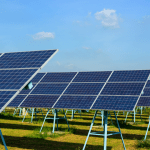
[Image credit: Bloomberg. Image: the Qcells plant in Georgia]