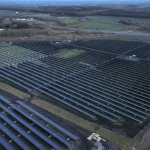
Following a sunny spell in Germany, figures from SEB Research show that solar producers have had to take an 87% price hit over the last 10 days.
This drop in prices has been observed during production hours which, during peak production times, has seen prices fall to below zero. The price received was €9.1 per MWh on average, which is a huge fall from €70.6 as seen during non-production times.
SEB Group issued a statement on Tuesday explaining:
“This is what happens to power prices when the volume of unregulated power becomes equally big or bigger than demand: Prices collapse when unregulated power produces the most.”
What caused this?
SEB Chief Commodities Analyst Bjarne Schieldrop attributed the price drop to a marked increase in solar installations, which has resulted in more produced energy than demand.
Schieldrop noted that summer saw the greatest disparity between the two, as sunny and warm weather led to peak solar production and low demand for energy.
As the price would plummet during the summer’s peak production hours, which was also a time with little requirement for energy, consumers were not seeing the benefits of the low prices.
How do we prevent this?
New installations should be encouraged with subsidies or power purchase agreements, according to Schieldrop, as reduced profitability will threaten Germany’s solar sector. Unless these are implemented, the country could see its rapid solar expansion end.
Schieldrop anticipates that the industry will instead focus on methods to make produced energy more efficient by investing in BESS and the national grid.
He adds: “This will over time exhaust the availability of ‘free power’ and drive solar-hour-power-prices back up. “This again will then eventually open for renewed growth in solar power capacity growth.”
Where else is this happening?
Notably, Germany has faced this issue for a while – along with the rest of the European market. Following Russia ceasing its export of energy to Europe in 2023, countries in the continent have been heavily investing solar infrastructure to achieve self-sufficiency.
Investments in other renewable sources such as wind, and in nuclear energy, has also historically caused drops in power prices.