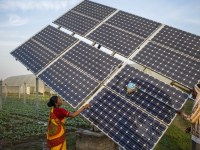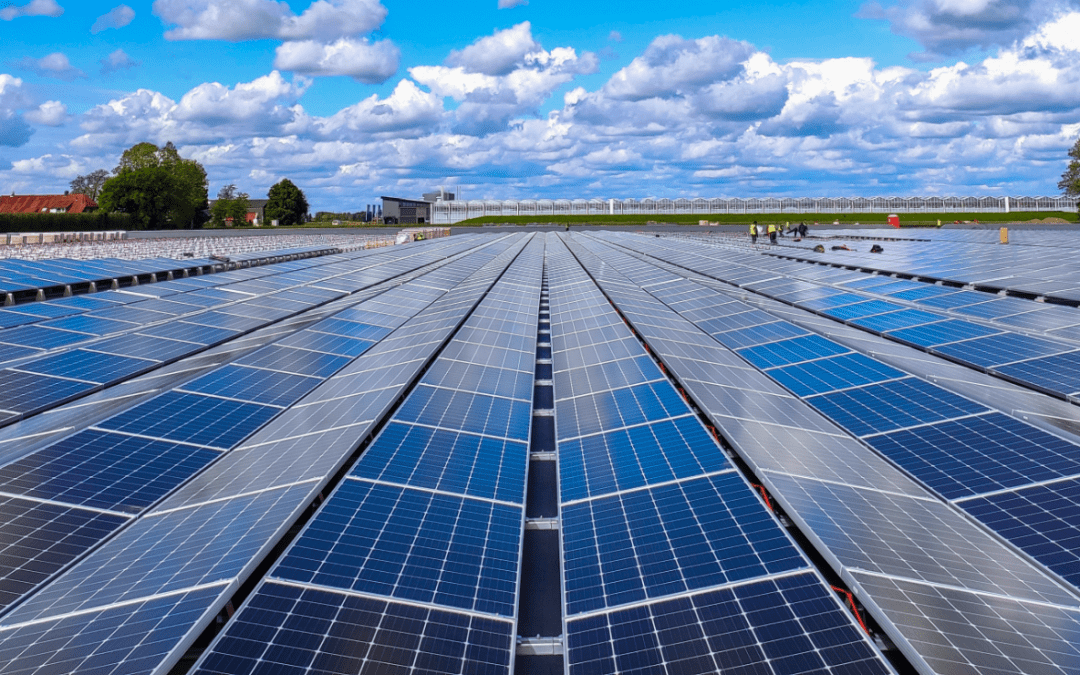
UAE-based renewable power developer AMEA Power has commenced construction on the 24MW Ituka solar PV project in Uganda, set to become the largest in the region upon its completion.
A subsidiary of AMEA Power, Ituka West Nile Uganda Limited, will construct and manage the project. The power generated will be sold to the Uganda Electricity Transmission Company, which is developing a new transmission line to connect the project to the national grid.
Funding for the project was provided by the Emerging Africa Infrastructure Fund (EAIF), which has been facilitating finance connections for project developers in Africa since 2001, raising over US$2.1 billion for 96 projects. The arrangement was finalised during the COP28 conference in Dubai last year and is supported by the African Trade and Investment Development Insurance (ATIDI) project through its Regional Liquidity Support Facility (RLSF).
“We are excited to begin construction on this landmark solar project in Uganda, marking a significant step forward in our commitment to expanding our footprint across East Africa,” said AMEA Power chairman Hussain Al Nowais. “This project aligns perfectly with Uganda’s vision for a cleaner and more sustainable energy future, and we are confident that it will deliver substantial economic and environmental benefits for the country.”
AMEA Power expects to commission the Ituka solar project in the third quarter of 2025. It will be the first utility-scale solar project to reach commercial operation in the West Nile region of north-west Uganda.
The project is also the latest to receive support from organisations such as EAIF and ATIDI. Last year, the EAIF supported the development of a 40MW solar project in Kenya, and in 2019, provided a US$27 million loan to the Kikagati Power Company to build a new hydropower dam on the Kagera River, benefitting both Uganda and Tanzania. In June this year, ATIDI and Globeleq Africa announced plans to develop a 35MW geothermal project in Kenya.
Uganda has already made several investments in its renewable energy sector, with the International Energy Agency (IEA) reporting that renewable power generation currently accounts for 99% of its energy grid. The China Energy Engineering Corporation announced plans to build 500MW of new solar capacity in Uganda in 2020, but these projects have not yet come to fruition.
Additionally, much of Uganda’s energy demand is not met by the electricity sector. The IEA notes that biomass and charcoal burning account for around 90% of the country’s final energy consumption. Expanding the scope of Uganda’s electricity sector will be crucial in the long term.