by Manas Sahu | May 29, 2025 | Europe, Innovation, Press Release
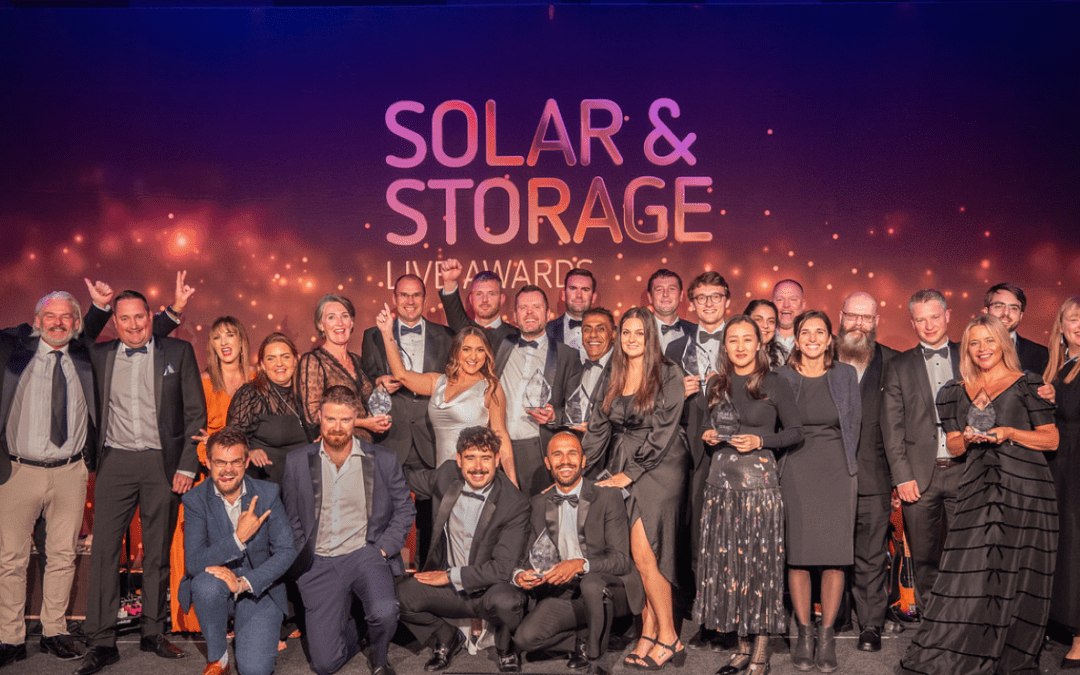
There’s still time to be recognised. The nomination deadline for the 2025 Solar & Storage Live Awards has been extended to Friday, 6th June – giving you extra time to shine a spotlight on the people, projects, and ideas driving progress in solar and energy storage.
Taking place on Tuesday, 23rd September at The Vox in Birmingham, this prestigious event celebrates innovation, inclusivity, and leadership across the renewable energy sector.
Introducing the Diversity & Inclusivity Impact Award
New for 2025, the Diversity & Inclusivity Impact Award honours individuals and organisations making remarkable efforts to create a more inclusive, equitable, and representative industry. This new category reflects the sector’s growing commitment to meaningful change and workplace transformation.
Award Categories Now Open
A total of 13 award categories are available, recognising outstanding achievements across the full spectrum of the solar and storage ecosystem:
-
Contractor of the Year
-
Women in Energy Award
-
Utility-Scale Project of the Year
-
Commercial Project of the Year
-
Residential Project of the Year
-
Innovation Award
-
Lifetime Achievement Award
-
Rising Star Award
-
…and more
Whether you’re leading a pioneering project, breaking new ground in technology, or making a difference in your community, there’s a category for your contribution.
Submitting an entry is simple – just visit the Solar & Storage Live Awards page to review the criteria and submit your nomination.
Key Dates to Remember
-
Extended Entry Deadline: Friday, 6th June 2025 at 18:00
-
Awards Ceremony: Tuesday, 23rd September 2025 at The Vox, Birmingham
Why Participate?
Winning or even being shortlisted for a Solar & Storage Live Award is a powerful endorsement of your work. It boosts your visibility, strengthens your reputation, and aligns your efforts with the best in the business.
Each entry is carefully reviewed by a panel of respected industry leaders, offering a chance for your work to be recognised by your peers and the broader renewable energy community.
Join the Celebration
Don’t miss your opportunity to be part of the industry’s biggest celebration of innovation and impact. Whether you’re an installer, manufacturer, entrepreneur or advocate, this is your platform to be recognised.
Submit your entry today and celebrate the future of solar and storage innovation.
Want to join your community at Solar & Storage Live UK? Register for free here. Or, find a Solar & Storage Live event near you.
by Manas Sahu | May 21, 2025 | Commercial & Industrial Solar
French renewable energy firm GreenYellow has obtained €49 million in financing from Crédit Agricole SA to support the development of a large-scale rooftop solar portfolio in Poland, with a total capacity of 116 MW.
The project is being led by GreenYellow Polska, the company’s local subsidiary, and involves the installation of 2,318 rooftop photovoltaic (PV) systems. These systems are designed for self-consumption and are being deployed on Biedronka supermarket locations nationwide.
This development underscores the strengthening link between renewable energy and the commercial real estate sector, as businesses increasingly turn to sustainable power solutions.
“Backing forward-looking, decentralized energy initiatives like GreenYellow’s Polish solar program is a clear example of our commitment to financing the energy transition,” said Valentin Frechu, renewable energy investment analyst at Crédit Agricole.
by Manas Sahu | May 21, 2025 | Europe, Innovation, Press Release
With just over a week remaining until the nomination deadline, the 2025 Solar & Storage Live Awards are set to spotlight innovation and inclusivity within the renewable energy sector. Taking place on Tuesday, 23rd September at The Vox in Birmingham, this prestigious event will honour outstanding contributions across the solar and energy storage industries.
Introducing the Diversity & Inclusivity Impact Award
A significant addition to this year’s awards is the Diversity & Inclusivity Impact Award, designed to recognise individuals and organisations making exceptional strides in fostering inclusive practices within the sector. This new category underscores the industry’s commitment to building a more representative and equitable workforce .
Award categories now open
The 13 award categories are designed to acknowledge excellence across various aspects of the industry:
- Contractor of the Year
- Women in Energy Award
- Utility-Scale Project of the Year
- Commercial Project of the Year
- Residential Project of the Year
- Innovation Award
- Lifetime Achievement Award
- Rising Star Award
- … and more!
Whether you’re an installer, manufacturer, innovator, or advocate, there’s a category that aligns with your achievements. Submitting an entry is straightforward – visit the Solar & Storage Live Awards page to review the criteria and submit your nomination.
Key Dates to Remember
- Entry Deadline: Friday, 30th May 2025 at 18:00
- Awards Ceremony: Tuesday, 23rd September 2025 at The Vox, Birmingham
Why Participate?
Being recognised at the Solar & Storage Live Awards not only elevates your organisation’s profile but also validates your contributions to the industry’s growth and innovation.
Your entry will be judged by the industry, by an esteemed panel of senior-level professionals, leaders and influencers from the breadth of the industry.
Join the Celebration
Don’t miss the chance to have your work acknowledged on one of the industry’s most prestigious stages.
Whether you’re pioneering new technologies, leading impactful projects, or championing inclusivity, the Solar & Storage Live Awards provide the recognition you deserve.
Submit your entry today and celebrate the future of solar and storage innovation.
Want to join your community at Solar & Storage Live UK? Register for free here. Or, find a Solar & Storage Live event near you.
by Manas Sahu | May 21, 2025 | Storage
Norwegian energy firm Statkraft has received environmental approval for its latest storage initiative in Spain—a 23.97-MW lithium iron phosphate (LFP) battery system planned for development in the Extremadura region.
The approved battery energy storage system (BESS) will be co-located with the existing Talayuela II solar farm, which generates 44.5 MW. With a two-hour storage capacity of 47.74 MWh, the facility is designed to enhance grid stability and optimise the performance of the solar plant.
By integrating storage with renewable generation, the project supports Spain’s broader ambitions for clean energy expansion and improved energy security.
José Miguel Ferrer, Statkraft’s General Manager for Spain and Portugal, highlighted the strategic importance of such technology:
“Renewable energy is essential to tackling climate change and reducing energy price volatility. But to maximise its potential, we must pair it with storage systems that ensure reliability and long-term sustainability.”
This project is part of Statkraft’s wider commitment to modernising energy infrastructure and accelerating the transition to a greener, more resilient energy system in Spain.
To find out more about solar and storage projects in Spain for residential solar, commercial and industrial solar and storage, attend Solar & Storage Live Espana, 25-26 June, Feria Valencia, Valencia and join over 3,000 solar industry professionals. Get free tickets
by Manas Sahu | May 20, 2025 | Commercial & Industrial Solar
Enfinity Global, a leader in renewable energy, has secured a bond facility of up to €100 million from Eiffel Investment Group to support solar PV and energy storage projects across Europe.
The funding will contribute to a portfolio that includes three utility-scale solar projects in Italy’s central Lazio region, scheduled to begin operations by 2026.
This deal marks a significant milestone for Enfinity Global, demonstrating the strength of its investment platform and its ability to deliver complex renewable energy projects. It also represents the company’s first financing for its battery energy storage system (BESS) portfolio in Europe. Enfinity is currently developing a 6.4 GW pipeline, with 5.1 GW in Italy and 1.3 GW in the UK. Energy storage is central to the company’s goal of delivering reliable, around-the-clock renewable energy to industrial and corporate customers while improving grid stability.
“We are thankful to Eiffel Investment Group for supporting our European platform. This financing proves strong investor confidence in our strategy and execution capabilities as we seek to deliver tailored hybrid energy solutions that meet the evolving power needs of our customers,” said Carlos Domenech, CEO of Enfinity Global.
by Manas Sahu | May 19, 2025 | Commercial & Industrial Solar
French company Closura has launched custom-built solar canopies to help car park operators comply with national legislation requiring photovoltaic coverage on large outdoor parking areas.
Since the Climate and Resilience Act came into force in 2021, followed by the APER Act in 2023, outdoor car parks in France larger than 1,500 square metres must be fitted with photovoltaic (PV) canopies covering at least 50% of the surface area between 2026 and 2028.
To support compliance, Closura, a company based in Le Thou in southwestern France, has developed a range of custom-made solar canopies. Available either ready to install or in a plug-and-play version, their key feature is the use of marine-grade aluminium — known for being both lightweight and highly durable.
Designed for local authorities, commercial operators, and large retail sites, the canopies are 100% made in France. They combine robust performance with a sleek aesthetic, available in standard RAL 7016 or RAL 9010 frosted finishes. Depending on the configuration, each canopy can produce up to 7.5 kWp of power. Their modular design allows for easy adaptation to various parking layouts.
The aluminium structure is guaranteed for 25 years and supported by four 110 mm square posts. Installation options include direct anchoring or the use of reinforced base plates. The canopy’s roof is angled between 5 and 10 degrees for optimal solar generation.
Optional extras include removal of corner posts, an EV charging socket, an energy monitoring system, rainwater collection gutters, and an aluminium privacy screen.
(Image: Closura)
by Manas Sahu | May 19, 2025 | Large Scale Utility Solar
Chinese technology firm Leapting Technology is set to provide its unmanned intelligent robotic solutions for the construction of 3.5 GW of solar parks by Indian engineering giant Larsen & Toubro (L&T) in Saudi Arabia.
As part of a cooperation agreement signed on Friday, Leapting will deploy multiple automatic navigation photovoltaic (PV) module mounting robots during the construction phase. These robots will install modules across two infrastructure sites within a single complex, spanning tens of millions of square metres. The use of robotics aims to maintain the project timeline, which has been challenged by a shortage of human resources and extreme working conditions, with temperatures reaching up to 50 degrees Celsius.
The robots have successfully undergone all testing and packaging procedures at Leapting’s factory in Huzhou and are scheduled for shipment to Saudi Arabia in May. Once on site, they are expected to install “hundreds of thousands” of PV modules within six months.
This collaboration with L&T follows Leapting’s successful commercial deployment of an AI-driven PV module installation robot in Australia. According to the company, its module mounting robots are three to five times more efficient than traditional manual methods and can reduce overall construction time by 25%.
by Manas Sahu | May 16, 2025 | Storage
Swiss trade association Swissolar has urged the development of a national energy storage strategy to support the growing adoption of home solar-plus-battery systems across Switzerland.
Currently, approximately one in every two residential photovoltaic (PV) installations in the country is coupled with a battery energy storage system (BESS).
“Over the past three years, the total number of battery storage systems has almost doubled annually,” Swissolar revealed in its inaugural storage market report, published yesterday during the organisation’s Members’ Day event in Lucerne.
A major factor driving the surge in home energy storage is the continued reduction in equipment costs, which Swissolar estimates to be around $115 per kilowatt-hour for 2024.
The report analyses newly installed storage capacity for 2023 and anticipates significant growth last year, with nearly 1 gigawatt-hour (GWh) of additional capacity.
“Battery storage systems play a vital role in securing Switzerland’s electricity supply by enabling the utilisation of domestically generated renewable energy,” commented Swissolar Managing Director Matthias Egli. “They enhance the flexibility of solar power usage and help alleviate pressure on the electricity grid.” Solar energy is projected to constitute approximately 14% of Switzerland’s energy consumption this year.
Swissolar has called for the rapid expansion of energy storage capacity, supported by incentives that encourage owners to operate their systems in ways that bolster grid stability.
“The necessary legal framework is established under the Electricity Act,” stated Swissolar President Jürg Grossen. “It is now incumbent upon all stakeholders to act. The solar industry must optimise self-consumption through batteries and energy management systems. Distribution grid operators must adapt tariffs and taxation to reflect the new energy production landscape. Meanwhile, policymakers should continue to refine the regulatory framework. It is crucial that the solution we helped develop—remuneration based on hourly market prices—is implemented without delay.”
The association advocates for a comprehensive national energy storage strategy to further promote the integration of photovoltaic systems with energy storage.
“Battery storage systems capable of storing electricity temporarily and delivering it to the grid within milliseconds when required must be included in future energy scenarios,” said Swissolar Vice President Gabriela Suter. The organisation emphasises that such a strategy should encompass all forms of energy storage—both seasonal and short-term—to avoid excessive grid expansion.
Swissolar’s report concludes with six key recommendations for policymakers, grid operators, and the industry. It calls for decentralised battery storage systems to be properly integrated within the energy system and highlights the importance of well-designed price signals and financial incentives. Targeted support for the intelligent incorporation of BESS is essential, the report states, while district and regional energy storage could reduce the need for costly grid upgrades. Furthermore, Swissolar stresses the need to facilitate access for BESS to grid balancing energy markets and to eliminate barriers to data exchange.
To find out more about solar and storage projects in Switzerland for residential solar, commercial and industrial solar and storage, and to reach the booming Swiss market, attend Solar & Storage Live Zurich, 16-17 September, Messe Zurich and join over 3,000 solar industry professionals. Discover more.
by Manas Sahu | May 16, 2025 | Commercial & Industrial Solar
The Minister for Energy, Michael Shanks, has reaffirmed the Government’s commitment to scaling up solar energy, pledging to install solar panels on “every possible rooftop” across the United Kingdom.
Addressing the House of Commons, Mr Shanks emphasised the administration’s ambition to maximise the deployment of rooftop solar, noting that public sentiment strongly favours the expansion of renewable energy.
“If there is a rooftop upon which solar panels can be installed, we are keen to pursue that opportunity,” the Minister stated. “This is not a matter of choosing between alternatives – we believe there is significant potential to utilise rooftops throughout the country for solar power generation.”
Earlier this month, the Government announced its intention to require the installation of “solar carports” over car parks at commercial premises, including supermarkets, shopping centres, and office complexes. Furthermore, from 2027, all newly constructed residential properties will be mandated to incorporate solar panels as part of broader environmental legislation.
During the debate, Mr Shanks reiterated the Government’s position: “We have already outlined our aspirations for new housing and industrial buildings, and recently launched a consultation on car park installations. Wherever a rooftop can accommodate solar panels, we are prepared to act. Ground-mounted solar installations will also continue to play a role.”
The Minister also highlighted public backing for solar power, citing recent survey data: “Eighty-eight percent of respondents in the most recent poll expressed support for solar energy, and that figure has consistently remained above 80 percent. This reflects a strong national consensus.”
He added: “Our objective is to establish a clean energy system that enjoys the support of local communities. That requires a balanced approach, utilising a variety of technologies in appropriate locations. However, it is not credible to claim support for energy infrastructure while opposing its development within one’s own constituency.”
The debate also featured contributions from Members of Parliament expressing concern about the impact of large-scale solar developments on rural communities.
Labour MP Terry Jermy, who represents South West Norfolk – the former constituency of Prime Minister Liz Truss – voiced his objections to a proposed solar farm in his area. Denying claims of nimbyism, Mr Jermy stated: “There has been a marked increase in solar farm applications locally, and the issue has become highly contentious. While I fully support the Government’s growth agenda, and am not opposed to solar energy or solar farms per se, it is vital that we approach this matter with pragmatism and due consideration for local communities.”
He also raised concerns regarding the siting of solar developments on high-grade agricultural land: “There is three times more grade five farmland in the UK than grade one. Yet, installations disproportionately occupy grade one land – by a factor of 20. This is clearly unsustainable. In my view, agricultural land graded two and above should be protected and prioritised for food production.”
Former Conservative Minister Sir David Davis expressed similar concerns about the planning process, citing a recent approval in his Goole and Pocklington constituency: “Last Monday, a 3,150-acre solar farm in East Yorkshire was approved with minimal scrutiny. The so-called consultation process was cursory at best, disregarding the legitimate concerns of local residents. This scheme will cover an area equivalent in size to the city of Durham. If we were proposing to build a town of that magnitude, the planning process would be vastly more rigorous.”
In response, Mr Shanks maintained that the planning framework is robust and inclusive: “Communities are regularly consulted, and their input is integral to the final decisions regarding these projects.”
by Manas Sahu | May 15, 2025 | Large Scale Utility Solar
Thrive Renewables, a Bristol-based renewable energy investor, has acquired a 14-MW solar farm in Essex. The Dunmow site, purchased from developer PS Renewables for an undisclosed sum, has completed construction and is expected to become operational later this month.
Once live, the solar farm will generate approximately 14,500 MWh of clean electricity annually—enough to power over 4,390 local homes. Thrive also plans to offer a shared ownership opportunity, enabling the local community to invest in up to a 10% stake in the project.
This acquisition represents Thrive’s first wholly owned ground-mounted solar installation and the third project backed by its joint venture with TopCashback Sustainability, Fair Play Clean Energy Ltd. The venture has a capital fund of GBP 80 million (USD 106.6m/EUR 95.0m) dedicated to advancing clean energy projects across the UK.
by Manas Sahu | May 13, 2025 | Commercial & Industrial Solar, Large Scale Utility Solar
Zelestra, a Spanish renewable energy company, has successfully secured a €146.6 million senior debt package to fund the development of six solar parks across Spain. These projects, which will produce a total of 237 MWdc of energy, are located in Belinchón and Brazatortas.
The financing, structured as a green loan, aligns with sustainability principles and was arranged by a syndicate of banks. It will cover both the construction and long-term operation of the solar assets.
Once completed, the solar parks will contribute significantly to Spain’s energy transition by generating large amounts of renewable electricity. These projects will help reduce CO₂ emissions annually, supporting Spain’s commitment to clean energy. With a combined capacity capable of powering around 150,000 Spanish households each year, the parks will play a vital role in reinforcing Zelestra’s expanding presence in the European renewable energy market.
Luis Alvargonzalez, Zelestra’s Country Manager in Spain, remarked, “Closing this major financing agreement is an important step in delivering these large-scale solar projects on time and on budget for our customers. We are very pleased that the financial community has confidence in Zelestra’s strategy and our team, and we thank BNP Paribas and Rabobank for their support. With construction taking shape, these projects will support hundreds of jobs over the next year and make an important contribution to Spain’s decarbonisation goals.”
This significant step highlights Zelestra’s role in advancing Spain’s renewable energy future and supporting the country’s decarbonisation targets.
With Spain’s solar market remaining a crucial topic, don’t miss your free ticket for Solar & Storage Live España 25-26 June 2025.
by Manas Sahu | May 12, 2025 | Large Scale Utility Solar
Boom Power has announced that it has received approval for a major solar farm project in East Yorkshire. The new development is set to span 1,277 hectares of farmland across the hamlet of Gribthorp, as well as the surrounding areas of Spaldington, Wressle and Howden.
The approved project is expected to generate approximately 400 megawatts of electricity – enough low-carbon energy to power around 100,000 homes. It represents a significant contribution to the UK Government’s target of achieving net-zero emissions by 2050.
This is the first Nationally Significant Infrastructure Project (NSIP) for which the Boom Power team has secured a Development Consent Order.
Mark Hogan, Founder of Boom Power, stated: “Securing development consent for the East Yorkshire solar farm is not only a proud and significant moment for BOOM Power, but marks a major advancement in the UK’s clean energy landscape and demonstrates our capability to deliver nationally significant infrastructure. The project has been meticulously designed to integrate renewable energy generation with environmental enhancements and grid stability considerations. This consent reflects the strength of collaboration, detailed planning, and valuable local input – it is a significant achievement for both our team and the wider region.”
This project also supports the Government’s wider goal of generating 70 GW of solar electricity by 2035.
by Manas Sahu | Mar 21, 2025 | Commercial & Industrial Solar
Prysmian, a global leader in cable systems, has partnered with Edison Energia to secure a long-term supply of 100% renewable energy.
Under the agreement, Edison Energia will provide approximately 25% of Prysmian’s annual electricity consumption in Italy. The energy will come from a new 150 MWp photovoltaic plant in Viterbo province.
This partnership aligns with Prysmian’s broader sustainability strategy, which focuses on reducing carbon emissions and promoting renewable energy adoption. By securing a stable supply of clean energy, the company aims to mitigate environmental impact while ensuring energy efficiency. The collaboration also highlights the growing importance of corporate renewable energy agreements in supporting the energy transition and achieving climate goals.
The European solar PPA market has seen increased corporate demand, with businesses seeking long-term renewable energy agreements to stabilise costs and reduce emissions. Italy, in particular, has experienced significant growth in utility-scale solar projects, reinforcing the country’s commitment to clean energy expansion.
Maria Cristina Bifulco, Chief Investor Relations, Sustainability and Communication Officer at Prysmian, stated: “This agreement is an important milestone in our journey in reducing our CO2 emissions.”
Laura Colli, Chief Purchasing Officer at Prysmian, added: “This agreement is a key component of Prysmian’s sourcing strategy, which emphasises building partnerships with a sustainable supplier base. By securing clean energy sources, we not only ensure a reliable supply chain but also make a positive impact on the environment, contributing to a greener and more sustainable future for the new generations”
by Manas Sahu | Mar 21, 2025 | Commercial & Industrial Solar
Great British Energy has announced its first major investment, allocating £200 million to fund renewable energy projects across England’s public sector. The initiative will see rooftop solar panels and other clean technologies installed at hundreds of schools and hospitals.
Around £80 million will support 200 schools, while nearly £100 million will fund clean energy at 200 NHS sites, helping to cut energy bills and reduce carbon emissions. The first solar panels are set to be installed by the end of summer, with savings expected from the start of the new academic year.
With energy costs soaring in recent years, the NHS, one of the UK’s biggest public sector energy users, has been particularly affected. Currently, only 20 per cent of schools and fewer than 10 per cent of hospitals have solar panels, despite the technology’s potential to reduce costs.
A typical school could save up to £25,000 annually, while an NHS site could save up to £45,000. Over 30 years, the investment is expected to deliver savings of £400 million and support the NHS’s target of reaching net zero by 2040.
Alongside this, £12 million will be invested in local clean energy projects across England, with a further £9.3 million allocated to similar schemes in Scotland, Wales and Northern Ireland.
Great British Energy Chair Juergen Maier said the investment would help schools and hospitals generate their own power, lower costs and strengthen the UK’s energy security.
by Manas Sahu | Mar 20, 2025 | Commercial & Industrial Solar
On Tuesday, Hungary’s green energy production reached record levels. According to data from Mavir, the electricity system operator, industrial facilities generated an all-time high of 3,747 megawatts in the fifteen-minute period starting at 11 a.m. When combined with household and self-generating power plants, total solar energy production reached 6,178 megawatts, the Ministry of Energy (ME) announced on its Facebook page on Wednesday.
It was also reported that as of early March, the total installed capacity of solar power plants had reached 7,831 megawatts. For the first time, this substantial capacity was utilised during Tuesday’s record-breaking solar production of over 6,000 megawatts. Industrial solar power plants, with a total capacity of 4,389 megawatts, alone generated electricity equivalent to 84% of the current gross system load during the peak period.
Officials highlighted that Hungary had initially aimed to reach 6,000 megawatts of installed solar capacity by 2030, a target that was already exceeded last year.
According to the latest data, solar panels accounted for a quarter of Hungary’s domestic electricity production in 2023, the highest proportion in Europe. With the contribution of the Paks nuclear power plant, the country is increasingly capable of covering domestic electricity needs solely from carbon-free sources and is even able to export surplus energy.
The number of solar power plants, including industrial facilities, surpassed 300,000 in February. It is expected that household-sized installations, primarily located on the roofs of family homes, will reach this milestone on their own by March. As capacity continues to expand rapidly, domestic solar energy production is likely to hit new record highs in the coming weeks and months.
by Manas Sahu | Mar 20, 2025 | Commercial & Industrial Solar, Storage
Clean energy developer and operator Fotowatio Renewable Ventures (FRV) Australia has acquired a 140-MW solar project with storage in Victoria, which is in the final stages of permitting.
The vendor, ACEN Australia, is part of the Philippine group Ayala’s ACEN Corp (PSE:ACEN). FRV did not disclose the financial details of the transaction and financed the purchase without external funding.
The Axedale project will feature a photovoltaic (PV) park with a 50-MW/100-MWh battery energy storage system (BESS), located approximately 20 kilometres (12.4 miles) east of Bendigo. Once operational, it is expected to generate nearly 369,500 MWh of electricity annually, enough to power around 80,000 local homes. The integrated BESS will provide two hours of storage capacity.
A grid connection agreement was signed in late 2024 with transmission system operator AusNet and the Australian Energy Market Operator (AEMO).
FRV Australia is a joint venture between Abdul Latif Jameel Energy’s FRV and Canadian investor and asset manager Omers Infrastructure. The company operates eight plants with a combined capacity of almost 1 GW.
by Manas Sahu | Mar 20, 2025 | Storage
In 2024, the United States saw a 66% increase in battery storage capacity, according to the January 2025 Preliminary Monthly Electric Generator Inventory. By the end of the year, the country’s total utility-scale battery storage capacity had exceeded 26 gigawatts (GW). A further 10.4 GW of new battery storage capacity was added during the year, making it the second-largest contributor to new generating capacity after solar energy.
Although battery storage is expanding rapidly, it still represented just around 2% of the total 1,230 GW of utility-scale electricity generating capacity in the United States in 2024. However, the growth of battery storage is set to continue in 2025, with operators planning to add 19.6 GW of utility-scale battery storage to the grid, potentially setting a new record for capacity growth.
Battery storage systems do not generate electricity directly. Instead, they store electricity that has already been produced by power plants or taken from the electrical grid. These systems act as secondary sources of power, storing and supplying energy when needed.
by Manas Sahu | Mar 19, 2025 | Storage
Scottish ministers have approved plans for a 456MW battery energy storage system (BESS) in southern Scotland. The project will be developed by a subsidiary of Gresham House.
The Scottish government’s Energy Consents Unit confirmed the decision on 17 March, following an application submitted by Gresham House Devco Pipeline Ltd in April 2024.
Planning documents indicate that Dumfries and Galloway Council’s Planning Applications Committee did not raise any concerns about the proposal.
Located south of the Gretna 400kV substation, the facility will be developed by Gresham House New Energy, the renewable energy division of Gresham House, the UK’s largest owner of battery storage assets.
The site spans 13 hectares near the England-Scotland border and will be split into two sections: one housing a 56MW battery enclosure and the other a 400MW battery enclosure, each featuring a 132kV substation. This layout accommodates an existing watercourse running through the area.
According to the Energy Consents Unit’s decision letter, there was no opposition from the public. As required by Scotland’s National Planning Framework, the project needed ministerial approval, which was granted unanimously.
The Gretna Green BESS website states that the facility is expected to be operational by late 2025.
by Manas Sahu | Nov 15, 2024 | Large Scale Utility Solar
Neoen has secured 164 MW of solar and agri-solar projects in the latest round of tenders from the French Energy Regulation Commission (CRE), reinforcing its position as a leader in renewable energy with more than 2.5 GW of capacity now committed in France.
The awarded projects, which include four agri-voltaic sites, are set to be commissioned between 2026 and 2029, with the exception of the 73 MW Tourneuve project, slated for 2032 due to necessary grid upgrades. Neoen’s emphasis on combining clean energy with agricultural practices underscores its commitment to sustainable land management.
CEO Xavier Barbaro praised the company’s ongoing efforts to support the energy transition, noting that a robust pipeline of solar, wind, and storage projects will drive continued growth.
by Manas Sahu | Nov 15, 2024 | Large Scale Utility Solar
France has awarded 948 MW of ground-mounted solar PV capacity in the sixth tender round of its PPE2 (Programmation Pluriannuelle de l’Énergie) programme, surpassing the 925 MW initially offered. The auction saw an average tariff of €79.28/MWh, making a 3% reduction from the previous round and continuing a steady decline in solar costs.
The awarded capacity is distributed across 120 projects, ranging in size from 1 MW to 35 MW. Among the regions, Nouvelle Aquitaine secured the largest share with 333 MW, followed by Centre-Val de Loire (194 MW) and Occitanie (110 MW). This round’s results are nearly on par with the fifth tender, which awarded 911.5 MW.
France is set to continue its solar momentum with the next tender round offering 925 MW, scheduled for December 2024. In addition to solar, the eighth PPE2 tender for onshore wind allocated 755 MW across 48 projects, achieving an average tariff of €87.92/MWh, consistent with the previous round.