by Solar&StorageXtra Team | Jan 9, 2026 | Commercial & Industrial Solar, Europe, Large Scale Utility Solar, Market Reports, Storage
The UK solar market is accelerating rapidly, with capacity reaching 19.1GW in 2025 and over 1.8m installations nationwide.
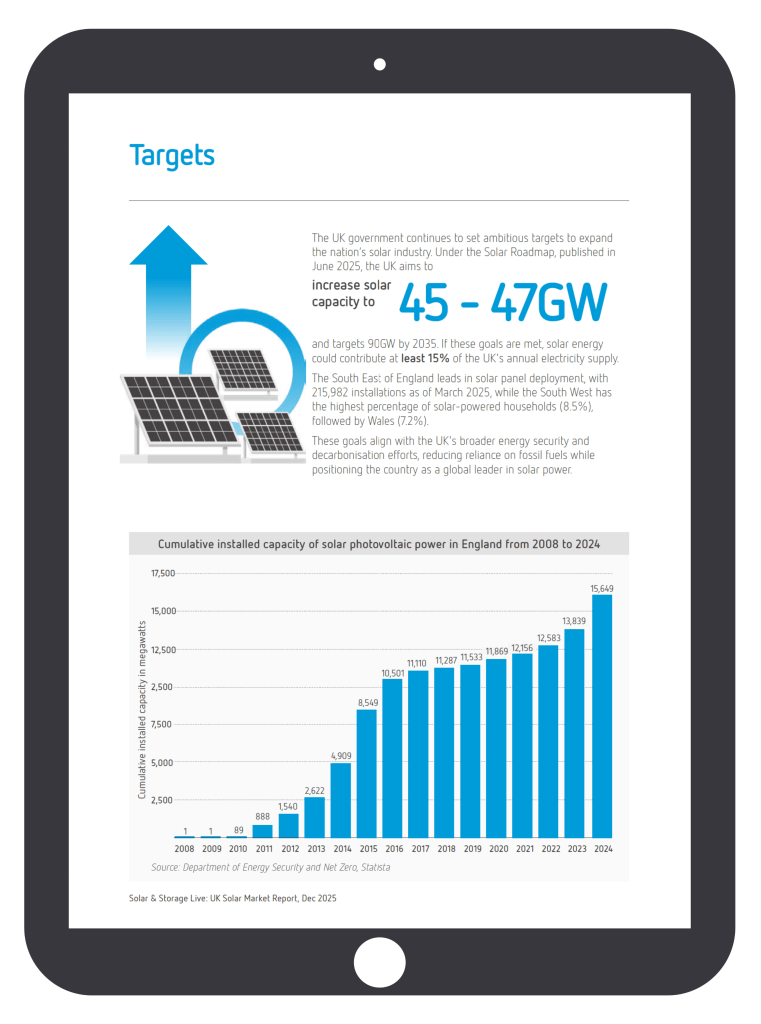 Supported by the launch of Great British Energy (GBE) and a £200m investment in clean energy, the sector is central to Britain’s mission to become a renewable energy superpower.
To navigate this evolving landscape, Solar&StorageXtra presents The UK Solar Market Report 2026, produced by Solar & Storage Live ahead of another busy year of solar and storage shows.
This essential guide offers deep-dive insights into the UK’s 6.8GW battery storage market, forecasts for utility-scale deployment, and the latest trends in commercial and residential solar.
Stay ahead of the UK’s clean energy transition.
Get your free copy of the UK Solar Market Report 2026.
Download the Report
We’re kicking off the year with Solar & Storage Live in London, so don’t miss out on your free ticket to the UK’s largest solar and storage show. Or, find a Solar & Storage Live event near you.
by Solar&StorageXtra Team | Jan 8, 2026 | Europe, Large Scale Utility Solar, Storage
In 2025, renewable energy accounted for 55.9% of Germany’s net public electricity generation, matching the previous year’s share.
According to data from the Fraunhofer Institute for Solar Energy Systems (ISE), wind remained the primary producer, while photovoltaics (PV) rose to second place, overtaking lignite for the first time.
Renewable performance and targets
Wind power generated 132TWh, a 3.2% decrease from 2024 due to poorer wind conditions. Sector expansion remained below national targets, with only 68.1GW of the planned 76.5 GW installed.
Conversely, PV production grew by 21% to approximately 87TWh. This shift aligns with a broader EU trend where solar generation surpassed the combined total of lignite and hard coal for the first time.
Total renewable generation reached 278TWh, falling short of the 346TWh target set for 2025. This shortfall is largely attributed to the slow expansion of onshore and offshore wind.
Furthermore, while solar capacity reached 116.8GW, the sector requires 22GW of new installations in 2026 to meet upcoming targets.
Storage and system impacts
The battery storage sector saw significant growth, with large-scale capacity increasing by 60% to 3.7GWh. Leonhard Gandhi, project manager at Fraunhofer ISE, noted the significance of this trend:
“The ramp-up of large-scale battery storage is fundamentally changing the way the German electricity system works. While effects on short-term flexibility provision are already visible, systemic impacts, e.g., on reserve power plants, can only be estimated at this stage.
“These developments require battery storage to be explicitly considered for expansion planning, system planning, and electricity market design.”
Generation from fossil fuels stagnated as rising natural gas consumption offset a 3.9TWh decline in lignite production. Consequently, carbon dioxide emissions remained stable at 160m tons.
In the trading sector, Germany’s net import surplus fell to 21.9TWh. This decline was driven by lower gas prices and higher electricity exchange prices, which averaged €86.55/MWh – a 10.9% increase over 2024.
Looking ahead
While the 2025 data showed rising exchange prices, 2026 is expected to see a “subsidised decline” in consumer costs.
In November 2025, Germany confirmed an Industrial Power Price Subsidy, which went into effect on 1 January 2026. This will cap industrial electricity prices at 5 cents per kWh, with an aim of protecting energy-intensive sectors like steel and chemicals.
Furthermore, the German battery industry’s rapid growth underscores the nation’s role as a European storage hub. As Germany’s total renewable energy generation has fallen, we may see a shift towards even greater investment in the country’s storage sector.
[Graph credit: Fraunhofer Institute for Solar Energy Systems (ISE)]
by Solar&StorageXtra Team | Jan 8, 2026 | Commercial & Industrial Solar, Europe
European Energy has reached a milestone of 2.1GW of grid-connected capacity in Denmark following the recent addition of the Glejbjerg Solar Park and a battery system at Kvosted Energy Park.
The portfolio, which spans solar PV, wind power, and battery energy storage systems (BESS), now accounts for more than 20% of Denmark’s total onshore renewable capacity, currently estimated at 8.8GW. Of this 2.1GW total, European Energy manages 2GW directly.
Maja Rasmussen, Country Manager for Denmark at European Energy, said:
“We have a strong development portfolio across Denmark, with many solid local partnerships, which only become an asset to the green transition if the projects are actually built and brought into operation.
“With this achievement, we demonstrate our ability to deliver. We look forward to continuing to support local and national climate and energy targets.”
Future demand and infrastructure upgrades
Data from the Danish Energy Agency suggests that electricity consumption in Denmark will double by 2040, necessitating further expansion of the nation’s renewable infrastructure.
In response to these market conditions, European Energy’s 2026 strategy focuses on upgrading existing assets by integrating battery systems. These additions are designed to provide flexibility, allowing renewable assets to store electricity for use during periods of low solar and wind generation.
Poul Jacobsen, EVP and Head of EPC at European Energy, emphasised the technical coordination required for such growth, stating, “Bringing assets from development into stable operation requires strong coordination across engineering, construction and asset management.”
He further observed that “Our experience in Denmark shows how assets can continue to evolve after commissioning, including through battery integration and other technical upgrades. This ongoing optimisation supports both long-term operations and the economic performance of the portfolio.”
The company’s Danish build-out includes more than 40 projects commissioned between 2013 and 2025. Moving forward, the firm continues to prioritise system optimisation and cooperation with local municipalities and stakeholders.
[Image caption: Glejbjerg Solar Park. Image credit: European Energy]
by Solar&StorageXtra Team | Jan 7, 2026 | Commercial & Industrial Solar, Europe
Orrön Energy AB has announced progress across its greenfield platforms, securing grid connections in the United Kingdom and municipal approvals in Germany.
Following the conclusion of the UK grid reform process, the company has secured connections for six large-scale projects with a combined estimated capacity of 2.9GW.
The UK developments include three solar energy projects totalling 1.8GW and three data centre projects with a combined capacity of 1.1GW. With land and grid connections secured, these projects have reached the ready-to-permit stage.
The company expects to receive binding grid offers and specific connection dates during the third quarter of 2026, at which point it will evaluate divestment options.
In Germany, three solar projects totalling approximately 250MW have received approval from local municipalities. Orrön Energy is also advancing a pipeline of large-scale battery projects and expects to receive grid confirmation early this year.
This follows a recent sales process where 310MW of projects were sold for a total consideration of MEUR 18, contingent on reaching specific development milestones.
Daniel Fitzgerald, CEO of Orrön Energy, commented: “Securing the Gate 2 grid connections in the UK enables us to move ahead with some of the discussions that were temporarily paused due to the now concluded grid reform process,” Fitzgerald said.
The company continues to mature its pipeline as part of its strategy to realise value from its development assets. Fitzgerald added: “The German platform has reached a level of maturity where project monetisation is underway.
“With an average sales price of around 55 TEUR (Thousand Euros) per MW during 2025, combined with the scale of our portfolio, I am confident that this will deliver significant value for us moving forward.”
by Solar&StorageXtra Team | Jan 7, 2026 | Europe, Everything Installer, Large Scale Utility Solar
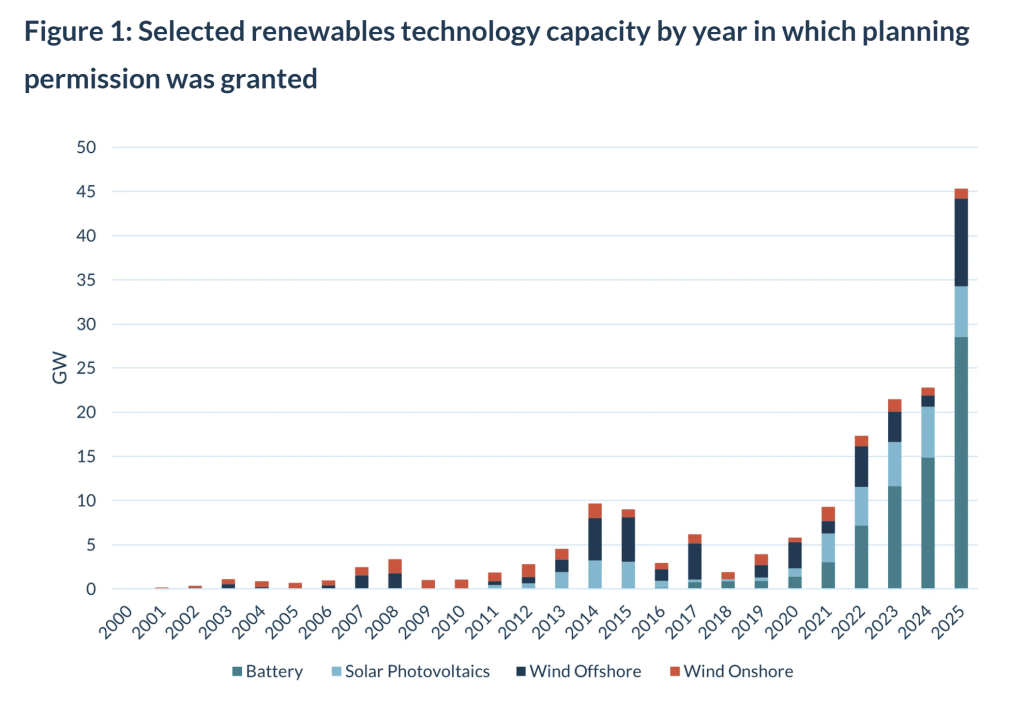
Planning approvals for battery, wind, and solar projects in the UK nearly doubled over the past year, with more than 45GW of capacity approved in 2025.
According to analysis from energy market intelligence service Cornwall Insight, this represents a 96% increase from the 23GW approved in 2024, providing enough potential capacity to power 12.9 million homes.
The growth is primarily due to battery storage, which rose from 14.9GW to 28.6GW in 2024, and offshore wind, whose approvals jumped from 1.3GW to 9.9GW. This shift follows a 400% increase in approvals since 2021.
Factors driving the surge include the maturity of battery technology and developers accelerating the adoption of applications ahead of network connection reforms. Government efforts to streamline planning through updated National Policy Statements have also been credited with reducing delays.
Despite the record numbers, industry experts warn of a gap between planning and delivery. Robin Clarke, Senior Analyst at Cornwall Insight, stated, “On paper, the UK’s renewables pipeline has never looked stronger.
“This record-breaking surge in planning approvals signals real momentum in the UK’s energy transition, with offshore wind and battery storage reshaping what’s possible at scale.”
However, Clarke noted that construction timelines and grid connection delays remain significant hurdles. “Approvals alone don’t generate electricity, and we urgently need to move from ambition to actual delivery of these projects.
“Too much capacity is still stuck in queues or waiting on grid upgrades. Grid bottlenecks remain one of the biggest risks to turning today’s approvals into tomorrow’s power.”
While reforms from NESO and the Planning and Infrastructure Bill aim to address “zombie” projects and legal challenges, Clarke emphasised that further action is required. “The recent grid connection reforms are a significant step forward, and should help clear some of the backlog, but they won’t solve everything.
“We need faster decisions, more investment in the grid, and real collaboration between Government, regulators, and industry. Without that, these record numbers risk becoming just another statistic.”
[Graph credit: Cornwall Insight]
by Solar&StorageXtra Team | Jan 5, 2026 | Europe, Large Scale Utility Solar
Skyworth PV, a global provider of photovoltaic solutions, has finalised an agreement to begin construction on a 10MW distributed power plant in Ocre, a town in Italy’s Abruzzo region.
This development follows the steady progress of a separate 10MW project in Bordeaux, France, as the company seeks to expand its renewable energy network across European markets.
The execution of the Italian agreement “reflects the role of global renewable energy providers in supporting the worldwide energy transition through bankable, long-term solutions.”
Project specs and impact
Located near the border of the Lazio and Abruzzo regions, the 10MW facility is expected to generate approximately 14.059m kWh of electricity annually once completed.
The project has reached the “Ready to Build” (RTB) stage and has secured a position in the Italian government’s feed-in tariff auction mechanism. This status is intended to ensure future grid connection and long-term revenue stability.
The project is being implemented through a joint venture between Skyworth PV and a local Italian partner. Within this structure, Skyworth PV serves as the EPC contractor, responsible for the plant’s overall construction and the supply of essential equipment.
The company utilises this model to integrate its technical manufacturing and financing capabilities with the local partner’s understanding of regional regulations and resources.
This collaboration is designed to establish a “commercially sustainable model of shared risk, shared benefit and complementary strengths,” providing a scalable framework for cross-border partnerships in the clean energy sector.
The start of the Ocre project, alongside ongoing initiatives in France, marks a milestone in Skyworth PV’s efforts to provide reliable solar infrastructure.
By focusing on established markets with mature regulatory frameworks, the company aims to continue its role in the global energy transition and expand access to clean power through localised partnerships and advanced technology.
Interested in Italy’s solar market? Don’t miss your free ticket to Solar & Storage Live Italia – taking place 7-8 October 2026 at the Veronafiere exhibition centre.
by Solar&StorageXtra Team | Jan 5, 2026 | Commercial & Industrial Solar, Europe, Innovation
Swiss International Air Lines (SWISS) and the cleantech company Synhelion have entered into a long-term offtake agreement for sustainable aviation fuel (SAF).
Beginning in 2027, the airline will purchase at least 200 tons of solar-derived jet fuel annually.
The agreement establishes SWISS as the first airline to sign a binding five-year contract with Synhelion, supporting the commercial scale-up of synthetic fuel production. Under the partnership, SWISS acts as a customer, investor, and strategic partner.
“The partnership with Synhelion is a significant step for SWISS on the path to decarbonising our flight operations,” said Jens Fehlinger, CEO of SWISS.
“Sustainable aviation fuels (SAF) are a core element of our sustainability strategy. The offtake agreement with Synhelion sends a strong signal for innovation and responsibility in aviation.”
Creating synthetic solar fuel
In 2024, Synhelion inaugurated DAWN: calling the project ‘the world’s first industrial plant for the production of solar fuels’. The company creates Sustainable Aviation Fuel (SAF), solar diesel, and solar gasoline.
Synhelion’s solar fuel production process involves creating renewable synthetic crude oil, or “syncrude,” using solar heat energy and sustainable materials.
This syncrude is processed in existing refineries alongside fossil crude to produce certified Jet-A-1 fuel. The resulting fuel is compatible with current infrastructure and logistics chains, requiring no technical adjustments for delivery to airports.
Solar fuel can be produced and stored for when sunlight is unavailable, much like solar energy storage, giving the sustainable fuel an edge over fossil fuels.
“The fact that SWISS, a leading airline, has committed early on to adopt our fuels demonstrates confidence in the market readiness of our technology,” commented Philipp Furler, Co-CEO and Co-Founder of Synhelion.
“This partnership is a milestone for the commercial market launch of our fuels – and sets a powerful example to other airlines worldwide.”
Logistics
The partnership also involves logistics provider Kuehne+Nagel, which will purchase a portion of the solar fuel from SWISS. The fuel will be used for air freight via Swiss WorldCargo to help cargo customers reduce their carbon footprints.
This long-term agreement follows an initial delivery in July 2025, when SWISS used Synhelion’s solar fuel in regular flight operations for the first time.
That fuel was produced at Synhelion’s DAWN plant and refined in northern Germany before entering the supply system at Hamburg Airport.
[Image credit: Synhelion]
Don’t miss out on Solar & Storage Live Zürich, taking place 16-17 September 2026. Haven’t registered yet? Get your free ticket by securing your place here.
by Solar&StorageXtra Team | Dec 17, 2025 | Electric Vehicles, Europe, Everything Installer
Segen, a UK-based distributor of renewable energy products, has announced an exclusive six-month distribution partnership with EV infrastructure provider 3ti.
The deal focuses on the Papilio3, a rapid-deploy smart solar EV charging “FastHub” designed to bypass traditional installation barriers like grid constraints and lengthy planning processes.
Infrastructure and training
As part of the collaboration, Segen has installed a Papilio3 unit at its Training Academy and Distribution Centre in Medway, Kent. The facility trains approximately 1,600 individuals annually to address the national shortage of qualified renewable energy installers.
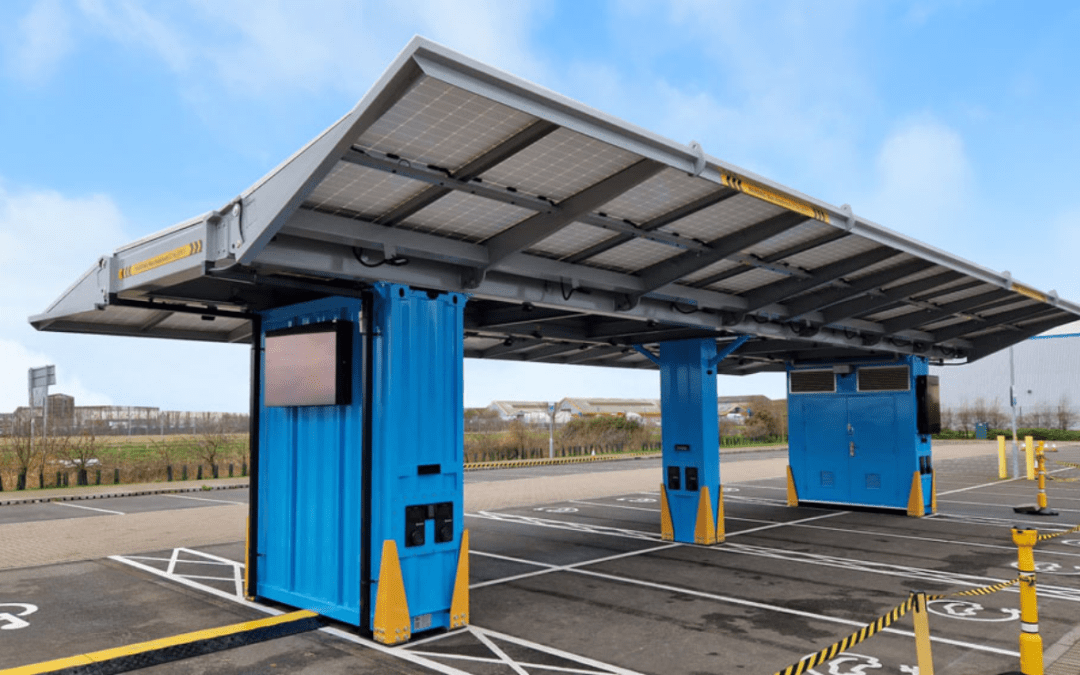
The Papilio3, constructed from an upcycled shipping container, features an integrated 20kWp solar PV array and can charge up to 12 vehicles simultaneously at speeds up to 22kW.
Because the unit is portable and free-standing, it requires no planning permission or major groundworks and can be installed in under a day.
James Galloway, Global Product Director at Segen Ltd, said:
“As a leader in the renewables sector, we are committed to setting an example by using innovative solutions to reduce our carbon footprint. At the same time, we aim to ensure that students have a rewarding and positive experience during their time at the Academy. Providing a convenient and sustainable onsite EV charging solution will help us achieve that goal.”
Market impact
The partnership aims to provide installers with a solution for commercial clients in sectors such as logistics, retail, and business parks. By utilising patented power-management technology, the FastHub operates using a site’s existing electrical infrastructure, removing the need for costly grid upgrades.
Beyond its charging capabilities, the hub includes integrated lighting, CCTV, and a roof cover for weather protection.
While currently serving Segen’s staff and trainees, the hub is also open to the public and nearby businesses, creating an additional revenue stream. The Papilio3 is currently available to order exclusively through Segen.
[Image credit: 3ti]
Get your free ticket to Solar & Storage Live London – the capital’s most exciting solar event. Or, find a Solar & Storage Live event near you.
by Solar&StorageXtra Team | Dec 17, 2025 | Europe, Press Release, Storage
Press Release
In the capacity market auction held in December 2025, R.Power was awarded capacity contracts for five battery energy storage projects with a combined capacity of 1,012 MW and 4,032 MWh.
This further strengthens the company’s position as a leading provider of large-scale energy storage solutions in Poland.
R.Power announces new long-term capacity agreements for five utility-scale battery energy storage projects.
The portfolio includes Dzięgielewo with a capacity of 300 MW and 1,200 MWh, Czekanów with 300 MW and 1,200 MWh, Jawiszów with 202 MW and 808 MWh, Wysoka with 202 MW and 808 MWh, and Wrzosowa with 8 MW and 16 MWh, totalling 1,012 MW and 4,032 MWh. These projects will support the stability of an increasingly renewable power system and enhance the long-term security of electricity supply in Poland.
This outcome builds on R.Power’s successes in previous capacity market auctions. In 2024 the company had already secured contracts for four major BESS projects. These include Herby (5 MW and 10 MWh), Jedwabno (150 MW and 300 MWh), Tursko Wielkie (250 MW and 1 000 MWh), and Gdańsk (250 MW and 1 000 MWh).
Combining all BESS projects with capacity contracts secured, R.Power portfolio in Poland amounts to nine projects with a total capacity of 1 667 MW and 6 342 MWh.
“Reaching a total of around 6.3 GWh of contracted battery storage capacity marks an important moment for R.Power and for the Polish energy system. The scale of our storage portfolio now positions us among the leaders of the emerging BESS market.
“At the same time, we are seeing significant advances in battery technology, which enable the development of increasingly large and complex projects. We remain fully committed to delivering the flexibility solutions that the power system urgently needs,” said Przemek Pięta, CEO and co-Founder of R.Power.
[Image credit: R.Power]
Want to publish a press release? Submit your content here for review by our editorial team.
by Solar&StorageXtra Team | Dec 16, 2025 | Europe, Innovation
Italy has allocated over 1.1GW of solar capacity in a landmark tender reserved explicitly for projects that comply with the European Net Zero Industry Act (NZIA).
The results, published by the energy agency Gestore dei Servizi Energetici (GSE), reveal a highly competitive market ready to support European industrial capacity.
The tender, part of the transitional ‘FER X’ regime, required projects to use modules meeting strict EU manufacturing standards, effectively excluding Chinese-origin components.
Despite these supply chain constraints, demand was robust: 157 applications were submitted, totalling 1.84GW, with 88 projects ultimately securing support.
Competition
The selection process was driven entirely by price reductions, highlighting a market willing to squeeze margins to secure capacity. Successful applicants offered an average discount of 27.696% against the base operating price, with a maximum registered strike price of €73/MWh.
The most aggressive bids exceeded a 41% discount. Crucially, 34 projects – totalling 335MW – were deemed technically eligible but failed to secure funding simply because their offered discounts (mostly under 20%) were not competitive enough to enter the quota.
While small and medium installations were numerous, significant capacity was awarded to utility-scale projects exceeding 20MW, with some individual plants surpassing 100MW.
Geographically, the results confirmed a strong polarisation towards Southern Italy. Sicily secured most of the large-scale infrastructure, followed by Lazio, Puglia, and Calabria.
According to the GSE, this reflects the availability of suitable greenfield land and high solar irradiance in these regions.
Next steps
The publication of the rankings triggers a 36-month deadline for developers to bring these plants online. For the wider industry, this tender serves as a critical stress test for the EU’s solar manufacturing ambitions.
Interested in Italy’s solar market? Don’t miss your free ticket to Solar & Storage Live Italia – taking place 7-8 October 2026 at the Veronafiere exhibition centre.
by Solar&StorageXtra Team | Dec 16, 2025 | Europe, Innovation
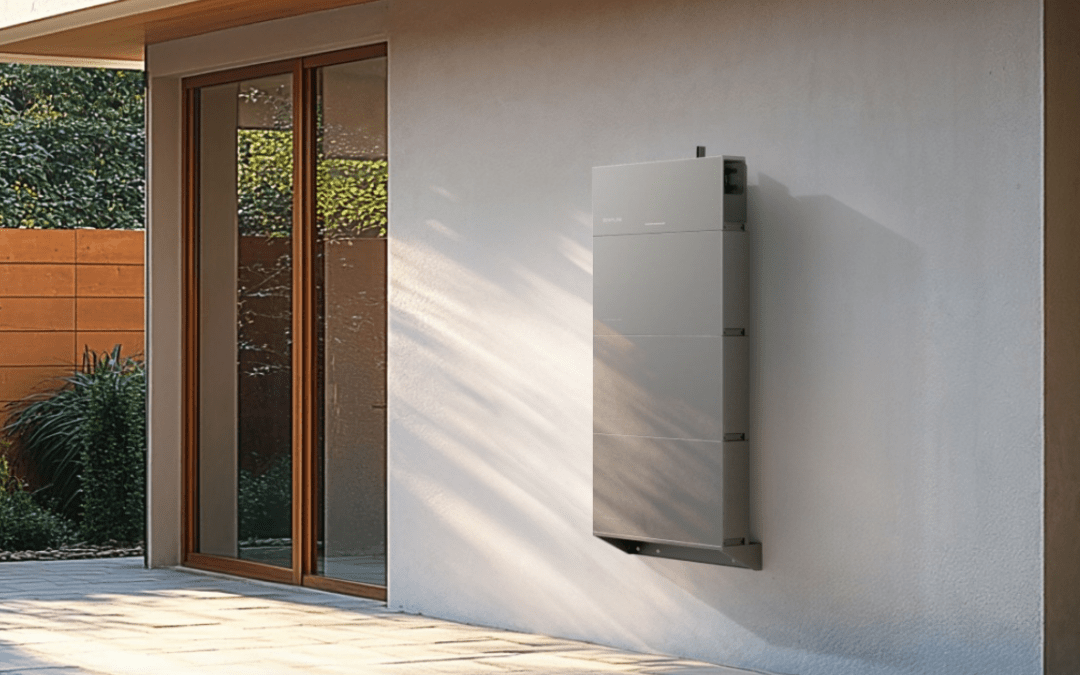
EcoFlow has announced full compatibility between its advanced home energy ecosystem, including the EcoFlow PowerOcean Single-Phase system, and Intelligent Octopus Flux, Octopus Energy’s smart solar-and-battery tariff.
This integration builds on EcoFlow’s existing built-in support for the Octopus Agile and Octopus Flux tariffs in the EcoFlow app.
With the latest upgrade, customers can now connect to Intelligent Octopus Flux, allowing Octopus to automatically manage their EcoFlow system for optimised charging, exporting, and savings.
Once connected through the Octopus app, the Intelligent Octopus Flux tariff assumes complete control of the system’s charging and discharging behaviour. It charges the battery during the most affordable import windows, exports energy during high-peak-rate periods, and helps reduce daytime reliance on the grid.
EcoFlow stated that this “hands-free optimisation increases monthly savings, boosts export income, and delivers a faster and more predictable return on investment for households with solar and a battery.”
Craig Bilboe, EcoFlow’s Country Manager UK, IE, & ANZ, said: “Customers have been asking for EcoFlow to integrate with Intelligent Octopus Flux, and we’re thrilled to deliver it. EcoFlow already supported Agile and Flux within our app, but adding Intelligent Flux brings a new level of automation, safety-led optimisation, and financial benefit to UK households.”
The PowerOcean Single-Phase system, which forms a key part of the compatible ecosystem, features long-life LFP battery technology with more than 6,000 cycles, a dedicated fire prevention module, and a multi-layered battery management system.
Its IP65-rated design supports reliable outdoor installation, and the system offers a 15-year warranty. The system’s capacity is expandable up to 45kWh.
The company concluded that with full Intelligent Octopus Flux compatibility now live, users gain a “fully automated, high-efficiency, high-safety energy ecosystem that actively works to lower bills and enhance home energy returns.”
[Image credit: EcoFlow]
by Solar&StorageXtra Team | Dec 15, 2025 | Europe, Storage
Press Release
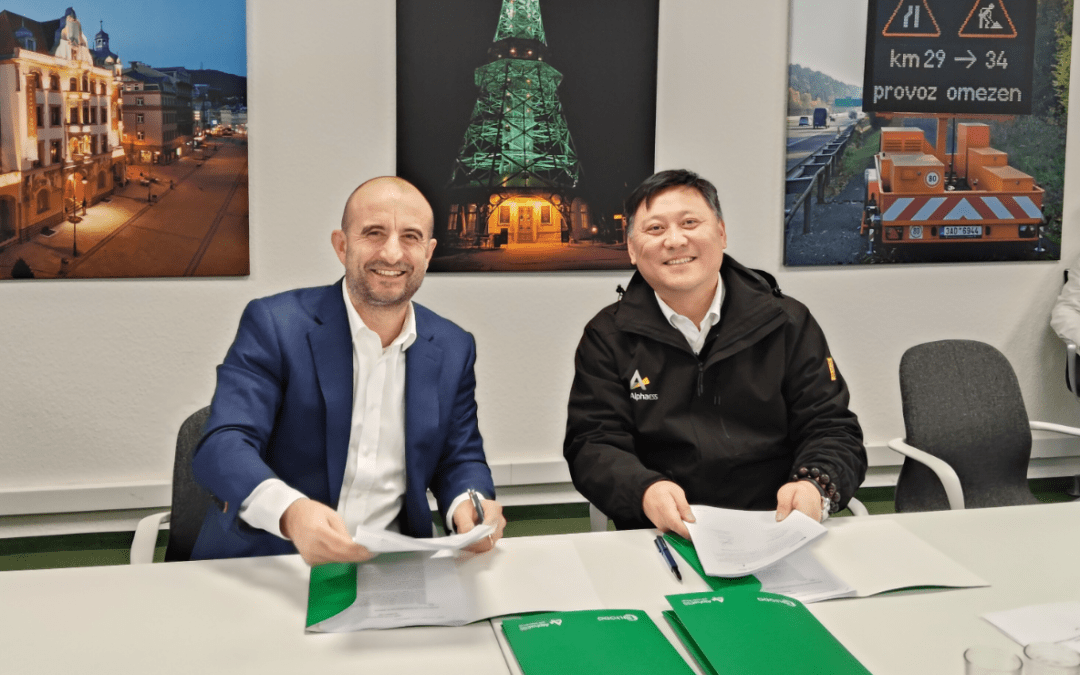
AlphaESS, a global leader in energy storage solutions and a BloombergNEF Tier 1 certified manufacturer for Q4 2025, has formally signed a cooperation agreement with EPC partner Eltodo a.s. to deliver a combined 320MWh large-scale battery energy storage system (BESS) across two strategic sites in the Czech Republic: BESS Chvaletice and BESS Kladno.
Once completed, the projects are set to become the largest Stand-alone energy storage installations in the country, marking a significant step forward in the Czech Republic’s energy transition and grid modernisation efforts.
Aster 5000 deployed at scale to support national grid stability
Under the agreement, AlphaESS will supply 46 units of Aster 5000 for the Chvaletice site and 18 units of Aster 5000 for the Kladno site. The systems will primarily support frequency regulation and other grid ancillary services, enhancing the reliability, flexibility, and responsiveness of the regional power network.
Project background and application needs
As the Czech power system undergoes rapid transformation, the demand for flexible grid regulation resources is steadily increasing.
With renewable energy capacity expanding quickly and traditional balancing units being gradually phased out, the customer has chosen to deploy AlphaESS large-scale energy storage systems to provide fast frequency regulation, stabilise grid frequency, and deliver key ancillary services such as voltage support and reserve capacity.
These large-scale BESS installations also strengthen regional grid resilience, mitigate fluctuations caused by solar and wind generation, and enable higher renewable energy penetration.
Driven by these core needs, the Chvaletice and Kladno energy storage projects were developed to provide essential flexibility and stability support for the Czech grid.
A collaboration built on technical expertise
To meet the demanding requirements of the Czech grid, AlphaESS is supplying the Aster 5000, a 5MWh liquid-cooled energy storage system designed for reliability, rapid deployment, and long-term grid support.
The system features a fully integrated 20-foot design that combines the battery system, BMS, EMS, and fire-protection system into a single container, significantly reducing onsite installation and commissioning time while enabling fast, large-scale rollout.
The Aster 5000 is built with a comprehensive multi-layer safety architecture that ensures robust protection from the cell level to the system level. Its liquid-cooling design, advanced thermal management, and coordinated protection mechanisms deliver stable operation even under demanding grid-side conditions.
To guarantee delivery quality, every unit undergoes a full factory acceptance test (FAT) before shipment, a level of rigor rarely seen in large-scale energy storage manufacturing.
In addition, the system incorporates cell-level bi-directional active balancing, enhancing operational efficiency and extending system lifetime by more than 10%.
This makes the Aster 5000 ideally suited for long-duration grid applications and large commercial and industrial scenarios that require high performance and strong operational resilience.
Eltodo a.s., acting as the EPC, will oversee site development, civil engineering, and project execution. The combined expertise ensures high technical robustness, rapid delivery, and long-term operational reliability.
A strategic milestone for AlphaESS in Europe
With a growing portfolio across the EU region, the Chvaletice and Kladno projects reinforce AlphaESS’s position as a leading global supplier of utility-scale energy storage solutions.
“These projects not only mark a major milestone for the Czech Republic but also reflect AlphaESS’s expanding role in enabling grid modernisation and renewable energy integration across Europe,” said Alfred, CEO of AlphaESS. “We are proud to work with Eltodo and support the country’s transition toward a resilient, low-carbon energy future.”
[Image credit: AlphaESS]
Want to publish a press release? Submit your content here for review by our editorial team.
by Solar&StorageXtra Team | Dec 15, 2025 | Europe, Large Scale Utility Solar
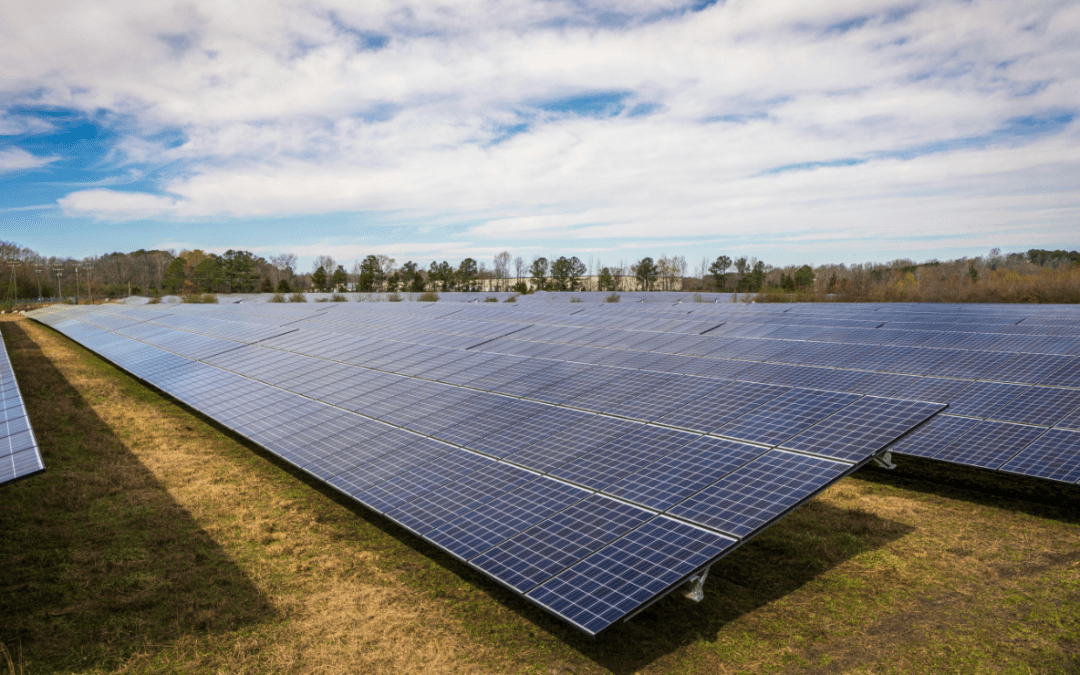
Visiolar has divested a 95MWp utility-scale ready-to-build (RTB) solar PV asset in Brandenburg, Germany.
The single photovoltaic installation was acquired by Sunovis, a platform company owned by Brookfield. Financial advisory firm Capcora exclusively executed the sell-side M&A mandate for the transaction.
The project has achieved full RTB status, and construction is set to commence immediately following the acquisition.
Dr. Janis Meyerhof, CEO at Visiolar, said:
“We are very pleased to have successfully completed the sale of this landmark project with a capacity of 95MWp. The transaction reflects the strength of our development platform and our commitment to bringing high-quality renewable-energy assets to market, even in a challenging environment for stand-alone PV in Germany.
“We look forward to seeing the project realised under its new ownership and to continuing to scale our pipeline across the region.”
The acquisition itself represents one of the larger stand-alone PV assets recently changing hands in the German market, where smaller, fragmented project structures are more common and investor selectivity has increased due to challenging market conditions.
This was acknowledged by Henning Prigge, Director at Capcora:
“This transaction stands out in an increasingly demanding German PV market, where completing a sale of a stand-alone, ready-to-build project requires deep market knowledge and industry network as well as disciplined preparation and an efficient, investor-oriented process.”
The sale highlights both the robustness of the project’s development and the appetite for German solar opportunities. Markus Renz, Managing Director at Sunovis, added:
“This acquisition represents an excellent addition to our growing renewable-energy portfolio in Germany. We remain committed to expanding our footprint in the German solar market and to contributing meaningfully to the country’s energy transition.”
by Solar&StorageXtra Team | Dec 12, 2025 | Europe, Large Scale Utility Solar
RWE has commissioned several new solar farms along the A44n motorway in North Rhine-Westphalia, following approximately eight months of construction. The facilities have a total installed capacity of 86.5MWp.
Utilising about 141,000 solar modules, the plants, located on recultivated land at the Garzweiler opencast mine between Bedburg and Jüchen, are expected to generate enough electricity to supply the equivalent of 27,700 German households.
Katja Wünschel, CEO RWE Renewables Europe & Australia, stated that the project demonstrates RWE’s commitment to expansion, adding: “Next year, we will add several thousand solar modules to the project.
“With wind and solar systems side by side, we are building a renewable energy road on recultivated land along the A44n motorway as a blueprint for further projects in the region.”
A second phase is planned for next year, aiming for 19.9MWp across over 30,600 additional solar modules in the Jüchen municipal area. Subject to planning consent, construction could start in the first half of 2026, with commissioning scheduled for the end of 2026.
Dr. Lars Kulik, CTO Lignite at RWE Power, noted that the projects emphasise that “structural change and the expansion of renewables in the Rhenish lignite area are going hand in hand. There is plenty of space in and around our opencast mines that we are also using for renewables projects.”
He added that RWE Power employees are contributing their expertise to the projects, creating “further prospects for our employees here in the region.”
RWE is also building the Bedburg 3 wind farm, a 60MWp, near the new solar sites. RWE now operates nine solar projects in the Rhenish region, with further photovoltaic schemes, such as the Manheimer Bucht solar farm, currently in the planning stages.
[Image credit: RWE]
by Solar&StorageXtra Team | Dec 12, 2025 | Europe, Press Release, Storage
Press Release
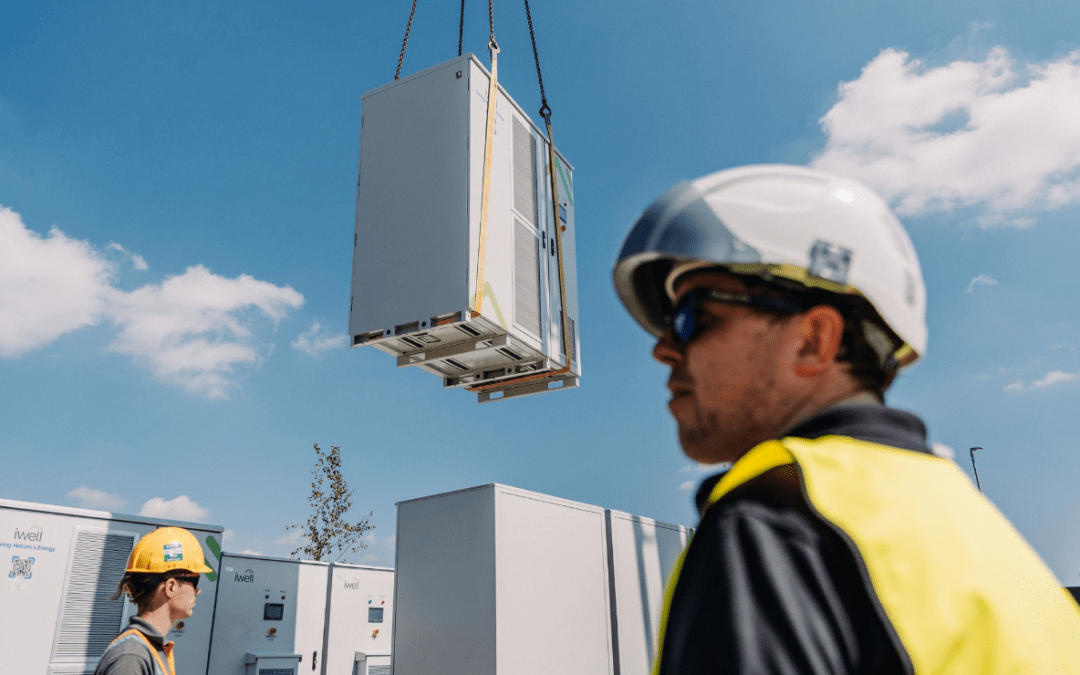
Finnish solar energy company Solnet Group and Dutch energy management software (EMS) and battery specialist iwell are teaming up to help businesses across the UK and Europe build smarter, more resilient energy systems in an increasingly volatile market.
Announced today during the trade mission between Finland and the Netherlands, the partnership primarily targets companies in the UK, Netherlands and Germany, where demand for secure, sustainable, and affordable energy solutions is rapidly increasing.
Utilising its deep technical expertise, Solnet’s strong customer network and full-scope capabilities enable the design, engineering and delivery of large-scale solar and battery installations.
Meanwhile, iwell’s battery storage systems and smart energy management software solutions help businesses optimally use their generated energy. By combining these strengths, an integrated solution emerges that enables companies to generate, store, and better deploy their own energy when the grid is congested or electricity prices spike.
Solution for uncertain energy market
The partnership is cited by both companies as coming at a crucial time, as geopolitical tensions and pressure on the electricity grid are establishing a growing urgency in Europe to become less dependent on external factors.
This is being reflected in the increasing number of businesses seeking control over their energy consumption and supply, as well as ways to reduce costs and ensure continuity.
In the Netherlands, the congested power grid has forced businesses and energy companies to be creative with on-site storage and advanced energy management software.
These applications are generating valuable knowledge that other markets, including Finland, can reference. Solnet sees in iwell’s technology and experience as an opportunity to bring this Dutch advantage to the UK and other European markets more quickly.
Jan Willem de Jong, CEO and founder of iwell, says: “Energy is a key factor for the UK’s security, and also the EU in general. The good news for businesses is that the road to affordable energy independence happens to be based on clean energy.
With this collaboration, we can help businesses in the UK, Finland, Germany and Benelux simultaneously to better manage their energy costs and become more independent.”
Integrated approach for businesses
In practice, the partnership means that Solnet becomes the primary point of contact for customers, overseeing both the build and delivery of the solar energy installations. iwell will provide the batteries and energy management software that controls all energy flows.
Customers will receive an integrated solution combining solar panels, battery storage and an EMS, simplifying implementation while delivering a more efficient, well-balanced energy system.
Arttur Kulvik (Chairman Solnet Group) adds: “By combining our technologies, we can help companies manage their energy more intelligently. They are less dependent on peak prices and can better respond to fluctuations in supply and demand. This makes them more resilient in a changing market.”
Both companies aim to finalise a definitive partnership agreement in the first half of 2026.
Want to publish a press release? Submit your content here for review by our editorial team.
by Solar&StorageXtra Team | Dec 11, 2025 | Europe, Large Scale Utility Solar, Press Release
Press Release
Uniper has taken the decision to start construction of Berryhill Solar Farm just north of Dundee, Scotland. The project has been developed jointly with partner Solar2 and Uniper plans to start the construction process as its sole owner.
The site is supposed to have approximately 152,000 solar panels, with the potential to generate 68.8MWp (45MW) – enough renewable electricity to power the equivalent of over 12,500 UK households each year, one fifth of the population of Angus – contributing to the UK’s net zero targets.
Construction is expected to start in early 2026 with power generation due to start later in the year. The District Network Operator (‘DNO’) for this area – Scottish and Southern Electricity Networks – will be responsible for putting in place the 9km medium voltage (MV) cable to connect the solar farm to the grid point of connection at the Charleston substation on the Kingsway in Dundee.
The solar scheme was first granted planning permission by the planning authority (Angus Council) in 2022, modified in 2024, following the submission of plans by Solar2. Once operational, there will be a community benefit fund associated with the project which will be agreed with the applicable local Community Council – Muirhead, Birkhill and Liff Council.
Want to publish a press release? Submit your content here for review by our editorial team.
by Solar&StorageXtra Team | Dec 11, 2025 | Commercial & Industrial Solar, Europe, Large Scale Utility Solar, Storage
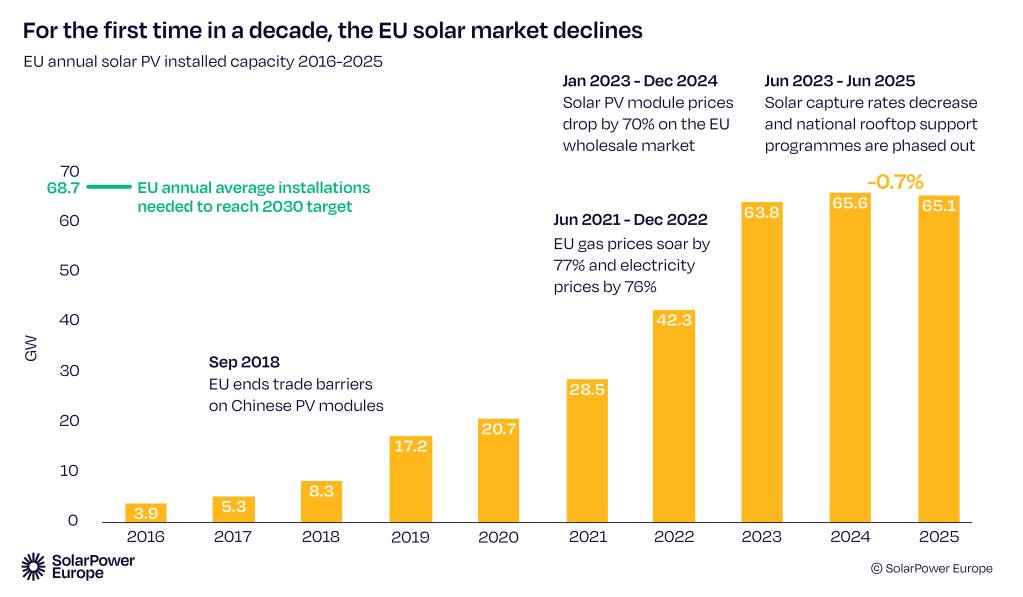
According to a report from SolarPower Europe, the European Union’s solar power boom has faded, with annual installations contracting for the first time since 2016.
The EU installed 65.1GW of solar capacity in 2025, marking a 0.7% decline from the 65.6GW installed the previous year.
Despite the downturn, the bloc surpassed a mid-decade milestone, reaching an estimated 406GW of total installed solar capacity across the EU by the end of the year, exceeding the 400GW target set in the 2022 EU Solar Strategy.
However, the slowdown is projected to continue through 2026 and 2027, with the annual installation returning to 2025 levels only around 2030, with roughly 67GW. This trajectory suggests the EU will fall short of its ambitious 750GW solar target for 2030.
“The number may seem small, but the symbolism is big,” said Walburga Hemetsberger, CEO of SolarPower Europe.
“This interruption in solar market growth comes at a pivotal moment when acceleration is essential. Solar is now delivering for Europe; 13% of Europe’s electricity was solar powered in 2025. In June we provided the most power out of all other sources in the EU.”
Hemetsberger added that it is “critical that policymakers now implement robust frameworks for electrification, system flexibility, and energy storage to ensure solar leads Europe’s energy transition for the rest of this decade.”
The market faltering is attributed to several factors, including an uncertain post-energy crisis environment that has led to cuts in rooftop support schemes and a perceived softening of energy price pressure on households.
Home rooftop solar, which was responsible for 28% of EU installed capacity in 2023, dropped significantly to account for only 14% in 2025.
In a segment shift, solar farms accounted for over 50% of installed solar capacity for the first time. However, this standalone solar segment faces increasing challenges to profitability, with a rising number of negative pricing hours reducing revenues.
Report highlights:
- Germany and Spain retained their positions as the EU’s largest, driven by utility-scale projects.
- France overtook Italy for the third-largest capacity, propelled by strong commercial and utility-scale expansion.
- Italy’s rooftop sector contracted following the phase-out of support schemes.
- Romania and Bulgaria entered the top 10 for the first time.
- The Netherlands’ ranking dropped significantly.
- Half of the top ten markets – Italy, Poland, Greece, the Netherlands, and Portugal – installed less solar in 2025 than in 2024.
Addressing common EU-level barriers, the report’s policy recommendations focus on redefining energy security around renewable sources, adopting a comprehensive strategy for flexibility, improving permitting procedures, boosting the rooftop solar market, and making solar supply chains more sustainable.
[Graph credit: SolarPower Europe]
by Solar&StorageXtra Team | Dec 10, 2025 | Europe, Large Scale Utility Solar
DAS Solar has announced a new cooperation with Hungarian renewable energy company Tiszta Energiák Kft. to supply high-performance photovoltaic modules for an upcoming 18MW ground-mounted solar project in Slovakia.
The installation, scheduled for grid connection in mid-2026, represents a continued expansion of DAS Solar’s market presence within Central and Eastern Europe.
The project will see DAS Solar providing its N-type module series, noting its “high conversion efficiency, strong reliability, and excellent performance in diverse climate conditions.”
The company suggests these characteristics make the product “ideally suited for ground-mounted applications in Slovakia’s rapidly expanding solar sector.”
The 18MW installation is expected to support local and regional sustainability goals by delivering stable, clean power. According to the release, the partnership “underscores their shared ambition to promote high-quality solar solutions across Europe.”
DAS Solar stated it “continues to strengthen its presence in the European market with reliable technologies, scenario-based PV solutions, and long-term partnerships that contribute to the region’s green transformation.”
Tiszta Energiák Kft. is a Hungary-based company with over 16 years of professional experience, focused on developing and implementing PV projects across Central Europe.
by Solar&StorageXtra Team | Dec 8, 2025 | Europe, Large Scale Utility Solar
The European Union plans to intensify efforts to develop cross-border energy infrastructure to alleviate costly bottlenecks and speed up the construction of new power grids, according to draft documents seen by Reuters.
EU member states have heavily funded low-cost renewable energy, but grid upgrades and expansion haven’t kept pace. Consequently, wind and solar output is increasingly being curtailed to prevent network overloads, resulting in wasted electricity and increased costs for consumers.
To tackle this disparity, the European Commission is set to develop a centralised EU plan for cross-border electricity infrastructure. The draft proposal, scheduled for publication on Wednesday 10 December, indicates the Commission will collaborate with grid operators and companies to launch projects.
A lack of grid investment has contributed to Europe’s high energy costs, which are reportedly two to three times greater than those in China and the US – a recurring concern for industries citing that steep bills undermine their competitiveness.
The draft document argues that “Grid development can deliver real added value and cost savings for Europeans.” It estimates that investing €5bn in grids would “shave €8bn off the overall cost of the power system.”
Failure to update infrastructure could lead the EU to curtail as much as 310TWh of renewable power generation by 2040 due to grid constraints. For context, EU households consumed 691TWh of electricity in 2023.
A second draft EU legal proposal shows the Commission intends to modify EU law to permit governments to exempt grid projects from requiring environmental impact assessments, citing years-long delays that can stall projects.
Additionally, small-scale renewable and storage projects would no longer require environmental permits.
The proposal also institutes shorter deadlines for authorities to approve grid-related permits, including a six-month limit for new electric vehicle charging stations.
To cut down years-long delays in some EU countries, permits would be automatically granted if authorities fail to respond within the specified timeframe.
A Commission spokesperson declined to comment on the draft plans. Any changes to EU laws would require approval from EU countries and lawmakers.
by Solar&StorageXtra Team | Dec 8, 2025 | Commercial & Industrial Solar, Europe
Italian energy agency GSE has awarded Contract for Difference (CfD) tariffs to European Energy for five solar projects in Italy, totalling a combined capacity of 513MW.
The utility-scale assets are distributed across Sicily, Apulia, and Molise, establishing a portfolio supported by stable revenue frameworks.
The awarded projects, which include large-scale photovoltaic installations ranging from 20MW to 225MW, represent one of the most substantial solar development portfolios currently advancing under the FerX auction scheme.
The CfD mechanism is set to provide each project with a predictable price structure, offering essential revenue stability throughout its operational lifespan.
Alessandro Migliorini, Director and Country Manager of Italy at European Energy, explained: “The auction outcome provides clarity for the next steps in progressing these photovoltaic projects across Sicily, Apulia and Molise. The awarded tariffs offer a stable framework for the development of these projects.”
A key component of this portfolio is the Vizzini solar park in Sicily. This agri-PV installation is designed to integrate agricultural production with energy generation from solar panels.
Upon completion, the Vizzini park is projected to become the country’s largest solar park and the first of its kind in Italy, contributing significantly to the nation’s renewable energy goals.
Thorvald Spanggaard, Executive Vice President and Head of Project Development at European Energy, added: “This project underscores European Energy’s role in advancing Europe’s green transition.”
“The company’s continued commitment to the Italian market is reflected in this development, which supports Italy’s renewable energy ambitions.”
European Energy has a history in the Italian renewable energy sector, having previously developed and constructed solar and onshore wind parks. This includes the Troia solar park, which was completed in 2021 and grid-connected in 2022, holding the title of Italy’s largest solar park at the time.
As of 2025, European Energy has secured or signed 15 CfDs or Power Purchase Agreements across its various markets.
[Image credit: European Energy]
Interested in Italy’s solar market? Don’t miss your free ticket to Solar & Storage Live Italia – taking place 7-8 October 2026 at the Veronafiere exhibition centre.