by Catie Owen | Jan 13, 2026 | Asia, Commercial & Industrial Solar
The Ministry of Finance and the State Taxation Administration announced on January 9 that China will remove value-added tax (VAT) export rebates for the photovoltaic (PV) industry starting April 1, 2026.
This policy shift marks a significant adjustment to the financial incentives supporting the country’s renewable energy exports.
The new regulations establish different schedules for solar and battery products. While solar rebates will vanish in a single step, the battery sector faces a two-stage reduction.
The adjustment affects a broad range of high-tech components. The solar category includes monocrystalline silicon wafers (specifically those with diameters above 15.24 cm), unassembled cells, and finished modules.
In the battery sector, the policy extends beyond standard lithium-ion packs to include all-vanadium redox flow batteries and essential upstream materials like lithium hexafluorophosphate and lithium cobalt oxide.
Market and industrial outlook
This marks the second major adjustment to the rebate structure in 14 months, succeeding a 2024 reduction from 13% to 9%.
Analysts indicate the update will increase export costs for Chinese PV and battery manufacturers, while some firms may advance exports before the deadline, potentially triggering a surge in shipments in early 2026.
The policy is intended to reinforce China’s industrial policy goals. These focus on industry consolidation and a move towards higher-value, more sustainable manufacturing rather than volume-based growth.
by Catie Owen | Jan 9, 2026 | Commercial & Industrial Solar, Europe, Large Scale Utility Solar, Market Reports, Storage
The UK solar market is accelerating rapidly, with capacity reaching 19.1GW in 2025 and over 1.8m installations nationwide.
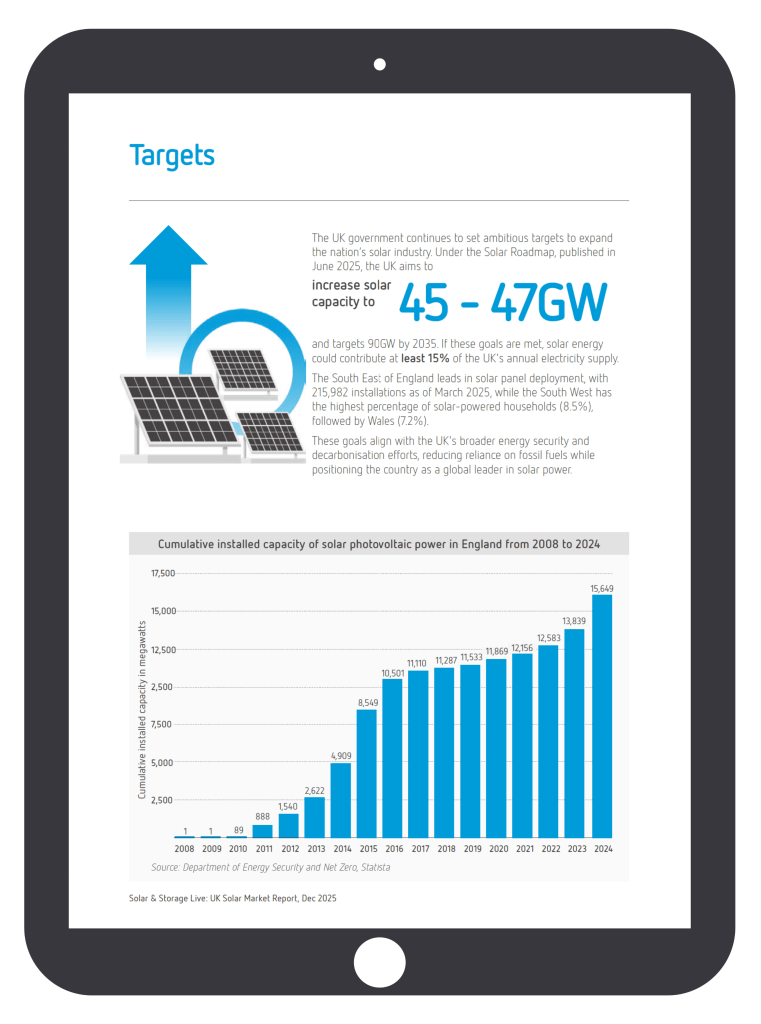 Supported by the launch of Great British Energy (GBE) and a £200m investment in clean energy, the sector is central to Britain’s mission to become a renewable energy superpower.
To navigate this evolving landscape, Solar&StorageXtra presents The UK Solar Market Report 2026, produced by Solar & Storage Live ahead of another busy year of solar and storage shows.
This essential guide offers deep-dive insights into the UK’s 6.8GW battery storage market, forecasts for utility-scale deployment, and the latest trends in commercial and residential solar.
Stay ahead of the UK’s clean energy transition.
Get your free copy of the UK Solar Market Report 2026.
Download the Report
We’re kicking off the year with Solar & Storage Live in London, so don’t miss out on your free ticket to the UK’s largest solar and storage show. Or, find a Solar & Storage Live event near you.
by Catie Owen | Jan 8, 2026 | Commercial & Industrial Solar, Europe
European Energy has reached a milestone of 2.1GW of grid-connected capacity in Denmark following the recent addition of the Glejbjerg Solar Park and a battery system at Kvosted Energy Park.
The portfolio, which spans solar PV, wind power, and battery energy storage systems (BESS), now accounts for more than 20% of Denmark’s total onshore renewable capacity, currently estimated at 8.8GW. Of this 2.1GW total, European Energy manages 2GW directly.
Maja Rasmussen, Country Manager for Denmark at European Energy, said:
“We have a strong development portfolio across Denmark, with many solid local partnerships, which only become an asset to the green transition if the projects are actually built and brought into operation.
“With this achievement, we demonstrate our ability to deliver. We look forward to continuing to support local and national climate and energy targets.”
Future demand and infrastructure upgrades
Data from the Danish Energy Agency suggests that electricity consumption in Denmark will double by 2040, necessitating further expansion of the nation’s renewable infrastructure.
In response to these market conditions, European Energy’s 2026 strategy focuses on upgrading existing assets by integrating battery systems. These additions are designed to provide flexibility, allowing renewable assets to store electricity for use during periods of low solar and wind generation.
Poul Jacobsen, EVP and Head of EPC at European Energy, emphasised the technical coordination required for such growth, stating, “Bringing assets from development into stable operation requires strong coordination across engineering, construction and asset management.”
He further observed that “Our experience in Denmark shows how assets can continue to evolve after commissioning, including through battery integration and other technical upgrades. This ongoing optimisation supports both long-term operations and the economic performance of the portfolio.”
The company’s Danish build-out includes more than 40 projects commissioned between 2013 and 2025. Moving forward, the firm continues to prioritise system optimisation and cooperation with local municipalities and stakeholders.
[Image caption: Glejbjerg Solar Park. Image credit: European Energy]
by Catie Owen | Jan 7, 2026 | Commercial & Industrial Solar, Europe
Orrön Energy AB has announced progress across its greenfield platforms, securing grid connections in the United Kingdom and municipal approvals in Germany.
Following the conclusion of the UK grid reform process, the company has secured connections for six large-scale projects with a combined estimated capacity of 2.9GW.
The UK developments include three solar energy projects totalling 1.8GW and three data centre projects with a combined capacity of 1.1GW. With land and grid connections secured, these projects have reached the ready-to-permit stage.
The company expects to receive binding grid offers and specific connection dates during the third quarter of 2026, at which point it will evaluate divestment options.
In Germany, three solar projects totalling approximately 250MW have received approval from local municipalities. Orrön Energy is also advancing a pipeline of large-scale battery projects and expects to receive grid confirmation early this year.
This follows a recent sales process where 310MW of projects were sold for a total consideration of MEUR 18, contingent on reaching specific development milestones.
Daniel Fitzgerald, CEO of Orrön Energy, commented: “Securing the Gate 2 grid connections in the UK enables us to move ahead with some of the discussions that were temporarily paused due to the now concluded grid reform process,” Fitzgerald said.
The company continues to mature its pipeline as part of its strategy to realise value from its development assets. Fitzgerald added: “The German platform has reached a level of maturity where project monetisation is underway.
“With an average sales price of around 55 TEUR (Thousand Euros) per MW during 2025, combined with the scale of our portfolio, I am confident that this will deliver significant value for us moving forward.”
by Catie Owen | Jan 7, 2026 | Asia, Commercial & Industrial Solar, Storage
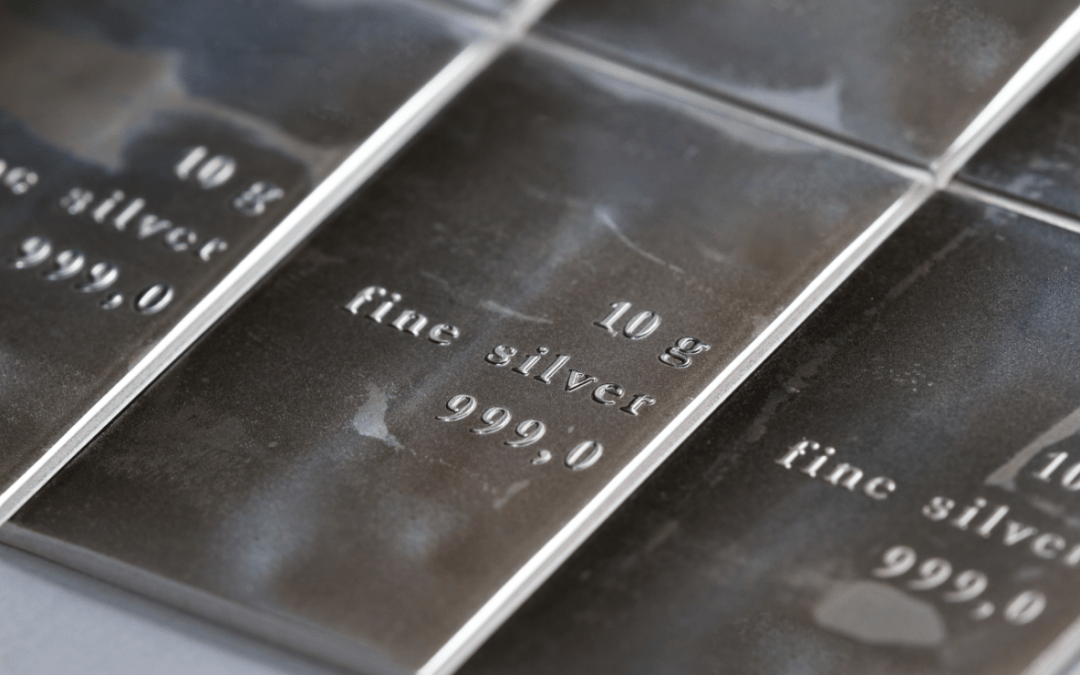
LONGi Green Energy Technology Co. has announced a strategic shift to replace silver with base metals in its solar cell production.
The move comes in response to escalating costs and intense market competition, which have pressured the industry’s profit margins.
Mass production of these base-metal solar products is scheduled to begin in the second quarter of 2026. According to a company filing on 5 January, the transition is intended to “further lower the costs of solar modules.”
The economic pressure of silver
The solar industry has long sought to reduce its reliance on silver, but recent market volatility has accelerated these efforts. According to BloombergNEF, silver now accounts for 14% of the cost of solar modules, a significant increase from 5% two years ago.
The price of silver has seen a dramatic trajectory:
- 2025 performance: The metal’s price surged 150% last year, driven by demand from the tech sector, global uncertainty, and the US Federal Reserve interest rate cuts.
- Current market: As of Tuesday, silver prices rose over 5% to approximately $80.73, nearing the all-time high of $83 recorded in late December.
- Geopolitical factors: Some analysts attribute the recent spike to China’s new export restrictions and increased global uncertainty following the US’ capture of Venezuelan president Nicolás Maduro.
China’s export restrictions
China, a dominant global producer, has limited the number of companies authorised to export silver to 44, which some analysts believe may create a “local surplus”.
Other analysts have compared the situation to previous restrictions on rare earth minerals used to maintain control over critical resources.
The restrictions have drawn criticism from industry leaders, as the metal remains vital for high-growth sectors, including electric vehicles (EVs) and AI data centres. Elon Musk, CEO of EV giant Tesla, commented on his social media platform X: “This is not good. Silver is needed in many industrial processes.”
LONGi’s pivot
LONGi’s pivot is supported by its specific focus on back-contact (BC) solar cells. While “TopCon” technology currently holds a larger market share, LONGi maintains that BC cells are better suited for material substitution.
Beyond solar cell innovation, LONGi said in its Monday statement that it will expand its new energy storage business. The company plans to focus its storage efforts on the domestic Chinese market as well as Europe, the US, and Australia.
by Catie Owen | Jan 6, 2026 | Americas, Commercial & Industrial Solar, Everything Installer
The return of Donald Trump to the White House created seismic changes to the geopolitical energy landscape throughout 2025.
To many onlookers, it seems that 2026 will continue in kind; the USA’s strikes on Venezuela indicate an escalation of the administration’s pro-fossil fuel agenda.
Background overview
January 3rd 2026 saw the US enact a military and economic takeover of Venezuela – arresting controversial president Nicolás Maduro – with Trump stating that the USA will “run” the country for an indefinite amount of time.
Pundits argue that the move is most likely a play at obtaining Venezuela’s oil reserves, which are the world’s largest. Notably, Trump’s press conference following the incursion focused heavily on Venezuela’s “badly broken” oil infrastructure alongside his desire to stabilise the country.
Why Venezuela?
Venezuela sits on more than 300 billion barrels of oil, which make up almost one-fifth of the world’s stock. However, since the 1970s, production has declined from 8% of global supply (around 3.5m barrels per day) to under 1% as of 2026 (under 1m bpd)
As such, increasing oil production in the country offers lucrative benefits for stakeholders.
Trump’s self-proclaimed plan is to introduce US oil companies to Venezuela’s reserves to “revitalise” the infrastructure: “The oil business in Venezuela has been a bust, a total bust for a long period of time,” he claimed at the press conference.
“We’re going to have our very large United States oil companies, the biggest anywhere in the world, go in, spend billions of dollars, fix the badly broken infrastructure, the oil infrastructure, and start making money for the country.”
A spotlight shines on US oil companies
Currently, one US energy company is operating in Venezuela – Chevron. “We continue to operate in full compliance with all relevant laws and regulations,” the company commented in response to the news.
US oil and gas producer ConocoPhillips stated that it is “monitoring developments in Venezuela and their potential implications for global energy supply and stability,” but that it would be “premature to speculate on any future business activities or investments.”
Eyes are on both major US and international energy companies to see if they make their stance on the oil-driven incursion clear.
The US goes “all-in” on fossil fuels
Xtra has previously reported that re-prioritising fossil fuel production is a clear pillar of Trump’s domestic policy. In the president’s inaugural speech, his intention to reinforce the US’ oil industry was encapsulated by his line “we will drill, baby, drill”.
Oil was at the core of 2025’s “Big Beautiful Bill”, which was followed by a tightening of clean energy tax credits and cancellation of grants for renewable projects. The US’ solar industry found itself particularly targeted.
By securing Venezuelan oil, Trump will receive ample fuel for the US’ future power projects and reduce the price of oil domestically. The US will additionally be able to control international access to Venezuela’s oil, to the benefit and detriment of other nations.
Impact on renewable energy
The implications for the renewable sector will be top-of-mind for international developers for several reasons.
American market volatility
Domestically, the “Big Beautiful Bill” continues to create a climate of extreme uncertainty. The US renewable industry relied heavily on the long-term certainty of the now-repealed Inflation Reduction Act (IRA), which provided major clean energy tax credits.
If more subsidies are gutted in favour of a “fossil-first” policy supported by cheap oil imports from Venezuela, many capital-intensive solar and wind projects may no longer be bankable.
International market changes
Internationally, a surge in Venezuelan production could lead to a global oil overabundance. Countries may find it more politically and economically convenient to invest in cheap oil rather than in more expensive green infrastructure.
Should oil begin to undercut the cost of clean energy in this way, the industry will likely see an increase in the cancellation or defunding of green projects worldwide.
Additionally, if the US retreats from clean energy production and manufacturing, the resulting market vacuum will be open to another major renewable power. Nations with an ever-expanding clean technology manufacturing industry, such as China, may be poised to increase their foothold further.
What now?
While Trump’s takeover of Venezuela may offer short-term relief for the US’ petrol prices, it places the global renewable industry at a crossroads.
The current US administration’s aversion to renewable energy is not new news to the industry; however, it leaves time for companies and countries alike to adapt to the situation.
While it presents an opportunity for oil and gas companies to capitalise on new supply, it also offers renewable stakeholders a chance to demonstrate leadership in pursuing renewables amid adversity.
It also serves as a reminder of the benefits of investing in renewable energy infrastructure: energy independence and security, and a cleaner climate.
[Header caption: Donald Trump delivers a press conference after ‘Operation Absolute Resolve’. Image credit: The White House]
by Catie Owen | Jan 5, 2026 | Americas, Commercial & Industrial Solar, Innovation
Alphabet, the technology conglomerate behind Google, has announced an agreement to acquire Intersect, an independent power producer that provides industrial-level projects with hybrid power generation.
The acquisition is for $4.75bn in cash plus the assumption of debt.
Google’s acquisition of Intersect is designed to increase the speed at which data centre and generation capacity come online. The deal includes Intersect’s workforce and several gigawatts of energy and data centre projects currently under construction or in development through an existing partnership with Google.
The news comes as companies expand their data centres to keep up with the increasing demand for accessible AI, with some looking to renewables to manage the technology’s vast energy consumption.
At the end of 2025, Google entered into a 21-year Power Purchase Agreement with multi-energy company TotalEnergies to supply renewable energy to Google’s Malaysian data centre.
Sheldon Kimber, CEO and Founder of Intersect, noted that “Modern infrastructure is the linchpin of American competitiveness in AI. We share Google’s conviction that energy innovation and community investment are the pillars of what must come next.”
Operational structure
Intersect will work closely with Google’s technical infrastructure team on joint initiatives, including a co-located data centre and power site currently under construction in Texas.
Sundar Pichai, CEO of Google and Alphabet, said: “Intersect will help us expand capacity, operate more nimbly in building new power generation in lockstep with new data centre load, and reimagine energy solutions to drive US innovation and leadership.”
Specific assets are excluded from the transaction, including Intersect’s existing operating assets in Texas and its operating and in-development assets in California.
These will continue to function as an independent company supported by its current investors, TPG Rise Climate, Climate Adaptive Infrastructure, and Greenbelt Capital Partners.
[Image credit: Intersect]
by Catie Owen | Jan 5, 2026 | Commercial & Industrial Solar, Europe, Innovation
Swiss International Air Lines (SWISS) and the cleantech company Synhelion have entered into a long-term offtake agreement for sustainable aviation fuel (SAF).
Beginning in 2027, the airline will purchase at least 200 tons of solar-derived jet fuel annually.
The agreement establishes SWISS as the first airline to sign a binding five-year contract with Synhelion, supporting the commercial scale-up of synthetic fuel production. Under the partnership, SWISS acts as a customer, investor, and strategic partner.
“The partnership with Synhelion is a significant step for SWISS on the path to decarbonising our flight operations,” said Jens Fehlinger, CEO of SWISS.
“Sustainable aviation fuels (SAF) are a core element of our sustainability strategy. The offtake agreement with Synhelion sends a strong signal for innovation and responsibility in aviation.”
Creating synthetic solar fuel
In 2024, Synhelion inaugurated DAWN: calling the project ‘the world’s first industrial plant for the production of solar fuels’. The company creates Sustainable Aviation Fuel (SAF), solar diesel, and solar gasoline.
Synhelion’s solar fuel production process involves creating renewable synthetic crude oil, or “syncrude,” using solar heat energy and sustainable materials.
This syncrude is processed in existing refineries alongside fossil crude to produce certified Jet-A-1 fuel. The resulting fuel is compatible with current infrastructure and logistics chains, requiring no technical adjustments for delivery to airports.
Solar fuel can be produced and stored for when sunlight is unavailable, much like solar energy storage, giving the sustainable fuel an edge over fossil fuels.
“The fact that SWISS, a leading airline, has committed early on to adopt our fuels demonstrates confidence in the market readiness of our technology,” commented Philipp Furler, Co-CEO and Co-Founder of Synhelion.
“This partnership is a milestone for the commercial market launch of our fuels – and sets a powerful example to other airlines worldwide.”
Logistics
The partnership also involves logistics provider Kuehne+Nagel, which will purchase a portion of the solar fuel from SWISS. The fuel will be used for air freight via Swiss WorldCargo to help cargo customers reduce their carbon footprints.
This long-term agreement follows an initial delivery in July 2025, when SWISS used Synhelion’s solar fuel in regular flight operations for the first time.
That fuel was produced at Synhelion’s DAWN plant and refined in northern Germany before entering the supply system at Hamburg Airport.
[Image credit: Synhelion]
Don’t miss out on Solar & Storage Live Zürich, taking place 16-17 September 2026. Haven’t registered yet? Get your free ticket by securing your place here.
by Catie Owen | Dec 17, 2025 | Commercial & Industrial Solar, Press Release
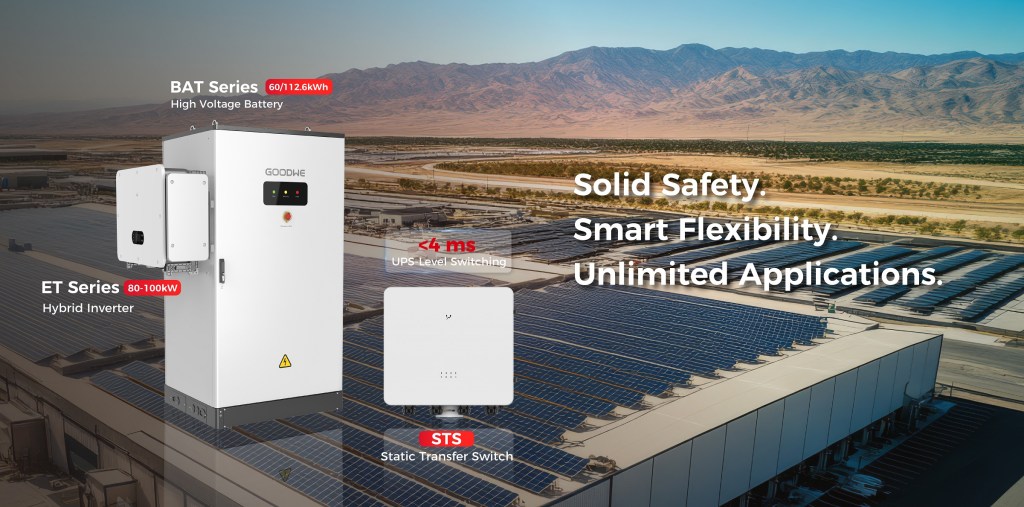
GoodWe is expanding the ET Series three-phase hybrid inverter with new models ranging from 80kW to 100kW, developed specifically for commercial and industrial (C&I) applications.
As a core product of GoodWe’s C&I energy storage portfolio, the ET 80–100 kW delivers higher efficiency and full-chain flexibility through enhanced power harvest and strong backup capabilities.
Seamless integration with GoodWe’s BAT 112 kWh high-voltage battery and Static Transfer Switch 125 kW (STS) positions the ET 80–100 kW as a leading choice for almost all C&I scenarios.
Full-chain flexibility & efficiency from DC to AC Side
The ET 80-100kW significantly increases energy harvest even in complex C&I scenarios, offering eight MPPTs with up to 42A input current, or 21A per string, making it compatible with M10 and M12 module sizes. AC and DC coupling offer great flexibility and efficiency.
AC coupling is ideal for adding storage to existing PV systems without changing the original PV wiring, MPPTs, cables or PV inverters, while DC coupling reduces conversion stages to cut energy losses and improve round-trip efficiency by more than 2%. Together, they enable flexible system configurations for different project requirements.
The ET 80-100kW has been engineered for flexible configurations and easy expansion over the project lifetime. Dual 110A independent battery inputs provide up to 220A charge and discharge capability, delivering the high power required for C&I peak-shaving, backup and fast response to load changes.
All-round safety, ultimate reliability
Safety and reliability are built into every layer of the hybrid inverter. The ET Series has been awarded the TÜV Rheinland Certificate for Comprehensive Environmental Adaptability, demonstrating its ability to operate reliably in challenging outdoor conditions.
The inverter features a smart fan reversal feature that automatically reverts direction of airflow during low power operation, reducing dust accumulation and corrective maintenance.
The ET Series inverter offers advanced features such as Arc-Fault Circuit Interrupter (AFCI 3.0) and Rapid-Shutdown Device (RSD) 2.0 for enhanced PV-side safety.
Terminal temperature monitoring on both AC and DC connections helps prevent overheating and ensures safe operation. Additional protections, including PV reverse polarity protection and ISO protection, guard the system from risks.
The smart DC circuit breaker option can be selected on a case-by-case basis and adds another layer of protection. It automatically trips in the event of reverse polarity, DC terminal over-temperature or internal short circuits, quickly isolating faults to protect both equipment and personnel.
Backup power and flexible expansion for diverse C&I scenarios
When combined with GoodWe’s STS 125kW, the ET 80-100kW delivers UPS-level switching with a transfer time of less than 4 ms, helping critical loads continue operation through grid disturbances without interruption.
The advanced smart port design of the STS 125kW supports multi-purpose use of a single port, including generator start-stop control and flexible switching between generators and large loads.
When paired with GoodWe’s high-voltage BAT 112kWh batteries, the ET 80-100kW forms an easy-to-deploy, optimally matched storage solution. This pairing allows the battery to discharge close to its maximum capacity and ensures high power performance.
As a truly scenario-ready solution, the ET 80–100kW is designed to serve a wide range of C&I sites. Ultra-low noise operation below 60dB enhances user comfort in noise-sensitive environments such as business parks, office campuses and public facilities.
Reverse rotating fans support dust removal and easy maintenance, making the inverter well-suited for dusty outdoor and industrial environments. The continuous peak output power (without grid) of 110 % and 150 % peak output for 10 seconds ensures strong performance with demanding and uneven C&I loads, including motors, compressors and other impact loads.
For larger projects, the ET 80–100kW can be paralleled in systems of up to 15 units via the SEC3000C smart energy controller. SEC3000C also enables mixed-parallel operation of the ET 80–100kW with GoodWe grid-tied inverters, giving more flexibility to expand with storage.
With STS 125kW, BAT 112kWh battery and SEC3000C, the ET Series 80–100kW offers a safe, efficient and flexible C&I energy storage solution that is ready to grow with customers’ future needs.
[Images credit: GoodWe]
Want to publish a press release? Submit your content here for review by our editorial team.
by Catie Owen | Dec 16, 2025 | Asia, Commercial & Industrial Solar
TotalEnergies and Google have entered into a 21-year Power Purchase Agreement (PPA) to supply certified renewable power to Google’s data centre operations in Malaysia.
The agreement will provide a total volume of 1TWh, equivalent to 20MW, sourced from the Citra Energies solar plant located in the northern Kedah province.
The Citra Energies solar farm, scheduled to begin construction in early 2026, was awarded to a partnership between TotalEnergies (49%) and its local partner MK Land (51%) by the Malaysian Energy Commission in August 2023 under Malaysia’s Corporate Green Power Programme (CGPP).
This PPA extends the collaboration between the two companies, following a similar agreement announced in November for renewable power supply to Google’s data centres in the United States.
Giorgio Fortunato, Head of Clean Energy & Power, Asia Pacific, Google, stated, “We’re thrilled to build on our collaboration with TotalEnergies in Malaysia. This agreement is a key part of our strategy to make meaningful investments that benefit the economies where we operate.
“By enabling this new clean capacity, we are supporting local growth of the electricity system hosting our infrastructure.”
The deal aligns with Google’s strategy to introduce new, clean energy capacity to the grid systems where its operations are located.
Sophie Chevalier, Senior Vice President Flexible Power & Integration at TotalEnergies, commented on the development, saying, “We are delighted to strengthen our collaboration with Google through this agreement to supply renewable electricity to their new data centre in Malaysia.”
The power supply agreement is slated to take effect once the project reaches its Financial Close, which is anticipated in the first quarter of 2026.
by Catie Owen | Dec 11, 2025 | Commercial & Industrial Solar, Europe, Large Scale Utility Solar, Storage
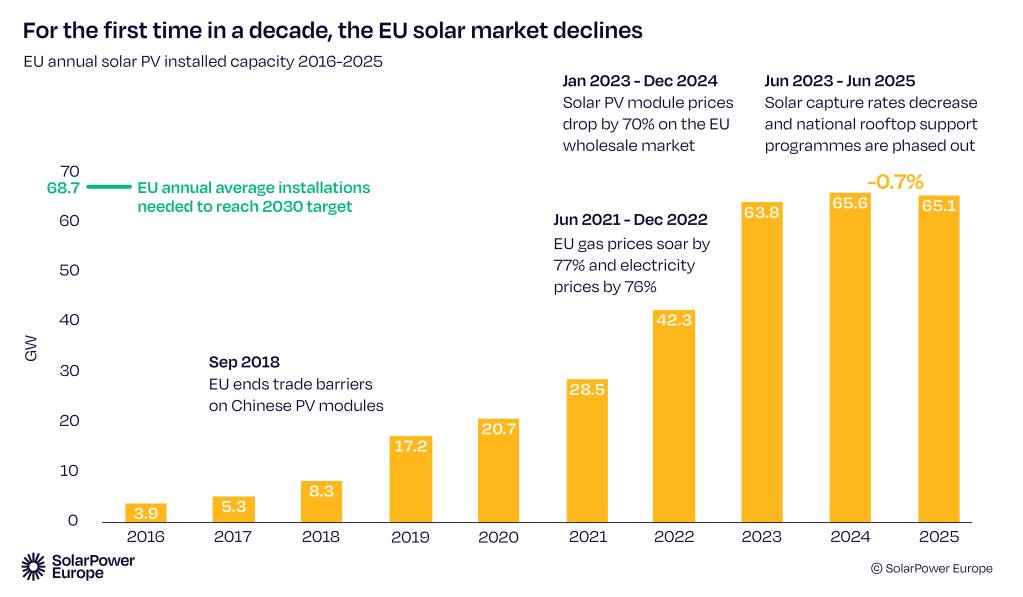
According to a report from SolarPower Europe, the European Union’s solar power boom has faded, with annual installations contracting for the first time since 2016.
The EU installed 65.1GW of solar capacity in 2025, marking a 0.7% decline from the 65.6GW installed the previous year.
Despite the downturn, the bloc surpassed a mid-decade milestone, reaching an estimated 406GW of total installed solar capacity across the EU by the end of the year, exceeding the 400GW target set in the 2022 EU Solar Strategy.
However, the slowdown is projected to continue through 2026 and 2027, with the annual installation returning to 2025 levels only around 2030, with roughly 67GW. This trajectory suggests the EU will fall short of its ambitious 750GW solar target for 2030.
“The number may seem small, but the symbolism is big,” said Walburga Hemetsberger, CEO of SolarPower Europe.
“This interruption in solar market growth comes at a pivotal moment when acceleration is essential. Solar is now delivering for Europe; 13% of Europe’s electricity was solar powered in 2025. In June we provided the most power out of all other sources in the EU.”
Hemetsberger added that it is “critical that policymakers now implement robust frameworks for electrification, system flexibility, and energy storage to ensure solar leads Europe’s energy transition for the rest of this decade.”
The market faltering is attributed to several factors, including an uncertain post-energy crisis environment that has led to cuts in rooftop support schemes and a perceived softening of energy price pressure on households.
Home rooftop solar, which was responsible for 28% of EU installed capacity in 2023, dropped significantly to account for only 14% in 2025.
In a segment shift, solar farms accounted for over 50% of installed solar capacity for the first time. However, this standalone solar segment faces increasing challenges to profitability, with a rising number of negative pricing hours reducing revenues.
Report highlights:
- Germany and Spain retained their positions as the EU’s largest, driven by utility-scale projects.
- France overtook Italy for the third-largest capacity, propelled by strong commercial and utility-scale expansion.
- Italy’s rooftop sector contracted following the phase-out of support schemes.
- Romania and Bulgaria entered the top 10 for the first time.
- The Netherlands’ ranking dropped significantly.
- Half of the top ten markets – Italy, Poland, Greece, the Netherlands, and Portugal – installed less solar in 2025 than in 2024.
Addressing common EU-level barriers, the report’s policy recommendations focus on redefining energy security around renewable sources, adopting a comprehensive strategy for flexibility, improving permitting procedures, boosting the rooftop solar market, and making solar supply chains more sustainable.
[Graph credit: SolarPower Europe]
by Catie Owen | Dec 10, 2025 | Asia, Commercial & Industrial Solar, Everything Installer
JinkoSolar, a global PV and ESS supplier, has commissioned a 9.728MWp rooftop solar photovoltaic system at Bangkok’s Krung Thep Aphiwat Central Terminal, Thailand’s largest railway station.
The installation, carried out by the Hiper Smart Consortium, is intended to meet the high and stable electricity demand for the lighting, cooling, and operational systems of the terminal, which serves over 600,000 passengers daily.
The project, developed by the Provincial Electricity Authority (PEA) for the State Railway of Thailand (SRT), incorporates more than 15,000 high-efficiency Tiger Neo TOPCon modules.
The modules were selected for their superior energy yield and high-power density, features necessary to maximise generation on the station’s vast rooftop and address its intensive, 24/7 energy requirements.
Operating under a self-consumption scheme, the PV power directly offsets electricity purchased from the grid, which is projected to reduce the station’s operational costs and enhance its energy resilience. This project represents a strategic scale-up of Thailand’s distributed PV efforts.
Daniel Liu, General Manager of JinkoSolar Indo-Pacific, said: “Powering a national landmark like this railway station with JinkoSolar’s Tiger Neo technology exemplifies how high-efficiency PV directly translates into economic and operational benefits for critical infrastructure.
“This project sets a powerful, replicable blueprint for Thailand’s clean energy transition, and we are ready to support more such transformative initiatives across the region.”
The initiative highlights the company’s role in delivering large-scale, cost-effective renewable energy solutions for high-impact public infrastructure in support of national sustainability goals.
by Catie Owen | Dec 9, 2025 | Asia, Commercial & Industrial Solar, Press Release
Press Release
DMEGC Solar has been awarded international professional services firm Aon’s 2025 “China Best ESG Employer” and “Best DE&I Practice Award”.
Aon’s “Best ESG Employer” award aims to acknowledge outstanding companies that advance ESG practices and promote sustainable business development, renowned for its rigorous evaluation system.
The six-month selection process involved research on 204 companies from various industries through questionnaires, employee surveys, and executive interviews, ultimately presenting “Best Employer” and other individual honours to 27 enterprises.
DMEGC Solar has consistently placed high importance on ESG governance, integrating ESG initiatives into its sustainable strategic decision-making. The company drives forward with its dual-core strategy, focusing on magnetic materials and new energy, accelerating its low-carbon transition, and continuously deepening technological innovation and green manufacturing.
It adheres to collaborative development with upstream and downstream partners to build a sustainable supply chain and strategic partnerships. Upholding a people-oriented principle, DMEGC Solar practices the ethos of ” Co-creation, Co-ownership, Co-prosperity and Co-sharing,” striving to create a high-quality, inclusive, and safe working environment for its employees.
These awards reflect the high recognition from various sectors of society for DMEGC Solar’s long-standing commitment to actively implementing ESG principles.
Moving forward, DMEGC Solar will continue to enhance its ESG governance and disclosure systems while driving collaborative progress across the industrial chain to lead the industry towards high-quality and sustainable development.
Want to publish a press release? Submit your content here for review by our editorial team.
by Catie Owen | Dec 8, 2025 | Commercial & Industrial Solar, Europe
Italian energy agency GSE has awarded Contract for Difference (CfD) tariffs to European Energy for five solar projects in Italy, totalling a combined capacity of 513MW.
The utility-scale assets are distributed across Sicily, Apulia, and Molise, establishing a portfolio supported by stable revenue frameworks.
The awarded projects, which include large-scale photovoltaic installations ranging from 20MW to 225MW, represent one of the most substantial solar development portfolios currently advancing under the FerX auction scheme.
The CfD mechanism is set to provide each project with a predictable price structure, offering essential revenue stability throughout its operational lifespan.
Alessandro Migliorini, Director and Country Manager of Italy at European Energy, explained: “The auction outcome provides clarity for the next steps in progressing these photovoltaic projects across Sicily, Apulia and Molise. The awarded tariffs offer a stable framework for the development of these projects.”
A key component of this portfolio is the Vizzini solar park in Sicily. This agri-PV installation is designed to integrate agricultural production with energy generation from solar panels.
Upon completion, the Vizzini park is projected to become the country’s largest solar park and the first of its kind in Italy, contributing significantly to the nation’s renewable energy goals.
Thorvald Spanggaard, Executive Vice President and Head of Project Development at European Energy, added: “This project underscores European Energy’s role in advancing Europe’s green transition.”
“The company’s continued commitment to the Italian market is reflected in this development, which supports Italy’s renewable energy ambitions.”
European Energy has a history in the Italian renewable energy sector, having previously developed and constructed solar and onshore wind parks. This includes the Troia solar park, which was completed in 2021 and grid-connected in 2022, holding the title of Italy’s largest solar park at the time.
As of 2025, European Energy has secured or signed 15 CfDs or Power Purchase Agreements across its various markets.
[Image credit: European Energy]
Interested in Italy’s solar market? Don’t miss your free ticket to Solar & Storage Live Italia – taking place 7-8 October 2026 at the Veronafiere exhibition centre.
by Catie Owen | Dec 5, 2025 | Asia, Commercial & Industrial Solar
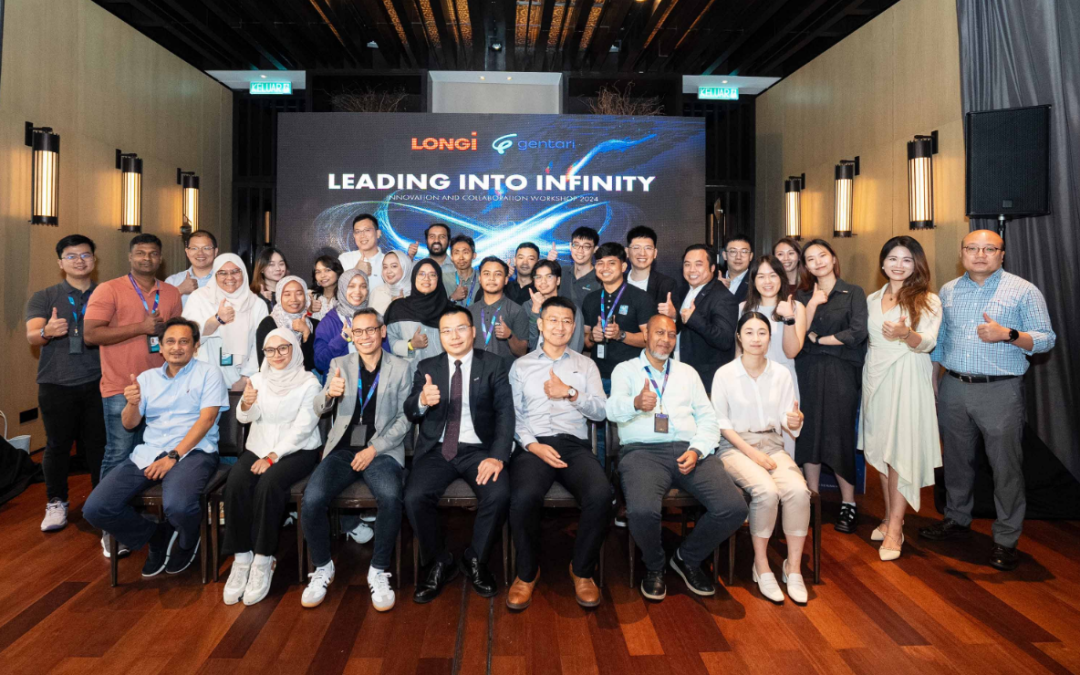
LONGi and Petronas Group, Malaysia’s state-owned energy company, have formalised a strategic cooperation order focused on advancing renewable energy projects across key Asia-Pacific markets. The partnership aims to support a sustainable and low-carbon future.
Petronas, operating through its clean energy subsidiary, Gentari, provides integrated low-carbon solutions encompassing renewable energy, hydrogen, and green mobility.
According to the announcement, LONGi’s technological capabilities, brand influence, and shared commitment to sustainability closely align with Petronas’s strategic vision.
The collaboration is intended to move beyond a buyer-supplier dynamic. A core focus will involve fostering joint research between LONGi’s Central Research Institute and Petronas’s own research entity.
This alliance is designed to accelerate innovation and co-develop high-level demonstration projects showcasing future clean energy technology.
Regarding the cooperation, Frank Zhao, President of LONGi Asia-Pacific, said: “We are delighted to deepen our partnership with Petronas, a key strategic client in the Asia-Pacific region. This collaboration is built on a foundation of shared vision and relentless pursuit of a sustainable future.
“Through our close communication and technical synergy, we are confident that our high-efficiency products and solutions will provide significant value and support Petronas in achieving its ambitious clean energy goals.”
Looking forward, the two companies plan to deepen project cooperation across multiple Asia-Pacific markets. They will also explore new opportunities in renewables, energy storage, and green mobility, working together toward a net-zero future.
This partnership marks a strategic step in LONGi’s global commitment to building lasting customer relationships and promoting the widespread adoption of clean energy.
by Catie Owen | Dec 4, 2025 | Commercial & Industrial Solar, Europe, Press Release
Press Release
BayWa r.e. has successfully completed the sale of two UK solar farms – Clump and Yanel Solar Farm – to Capital Dynamics, an independent global asset management firm specialising in private assets and a leading investor in global green energy.
The projects have both received full planning consent and have a combined capacity of more than 121 MWp, contributing significantly to the UK’s renewable energy generation.
Clump Farm, located in Leicestershire, has an expected capacity of around 77 MWp, with the potential to supply renewable electricity to approximately 19,000 homes each year. Yanel Solar Farm, situated in North Somerset, will provide a capacity of 44 MWp, supplying up to 11,000 households.
Developed under a joint venture with Grüne Energien Solar, the two solar farms have been designed with a focus on improving and protecting the local landscape and environment by improving biodiversity.
With the completion of this transaction, BayWa r.e. continues to strengthen its role as a trusted developer and supplier of high-quality renewables assets across Europe, driving forward the energy transition.
John Milligan, Managing Director of BayWa r.e. in the UK, said: “These projects showcase the powerful results our teams can achieve together. We are proud of the quality and long-term impact of these solar farms and pleased to see them transition to the hands of a strong partner like Capital Dynamics.
“Looking ahead, we remain committed to delivering high-value renewable projects that accelerate the UK’s clean energy transition, in close collaboration with communities and local stakeholders.”
Dr. Daniel Gaefke, COO of BayWa r.e., added: “This transaction builds on a series of successful project sales in recent months, underscoring the strength of our development strategy. The portfolio reflects the scale and excellence we aim to provide – both in the UK and internationally – and highlights our ability to create strategic assets for our trusted partners.”
BayWa r.e. has marked a major year of progress in the UK, reaching a total of 235 MW of consented solar power in 2025, including the company’s first Development Consent Order (DCO) approval for Oaklands Farm Solar Park, and securing planning permission for Redshaw BESS, BayWa r.e.’s largest battery energy storage project in Europe.
The UK development pipeline currently includes over 3.3 GW of onshore wind, solar and battery energy storage projects. BayWa r.e.’s asset operations business in the UK manages over 1.7 GW of solar, onshore wind and BESS sites across the UK and Ireland.
[Image credit: BayWa r.e.]
Want to publish a press release? Submit your content here for review by our editorial team.
by Catie Owen | Dec 3, 2025 | Asia, Commercial & Industrial Solar, Electric Vehicles
Octillion has announced the successful conversion of one of its three Indian battery system manufacturing factories to facility-wide solar energy, establishing a site that now operates entirely on carbon-free power.
This achievement anchors a larger initiative to make all the company’s India-based facilities carbon neutral via solar power generation by 2027.
Global President of Octillion, Paul Beach, commented on the commitment: “India’s electric vehicle market is accelerating rapidly, and we’re committed to ensuring this growth is truly sustainable.
“By converting our manufacturing to solar power, we’re closing the loop – producing the clean energy storage solutions of tomorrow, using clean energy today. This is just the beginning of our journey toward our goal of carbon-neutral operations across all our India facilities by 2027.”
The Pune facility, which spans approximately 8,200 square meters, generates 3GWh of total annual battery capacity.
Its new rooftop solar installation is set to provide approximately 545MWh of dedicated clean energy annually, fully covering the factory’s entire power requirements. The conversion began in June 2024 and achieved full operational status by July 2025.
Nikhil Parchure, Senior Vice President at Octillion, noted the company’s role: “Accelerating cleaner, more efficient transportation in India is central to our mission as a global battery company.
“With three large-scale battery manufacturing facilities in India… Octillion is uniquely positioned to serve the fast-growing needs of India’s electric vehicle sector… We will continue to advance our efforts in India and globally by providing cutting-edge, safe battery systems, working to leave the least environmental impact possible in the transportation sector.”
by Catie Owen | Dec 3, 2025 | Commercial & Industrial Solar, Europe, Innovation
Plans for the UK’s largest floating solar energy project at the Port of Barrow have been approved by Westmorland & Furness Council’s Strategic Planning Committee.
Associated British Ports (ABP), the UK’s leading port operator, confirmed the decision on Monday 24 November, which marks a significant step forward in the company’s commitment to sustainable energy solutions.
The Barrow EnergyDock project involves the installation of a floating solar array of up to 40MWp on Cavendish Dock. This renewable energy source is expected to generate enough electricity annually to power the equivalent of approximately 14,000 homes, with the energy primarily intended for use by the advanced manufacturing sector.
The project aims to help control electricity costs at the port, reduce carbon emissions, and improve energy resilience for local industry.
The installation will feature around 47,000 panels mounted on floating pontoons, fixed at an optimum angle for generation and secured to the dock bed by an anchoring system.
The proposed array would cover around one-third of the dock’s water area. This floating approach is intended to preserve valuable port land for operational and manufacturing uses, supporting local jobs and the wider economy.
Kirsten Abbott, Senior Project Manager (Energy Generation and Storage) at ABP, commented on the development, stating: “We are delighted to receive approval for this landmark project, which represents a significant step towards cleaner, more resilient energy for the region.
Barrow EnergyDock demonstrates our commitment to delivering innovative solutions that support industry and reduce carbon emissions.”
The project not only highlights ABP’s dedication to renewable energy but also underscores its efforts to secure economic growth for the Barrow and Furness area. Bryan Davies, Divisional Port Manager (Northwest and Scotland), added:
“The development marks a major milestone in realising ABP’s exciting plans for the Port of Barrow, which are designed to drive economic growth and support the region’s advanced engineering sector. We look forward to taking this project forward.”
Get your free ticket to Solar & Storage Live London – the capital’s most exciting solar event. Or, find a Solar & Storage Live event near you.
by Catie Owen | Dec 2, 2025 | Commercial & Industrial Solar, Europe
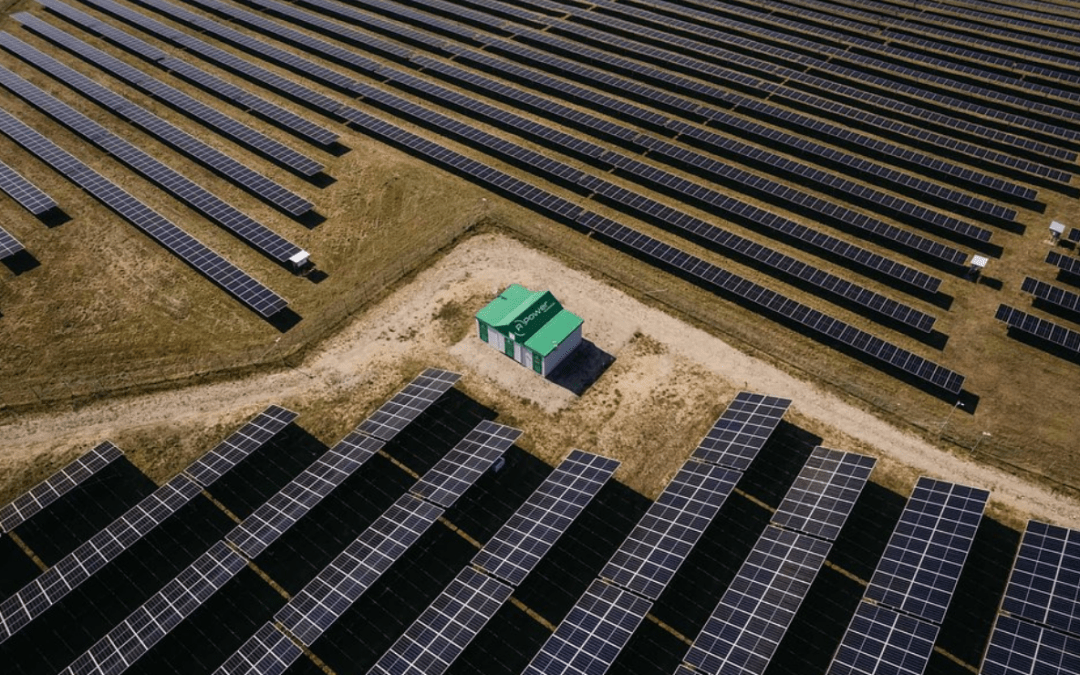
R.Power, a European independent renewable energy producer, has begun construction on its Klotze Solar Park in Saxony-Anhalt, Germany.
This project signifies the company’s first utility-scale photovoltaic installation in the country.
The Klotze Solar Park, which has an installed capacity of 20MW, was awarded a 20-year support contract through the German Renewable Energy Sources Act (EEG) auction system.
This installation is a key development in R.Power’s strategy for expansion into Western Europe and supplements the company’s existing German portfolio, which includes over 115MW of solar capacity recently secured in the German Innovation Auction organised by Bundesnetzagentur.
Speaking on the development, Przemek Pięta, CEO and Co-Founder of R.Power, said: Germany is a strategically vital market for R.Power, and the start of construction at Klotze Solar Park is a milestone for our company.”
He added that the project “follows our recent success in the German Innovation Auction, where we secured 115.5MW of capacity for new PV projects integrating innovative elements such as storage and hybrid configurations.”
Pięta concluded that, “Together, these achievements demonstrate our strong development capabilities and our long-term commitment to the German market.”
Once operational, the Klotze installation will provide clean electricity to thousands of households, thereby supporting Germany’s decarbonisation objectives and contributing to the national renewable energy mix.
The project aligns with R.Power’s approach of combining photovoltaic and battery energy storage assets to increase system flexibility and value creation, reinforcing its capacity to execute projects across various European markets.
[Image credit: R.Power]
by Catie Owen | Dec 1, 2025 | Asia, Commercial & Industrial Solar
The Embassy of Switzerland in China has installed its first PV system, moving toward a greener future with technology provided by GoodWe.
This initiative places the Swiss Embassy among the early diplomatic missions to embrace renewable energy solutions as the world pursues carbon neutrality.
Explaining the motivation behind the project, Swiss Ambassador to China, Jürg Burri, noted Switzerland’s high priority on sustainable buildings. “This year, we’ve taken many measures to make this embassy green,” Burri said.
He detailed the challenge of reducing the embassy’s substantial energy use, stating that conventional measures would only achieve a limited cut. “Adding photovoltaics helps us make a real, substantial difference,” he affirmed.
GoodWe supplied a tailored Building-Integrated Photovoltaic (BIPV) solution, featuring 143 Galaxy Ultra 335W solar panels and an SDT series inverter. The 47.9kWp system is projected to generate approximately 58,856kWh in its first year, providing power to the ambassador’s residence and the main office building.
The system’s design also had to respect the nearly 50-year-old historic embassy building in Beijing’s Chaoyang District. Ambassador Burri stressed this point, stating, “While we’re making this embassy green, we must respect it as a historic building.”
He added, “We were looking at the product which is not changing the optics or the aesthetics of the embassy too much.” GoodWe’s frameless Galaxy Series panels were selected for their ability to integrate seamlessly with the architecture.
The installation was completed efficiently and with minimal disruption. Ambassador Burri remarked that “The installation was really smooth, very fast.”
Daniel Huang, CEO of GoodWe, highlighted the company’s role in the transition, stating, “This project is another example of how GoodWe delivers integrated solutions that meet specific energy needs while making installation and maintenance simple.”
Ambassador Burri concluded by positioning the partnership within the broader context of international climate action: “China leads in manufacturing capability, and Switzerland is at the forefront of innovation. This partnership shows how our strengths can come together to support global climate goals.”
[Image caption: The Embassy of Switzerland in China. Image credit: GoodWe]