by Catie Owen | Jan 28, 2025 | Everything Installer, Innovation
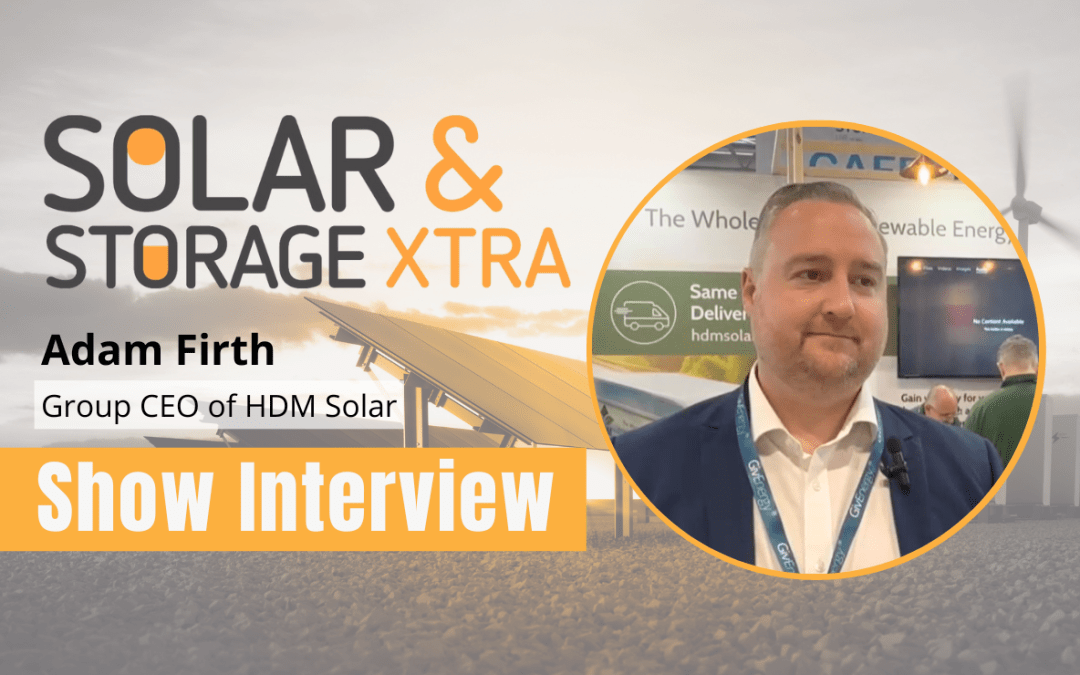
At last year’s Solar & Storage Live in Birmingham, Adam Firth, Group CEO of fast-growing solar wholesaler HDM Solar, shared his insights into the business’ offerings, current industry trends, and expansion plans.
In this interview, Adam discussed HDM Solar’s journey, the rise of battery technology, and the importance of attending events like for the renewable energy sector.
Interview with Adam Firth, Group CEO of HDM Solar
“Battery adoption… remains a specialist field. It’s not as simple as plug-and-play, so I think the industry still has a lot to learn about commercial battery systems.”
Xtra: Can you talk a bit about what HDM has to offer?
Adam: We’re a national wholesaler looking to expand our branch network. We specialise in solar panels, inverters, batteries, mounting systems, and various other accessories. It’s a significant investment for us as a 15-month-old company.
At Solar & Storage Live we showcase everything we offer – from solar panels to batteries, inverters, and microinverters.
Xtra: What industry trends are currently of note?
Adam: Over the summer, particularly in June and July (2024), we saw the market slow down. Installations were down by about 25–30%.
Batteries are the big trend right now. We’re seeing significant demand for batteries from major brands like GiveEnergy, Sunsynk, EcoFlow, Selectronic, and Duracell. I’d say batteries are the biggest growth area this year.
On the commercial side, battery adoption is becoming more frequent, but it remains a specialist field. It’s not as simple as plug-and-play, so I think the industry still has a lot to learn about commercial battery systems.
Xtra: Why should manufacturers, business owners, and installers attend Solar & Storage Live UK?
Adam: This is the place to be in the UK. The event is now hosted in Birmingham and London and various locations worldwide, and everyone in the industry needs to be here. It’s an opportunity to showcase innovations, connect with all the biggest brands in the world, and network.
It’s hard work for the week but also a lot of fun. If you’re not here, you’re definitely missing out!
Missed out on Solar & Storage Live, or want to come back for more? Don’t miss the London edition from 2-3 April 2025 – or find a Solar & Storage Live event closer to home.
by Catie Owen | Jan 28, 2025 | Everything Installer, Large Scale Utility Solar
Press Release
Enfinity Global, a global leader in renewable energy, has secured connectivity for 2 GW of utility-scale solar PV and wind projects in the states of Rajasthan, Uttar Pradesh, Maharashtra, and Karnataka in India.
This strategic development represents a key advancement in the company’s efforts to expand its renewable energy portfolio and contribute to India’s energy transition.
The combined capacity of this 2 GW portfolio is expected to produce electricity equivalent to powering approximately 4.7 million households and avoiding 49 million metric tons of CO2 annually.
The power generated from these projects is earmarked to cater to government utilities, as well as commercial and industrial (C&I) customers.
“This milestone underscores our commitment to accelerating India’s renewable energy transition, with the aim of contributing to its ambitious goal of deploying 500 GW of non-fossil fuel energy capacity by 2030,” said Carlos Domenech, CEO of Enfinity Global.
“Our global presence enables us to create capital and operational synergies, and when combined with our local capabilities, it positions us as a strategic and reliable partner for the long-term energy needs of our customers in India.”
With over 1 GW of projects expected to enter the construction phase this year, including those in Maharashtra and Karnataka starting in Q1 2025, Enfinity Global’s renewable energy portfolio in India now totals ~3.3 GW in various stages.
This includes 240 MW already operational, 2 GW with granted connectivity, and an additional 1 GW of solar PV, wind, and energy storage projects in development. The company recently awarded a 300 MW Solar-Wind Hybrid project through SJVN’s competitive bidding process in Q4 2024.
Over the next 3 years, Enfinity intends to develop and commission renewable power plants to supply over 5 GWh of renewable electricity annually, including through Power Purchase Agreements (PPAs) with C&I customers.
The company is also taking significant steps to align the necessary capital to execute its portfolio in India through collaboration with national and international financial partners.
In May 2024, it closed a $135 million junior financing agreement with the Canada Pension Plan Investment Board (CPP Investments) to support the development and construction of solar and wind projects across the country.
by Catie Owen | Jan 14, 2025 | Everything Installer, Video
At Solar & Storage Live in Zürich, Solar&StorageXtra spoke to Maâty Bouanane – Country Leader for France at Enphase Energy.
Maâty discussed the company’s global mission and its plans going forward, the technology leading its charge into the future, and any trends set to impact the solar and storage industry.
Interview with Maâty Bouanane, Country Leader for France, Enphase Energy
“Installing solar is the first step then adding the battery and its intelligence. In this, Enphase is leading the way.”
Xtra: What is Enphase Energy’s mission, or any achievements from the past year?
Maâty: Enphase Energy was established in 2006 and is an American company listed on the New York Stock Exchange. We are the inventor of micro-inverter technology.
There is a reason why we are called Enphase Energy: we want to be seen as both a micro-inverter company and an energy provider – (ranging) from conversion DCAC to storage, to intelligence, to EV chargers.
We want really to build a complete solution both branded by Enphase and using the software of Enphase. With only one app, you’ll (be able to) have everything in hand.
Xtra: Why does Enphase Energy stand out in the industry?
Maâty: Enphase is a unique company with a unique product: we are both the inventor of micro-inverter technology and leaders in its market.
What makes us stand out first are the warranty and the quality of the product. We are the only company to offer a 25-year warranty on the micro-inverters.
Additionally, customer experience is key for us. We have a dedicated customer service that you can call from 24-7 – this is appreciated by both the installers and the homeowners. They also appreciate the individuality of our app, which is easy to use and install.
Finally, the performance of the product makes Enphase stand out because we make the conversion on the panel-wise, which makes our product both more durable over time and has better performance in the 25-year period.
Xtra: Can you identify any trends in the solar and storage industry that will influence the global uptake of renewable energy?
Maâty: Right now, the market is moving towards self-consumption. People now are trying more to produce energy at the same place where we consume the energy. The market will move this way – where each house and each customer will become the consumer.
Installing solar is the first step then adding the battery and its intelligence. In this, Enphase is leading the way.
For example, with our dynamic tariff, you can charge and discharge the battery automatically on the peak hours when the tariff is high, and discharge when the tariff is low.
Xtra: What was your talk at Solar & Storage Live Zürich about?
Maâty: We had a great conference Solar and Storage Zürich, where we had a lot of enthusiasm from installers because of our distinctive product and solution.
People like the fact that we have a one-stop-shop solution with the inverter, battery, and home energy management system (HEMS). Additionally, we are going to add an EV charger.
Overall, (we shared that) the idea behind Enphase is to bring all the solutions together and to serve the customers with only one company name.
Xtra: What benefits does Enphase Energy see from attending Solar & Storage Live Zürich?
Maâty: I think that for the installers – when they come to this event – they can see all the different technologies available. It’s a good overview of what is happening in the market currently.
There are also a lot of conferences, so Solar & Storage Live Zürich is a great place to discuss the next steps of solar energy and storage in Switzerland.
Additionally, it’s a good time to gather the industry together – the industrial sector and the installer sector – to exchange and establish a partnership and business proposals.
Missed out on Solar & Storage Live, or want to come back for more? Don’t miss the London edition from 2-3 April 2025 – or find a Solar & Storage Live event closer to home.
by Catie Owen | Jan 10, 2025 | Everything Installer, Innovation
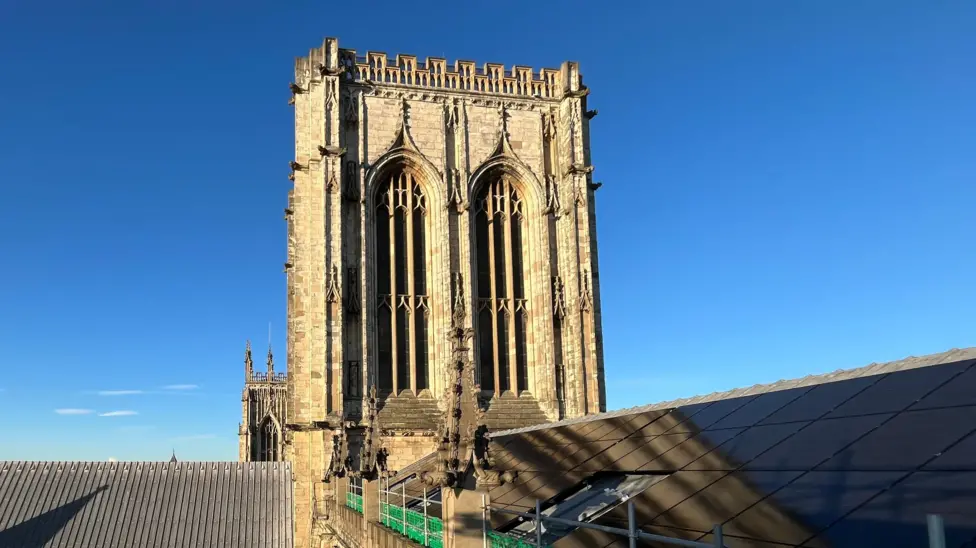
York Minster, located in the city of York, England, has inaugurated more than 180 solar panels on its South Quire roof, marking a significant step in its sustainability journey.
The panels, blessed during a ceremony led by the Dean of York, the Very Rev Dominic Barrington, are expected to generate 70,000 kWh annually, covering one-third of the minster’s electricity needs.
This installation is the fourth solar array on the minster estate, collectively producing 120,000 kWh of energy per year – enough to power 41 average UK homes.
Alex McCallion, Director of Works and precinct at York Minster, said the project, which has been seven years in the making, reflects the minster’s “holistic approach to bringing the estate into the 21st Century.”
He added, “It’s a major step forward in their decarbonisation journey. It’s a Grade I listed building which is internationally important, and we hope this project will inspire others to do the same.”
During the blessing ceremony, Barrington sprinkled holy water on the panels. He noted that the minster’s founding fathers, who were “at the cutting edge of technology in their day,” would have applauded the occasion.
Calling it the “highest blessing” of his 30-year ministry, Barrington emphasised the importance of sustainable energy for the historic site’s future.
[Image credit: BBC]
by Catie Owen | Dec 4, 2024 | Everything Installer, Innovation
Press Release
Sungrow, a global leading PV inverter and energy storage system provider, announces the grand opening of its new Technological Centre for Training and Innovation in Pamplona, Spain.
The state-of-the-art facility reaffirms the company’s long-term commitment to its partners and especially customers in Spain, Portugal, and Southern Europe, marking another significant step in Sungrow’s efforts to drive the energy transition and shape a sustainable future.
Currently, Sungrow Iberica consists of more than 85 employees, while Sungrow in Southern Europe has more than 140 experts.
The new centre covers a total area of 10,000 square meters and it is designed to serve as a hub for training, innovation, and service excellence. It features a fully equipped warehouse, a repair centre, a dedicated training space, and a modern showroom.
The 400 square meters showroom includes all the latest solutions for residential, C&I and utility-scale projects from Sungrow.
In line with Sungrow’s sustainability goals, the centre includes also a parking area equipped with a number of Sungrow’s EV chargers, promoting the use of electric vehicles.
This opening of this new facility symbolises Sungrow’s continued focus on excellence and innovation, providing tailored resources for the advancement of the renewable energy sector.
Javier Izcue, Vice President of Sungrow Europe responsible for Southern Europe, opened the event with a speech, expressing his enthusiasm: “This centre embodies Sungrow’s deep-rooted commitment to both our customers and the broader mission of energy transition in Southern Europe.
“By offering training and cutting-edge technology, we are ensuring that our partners have access to the best solutions and support. As the energy landscape evolves, we are dedicated to being at the forefront, driving innovation and sustainable growth.”
The managing director of Sodena, Iñaki Larraya, a public company under the Government of Navarra, which has supported the company with several processes in recent years, also took part in the event.
He stressed that “this centre will not only be a place where advanced technical knowledge will be taught but also a space where creativity and collaboration between professionals from different disciplines will be fostered, providing the necessary tools and knowledge to face the energy challenges of the future.”
During the event, attendees – including key customers and partners, as well as representatives from local government and industry media – toured the new facilities and were introduced to the advanced capabilities Sungrow will now offer from its Pamplona base.
These include training programs aimed at both technical development and the practical application of renewable energy solutions, further supporting the company’s commitment to delivering the highest quality service across its market lines.
The centre also underscores Sungrow’s ongoing investment in the Navarre region, where the company continues to foster strong ties with the local community.
The combination of innovation and local engagement positions Sungrow as a pivotal player in the renewable energy landscape, not just in Spain, but across Southern Europe.
With Spain’s solar market remaining a crucial topic, don’t miss your free ticket for Solar & Storage Live España 25-26 June 2025.
by Catie Owen | Dec 4, 2024 | Commercial & Industrial Solar, Everything Installer
Solarfix, a Northern Irish solar panel design and installation start-up, has acquired €1.8m in a funding package from Whiterock.
With this funding, Solarfix plans to increase its presence in the UK and Ireland by reducing energy costs and lowering carbon emissions for both domestic and commercial customers.
Solarfix’s current portfolio includes solar projects for the domestic, commercial, and agricultural markets – such as providing Duracell Energy batteries for storage or Solaredge Optimised systems for buildings that are in shade or high risk.
The announcement
On the news, Michael O’Donnell, Managing Director of Solarfix, says:
“Over the next 10 years, our vision is to see Solarfix become a leader in sustainable energy solutions across the UK and Ireland.
“We have already experienced significant growth within our team, and we are actively recruiting to meet demand.”
Solarfix has installed more than 2,000 systems across Northern Ireland, which has generated over 16m units of electricity while saving 4,000 tonnes of carbon emissions per annum.
O’Donnell continues: “With nearly 20mw of solar panels installed on sites ranging in size from 4kw to 1,000kw… Solarfix systems now form an important part of Northern Ireland’s energy infrastructure.”
Chris Trotter, Investment Director at Whiterock, adds: “With energy costs and sustainability being a key concern among customers and businesses we are delighted that our £1.5m investment will drive green energy adoption in the UK and Ireland.”
by Catie Owen | Nov 22, 2024 | Everything Installer
SaaS platform Solteo, a French company aimed at renewable energy installers, has raised €1.5m in funding.
The investment round featured contributions from Axeleo Capital, Kima Ventures, Campus Fund, and prominent business angels from the solar and entrepreneurial sectors. The funds will support Solteo’s expansion across France and ongoing improvements.
By addressing inefficiencies in project management, Solteo provides a unified platform for tasks ranging from technical studies to site management, allowing installers to concentrate on installations.
“Every minute we save them is precious time to focus on what’s essential: installing panels and accelerating the development of solar power in France,” said Alexandre d’Auvigny, a co-founder of Solteo.
The platform
According to Solteo, its platform integrates administrative, technical, and financial tools, reducing the need for multiple software systems and optimising workflows for users.
Since launching its first administrative module in mid-2023, Solteo has facilitated over 10,000 projects across more than 100 users. In the future, the company plans to expand its platform into a full-suite solution that includes maintenance and financing capabilities.
“Solteo embodies the innovation needed to support France’s energy transition, enabling installers to focus on what’s essential: offering sustainable, profitable solutions,” concluded Manon Hias, the company’s CEO.
Don’t miss your ticket to the inaugural edition of Solar & Storage Live Paris, taking place 19-20 November 2025. Register for free here.
by Catie Owen | Nov 8, 2024 | Everything Installer, Video
At Solar & Storage Live UK, Solar&StorageXtra caught up with Craig Bilboe of EcoFlow.
Craig talked to Xtra about the industry challenges EcoFlow is currently tackling, market barriers, the evolution of the solar industry over the next decade, and the company’s PowerOcean Single Phase product.
Interview with Craig Bilboe, Head of UK & Ireland Business Development, EcoFlow
“People will want connected homes, where they can control everything within their home and stay linked to the renewable energy solutions that we offer.”
Xtra: Can you explain EcoFlow’s mission in the industry?
Craig: EcoFlow started in 2017 with a mission to power a new world. Our goal is to enable people to have energy in areas and situations that historically haven’t had access to power.
We began with portable power stations and have since expanded into home energy storage. Our focus is on making renewable energy accessible to all.
Xtra: Can you identify any issues in the solar and storage industry, and any solutions to them?
Craig: Currently, there are many challenges in the industry at the moment, including PAS guidelines and best practices. At EcoFlow, we see this as a positive.
There are lots of new regulations in regard to how we approach energy solutions within homes, including battery positioning, handling, and installation.
This can be one of the biggest barriers in the market right now, but EcoFlow is committed to helping installers by offering products that meet these guidelines and best practices.
Xtra: How do you see the industry changing in the next decade?
Craig: We believe the industry is heading towards better products and more demand from consumers for enabled products.
The smart home ecosystem is going to be important. What we mean by that is people will want connected homes, where they can control everything within their home and stay linked to the renewable energy solutions that we offer.
Xtra: Talk to us about the products you’re showing at Solar & Storage Live.
Craig: The PowerOcean Single Phase is our showcased product here at Solar & Storage Live. For installers, it complies with PAS guidelines and includes features like auto-heating, fire suppression, and an IP65 rating.
For homeowners, it supports a connected home ecosystem, integrating with other devices like Google’s smart thermostats and Matter-enabled devices, allowing consumers to connect to a wide range of home energy management options.
Xtra: What benefits can companies and visitors gain from attending Solar & Storage Live?
Craig: When attending Solar & Storage Live, you’ll have the chance to meet policymakers, manufacturers like us, and other industry experts.
It’s a great opportunity to see the latest technology and market trends over the next few years, whether you’re a homeowner and end user wanting to explore available tech or an installer looking to see what products you can offer customers in future.
Missed out on Solar & Storage Live, or want to come back for more? Don’t miss the Barcelona edition from 13-14 November.
by Catie Owen | Nov 6, 2024 | Everything Installer, Innovation
The Energy Leaders’ Coalition (ELC) published its 2024 annual report on November 6th, Engaging the majority and spotlighting the minority to drive better female representation in UK energy.
This report highlights the stronger commitments made and needed to gender diversity among major UK energy employers – all of whom impact the UK’s solar industry.
While these companies show growing ambitions, challenges persist in recruiting women and advancing them into senior roles.
The ELC
The ELC, composed of leaders from 14 major energy companies alongside the CEOs of Ofgem and the North Sea Transition Authority, represents nearly two-thirds of the UK’s energy workforce – which works collectively to promote diversity, equity, and inclusion (DEI) within the sector.
ELC Chair Alistair Phillips-Davies, CEO of SSE, notes: “The ELC meetings allow for open, face-to-face discussions on gender diversity, informed by external insights. This year, attendance reached record levels, showing the growing commitment to learning and progress.”
This year, ELC members reported strides towards aligning their gender diversity targets with POWERful Women’s goal of 40% female representation by 2030, regularly monitoring progress.
They also emphasised learning and collaboration, seeking external insights to address ongoing DEI challenges.
Regarding female representation, the ELC companies are on average ahead of the broader UK energy sector, with seven members meeting the FTSE target of 40% women on boards.
Three companies have achieved 40% female leadership, but progress at the middle-management level remains slow, with some organisations even seeing stagnation or decline.
Key actions that have made a difference include targeted recruitment, inclusive leadership training, and better DEI data tracking.
Tackling challenges
Challenges remain, particularly in engaging more of the male workforce, addressing non-inclusive behaviours, and supporting gender diversity in traditionally male-dominated field roles.
Incoming ELC Chair Cordi O’Hara, President of National Grid Electricity Distribution, adds: “We must continue building on this progress, working together to foster a diverse workforce that will support the UK’s transition to net zero.”
Looking ahead, the ELC aims to lead change, support UK net zero goals, and enhance sector-wide collaboration.
Katie Jackson, Chair of POWERful Women, remarks: “As we celebrate our 10th anniversary, it’s critical that companies don’t lose momentum and continue accelerating towards our 2030 goals.”
The 2024 ELC Annual Report was launched on November 6th at POWERful Women’s 2024 Annual Conference: ‘Bridging the gaps to 2030: the bold and rapid actions that will drive gender equality in energy’.
by Catie Owen | Nov 5, 2024 | Everything Installer, Video
At Solar & Storage Live in Zürich, held in September, Solar&StorageXtra spoke to Matthias Egli, Managing Director for Swissolar.
Matthias shed some light on the most prominent solar installations in Switzerland, how the country is looking to expand its projects, Switzerland’s progress towards its energy goals, and the benefits of attending international Solar & Storage Live events.
Interview with Matthias Egli, Managing Director for Swissolar
“In Switzerland, most solar installations are built on roofs or facades which is unlike anywhere else in the world… we’re starting to explore large-scale installations like Alpine PV, which is better for winter production.”
Xtra: Talk to us about Swissolar’s mission, and any achievements over the last year.
Matthias: Our mission is essentially to get the energy transition done. We believe that, by 2050, we believe that 50% of produced energy in Switzerland will be solar energy.
There are a lot of activities we need to do. We are doing a lot of policy work, we’re developing technical standards for the industry, and we also organise educational courses which are important for the industry.
Networking and events like this (Solar & Storage Live) are also important parts of the association’s activities.
Xtra: Swissolar has been advocating for accelerated solar deployment in Switzerland. What are the key announcements or policies that have been introduced recently to support this growth?
Matthias: A new energy law was introduced in June this year. This is important for the future development of renewable energy in Switzerland.
The law makes clear its strategic goal for Switzerland of 35TWh of renewable energy in the next ten years, with 30-40% being solar energy.
The law has new specific changes, one of which is the concept of energy communities. This allows producers to sell energy directly to a community, offering better benefits and offers incentives to build new plants in a community.
Xtra: Can you share insights on any upcoming large-scale solar projects in Switzerland that Swissolar is particularly excited about?
Matthias: I don’t often discuss large-scale projects, because Switzerland is a world leader in building integrated photovoltaics (BIPV) installations.
In Switzerland, most solar installations are built on roofs or facades which is unlike anywhere else in the world. That’s what’s most important to Switzerland.
Of course, we’re starting to explore large-scale installations like Alpine PV, which is better for winter production.
We expect the first installation to start probably next year, which is exciting. But what’s important is that we have a lot of building-integrated systems, as Switzerland has more of these installations than any other country.
Xtra: Can you talk to us about your keynote presentation?
Matthias: This morning (17/09/2024), I talked about the market outlook for Switzerland. The Swiss market has grown strongly over the last five years, with an annual growth of around 50%.
This progress is important, and we’ve achieved a level where we’re on track to meet our political goals – it’s not impossible anymore! We are on track.
(In) the second part of the presentation, we learned more about the diversity of installations.
Like we discussed earlier, today most installations are rooftop building integrated. In the future, we also see potential in agricultural PV, Alpine PV, and more installations on infrastructure like roads, parking lots, and more. Most importantly, we aim to expand installations on building facades.
Xtra: What benefits can companies see when they attend Solar & Storage Live events?
Matthias: It (the event) is an excellent place for networking. It allows us to get in touch with energy companies, installers, and real estate firms, and also develop an international connection.
Many companies attending come from abroad, which is important and helps us to bring new innovations to Switzerland.
Missed out on Solar & Storage Live Zürich, or want to come back for more? Don’t miss the Barcelona edition from 13-14 November.
by Catie Owen | Oct 24, 2024 | Commercial & Industrial Solar, Everything Installer
Spanish-owned ACCONIA has created a sustainable breakwater project for offshore floating photovoltaic (FPV) systems. ACCONA’s product protects FPV systems from harsh marine conditions, which will improve their efficiency and lifespan.
The breakwater product is part of the EU’s SUREWAVE project, which focuses on creating sustainable marine infrastructure for renewable energy projects (including solar) with an emphasis on using recycled and circular materials.
Seven partners from six EU countries are collaborating on this effort. ACCIONA leads the development of circular materials for the breakwater, striving to reduce its environmental impact.
Development
The company has introduced two types of sustainable concrete. The first is a high-performance concrete with a compressive strength of 120 MPa.
By incorporating slag and fly ash, this concrete reduces clinker, a significant pollutant in cement production, by 20%, while also lowering the amount of material needed by 40%, according to ACCIONA.
The second material is lightweight concrete made with recycled glass and construction and demolition waste (CDW) aggregates, which brings its density below 1900 kg/m³.
This concrete uses cement with blast-furnace slag, cutting clinker content by 35%. For the core of the breakwater, ACCIONA developed a cellular concrete with a density of 365 kg/m³, further minimizing cement use and incorporating recycled glass.
This marks a key step toward more sustainable marine infrastructure for renewable energy. In November 2023, the SUREWAVE consortium conducted wave tank tests of the floating solar concept at the Maritime Research Institute Netherlands (MARIN).
Stay in the loop with Spain’s solar and storage sector by getting your free ticket to Solar & Storage Live in Barcelona, 13-14 November.
by Catie Owen | Oct 15, 2024 | Everything Installer
SolarEdge, an international solar inverter manufacturer, has launched a new high-power inverter system in the UK.
Named the SolarEdge TerraMax (SE330K), the inverter is designed for small-to-medium utility scale solar installations. According to the company, the product offers 99% inverter efficiency to increase solar power production.
It will ship from early in 2025, following pre-orders.
The inverter is designed for a variety of landscapes and requirements, with SolarEdge particularly highlighting ground-mounted systems on uneven or sloped ground, floating solar systems, and agrivoltaics sites.
“We are excited to bring the well-known benefits of SolarEdge power optimisation and high-resolution monitoring to the utility solar segment in the UK with the introduction of our new high-power SolarEdge TerraMax Inverter,” says Christelle Barnes, UK country manager at SolarEdge Technologies.
“We believe that this technology will help maximise value to investors and EPCs.”
The company’s C&1 energy optimisation software, SolarEdge ONE, will be used by the inverter system, enabling monitoring of the solar modules.
In doing this, SolarEdge explains that fewer site visits will be required, as well as creating bonuses including reduced management costs and lower operations.
by Catie Owen | Oct 10, 2024 | Everything Installer, Large Scale Utility Solar
A group of international scientists has developed a new model to assess rooftop photovoltaic solar panels (RPVSPs) in urban microclimates.
This model integrates the latest weather research and forecasting (WRF) system with the building energy model (BEM) and building effect parameterisation (BEP). It was tested against ten observation stations in Kolkata, India, using validated experimental data.
“While existing studies report the impact of RPVSPs on urban environments, most focus on building-scale simulations or in situ experiments,” the researchers explained.
“Our study addresses gaps by including new parameters such as convective heat transfer, aligning results with other studies using similar factors.”
The WRF/BEP + BEM model calculates heat exchange, humidity, and energy flux between buildings and the environment under stable atmospheric conditions.
It was initially tested in Kolkata and later validated in Sydney, Australia; Austin, Texas; Athens, Greece; and Brussels, Belgium, to confirm the findings apply across different climates.
The study conducted five experiments in Kolkata, exploring RPVSP coverage scenarios from 25% to full city coverage.
The results showed that RPVSPs could increase daytime air temperatures by up to 1.5°C due to heat absorption but reduce nighttime temperatures by up to 0.6°C. Surface temperatures rose by up to 3.2°C during the day and cooled by 1.4°C at night.
Similar patterns were observed in other cities, with Sydney experiencing a 1.9°C daytime rise and a 0.8°C nighttime cooling.
The research also found that RPVSPs alter urban energy dynamics and increase atmospheric mixing, raising the planetary boundary layer by up to 615.6 meters, which could reduce ground-level pollution.
The study, “Rooftop photovoltaic solar panels warm up and cool down cities,” was published in Nature Cities.
by Catie Owen | Oct 2, 2024 | Everything Installer, Innovation
At September’s Solar & Storage Live in Zurich, Solar&StorageXtra spoke to Patrick Imholz, Director Of Sales And Business Development for Freesuns.
Patrick explained Freesuns’ innovative rooftop solar PV solution, and how it came to dominate the niche market of solar-powered heritage buildings.
“Overall, it’s all about holding constructive discussions and being pioneers – engaging in discussions with the heritage commission to find acceptable solutions”
Interview with Patrick Imholz
Xtra: Can you explain Freesuns’ role in the industry and product?
Patrick: Freesuns is mostly active in Switzerland, but we’re expanding out into the Eastern Market. Our product is small in size; it’s very close to the size of traditional roof shingles or tiles.
What makes us stand out is our installation method, which not many other products utilise. We overlap our product both horizontally and vertically so that when it is finished it looks exactly like a tiled roof – like how we have here in Switzerland.
It also has the same type of structure underneath, (which is) a wooden-on-wooden structure, creating a discrete appearance. A lot of people like our product’s aesthetics.
As I mentioned in my presentation, we’ve also had success with installations on heritage and protected buildings – where the requirements for PV are more difficult.
Xtra: Can you explain more about your presentation?
Patrick: My presentation showcased Freesuns’ product, company, and learnings we’ve had in a niche market. That being heritage-protected buildings, which are one of our target sectors due to how our product integrates with the roofing.
I also highlighted what goes into a heritage solar project, such as early discussions with the heritage commissions to ensure you’re aware of which rules apply to the building. In doing this, you can work together towards a solution.
It also depends on the role that homeowners play if they live in a heritage-protected building. These properties will have a lot of rules to comply with. For example, whenever the homeowner wants to renovate they need to ask the canton (state) architect.
If they want to change the heating system by way of installing PV power to their heat pump, they might receive a rejection if they can’t install PV.
Overall, it’s all about holding constructive discussions and being pioneers – engaging in discussions with the heritage commission to find acceptable solutions for both the homeowner who wants PV and the heritage commission who protects the building.
Xtra: How do you see the solar landscape evolving over the next few years?
Patrick: For homeowners, a point of uncertainty comes from not knowing what future energy prices will be. They might know next year’s prices, but not what they’ll be paid for any energy they put back into the grid.
A few Swiss cantons have started to roll out incentives for this, but it currently isn’t clear what these incentives will be. For example, will there be incentives for house renovation, to install PV? Without these answers, it’s hard for people to invest in solar solutions as they won’t know the returns.
Clear communication around pricing and incentives can likely be expected over the next few years, and following that an improved adoption of PV by the market.
Xtra: What rising trends and challenges are you noticing in the solar industry, which the sector should be aware of?
Patrick: We’re in a niche market, but we’re aware of the slowdown in solar adoption some people in the industry have been experiencing. The war in Ukraine has caused these, and a fear of shortages which has prompted an uptick in self-sufficient green energy generation.
The economic situation, such as the rise in interest rates, seems to have made people more cautious about investing in solar energy. Combine this with uncertainty about the future, tariffs, and subventions, and the market appears less desirable.
There’s a large surplus of solar panels being produced in China, all of which are attempting to be fed into the market, causing a price drop and competition.
Fortunately, our niche solution means that we’re largely shielded from these concerns, but they are general trends in the solar industry we have noticed.
Xtra: What benefits can companies and visitors gain from attending Solar & Storage Live?
Patrick: The show is a place where you can find lots of providers and solutions. For a company exhibiting, the exposure here is helpful because you’re in the midst of technicians and installers who could use your product.
Solar & Storage Live is a great visibility network, which also spreads information through the interesting presentations it holds.
Missed out on Solar & Storage Live Zurich, or want to come back for more? Don’t miss the Barcelona edition from 13-14 November.
by Catie Owen | Sep 5, 2024 | Commercial & Industrial Solar, Everything Installer
Following a sunny spell in Germany, figures from SEB Research show that solar producers have had to take an 87% price hit over the last 10 days.
This drop in prices has been observed during production hours which, during peak production times, has seen prices fall to below zero. The price received was €9.1 per MWh on average, which is a huge fall from €70.6 as seen during non-production times.
SEB Group issued a statement on Tuesday explaining:
“This is what happens to power prices when the volume of unregulated power becomes equally big or bigger than demand: Prices collapse when unregulated power produces the most.”
What caused this?
SEB Chief Commodities Analyst Bjarne Schieldrop attributed the price drop to a marked increase in solar installations, which has resulted in more produced energy than demand.
Schieldrop noted that summer saw the greatest disparity between the two, as sunny and warm weather led to peak solar production and low demand for energy.
As the price would plummet during the summer’s peak production hours, which was also a time with little requirement for energy, consumers were not seeing the benefits of the low prices.
How do we prevent this?
New installations should be encouraged with subsidies or power purchase agreements, according to Schieldrop, as reduced profitability will threaten Germany’s solar sector. Unless these are implemented, the country could see its rapid solar expansion end.
Schieldrop anticipates that the industry will instead focus on methods to make produced energy more efficient by investing in BESS and the national grid.
He adds: “This will over time exhaust the availability of ‘free power’ and drive solar-hour-power-prices back up. “This again will then eventually open for renewed growth in solar power capacity growth.”
Where else is this happening?
Notably, Germany has faced this issue for a while – along with the rest of the European market. Following Russia ceasing its export of energy to Europe in 2023, countries in the continent have been heavily investing solar infrastructure to achieve self-sufficiency.
Investments in other renewable sources such as wind, and in nuclear energy, has also historically caused drops in power prices.
by Catie Owen | Aug 21, 2024 | Everything Installer, Innovation
Guest blog by Energy Now
Energy Now is excited to announce a collaboration with the leading industry event Solar & Storage Live to help facilitate the continued adoption of solar energy systems on farms and estates across the UK.
Energy Now has provided farmers and landowners with independent insight and guidance on renewables, energy efficiency and other low-carbon measures since 2007, with the popular magazine converting to an online platform in 2020.
The site’s content includes industry news, advice, case studies, interviews, webinars, details of relevant events and a directory of suppliers that farmers and landowners can turn to when exploring their renewable energy needs.
Solar-Coaster
It is fair to say that the solar industry has been somewhat of a ‘solar-coaster’ in the UK’s Government subsidy schemes.
The Feed-in Tariff and Renewable Obligation Certificate encouraged farmers and landowners across the country to invest in rooftop schemes and enter land leasing arrangements to take advantage of the returns available.
This was replaced by a relative period of inactivity once the support mechanisms were dramatically cut and then removed due to the unsustainable nature of the numbers involved. Brexit and the COVID-19 pandemic further hampered development.
Fast forward to today and the landscape is incredibly different.
Lower technology costs, high energy prices, decent export tariffs and a much greater emphasis on the reduction of GHG emissions have made solar PV and associated battery technologies a worthwhile investment for many businesses, enabling the solar industry to drive forward in a subsidy-free environment.
Key role of farmers and landowners
As part of its pledge to make the UK a ‘clean energy superpower’, the new Labour government wishes to fully decarbonise our power system and triple solar capacity by 2030.
Increased collaboration between the solar sector and the UK’s agricultural communities is critical to achieving these goals, building on the existing symbiotic relationship and bringing much-needed financial and environmental benefits to the nation’s farmers.
“It has been a genuine pleasure to work with farmers and landowners throughout the UK these past few decades, helping them realise the financial and environmental benefits and the well-chosen system will provide,” Energy Now Publisher David Jacobmeyer says.
“The agricultural and rural communities continue to play an essential role in the development of the clean energy sector and our country’s journey to Net Zero, and we are excited to be working with Solar & Storage Live to help broadcast the opportunities, facilitate discussions and drive forward our energy transition.”
Looking to promote your company and its’ services to farmers and/or landowners? Contact Energy Now today for more information on the options available.
by Catie Owen | Aug 19, 2024 | Everything Installer, Large Scale Utility Solar
Huawei, a Chinese technology company, has launched its 150K series commercial and industrial inverter in Kenya, aiming to boost solar energy adoption across the country.
The announcement was made during the Huawei FusionSolar Eastern Africa Partner Summit 2024, held in Nairobi. At the event, where key renewable energy industry leaders, practitioners, and advocates gathered to discuss expanding green and sustainable development in Kenya.
Du Peng, CEO of Huawei Digital Power Eastern Africa Region, highlighted the benefits of the inverter at the summit, explaining that the inverter enables solar panels to generate more power by reducing system losses for commercial and industrial users.
He also emphasised the device’s safety features, noting that it “enhances safety by providing real-time software and hardware fault detection.”
Kenya’s growing interest in renewable energy is reflected in the Energy and Petroleum Regulatory Authority’s data. The data shows that the country’s installed electricity capacity stands at 3,112MW, with solar energy contributing 210MW.
The introduction of Huawei’s advanced inverter is seen as a step toward increasing this contribution.
Transitioning to sustainable sources
Nick Lusson, VP of Huawei Digital Power Eastern Africa Region, added that the new inverters are designed to be more cost-effective by reducing the need for additional accessories, leading to lower installation costs.
He further explained that the technology behind the inverter allows solar panels to harness energy for longer periods during daylight hours, thereby maximising energy output.
The launch of Huawei’s 150K series inverter is expected to play a crucial role in Kenya’s transition to sustainable energy, providing businesses with more efficient and cost-effective solutions to meet their energy needs.
As the country continues to push for green energy solutions, Huawei’s innovative technology could significantly reduce Kenya’s carbon footprint and increase the share of solar energy in its power grid.
Visit Solar & Storage Live Africa 2025 in Johannesburg to stay up to date with all things solar in the region.
by Catie Owen | Aug 15, 2024 | Commercial & Industrial Solar, Everything Installer
President Joe Biden has issued a proclamation designed to reinforce the USA’s solar industry, by expanding the current tariff-rate quota (TRQ) for imports of crystalline silicon photovoltaic (CSPV) cells.
With the change taking place on August 1st 2024, the TRQ on imports has been increased from 5GW to 12.5GW per annum. This increase is designed to protect the USA’s solar industry by decreasing the competitiveness of international imports.
The tariff increase is on trend with other changes implemented by President Biden’s administration. In May, new tariffs on double-sided solar panel imports were introduced.
Benefits
By increasing the volume of CSPV cell imports and bypassing additional safeguard tariffs, USA solar module manufacturers are expected to benefit from easier access to the cells as they are difficult to create domestically.
Easier access to supply is hoped to decrease international imports by making the prices of domestic products more competitive, while also meeting the USA’s increasing demand for solar panels.
With a stabilised domestic solar market through the TRQ’s expansion, the USA’s PV industry could see a growth surge – which could bring more investment. This could lead to the construction of new manufacturing plants in the country.
“This move provides an important bridge for module producers to access the supply they need while the United States continues to progress on solar cell manufacturing,” says Abigail Ross Hopper, President and CEO of the Solar Energy Industries Association (SEIA).
Concerns
When new tariffs were introduced in May, Solar&StorageXtra reported on comments a senior executive from one of China’s largest solar equipment groups made to the Financial Times.
The executive urged Western governments to “let the best technology win”, explaining that protectionist measures from the USA and Europe could hurt the global solar industry.
Trade barriers were cited as unfairly harming solar manufacturers, however, international companies have alternatively cited excess Chinese output and “dumped” overstock as the volatile market’s source.
Stay in the loop with all things USA solar by attending Solar & Storage Live USA, taking place in Philadelphia in 2025.
by Catie Owen | Aug 14, 2024 | Commercial & Industrial Solar, Everything Installer
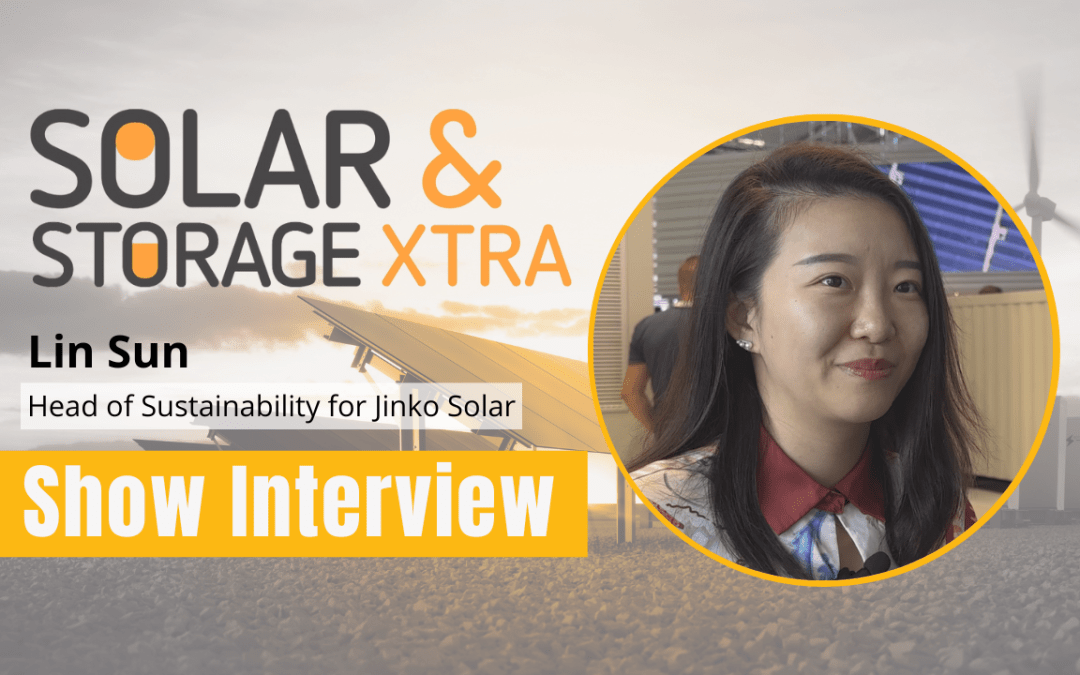
At Intersolar 2024, Solar & Storage Xtra met Lin Sun, Head of Sustainability for Jinko Solar.
Lin Sun filled us in on the exciting projects taking place at Jinko, the benefits of international trade shows, and her talk on ESG and Jinko’s sustainability journey.
Interview with Lin Sun, Head of Sustainability for Jinko Solar
“We recognise it’s important to attend Europe’s largest solar shows. For us, it’s a great opportunity to be here and get close with our European clients.”
Xtra: Are there any exciting projects or collaborations in the pipeline that you can share with us?
Lin Sun: This year we have our booth designed into two different areas. One is for PV as Jinko Solar is a well-known PV module manufacturer.
[Here] we have new products called New Breeze, which we call the “green modules”, and we also have our ESS booth. This is our commercial, residential, and also utility projects and ESS products.
Xtra: Are there any issues that you think Jinko provides solutions to within the solar field?
Lin Sun: We know many countries want to develop their own strategies for renewables. These energy transitions will give all of us a big target to achieve, meaning [that] Jinko, like all renewable players, wants to offer solutions for our partners.
These are not only for big utility projects but also for distributor and individual residential solutions which fit the bill.
For example, before we usually just provided our services as a PV module supplier, so for residential we can install modules for rooftops.
Right now, we consider this a really nice combination of storage solutions on top of solar solutions. That would be solar plus storage solutions, which should be considered a very promising business as well.
We are starting to build up our pipeline across the globe for our projects in China, Asia Pacific, and Europe as well; you may notice some of our big news and news releases on our big and exciting signing projects in Europe.
Xtra: Why is it important to attend international solar events, and what are the benefits?
Lin Sun: Going to solar events, we recognise it’s important to attend Europe’s largest solar shows. For us, it’s a great opportunity to be here and get close with our European clients.
For Jinko, we are really proud of our globalisation and networks, in Europe and in other regions as well.
I’m from [Jinko] headquarters (located in Shanghai, China), so [Intersolar] is a great show for people from China, for Chinese manufacturers to come back to the regions to see our friends – sometimes we call clients friends because we have already built close relationships with them – then we can celebrate the big milestones of our technology.
We can create new contracts and have big, exciting moments. This is the key element.
The second top element is being here to absorb and learn from other peers. We understand this is a booming industry, so you can observe many other good players coming to the market to showcase their products.
There will also be time for us to share some industry information exchange so we can always be the leader of the industry trying to make a solution for the world.
Xtra: What kind of people have you been meeting on your stand at Intersolar?
Lin Sun: My role is Head of Sustainability, and I also joined another panel where I gave a speech on ESG and our sustainability journey.
At this particular panel, I had a chance to talk about our company’s ESG practice where I met many potential buyers, which makes me very excited.
They wanted to come in and say: “I hear ESG, I hear Jinko, we wanted to buy your products”, – they want to know you. The first category [of people] are the potential buyers. I also invite some of our potential buyers to come to visit our booth.
The second group are actually our clients, who we have organised meetings with. We have always had long-term partnerships with our clients, [so here] they come and do updates and discuss some of the details of our ongoing contracts, and future pipeline.
The third category is multi-stakeholders and shareholders with whom we have contact and conversations with, such as European associations.
We also have the chance to have a conversation with the Global Solar Council, now that we are a member. We have conversations with international organizations, commercial banks, etc.
We also organise meetings with other industry players: we’ll have a one-on-one meeting to understand their technology and their new things as well.
Xtra: How do you see your company’s role in the energy sector evolving over the next decade?
Lin Sun: Jinko will always be the industry leader not only in technology and our globalisation service but also in our ESG and sustainability competitiveness.
That is my role, and why I’m always so excited to always be present at different regional fairs, including Intersolar.
So last week I was in SNEC in Shanghai: one of the world’s largest shows. Being with Jinko is a very exciting journey.
I believe that Jinko in the future will, not only in solar but also in ESS and many other topics around solar, will make sure to deliver a good solar experience for our lovely partners.
by Catie Owen | Aug 14, 2024 | Commercial & Industrial Solar, Everything Installer
The European Bank for Reconstruction and Development (EBRD) has released details about a €25m loan to Polinas Plastik, a flexible packaging producer in Türkiye.
Polinas Plastik will use the loan to enhance the energy efficiency of its production line. This will include the installation of solar panels.
A new production line for biaxially oriented polypropylene (BOPP) film will be included in the funding, alongside new machinery. To help power these investments, the fund will also contribute to Polinas Plastik’s integration of solar solutions into its operations.
In doing so, the company hopes to reduce its carbon emissions and increase its reliance on renewable energy.
EBRD’s announcement also notes that the solar initiative and funding will enable Polinas Plastik to produce fully recyclable packaging materials, via both recycled and bio-based content, reducing the company’s carbon footprint even further.
Polinas Plastik currently exports BOPP and other products to over 50 countries, who will have access to a product with reduced carbon cost.