by Catie Owen | Aug 22, 2025 | Europe, Large Scale Utility Solar
According to the Financial Times’ analysis of University of Sheffield data, solar generation in Britain has already exceeded the total for 2024.
It is noted that this was propelled by increased panel installations and unusually favourable weather, emphasising the growing role of renewables in the grid.
By 16 August, solar production had reached 14.08TWh – around one-third more than at the same time last year – sufficient to power 5.2m homes for a year.
A 20% rise in solar capacity since 2023 helped harness spring and summer sun, with a record 14GW of output at one half-hour on 8 July, meeting nearly 40% of demand.
The government aims to grow capacity to 45-47 GW by 2030, backed by policies such as mandatory rooftop panels on new homes, revised planning laws, and extended subsidies.
Furthermore, UK government data shows that, in Q2 2025, Britain approved a record 16.1GW of new renewable energy across 323 projects.
This is a 195% increase year-on-year – which aligns with the 95% clean power generation target by 2030.
Notably, more than 100 battery energy-storage applications totalling 8.4GW were submitted during the same quarter, doubling that of the previous year. The nation now estimates it will require 23-27GW of storage by 2030 – up from approximately 6GW at present.
Battery projects are increasingly attractive to developers due to their lower visual impact and rising profitability, with average revenues reaching £92,000 per megawatt.
Despite this momentum, challenges persist: grid bottlenecks, planning delays and local resistance remain significant barriers to deploying both generation and storage quickly.
Analysts caution that meeting ambitious targets will demand sustained investment in infrastructure and is contingent on accelerating planning and grid processes.
Solar & Storage Live in Birmingham is on the horizon, so don’t miss out on your free ticket to the UK’s largest solar and storage show. Or, find a Solar & Storage Live event near you.
by Catie Owen | Aug 21, 2025 | Everything Installer, Large Scale Utility Solar, Oceania
A new handbook on agrivoltaics from EnergyCo sets out how combining agriculture with solar energy can help meet renewable energy targets while supporting food production and rural economies.
Designed for both solar developers and landholders, the handbook contains research from industry leaders and insights from farmers themselves.
“This is the first comprehensive guide to assist developers and landholders to design and plan solar developments for grazing sheep,” explained Farm Renewables Consulting Director Karin Stark, who worked on the report with EnergyCo, on a LinkedIn post sharing the report.
“It also covers considerations for growing crops under solar and outlines case studies for cattle under solar.
By drawing on Australian case studies and international research, the document positions agrivoltaics as a solution with worldwide relevance for balancing renewable energy growth with the protection of farmland.
EnergyCo described the purpose of the handbook in a statement on social media: “The handbook reflects our commitment to informing local communities as we modernise the NSW energy grid.”
Benefits for farmers
The publication highlights the resilience that a secondary income stream provides. “For farmers, a secondary income earned from leasing land to solar developers builds financial resilience,” it states.
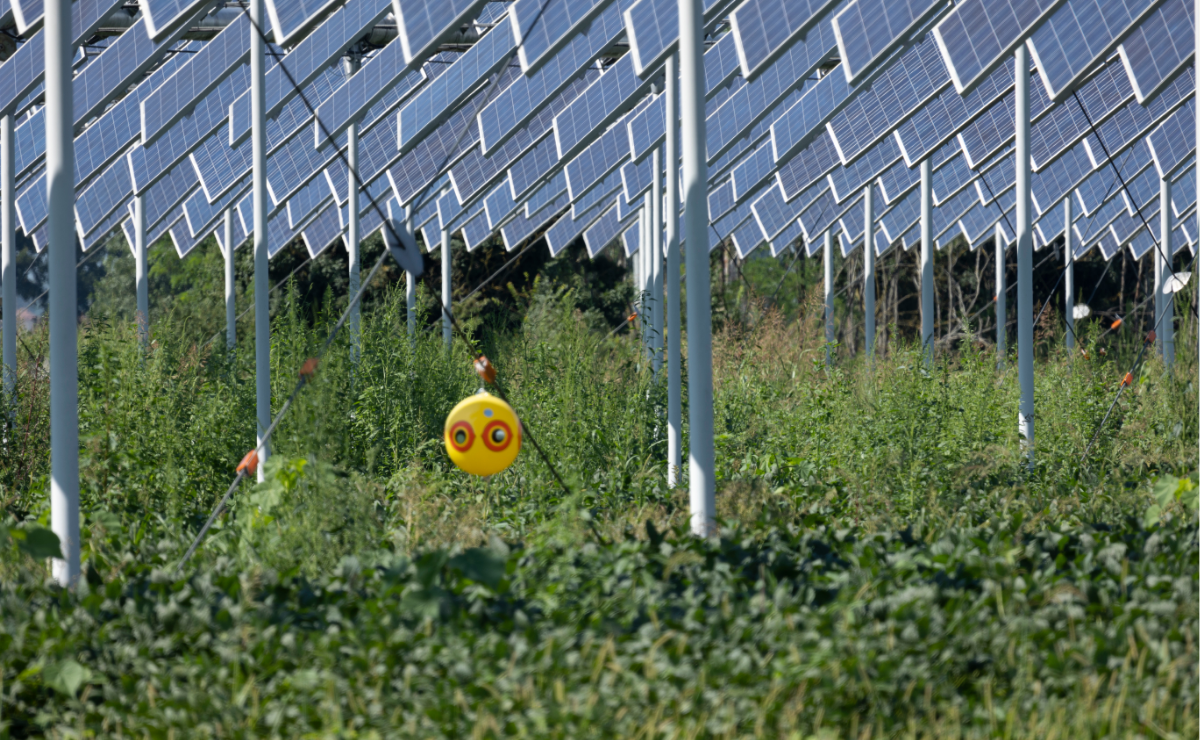
Panel shading also offers production benefits. In grazing systems, sheep use panels for shelter from extreme heat and wind, while the microclimates beneath panels help pastures stay green for longer.
Dubbo grazier Tom Warren, who runs around 250 merino sheep on 54 hectares within a solar farm, reports carrying “25% more sheep overall, compared to land without panels, due to increased soil moisture retention and the concentration of moisture in green pasture strips during dry periods.”
Warren has also observed improvements in wool quality, attributing this to reduced dust and burr contamination under panels.
For horticultural systems, panel cover can reduce crop losses. International trials cited in the handbook suggest reduced heat and hail damage for fruit and vegetable growers, as well as greater water efficiency.
Benefits for the solar industry
For developers, agrivoltaics provides an inexpensive way to manage vegetation while strengthening the industry’s “social licence” in rural areas.
The handbook notes that “solar grazing reduces vegetation management costs and increases social acceptance if the land is kept in production.”
The cost savings are significant: slashing vegetation mechanically costs $100 to $250 per hectare, while sheep grazing offers a cheaper and more sustainable alternative.
In addition, community acceptance improves when energy projects retain visible links to farming. “The retention of agricultural production on the same footprint as large-scale solar development is a critical aspect of delivering community benefit and gaining community acceptance for the energy transition to renewables,” the report states.
Towards wider adoption
While the handbook is designed for New South Wales, it draws on local, national, and international case studies. Its practical checklists for developers and landholders – from paddock layout to stocking rates – are applicable worldwide.
Agrivoltaics is already highly discussed internationally as a method for increasing investment in solar. Research from the UK’s University of Sheffield found that the country’s solar expansion goals could be achieved via agrisolar – without sacrificing farmland.
Overall, handbook authors stress that success depends on collaboration. Input from graziers, agronomists, and landholders during the design phase ensures that solar infrastructure supports continued agricultural use.
The report concludes that agrivoltaics is still an evolving practice, but one with clear potential: “Agrivoltaics is not a silver bullet, but it offers a practical and scalable solution to deliver food and energy security hand in hand.”
Solar & Storage Live in Birmingham is on the horizon, so don’t miss out on your free ticket to the UK’s largest solar and storage show. Or, find a Solar & Storage Live event near you.
by Catie Owen | Aug 21, 2025 | Europe, Large Scale Utility Solar
Italy has crossed a major renewable energy milestone, exceeding 2m grid-connected PV systems and 40GW of installed capacity, according to new figures from ITALIA SOLARE.
As of 30 July 2025, the country counted 2,011,056 PV systems with a combined capacity of 40,430 MW. In the first seven months of 2025 alone, 132,276 new systems were connected, adding 3,354 MW.
Paolo Rocco Viscontini, President of ITALIA SOLARE, commented:
“We have reached a symbolic milestone: 2m installations represent millions of families, businesses, and governments who have chosen a clean, reliable, and autonomous source. Today, photovoltaics is no longer a marginal option; it is an integral part of our energy infrastructure.”
Viscontini urged policymakers to remove barriers slowing down further development:
“It’s time to accelerate the mechanisms that support self-consumption and integration with storage, overcoming the bureaucratic and legislative slowness that is still hindering the development of an energy system based on clean technologies that can ensure our country’s low and stable energy prices over time.”
Residential growth and incentives
Between 2020 and 2024, residential PV connections in Italy grew significantly. Average monthly installations rose from 22 MW in 2020 to 140 MW in 2024, with a peak of 188 MW in 2023 during the height of the Superbonus scheme.
In the first half of 2025, installations averaged 88 MW per month – four times higher than pre-Superbonus levels, indicating strong demand even without extraordinary incentives.
The trend has been supported by falling technology costs, particularly in photovoltaic and electrochemical storage, and rising consumer awareness of the financial benefits of solar.
Regional distribution
The regions with the highest number of solar systems are also some of Italy’s most populous. Lombardy leads with 326,586 PV systems, followed by Veneto (274,699), Emilia-Romagna (198,003), Lazio (141,210), Sicily (136,511), and Piedmont (134,729).
In terms of installed capacity, Lombardy again ranks first with 5,419 MW, followed by Veneto (4,055 MW), Puglia (3,912 MW), Emilia-Romagna (3,855 MW), and Lazio (3,787 MW).
Driving the energy transition
ITALIA SOLARE noted that solar’s role is becoming increasingly central as electrification accelerates across heating, mobility, and industry.
“Photovoltaics, integrated with storage systems and digitalisation, meets these needs and enables a more flexible and participatory system,” the association said.
With the European Union targeting full decarbonisation of building stock by 2050, Italy’s PV sector is expected to continue expanding.
Interested in Italy’s solar market? Don’t miss your free ticket to Solar & Storage Live Italia – taking place 8-9 October at the Veronafiere exhibition centre.
by Catie Owen | Aug 19, 2025 | Large Scale Utility Solar, Middle East
The European Bank for Reconstruction and Development (EBRD) is lending US$150m to Türkiye’s Enerjisa Enerji to support post-earthquake reconstruction and renewable energy projects.
The financing will be used to rebuild and modernise the electricity distribution network in the Toroslar region, which was heavily damaged during the February 2023 earthquakes that killed more than 55,000 people.
The area represents around one-third of Enerjisa Enerji’s total operations.
In addition to reconstruction, the funds will be directed towards the development and construction of solar power plants, enabling the company to provide sustainable energy solutions to its corporate customers.
The EBRD said the project would contribute to reducing distribution losses and carbon emissions while advancing Türkiye’s green agenda.
The initiative also coincides with the launch of the Board Director Nomination Toolkit for Companies in Türkiye, led by the EBRD to promote diverse and effective company boards. Enerjisa Enerji will work with the bank to raise awareness of the toolkit within the energy sector.
Matteo Patrone, the EBRD’s Vice President for Banking, said: “I have seen first hand that reconstruction in the Toroslar region is not a short-term task. It requires long-term commitment, clear strategic direction and the kind of trusted partnership that we have with Enerjisa Enerji.
“Reliable, sustainable power is fundamental to both human well-being and economic recovery.”
Philipp Ulbrich, CFO of Enerjisa Enerji, added: “This long-term financing worth US$150m equivalent in Turkish lira is showing that Enerjisa Enerji is able to finance its profitable growth also within a challenging environment.
“The well established partnership with EBRD is strengthening our strategic steps toward sustainable growth.”
Since 2009, the EBRD has committed more than €22bn to Türkiye through 495 projects and trade finance limits, primarily in the private sector.
[Image caption: Enerjisa signing. Image credit: EBRD]
by Catie Owen | Aug 18, 2025 | Africa, Large Scale Utility Solar, Middle East
UAE-based Global South Utilities (GSU), part of Resources Investment Company, has begun construction on a 50MW solar PV power plant in Sakaï, Central African Republic (CAR).
The project is seen as a significant step in expanding energy access and advancing the country’s clean energy transition.
The plant is expected to provide electricity for more than 300,000 households and reduce annual carbon emissions by over 50,000 tons. It will also feature a 10MWh BESS to improve grid reliability and ensure a steady supply of power.
Beyond energy delivery, the initiative aims to generate jobs in the renewable energy sector and support skills development within the local workforce.
A groundbreaking ceremony was attended by Faustin-Archange Touadéra, President of CAR, Pascal Bida Koyagbele, Minister of State for Strategic Investments and Major Work, senior government representatives, and GSU executives.
“For the Central African Republic, this project will play a key role in expanding energy access to communities across the country,” said Ali Alshimmari, Managing Director and CEO of GSU.
“It represents another milestone in our commitment to delivering clean, scalable energy solutions in places that others may see as difficult – but which we view as gateways to opportunity and sustainable growth.”
The Sakaï solar development follows the Comprehensive Economic Partnership Agreement (CEPA) signed in March 2025 between the UAE and CAR, designed to strengthen bilateral trade and investment.
This project adds to GSU’s growing portfolio of renewable energy investments in Africa, aligning with the UAE’s broader strategy of supporting climate-focused infrastructure and long-term economic cooperation with Global South nations.
by Catie Owen | Aug 15, 2025 | Asia, Large Scale Utility Solar
Construction has begun on a 99MW solar power plant in Tantangan, South Cotabato, a project expected to provide clean energy to more than 82,000 households in the Philippines.
The ₱4.49 billion initiative is funded through British International Investment (BII), the UK’s development finance institution, in partnership with HSBC and Pentagreen Capital.
It is part of a growing collaboration between the UK and the Philippines in renewable energy development.
Once operational, the solar farm is projected to generate enough electricity to power over 82,000 homes annually and prevent around 66,000 tonnes of carbon emissions each year.
Mike Welch, Chargé d’Affaires a.i. at the British Embassy Manila, said:
“This new joint financing facility between the UK’s British International Investment and Pentagreen, with ib vogt Singapore will support a 99MWp solar power project in South Cotabato, Mindanao.
“This will have a positive impact on local communities and businesses, as well as supporting the broader energy transition in the country.”
The plant is being developed by international solar company ib vogt and is their second major project in Mindanao. Construction and operations are expected to create jobs locally and strengthen the national electricity grid.
The Tantangan development adds to a series of UK-backed renewable energy projects in the Philippines, including wind farms in Luzon and Visayas, and what is set to become the country’s largest solar installation in Nueva Ecija.
These investments are intended to expand renewable capacity, support economic growth, and contribute to global climate goals.
by Catie Owen | Aug 14, 2025 | Large Scale Utility Solar, Storage
Solar curtailment – when electricity generation from PV systems is intentionally reduced due to grid limitations or oversupply – is often a last-resort measure to maintain grid stability. But when curtailment is used, it results in wasted renewable energy and lost revenue.
The problem is only expected to grow as solar capacity expands. In the UK, grid delays and technical limits mean some projects face curtailment rates above 90%, or even 100%, until infrastructure upgrades are completed.
Similar issues have been reported across Europe, where industry bodies warn that rising curtailment and negative pricing threaten investor confidence.
As the industry hunts down a solution that mitigates the impact of electricity curtailment, particularly in solar, energy storage has taken the stage as a major contender.
What causes curtailment?
Several factors cause electricity curtailment as a whole: usually, either grid capacity or economic factors are involved.
Oversupply can overwhelm the grid, prompting grid operators to intervene and limit supply. This can be due to limited grid capacity or a disconnect between regions that have a large supply and those that don’t.
Good weather and sunshine mean abundant energy and minimal demand: a combination that can cause oversupply. Alongside threatening to overwhelm the grid, oversupply can drive prices into negative territory. The more energy is fed to the grid, the more producers lose money.
Tackling the oversupply conundrum is where energy storage steps in.
The role of energy storage
Energy storage provides a direct means of mitigating curtailment by capturing surplus solar energy for use during periods of low generation or high demand.
By capturing excess solar generation during periods of low demand or grid congestion, storage enables energy to be shifted to times when it is most valuable – such as after sunset or during peak demand events.
The most common storage technology deployed today is lithium-ion batteries, which dominate the grid-scale market due to their relatively high efficiency, rapid response times, and falling costs.
However, reliance on lithium-ion has limitations, including material supply constraints and degradation over time. This has spurred investment in alternative solutions such as:
- Pumped hydro storage: which stores energy by pumping water uphill and releasing it through turbines when needed.
- Flow batteries: where energy is stored in liquid electrolytes that can be scaled independently for power and energy capacity.
- Thermal storage: which captures heat for later conversion to electricity or direct use in heating systems.
- Vehicle-to-grid (V2G) systems: which leverage the growing number of electric vehicles as distributed energy storage assets.
Short-duration storage – particularly systems offering between two and four hours of capacity – has been shown to deliver the largest reductions in curtailment for the lowest cost.
This is because most curtailment events are driven by daily supply, where demand mismatches rather than seasonal imbalances.
In the U.S. National Renewable Energy Laboratory’s modelling, adding four hours of storage to a high-renewables grid significantly lowered wasted solar and wind generation without the need for expensive long-duration systems.
Beyond energy shifting, storage plays an important role in grid stability. Batteries can provide frequency regulation, voltage support, and ramping capability, enabling operators to integrate higher shares of variable renewables without compromising reliability.
They can also participate in market arbitrage, buying power during low-price periods and selling when prices spike, which can improve project economics.
Economic considerations
While storage can be more expensive than curtailment in some cases, falling battery costs and market incentives are narrowing the gap.
The choice between curtailment and storage often depends on electricity price patterns, grid constraints, and policy support.
In Switzerland, modelling found that curtailment was currently cheaper than installing batteries in certain medium-voltage networks, but cost declines could reverse this.
The report, published in Applied Energy, notes:
“A sensitivity analysis showed that decreasing costs of energy storage technologies could make installing energy storage cost-competitive compared to curtailing PV generation.”
Policy and infrastructure needs
In a joint letter titled It’s not curtailment. It’s waste, SolarPower Europe raised its concern about curtailment during Europe’s “era of solar abundance”.
Written in 2023, the letter notes that over 40GW of solar energy was installed in Europe during the previous year. This number has only increased, with the EU seeing 65.5GW of new installations in 2024 – according to figures released this April.
As such, the “suite of solutions” SolarPower Europe outlines in its joint letter is all the more pressing:
- Grid investment and expansion to handle renewables’ accelerated pace.
- Regulatory and economic incentives to both integrate storage into existing and future projects and protect prices.
- Flexible demand-side management, including dynamic tariffs and hybrid solar–storage configurations.
- Faster permitting and digitalisation of grid operations to match renewable deployment rates.
Without these interventions, rising solar capacity may be undermined by wasted energy and weakened project returns. When paired with grid upgrades and smart market design, energy storage could be part of the solution to the curtailment conundrum.
While energy storage is not a cure-all, it is a critical tool to ensure that abundant solar generation is fully utilised in the transition to a low-carbon power system.
Solar & Storage Live in Birmingham is on the horizon, so don’t miss out on your free ticket to the UK’s largest solar and storage show. Or, find a Solar & Storage Live event near you.
by Catie Owen | Aug 14, 2025 | Europe, Large Scale Utility Solar
ABO Energy has been awarded a contract for its first Polish solar park in a tariff tender issued by the Energy Regulatory Office (URE).
The company had previously secured grid connection conditions for the Gubin solar park, a key step in Polish project development.
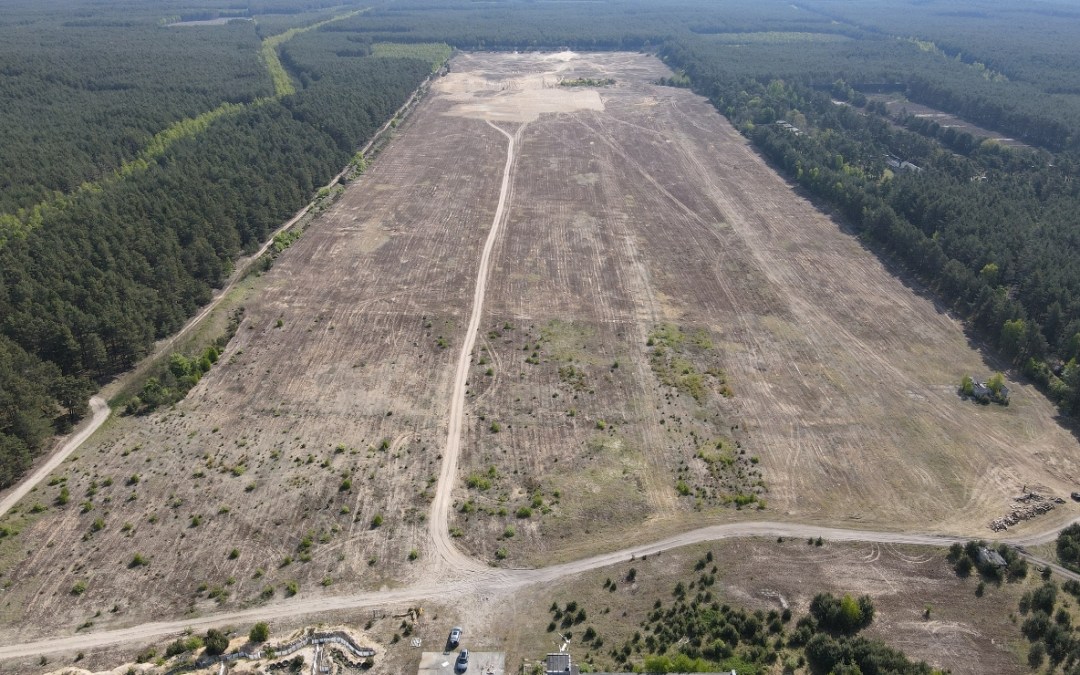
Construction has recently begun on the 17 MWp facility, which is expected to supply electricity to more than 6,000 households. Located on a former military range in Gubin, Lubuskie voivodeship, the project marks a milestone for the company’s Polish operations.
“In 2022, we connected our first wind farm in Donaborów to the grid, and now we are building our first solar park in Gubin – an important step for ABO Energy Polska.
“We are very pleased that, following grid connection approval, we have now also won a tariff,” said Aleksandra Koska, Managing Director of ABO Energy Polska.
Operating in Poland since 2019, ABO Energy employs 18 people in Łódź, working on solar, wind, and battery projects totalling over one gigawatt.
The company recently secured grid connections for three more solar parks and has applied for three standalone battery projects, including a 257 MW facility.
“The outlook for renewable energies in Poland is very good,” said Dr Klaus Pötter, General Manager. “The country is experiencing high economic growth and has an electricity demand of around 160 terawatt hours. Until now, coal has played the leading role, but that is currently changing.”
In June 2025, renewables overtook coal in Poland’s electricity generation for the first time.
Koska added: “Solar energy and battery storage had a slightly easier time and we hope that realisation of our solar park in Gubin will help us to further expand our strong position in the Polish market.”
[Image caption: On this former military range, ABO Energy is currently building our Gubin solar park. Image credit: ABO]
by Catie Owen | Aug 12, 2025 | Americas, Large Scale Utility Solar, Press Release
Press Release
Custom Electronics, Inc. (CEI) and GridEdge Networks, Inc. (GridEdge) have partnered to launch a breakthrough 69kV Distributed Generation Permissive (DGP) solution that enables safer, more cost-effective integration of Distributed Energy Resources (DER) into utility grids.
The new system addresses a critical safety challenge: protecting utility workers and equipment when distributed energy resources are disconnected from the grid and form an unintentional island that may cause dangerous power fluctuations. The solution was presented at the IEEE Power & Energy Society General Meeting in Austin, Texas, on July 28, 2025.
“As more independent power producers connect to the electric grid, utilities face new safety risks when utility crews work on power lines,” said Nachum Sadan, CEO of GridEdge Networks.
“Our DGP system provides failsafe protection by automatically disconnecting renewable energy sources when grid faults occur, eliminating the risk of unintentional islanding. This solves a critical grid safety problem.”
Unlike traditional Direct Transfer Trip (DTT) systems that utilise an external communications method such as fibre, GridEdge’s Distributed Generation Permissive (DGP) technology leverages the existing wires and is readily available, low-cost cost and inherently failsafe.
The system meets the IEEE 1547-2018 interconnection standard and is recognised in IEEE 1547.1-2020 section 5.10.3 as a “Powerline Conducted Permissive Signal” method.
The 69kV solution uses standard Coupling Capacitor Voltage Transformers (CCVTs) to transmit signals, eliminating the need for expensive fibre optic installations that can cost hundreds of thousands of dollars, depending on distance.
This breakthrough innovation makes renewable energy projects more economically viable while maintaining the highest safety standards, as it is a reliable and cost-effective alternative to fibre.
CEI brings six decades of expertise in high-voltage capacitors and power systems to this strategic manufacturing partnership, with products deployed in military, commercial and industrial applications worldwide.
“This collaboration leverages our proven high-voltage manufacturing capabilities to support the clean energy transition,” said Michael Pentaris, President and CEO at CEI. “The technology provides essential infrastructure for utilities and renewable energy developers to operate safely and efficiently.”
The 69kV DGP solution was developed in close collaboration with US utility partners and is immediately available for sub-transmission applications. The solution includes equipment and services. GridEdge provides a complete turnkey deployment, including system commissioning and operator training.
Want to publish a press release? Submit your content here for review by our editorial team.
by Catie Owen | Aug 11, 2025 | Africa, Large Scale Utility Solar
More than 20GW of solar capacity is now operational across Africa, according to the Africa Solar Industry Association (AFSIA).
The figure includes utility-scale, commercial and industrial (C&I), minigrid, and solar home systems (SHS) projects recorded in AFSIA’s database up to the end of the first half of 2025. The database now also contains residential projects in a limited number of countries.
AFSIA previously recorded a cumulative solar capacity of 19.2GW at the end of 2024, indicating that around 0.8GW was added between January and June 2025.
South Africa remains the continent’s leading solar market, accounting for around half of all installed capacity. Egypt, Morocco, and Tunisia complete the top four.
Most capacity added so far in 2025 has come from Southern Africa. While South Africa continues to develop large-scale projects, AFSIA noted that Zambia, Botswana, Zimbabwe, and Namibia “announced and completed notable projects” in the first half of the year.
Outside the region, Senegal is “emerging as a leader in solar deployment,” with 54 MW added year to date.
Nearly 40,000 solar projects are at varying stages of development across the continent, including 10GW under construction.
AFSIA said capacity under construction “is more spread across the continent,” with Algeria, Egypt, Angola, South Africa, Tunisia, and Zambia together accounting for three-quarters of the total. South Africa holds the largest share, at 28%.
Utility-scale projects make up 70% of capacity currently under construction. AFSIA described this as a “solid rebound” for the segment, which was overtaken by C&I projects in the early post-pandemic years.
by Catie Owen | Aug 11, 2025 | Europe, Large Scale Utility Solar
Exus Renewables has closed financing for the Cibele solar farm in Portugal. Located in the Alentejo region, the solar farm will have a peak capacity of 130MW and cover roughly 300 hectares.
Once operational, it is expected to supply clean electricity to around 69,000 Portuguese households annually, contributing to national energy independence and the sustainability of Portugal’s electricity system.
The project aligns with Exus’ growth strategy in Iberia and its aim to become a NextGen Energy Solutions provider across Europe.
It also supports Portugal’s renewable energy targets, with solar playing a central role in the country’s decarbonisation plan to reach 21GW of installed solar capacity by 2030.
“Following the successful financing of our projects in Spain and Poland, this transaction marks a key milestone as our first project financing in Portugal as a NextGen Energy Solutions provider,” said João Pedro Summavielle, Chief Financial Officer at Exus Renewables.
“Partnering with MUFG reinforces the bankability of our platform and our commitment to scaling clean energy across Europe through disciplined, high-quality development.”
Genoveva Ramon-Borja, Managing Director, Head of EU GCIB Coverage at MUFG, said: “We are delighted to have supported Exus Renewables with a flexible financing structure tailored to the requirements of the transaction.
“This new financing reinforces MUFG’s commitment to supporting the renewable energy sector in Iberia and demonstrates our capabilities in delivering a fully integrated financing package with lending, hedging, agency, and account bank services.
“We were pleased to combine our sector knowledge and tailored structuring to support our client achieve their strategic ambitions.”
Construction timelines for the Cibele solar farm have not yet been disclosed.
by Catie Owen | Aug 8, 2025 | Americas, Large Scale Utility Solar
The US Trump administration has intensified its measures against renewable energy, with policy changes now including the cancellation of established programmes.
Recent actions include new permitting reviews, restrictions on federal land use for projects, and the rescinding of Biden-era renewable policies.
The Environmental Protection Agency (EPA) is set to cancel the $7bn Solar For All programme, designed to provide solar access to over 900,000 low-income households.
EPA head Lee Zeldin announced the programme’s termination as part of the “One Big Beautiful Bill” spending cuts. The scheme’s 60 recipients – including state energy departments, tribal organisations, and multi-state initiatives – had aimed to deliver community solar projects and direct support.
Some states, such as Massachusetts, projected 20% electricity bill reductions for tens of thousands of residents.
Senator Elizabeth Warren called the cancellation “reckless”, while Senator Ed Markey said it would remove billions in savings from households.
Industry groups and analysts warn these measures will increase reliance on fossil fuels, delay or cancel projects, and raise consumer energy costs.
The E2 advocacy group estimates more than $22bn in clean energy projects have been delayed or cancelled since January, with over 16,500 job losses – the majority in Republican districts.
The administration argues the changes “level the playing field” for coal, gas, and nuclear, prioritising “always-on” power. Interior Secretary Doug Burgum now personally approves dozens of renewable permits; a process developers say will mire projects in red tape.
While larger firms claim they can weather the policy shift, smaller developers may struggle, and analysts warn that impacts could extend to projects on private land as well.
by Catie Owen | Aug 6, 2025 | Americas, Large Scale Utility Solar
Governor Jared Polis announced new measures to expand access to affordable renewable energy in Colorado, USA.
These include an executive action to prioritise clean energy across state agencies and the launch of the Colorado Energy Savings Navigator (CESN) – a digital platform that connects residents to over 600 energy rebates and 18 bill assistance programmes.
“Today we are taking action to ensure that Coloradans can easily access clean energy savings, especially ones that expire soon,” said Governor Polis.
“We continue to do all we can to make people aware of how you can reduce costs on energy bills and keep money in your pocket.”
With average household energy costs in Colorado projected to rise by up to $500 annually by 2035 due to new federal policies, Colorado’s steps aim to lower energy bills, speed up clean energy development, and secure economic certainty for businesses.
Public Utilities Commission Director Rebecca White said the CESN tool was designed to solve the “time-consuming” process of accessing rebates.
Environmental and energy leaders welcomed the announcement. “This Executive Action will give people tools they need to save money on energy and accelerate clean energy deployment,” said Kelly Nordini, CEO of Conservation Colorado.
Washington targets renewables
The signing of Executive Order 14315: Ending Market Distorting Subsidies for Unreliable, Foreign-Controlled Energy Sources and the One Big Beautiful Bill Act on July 7 2025, heralded the end of subsidies for renewable energy projects in the US.
The Executive Order cited costs to taxpayers and dependency on supply chains “controlled by foreign adversaries” as the motivations behind cutting the tax cuts.
In cutting discounts for wind and solar projects, the US plans to revert its focus to fossil fuels.
In retaliation, Colorado Governor’s executive action instructs state agencies to streamline project development and maximise federal tax credit opportunities before they expire.
Advanced Energy United’s Emilie Olson commented: “It sends a clear signal that Colorado will move forward in spite of Washington, D.C.”
by Catie Owen | Aug 6, 2025 | Europe, Large Scale Utility Solar
Zenith Energy has announced the acquisition of a 10MWp agrivoltaic solar project in Lazio, Italy, via its wholly owned subsidiary WESOLAR S.R.L.
The deal marks the company’s largest solar acquisition to date and supports its strategy to build a 20MWp portfolio by the end of 2025.
The €1.3m acquisition includes the purchase of the land and is conditional on the project reaching Ready-to-Build (RTB) status within 12 months.
Agrivoltaic systems combine solar power production with agricultural activity, allowing for dual land use and supporting sustainability goals.
Zenith’s current solar portfolio spans four regions in Italy. These include an operational 0.5MWp site in Liguria (currently generating 0.2MWp), a 3MWp RTB asset in Puglia, and development-stage agrivoltaic projects in Piedmont (7MWp) and Lazio (10MWp).
“We are pleased to announce the Acquisition our largest to date,” said CEO Andrea Cattaneo.
“This milestone holds significant symbolic value because it marks the early achievement of our strategic goal of building a 20 MWp production capacity portfolio by the end of 2025.”
Cattaneo further highlighted the company’s due diligence process and financing strategy:
“Each project we pursue is subject to rigorous technical and legal due diligence… Looking ahead, we intend to leverage favourable financing options tailored to Italy’s solar sector to accelerate our expansion and minimise equity dilution.”
Zenith aims to develop projects at various stages, with a focus on rapid investment recovery and long-term sustainability.
Interested in Italy’s solar market? Don’t miss your free ticket to Solar & Storage Live Italia – taking place 8-9 October at the Veronafiere exhibition centre.
by Catie Owen | Jul 31, 2025 | Europe, Everything Installer, Large Scale Utility Solar, Press Release
Press Release
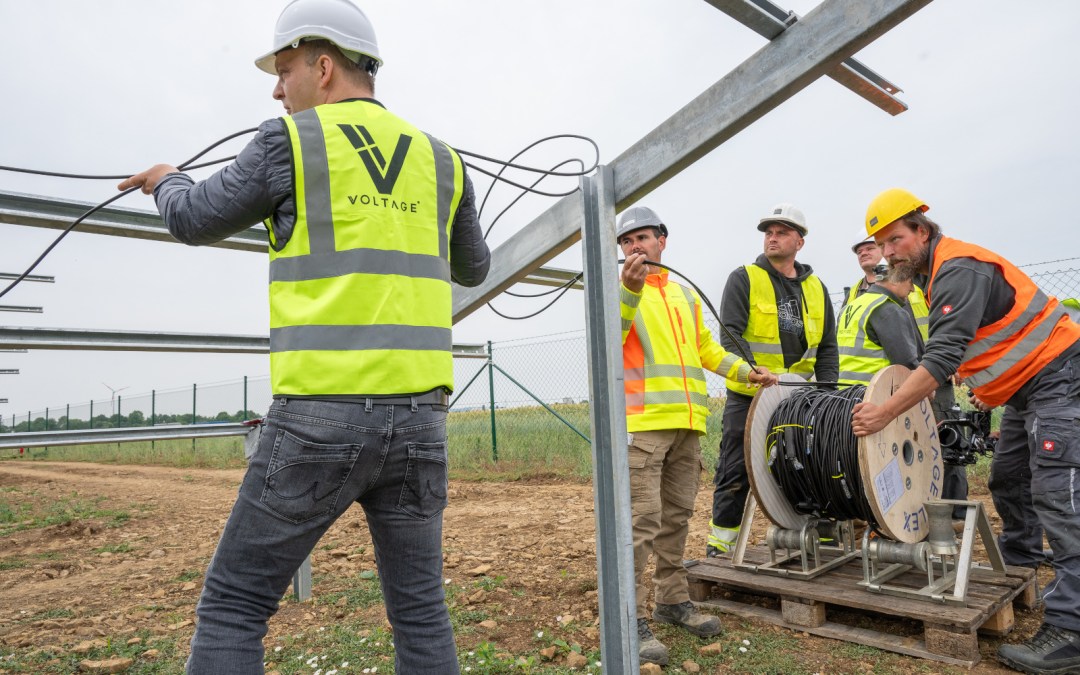
Voltage Energy, a global provider of utility-scale wire solutions, has delivered PV cabling to a utility-scale project in Europe for the first time.
The plant, built by BELECTRIC GmbH based in Kolitzheim, has a total capacity of 96.7MW and is expected to generate around 105GWh of clean electricity annually once completed.
The power plant consists of three sections, two of which are already connected to the grid. The final 15 MW, located on an area of approximately 10 hectares, are nearing completion and commissioning.
Voltage Energy’s pre-assembled cable harnesses are being used for over a third of the installed capacity, ensuring safe, efficient, and long-lasting power transmission from the module strings to the inverters.
“This first delivery to a European customer marks a significant milestone for our company. The local market demands high standards of quality, reliability, and sustainability – precisely where our products excel,” says Georg Urban, General Manager Europe at Voltage Energy.
“Our project with BELECTRIC is the ideal entry point into the European market. Going forward, we aim to focus primarily on supplying large-scale projects of 100 megawatts and above,” adds Andreas Thissen, Sales Director Europe.
The IBEX® solution used in the project stands out for its fast installation, superior weather resistance, and optimal performance under challenging conditions.
Factory-assembled and tested to international standards, they not only meet all common requirements for large-scale PV projects but also significantly reduce risks associated with improper installation and incorrect connections often seen in conventional on-site cabling.
Since its founding in 2015, Voltage Energy has delivered over 40 gigawatts of cabling solutions to customers in the United States. The company established its European headquarters in Frankfurt am Main in 2024, laying the foundation for its expansion across Europe, and is continuing to build up local resources.
Want to publish a press release? Submit your content here for review by our editorial team.
by Catie Owen | Jul 30, 2025 | Africa, Large Scale Utility Solar
Sun King, the world’s largest off-grid solar company, has secured US$156m in financing to expand affordable solar access across Kenya.
The deal, backed by Citigroup Inc. and British International Investment, marks the largest securitisation of its kind in sub-Saharan Africa outside South Africa and the first primarily backed by commercial banks in the region.
Other participants include Stanbic Bank Kenya, Absa Group, Co-operative Bank of Kenya, KCB Bank Kenya, Dutch development bank FMO, and Norfund.
The financing will support Sun King’s pay-as-you-go solar model, enabling approximately 1.4m low-income households and businesses to transition from expensive, polluting fuels like kerosene and diesel to solar power.
“This deal signals a major turning point for green energy finance in Africa,” said Anish Thakkar, co-founder of Sun King. “It shows that African commercial banks believe in the power of pay-as-you-go solar and are ready to back it with serious capital.”
Sun King sells solar kits with batteries and collects payments over about a year, typically costing users around $0.19 a day. The equipment lasts up to a decade. The company has also secured funding for projects in Nigeria and Tanzania.
“This securitisation demonstrates the effectiveness of pay-as-you-go business models to reach underserved communities at scale,” said Jorge Rubio Nava, Citi’s global head of social finance.
Kenya is one of the few sub-Saharan African countries on track for universal electricity access by 2030, with rooftop solar playing a growing role, according to the International Energy Agency.
by Catie Owen | Jul 29, 2025 | Europe, Large Scale Utility Solar
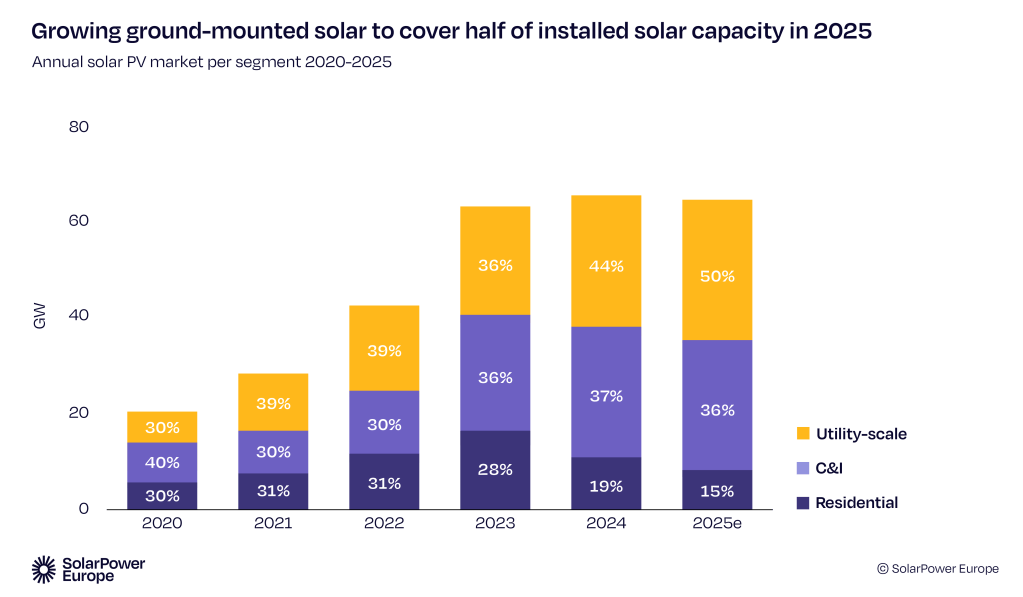
SolarPower Europe’s latest market analysis projects a -1.4% decline in EU solar installations for 2025 – the first drop in annual growth since 2015.
EU Market Outlook for Solar Power: 2025 Mid-Year Analysis follows two years of exceptional expansion and a modest rise in 2024, when the bloc installed 65.1GW. In 2025, installations are expected to fall slightly to 64.2GW.
Despite this dip, the EU is still on course to meet its 2025 solar target of 400GW. By the end of the year, the bloc is forecast to host 402GW of solar capacity.
However, SolarPower Europe warns that current trends put 2030 targets at risk. The EU needs to add nearly 70GW of solar annually to reach 750 GW by the end of the decade; current trajectories point to just 723GW by 2030.
“The number may seem small, but the symbolism is big,” said Dries Acke, Deputy CEO of SolarPower Europe.
“Market decline, right when solar is meant to be accelerating, deserves EU leaders’ attention. Europe needs competitive electricity, energy security, and climate solutions. Solar delivers on all of those needs.
“Now policymakers must deliver the electrification, flexibility and energy storage frameworks that will drive solar success through the rest of the decade.”
A slump in residential rooftop installations largely drives the downturn. Markets including Italy, the Netherlands, Austria, Belgium, Czechia, and Hungary have seen households postpone installations as the effects of the 2022 energy crisis subside and incentives are withdrawn.
Rooftop installations are down over 60% in some regions, while Poland, Spain, and Germany face declines exceeding 40%.
Utility-scale stays strong
In contrast, utility-scale solar remains strong, supported by improved auction design. In 2024, EU countries awarded a record 20GW, with Germany leading in hybrid solar-storage projects.
Auctions continue to attract competitive bids, with Germany’s latest innovation tender seeing prices fall to €0.05/kWh.
“Utility-scale solar remains the backbone of EU deployment,” Jonathan Gorremans, Market Analyst for SolarPower Europe, commented on LinkedIn. “It’s expected to account for half of all new installations in 2025.”
This aligns with IRENA’s Renewable Energy Statistics 2025 report, released earlier this month, noting that energy capacity grew by 15% in 2024, but regional gaps were widening.
However, corporate Power Purchase Agreements (cPPAs) – once a key driver of large-scale solar – have declined, with a 41% drop in signed deals between Q1 and Q2 of 2025.
Falling electricity prices are reducing long-term contracting incentives, highlighting the need for improved policy support.
Even amid challenges, solar’s role in Europe is growing. June 2025 marked the first time solar generated most the EU’s electricity for a full month, underscoring its central role in the continent’s energy future.
[Graph credit: SolarPower Europe]
Europe’s solar future is in the hands of the sector that knows it best. Network, showcase innovations, and keep up to date on the latest market progress by attending a Solar & Storage Live event. Find one near you.
by Catie Owen | Jul 28, 2025 | Commercial & Industrial Solar, Large Scale Utility Solar, Middle East
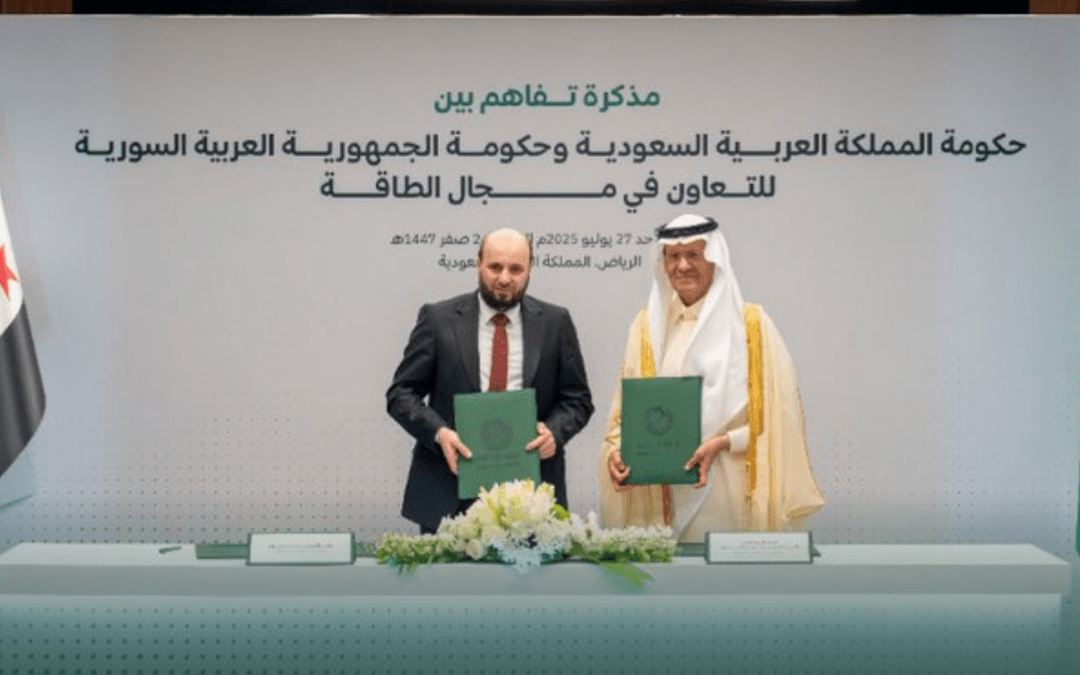
Saudi Arabia and Syria have signed a memorandum of understanding (MoU) to enhance cooperation across a range of energy sectors, following a ministerial meeting held in Riyadh.
The meeting brought together Saudi Arabia’s Minister of Energy, Prince Abdulaziz bin Salman bin Abdulaziz, and Syria’s Minister of Energy, Eng. Mohammad al-Bashir.
Discussions focused on opportunities to strengthen collaboration between the two countries in areas including oil and its supplies, electricity, renewable energy, and energy efficiency.
The ministers also reviewed potential investment opportunities and discussed ways to exchange expertise in the development of energy projects, policies, and regulatory frameworks. These efforts are intended to support the development of Syria’s energy sector.
Following the talks, the two sides signed an MoU outlining plans to deepen cooperation in several key areas. These include oil and gas, petrochemicals, electricity, electrical interconnection, and renewable energy.
The agreement reflects a shared interest in enhancing bilateral ties within the energy field and exploring long-term collaboration to support the development goals of both nations.
Saudi Arabia’s Ministry of Energy commented on the news on X (formerly known as Twitter), describing the meeting between the two ministers as “to discuss topics of mutual interest and explore opportunities for cooperation between the two countries across various energy sectors.”
[Image credit: The Saudi Arabian Ministry of Energy on X]
by Catie Owen | Jul 28, 2025 | Americas, Large Scale Utility Solar
The latest Electric Power Monthly report from the U.S. Energy Information Administration (EIA), covering data through May 2025, shows solar remains the fastest-growing source of electricity in the United States.
In May, utility-scale solar generation (installations >1 MW) rose by 33.3% compared to May 2024. Small-scale solar, such as rooftop systems, increased by 8.9%.
Together, solar accounted for more than 11% of the country’s electricity that month – a 26.4% year-on-year increase.
For the first time, combined utility- and small-scale solar output (38,965 GWh) exceeded wind generation (36,907 GWh).
From January to May 2025, utility-scale solar generation grew by 39.8%, while small-scale solar rose by 10.7%, totalling an overall increase of 31.1% compared to the same period in 2024.
Solar made up 8.4% of the nation’s electricity in the first five months of 2025, up from 6.6% the year prior.
Solar generation also surpassed output from hydropower (6.1%) and now exceeds the combined output of hydropower, biomass, and geothermal sources.
Wind generation accounted for 12.2% of U.S. electricity between January and May 2025, 3.9% more than the previous year and nearly double that of hydropower. Combined, wind and solar provided 20.5% of U.S. electricity in that period, surpassing coal and nuclear.
In May alone, renewables generated 29.7% of U.S. electricity, second only to natural gas, which declined by 5.9% from the previous year.
The report follows EIA’s June findings, which demonstrated that the US’s renewable energy generation reached a record high in 2024. However, eyes on the country’s 2025 changes to its renewable policies, which threaten the US’ clean energy development.
by Catie Owen | Jul 25, 2025 | Innovation, Large Scale Utility Solar, Middle East
TotalEnergies Jordan has donated over 800 solar panels to support the Jordan Food Bank, Tkiyet Um Ali, and the Dar Abu Abdullah Association.
The contribution is part of the company’s corporate social responsibility strategy and commitment to renewable energy.
Around 115 panels have been designated for the Jordan Food Bank. These will help power its core facilities, including a charity supermarket and administrative offices. Installation will proceed once the necessary funding is secured.
Additionally, TotalEnergies Jordan signed a memorandum of understanding with Tkiyet Um Ali to supply 720 solar panels for future projects implemented by Dar Abu Abdullah in partnership with Tkiyet Um Ali. Deployment will depend on each programme’s needs and timeline.
“Supporting renewable energy is a core pillar of our social responsibility agenda,” said François Decherf, Managing Director of TotalEnergies Jordan. “We are proud to contribute to projects that not only serve humanitarian causes but also advance environmental sustainability.”
Decherf added that the initiative is intended to help non-profits reduce operational costs, enabling them to direct more resources toward community support.
He also noted the importance of private sector involvement in creating development models that combine charity with sustainability.
Dr. Kawthar Al-Qatarneh, Director General of the Jordan Food Bank, said the donation would help expand the organisation’s services and reduce its dependence on traditional energy sources.
“This initiative strengthens our infrastructure and that of our partners, allowing us to adopt clean energy solutions that help ensure the sustainability of our humanitarian mission,” added Samer Balkar, Director General of Tkiyet Um Ali.
The initiative supports Jordan’s Sustainable Development Goals, particularly in promoting clean energy and community development.