by Catie Owen | Oct 9, 2024 | Large Scale Utility Solar, Market Reports
A new report from the International Energy Agency (IEA) reveals that efforts to triple global renewable energy capacity by 2030 will likely fall short, despite rapid growth in solar power and supportive policies from major economies.
The IEA’s Renewables 2024 report forecasts a 2.7-fold increase in renewable capacity by the end of the decade, reaching 10,800 gigawatts—just under the 11,000-gigawatt target set at the COP28 climate conference.
However, the agency outlines an accelerated pathway that could still meet this goal.
Renewable energy capacity reached a record 3,870 gigawatts last year, but the IEA warns that current growth is not fast enough to meet 2030 targets.
The tripling goal, established during COP28 as part of the UAE Consensus, seeks to promote sustainable development and advance global climate objectives.
Fatih Birol, IEA Executive Director, highlighted that renewables are expanding faster than governments can set targets.
He noted that this growth is driven not only by the need to reduce emissions but also by the cost-effectiveness of renewables as the cheapest option for new power generation globally.
China, Europe, India, and the U.S. are expected to contribute 80% of the global increase in renewable capacity, with China alone accounting for about 60%. The IEA attributes China’s success to strong policy support and competitive costs.
Despite positive developments, investment in grid infrastructure remains insufficient, limiting the ability to fully utilise renewable energy.
The IEA estimates that at least 1,650 gigawatts of renewable capacity are awaiting grid connection.
The agency emphasises that more investment in grids and stable policy environments will be essential to unlocking the full potential of renewables, especially in emerging economies.
by Catie Owen | Oct 4, 2024 | Market Reports, Storage
According to research by InsightAce Analytic, the global solar energy storage market was valued at $45.63bn in 2022 and is projected to reach $154.30bn by 2031, growing at a compound annual growth rate (CAGR) of 14.7% from 2023 to 2031.
Solar energy storage involves capturing and storing energy generated from solar panels for future use, offering a clean, abundant, and cost-free energy source.
This market is driven by factors such as population growth, urban expansion, and increasing awareness of solar energy’s economic and environmental benefits.
The market’s growth is further fueled by innovations like building integrated PV, floating solar, and advancements in lithium-ion batteries for electric vehicles.
However, challenges include high installation costs, space requirements, and the intermittent nature of solar energy, which depends on sunlight and is impacted by weather conditions.
Several prominent players in the market include Samsung SDI, Tesla, ABB, LG Electronics, Siemens Energy, and Schneider Electric, among others.
Market growth is expected to be driven by the electrification of transportation, the digitalisation of economies, and the increasing use of electric motor systems in industries.
Regionally, North America holds a significant share of the market, driven by advancements in renewable energy and government incentives.
Asia-Pacific is also a key region, with countries like China and India pushing for solar energy adoption. Recent developments include GE Vernova’s collaboration in Taiwan’s energy storage sector and Fluence’s partnership with ESB on a storage system project in Europe.
Key market segments include lead-acid and lithium-ion batteries, off-grid and on-grid installations, and applications in residential, industrial, and utility sectors.
by Catie Owen | Oct 2, 2024 | Market Reports
According to SolarPower Europe’s 2024 Solar Jobs Report the European solar sector created around 826,000 jobs by 2023’s close – a 27% increase since 2022. However, the 2024 forecast expects only a 0.4% increase.
The 2023 boost seems to have been caused by a record-breaking 50% growth of the European solar market as more than 60GW were installed across the continent.
The 2024 report has indicated a drastic slowdown in solar industry growth, particularly noting the rooftop solar sector. The slowdown has been attributed to a decrease in solar installations due to limited flexibility and decreased impacts of the energy crisis.
Furthermore, European solar manufacturers have been hindered by significant challenges over the last year. This has resulted in pauses in production and a reduction in the workforce.
“Solar can offer more than 1 million workers a meaningful, quality career in their local communities,” comments Walburga Hemetsberger, CEO of SolarPower Europe.
Movement has been noticed on a national case-by-case basis. For example, Germany saw a 104% growth in its solar workforce – becoming the largest in Europe boasting 154,000 workers.
Poland took second place with 113,000 workers, and Spain third.
Hemetsberger continues: “These job opportunities can’t be taken for granted. We urge the new EU leadership to improve regulatory conditions to add more solar, support EU solar manufacturers, and develop Europe’s strategy around solar skills.”
Despite this report, SolarPower Europe predicts that 1m solar jobs will have been created by 2027 – thus meeting the region’s demand for competitiveness, climate, and energy security targets.
This is a revised prediction from the original forecast of 1m solar jobs and 88.5GW of annual installations by 2025.
Policy recommendations
SolarPower Europe has also published policy recommendations in the Solar Jobs Report. These are:
- Assessing the exact need for workers and skillsets at a national level.
- Creating a pan-renewable energy career path.
- Including an electrification skills strategy under the upcoming EU Electrification Action Plan.
- Boosting the visibility and allure of STEM education and careers.
- Retraining workers from legacy-fossil industries.
- Supporting the circulation of skills in Europe.
- Developing solar-specific training within electrical professional training.
To stay up-to-date with the European solar market, don’t miss out on your free ticket to Solar & Storage Barcelona – taking place 13-14 November.
by Catie Owen | Oct 1, 2024 | Market Reports
According to a report from the International Energy Agency (IEA), more international cooperation will be needed in order to achieve climate goals – despite headway already made in high-emission sectors.
The IEA worked with the UN Climate Change High-Level Champions to produce the Breakthrough Report. In the report, some sectors are shown to be performing better than others in the move towards 2030 net zero targets.
To encourage international cooperation for net zero, the report highlights development over the last year and issues recommendations for how countries can collaborate.
Factors included are research and development, demand creation, financial assistance, infrastructure and standards, and trade.
Through these, it is the report authors hope that energy transitions in some of the highest emitting sectors will be sped up. These sectors include road transport, steel, cement, hydrogen, power, and buildings.
According to IEA Executive Director Fatih Birol, collaboration between countries is crucial to achieving international climate goals – especially for developing and emerging economies.
Additionally, the UN Climate Change High-Level Champion for COP29 explained that governments and businesses should work together to adopt “harmonised standards” to increase market demand for clean technologies.
The report also stresses that collaboration can help make clean technologies, such as solar, more affordable by attracting investment.
Background
The release of the report coincides with Climate Week NYC. The Breakthrough Agenda, which was launched in 2021 and includes 59 countries and more than 150 initiatives, has a goal of increasing use of renewable energy over fossil fuels.
The Agenda was initially founded in Glasgow and has been supported through a partnership with the UAE via the COP28 Presidency.
It is also the hope of the authors that the recommendations featured in the report will inform policymakers attending COP29 in Azerbaijan in December. October 1 will also see the release of a report focused on agricultural progress – likely featuring agrivoltaics.
by Catie Owen | Sep 30, 2024 | Market Reports
Press Release
UK farming is preparing for both a low-yielding harvest and adapting to a new normal of climate extremes, following the country’s coolest summer for nearly a decade and one of the wettest winters on record.
This has been compounded by external factors such as the cost of energy, inflation, changing subsidies and economic volatility – resulting in a “perfect storm” of crises that pushes farm margins to the brink.
Trade association Solar Energy UK has launched an online survey to understand the pressures currently faced by farmers, landowners and those working in the agricultural sector and the extent to which diversification could help farms tackle headwinds.
“We believe the perspectives of farmers have been largely missing from the national conversation on farm diversification and renewables,” said Solar Energy UK Chief Executive Chris Hewett.
“We want our survey to assess the acute challenges farmers have faced this year, from turbulent energy prices to the weather. With margins squeezed to near breaking-point, it explores solutions to mitigate uncertainty in fallow periods and asks farmers to what extent diversification could help them maintain their livelihoods,” he added.
Diversifying through renewables – be it solar, wind, battery energy storage or anaerobic digestion – presents a significant opportunity for farmers to generate a more predictable and sustainable income stream.
Results
The survey results will be compiled into a national report to inform discussions on farming and energy policy, to ensure the voice of the UK’s farming community is heard in the important debate.
Commenting on the season, Gareth Williams, a farmer in Hereford, said: “As we harvest the fruits of our labour, late summer is always a busy time on UK farms, but this year’s season has certainly been challenging.
“We’ve faced a perfect storm of economic headwinds through crop prices, inflation on inputs and multiple years of weather extremes. On our farm, and for a lot of our neighbours, we’re asking fundamental questions about our long-term viability.
“What farmers need is certainty, confidence and tools at our disposal to steady the peaks and troughs of difficult years. Diversifying our farms – whether through holiday cottages, solar energy or biomass – means we can be more resilient to the uncertainties.”
Audience
Solar Energy UK’s national survey is specifically targeted at farmers, landowners, and those working on farms across the UK. Taking less than 10 minutes to complete, it will provide participants with the opportunity to help influence the national conversation on farming and energy policy.
Participants who share their insights in the survey will also be entered into a prize draw to win a £100 gift voucher.
Solar Energy UK is a membership-based trade body committed to promoting renewable energy solutions that benefit both the environment and the economy. The organisation is dedicated to supporting British farmers by providing sustainable energy alternatives to help secure UK agriculture’s future.
Farmers, landowners, and farm workers are encouraged to participate in the survey and have their say in shaping the future of British agriculture.
To participate in the survey, please visit www.farmingsustainably.co.uk
by Catie Owen | Sep 23, 2024 | Market Reports
The U.S. solar energy sector is experiencing rapid growth, driven by increased investment and supportive policies like the Inflation Reduction Act (IRA).
Solar installations grew by 21% in the first quarter of 2024, bringing total capacity to over 100 GW, with 3,379 MW of utility-scale solar power added.
Projections for 2024 suggest over 56 GW of new solar capacity, with experts predicting that solar and wind energy could soon surpass coal generation for the first time in U.S. history.
The Solar Energy Industries Association (SEIA) reports 5m solar projects across the U.S., a figure expected to double by 2030. Currently, 97% of U.S. solar installations are on residential rooftops, powering 7% of homes.
By 2030, that number is projected to reach 15%. The solar industry now supports around 280,000 jobs, with employment in the sector growing by 6% in 2023.
Federal and state-level policies have boosted the post-pandemic expansion of the industry, helping connect new projects to the grid.
“The solar and storage industry is turning federal clean energy policies into action by rapidly creating jobs and powering economic growth,” said SEIA President Abigail Ross Hopper.
However, competition from China, which produces over 80% of the world’s solar panels, poses a challenge. U.S. companies struggle to compete with China’s lower-cost production, despite tariffs aimed at curbing imports.
Mike Carr, executive director of the Solar Energy Manufacturers for America coalition, compared China’s dominance to OPEC’s control of oil markets.
While tariffs could help boost U.S. manufacturing, they may also raise prices, potentially slowing the expansion of solar energy and the broader green transition.
by Catie Owen | Sep 19, 2024 | Market Reports
A new report by Ember, a UK-based independent climate and energy think tank, projects that global solar capacity will reach 593GW by the end of 2024.
If these forecasts are accurate, it would mark a 29% increase in capacity compared to the previous year, even after a remarkable 87% growth in 2023. By July 2024, it is estimated that 292GW of solar capacity had already been installed worldwide.
For most countries, including the UK, the amount of installed solar capacity added in 2024 has outpaced the same period in 2023. The UK, in particular, added around 1.1 times the capacity it installed the previous year.
The Department for Energy Security and Net Zero (DESNZ) data, released in August, shows that the UK now boasts a total installed solar capacity of 17GW.
This represents a 7.5% increase (1.2GW) since July 2023, with 70MW of new solar capacity added in July 2024, the highest monthly figure so far this year.
Despite the prevalence of small-scale domestic solar installations in the UK, these only account for 30% of the country’s total installed capacity. In June 2024, 77% of the new solar installations were domestic, adding 51MW of capacity.
Ember’s analysis shows that the UK is experiencing modest but steady growth in solar installations, with an 11% year-on-year increase in installed capacity—on par with Germany’s growth rate.
Interestingly, global forecasts for solar power installations have been repeatedly revised upwards over the past 18 months, as the actual installation rates have consistently exceeded even the most optimistic predictions.
Ember’s estimate of 593GW of additional capacity for 2024 is nearly 200GW higher than the International Energy Agency’s (IEA) forecast at the beginning of the year.
Looking ahead, the UK’s solar capacity is expected to rise sharply, thanks to the Contracts for Difference (CfD) Allocation Round 6 (AR6), which has set new benchmarks for the industry. A total of 93 ground-mounted solar projects, representing a combined capacity of 3.3GW, were awarded contracts under AR6.
UK Energy Week marks the leadup to Solar & Storage Live, taking place 24-26 September. Haven’t registered yet? Don’t miss out on your free ticket by securing your place here.
by Catie Owen | Sep 13, 2024 | Market Reports
Solar and clean energy stocks experienced a significant uptick on Wednesday after the first debate ahead of the USA’s upcoming November election.
The Invesco Solar ETF (TAN) rose by 6%, while the iShares Global Clean Energy ETF (ICLN) climbed by more than 3%. Despite these gains, both benchmarks have faced losses this year, with TAN down 24% and ICLN down 7.7%, due to ongoing uncertainty surrounding the election and its potential impact on the clean energy sector.
First Solar surged by 15.2%, SolarEdge saw an 8.5% rise, Sunnova advanced by about 6.2%, and Sunrun jumped 11.5%.
“We expect a near-term bounce towards Vice President Harris following the first debate with former President Trump, but the longer-term impact remains unclear,” said Raymond James analyst Ed Mills in a note to clients on Tuesday night.
Citi analysts noted that betting markets have shifted in favour of Harris, but only to levels seen before a recent New York Times/, Siena College poll gave former President Donald Trump a slight one-point lead in the race for the White House.
The upcoming election is viewed as a critical juncture for the energy transition, with some investors concerned that a Trump win could lead to the weakening or even repeal of the Inflation Reduction Act (IRA) if Republicans take control of both the White House and Congress.
Debate points
Trump, while discussing energy policy, criticised the Biden administration’s approach and claimed that if Harris wins in November, “fossil fuel will be dead.” He criticised both wind and solar energy but offered a cautious acknowledgement of clean energy initiatives.
“We’ll go back to windmills and we’ll go back to solar, where they need a whole desert to get some energy to come out,” Trump said. He added, “By the way, I’m a big fan of solar.”
During the debate, Harris addressed a statement she made in 2019 supporting a fracking ban, a stance she now appears to be walking back. Fracking has contributed to the U.S. natural gas boom, and under the Biden administration, both oil and natural gas production have reached record levels.
“I will not ban fracking,” Harris clarified during the debate. She also emphasised the administration’s investments in clean energy, supported by the IRA.
“I am proud that as vice president over the last four years, we have invested a trillion dollars in a clean energy economy while we have also increased domestic gas production to historic levels,” Harris said. She further highlighted how a clean energy economy has boosted investments in “American-made products, American automobiles.”
Analysts predict that if Harris wins, the current provisions of the IRA will likely remain in place. However, if Trump returns to the White House, they expect he may target specific aspects of the law, particularly tax credits for electric vehicles.
Trump’s views on solar energy remain somewhat ambiguous, although it’s worth noting that solar investments have disproportionately benefited districts represented by GOP members of Congress.
by Catie Owen | Sep 12, 2024 | Market Reports
In September 2023, the International Energy Agency (IEA) released a report on Switzerland’s energy policies – as it does for all its member countries.
Switzerland’s low-emissions electricity system positions the country favourably to achieve its climate goals for 2030 and beyond but accelerating the development of renewable energy is crucial as it plans to phase out nuclear power, according to the report.
Switzerland has committed to reducing greenhouse gas emissions by at least 50% by 2030 and achieving net-zero emissions by 2050. To facilitate this, the government has introduced new legislation and updated existing laws to drive progress.
However, significant work is still needed in sectors like buildings and transport, which missed the 2020 emission reduction targets.
Previous results
Since the IEA’s previous review in 2018, Switzerland has made progress in its energy transition, particularly with the updated Energy Act. This law prioritises new hydropower and wind projects as matters of national interest.
The latest IEA review recommends expanding this designation to all renewable energy plants and their grid connections, which would help attract investment in new energy capacity.
Renewable energy projects and grid extensions in Switzerland frequently encounter long delays, with legal proceedings sometimes stalling initiatives for decades. Administrative challenges related to planning and execution are slowing down the rollout of new projects, which, if not addressed, could jeopardize Switzerland’s 2030 climate goals and create concerns about energy security.
Following a 2017 national referendum, Switzerland will gradually phase out nuclear energy, which could increase reliance on electricity imports until new low-emissions capacity is brought online.
“Switzerland’s efforts to mitigate the impact of the global energy crisis while advancing towards its net-zero targets are admirable,” said IEA Deputy Executive Director Mary Burce Warlick, who presented the report in Bern at an event with Federal Councillor Albert Rösti, Head of the Federal Department of the Environment, Transport, Energy and Communications (DETEC).
“The gradual phaseout of nuclear power and increased electrification of the energy system will pose challenges. Switzerland must ensure that new renewable energy capacity is developed in a timely and orderly manner to reduce dependence on electricity imports and stay on course to meet its long-term decarbonisation targets.”
Recommendations
To help Switzerland meet its targets, the IEA’s review provides several key recommendations. A primary suggestion is for federal and regional authorities to streamline lengthy approval processes for critical infrastructure projects, including hydropower, wind, and solar PV installations, clearing obstacles to a clean energy future.
The review also encourages Switzerland’s regions, or cantons, to harmonise approval procedures and improve spatial planning for energy projects and supporting infrastructure.
Additional recommendations include preparing climate legislation for the post-2030 period, focusing on energy efficiency measures, accelerating digital transformation, and aligning electricity market regulations with those of the European Union.
The global energy crisis also underscored the importance of basic gas market regulation in Switzerland, including the creation of an independent gas regulator. These reforms would help prepare Switzerland for potential integration into the EU’s internal energy market.
Energy efficiency plays a key role in Switzerland’s strategy to meet its 2030 climate goals. The country has a strong record of decoupling economic growth from energy use, significantly outperforming the IEA average on a per capita basis.
However, missed targets in key sectors show the need for stronger energy efficiency measures. As such, the IEA suggests that energy efficiency be treated as the “first fuel” and integrated into all new energy and climate legislation.
Close cooperation between federal and regional governments will be essential to driving the energy transition, given the decentralised powers that cantons hold over energy policy.
Switzerland Energy Week marks the leadup to Solar & Storage Live Zürich, taking place 17-18 September. Haven’t registered yet? Don’t miss out on your free ticket by securing your place here.
by Catie Owen | Sep 11, 2024 | Market Reports, Storage
A study titled Future Swiss Energy Economy: The Challenge of Storing Renewable Energy, published in the journal Frontiers in Energy Research, in part analyses how Switzerland could use solar power as part of its renewable energy transformation through various storage and economic solutions.
Researchers hailed from École Polytechnique Fédérale de Lausanne (EPFL) and Empa Materials Science and Technology in Switzerland, and from Tohoku University in Japan.
Solar’s role in Switzerland
Solar energy is a key renewable resource for Switzerland’s future energy economy. PV installations capture solar power efficiently, and with the right infrastructure, solar energy has the potential to meet a significant portion of the country’s demand.
On average, Switzerland receives around 1,100kWh per square meter annually, making solar energy a viable source of electricity. The study further highlights the potential for expanding solar PV capacity to cover many of the country’s energy needs.
However, the variability of solar energy, with higher production in summer and lower output in winter, creates a need for efficient energy storage systems. The main challenge is ensuring that excess energy generated during sunny months can be stored and used during periods of lower sunlight, especially in winter.
Approaches to solar storage
The study examined three energy systems for Switzerland’s renewable future, all of which rely heavily on solar power:
- Purely electric system (ELC): Solar power is converted directly into electricity, which is stored in batteries and used to meet energy demand. The electric system is the most energy-efficient option, but it faces challenges with seasonal storage.
- Hydrogen-based system (HYS): Solar power generates hydrogen through electrolysis, and the hydrogen is stored for later use. This method provides flexibility for seasonal storage, but the study notes that the hydrogen infrastructure – production, storage, and transportation – needs development.
- Synthetic hydrocarbon system (HCR): Solar energy is used to produce synthetic hydrocarbons, such as synthetic fuels, by capturing carbon dioxide from the air and combining it with hydrogen produced by solar power. This system is the least energy-efficient, requiring the largest PV installations and additional energy for conversion processes.
Solar energy potential and storage challenges
The study shows that solar energy alone could potentially meet Switzerland’s energy needs, provided enough PV installations are developed. For the purely electric system, an area equivalent to 13% of Switzerland’s urban space would need to be covered with solar panels.
Although solar energy is abundant during the summer, the critical issue is storing that energy for use in the darker winter months.
To achieve this, either battery storage or alternative storage methods like hydrogen or synthetic hydrocarbons would be required. While battery storage for day-to-day energy balancing is feasible, long-term seasonal storage remains the biggest hurdle.
Hydrogen and synthetic hydrocarbons present viable solutions, but their implementation requires further technological advancements and infrastructure investments.
Economic considerations
The cost of transitioning to solar energy in Switzerland is a key factor. The purely electric system, which relies heavily on solar power, is the most cost-effective at around CHF 3,669 per person annually.
Hydrogen-based systems and synthetic hydrocarbon systems are more expensive due to the additional infrastructure and conversion processes required. With continued technological development, the cost of solar panels and storage solutions is expected to decrease, making solar energy more economically feasible over time.
Conclusion
Solar energy is a cornerstone of Switzerland’s renewable energy future. With proper infrastructure, PV installations can generate enough power to meet a significant portion of the country’s energy needs.
However, the main challenge remains energy storage, especially to balance seasonal fluctuations in solar output.
By investing in innovative storage technologies like hydrogen and synthetic hydrocarbons, Switzerland can harness solar energy efficiently and create a sustainable energy economy for the future.
Switzerland Energy Week marks the leadup to Solar & Storage Live Zürich, taking place 17-18 September. Haven’t registered yet? Don’t miss out on your free ticket by securing your place here.
by Catie Owen | Sep 9, 2024 | Large Scale Utility Solar, Market Reports
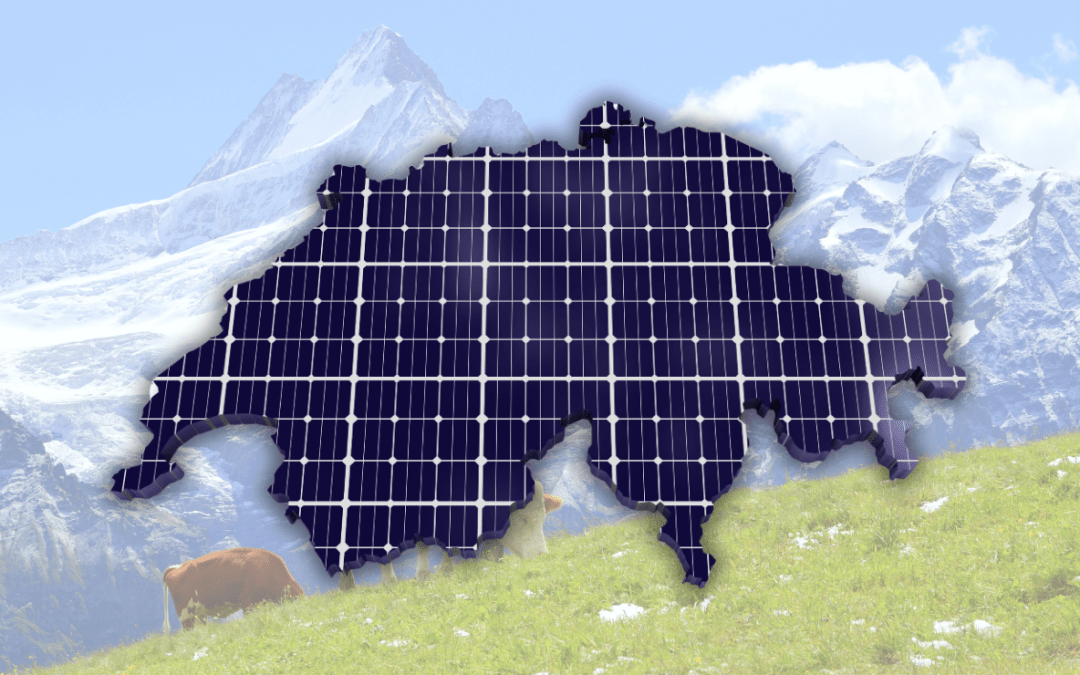
Switzerland is experiencing a significant surge in solar PV energy, with solar power expected to cover more than 10% of the country’s total electricity demand for the first time in 2024.
This marks a milestone, as solar energy will surpass the output of the Beznau nuclear power plant, according to the Swiss Solar Energy Association (Swissolar).
The Swiss PV market has been on a rapid growth trajectory since 2020, with annual growth rates exceeding 40%. The energy shortages in 2022 further accelerated this trend, resulting in a 58% increase in growth.
Meeting demand
Last year, Switzerland’s solar expansion exceeded forecasts, growing by 51% and adding 1,641 MW of new capacity. By the end of 2023, solar panels were responsible for supplying 8% of the country’s total electricity demand, producing 4,624 GWh annually.
This production is equivalent to the electricity needs of 1.4m households or 80% of the Beznau nuclear plant’s annual output.
“Solar expansion currently covers 2-3% more of Switzerland’s electricity needs each year. Until 2050, solar energy will be able to cover 50% of annual demand despite increasing consumption,” said Swissolar CEO Matthias Egli.
He emphasised that solar energy would become “the second pillar of our electricity supply along with hydroelectric energy.”
The strong growth has continued into 2024, with Switzerland installing more than 602 MW of PV systems in the first months of the year alone.
This represents an 81% market growth, according to preliminary figures from the government-run agency Pronovo. In comparison, the country added approximately 1.5GW of new PV capacity in 2023, 1GW in 2022, and 683MW in 2021.
Installations
Pronovo’s data also highlights that 367MW of installations in 2024 were for systems below 100kW, with a peak of 197MW reported in May.
Additionally, around 200MW of new capacity came from rooftop PV systems over 100 kW, with the “RUE tenders” assigning 35 MW across 260 projects. The RUE program offers rebates covering up to 60% of installation costs for systems between 2 kW and 150kW.
The increase in large installations over 100kW, many with self-consumption capabilities, along with facade-mounted PV systems, has been a key trend in the early months of 2024.
By the end of 2024, Switzerland is expected to reach a cumulative installed PV capacity of about 6.2GW.
Swissolar anticipates continued growth, forecasting a 10% expansion in the market in the coming year. By 2027, the country is expected to increase its solar expansion to more than 2GW annually, with solar energy consumption likely reaching 35 TWh per annum.
Switzerland Energy Week marks the leadup to Solar & Storage Live Zürich, taking place 17-18 September. Haven’t registered yet? Don’t miss out on your free ticket by securing your place here.
by Catie Owen | Sep 9, 2024 | Market Reports
Chaucer, a specialist insurance group, has released a new report showing that the number of recorded hailstorms has more than doubled over the last year. These reached 11,808 in the 12 months leading up to the end of June, which could cause damage to solar panels.
Hailstorms, which could become more frequent and severe due to escalating climate impacts, pose a significant threat to solar farms. Large hailstones can crack the protective glass on solar panels, causing extensive damage.
The analysis reveals a 267% rise in European hailstorms over the past five years, a surge attributed to climate change. In 2019/20, only 3,217 hailstorms were recorded. Countries like Italy and Germany are also experiencing larger hailstones, with some reported as large as 10 cm in diameter.
Chaucer noted that standard insurance policies for solar farms typically cover only 10-15% of the total insurable value (TIV). Additional coverage is necessary to protect solar panels from hailstone damage fully.
Minimising damage
Additionally, the report highlighted that solar farms must often demonstrate that their panels can be tilted to 70 degrees to mitigate hail damage to secure insurance. For many existing installations, this would require retrofitting automated systems.
“Hailstorms are increasingly frequent and therefore increasingly damaging,” says Alex Nelson, class underwriter at Chaucer.
“With limited cover from standard policies, operators of solar installations often have to pick up a large percentage of the cost of damage by a hailstorm. That’s naturally going to slow the growth of solar energy production in those areas where hailstorms occur.”
Despite the growing risk, the industry is adapting. Advances such as thicker tempered films, which are more resistant to cracks, and improved weather monitoring systems that provide timely warnings of approaching hailstorms, are being developed.
“With the intensity and volume of hailstorms likely to continue increasing, it is imperative solar farms invest in new technology and ensure they are financially protected from damage,” Nelson adds.
by Catie Owen | Aug 30, 2024 | Market Reports
A recent McKinsey & Company study reveals that Europe and the United States lag behind their decarbonisation objectives.
This shortfall is primarily due to a significant discrepancy between the volume of targeted projects and the number progressing to final investment decisions (FID).
McKinsey’s analysis highlights that, despite the swift expansion of solar energy in recent years, Europe is not on track to meet its 2030 solar capacity target of 600 GW. Projections indicate that less than 390 GW will be operational by the decade’s end.
Furthermore, under 20% of the planned 114 GW of new solar capacity slated for installation in the next five years has reached FID. Nevertheless, McKinsey remains optimistic, suggesting solar projects can be quickly deployed to enhance and stabilise the pipeline before 2030.
In the United States, the study forecasts a deceleration in the annual growth of solar PV capacity post-2028. Approximately 60% of the announced pre-2030 capacity remains pending FID, posing significant risks to the realisation of many planned solar initiatives.
Regarding onshore wind energy, Europe currently boasts 240 GW of operational capacity and an additional 106 GW in development.
While this total could surpass the 314 GW target, only 17 GW has secured FID. Conversely, the U.S. anticipates adding merely 39 GW of new onshore wind capacity after 2025, with 16 GW (41%) having achieved FID.
The research underscores that hesitation among corporate, public, and private investors stems from weakening business cases, doubts about the cost-effectiveness of technologies, and inadequate policy support.
Other contributing factors include economic uncertainties, prolonged permitting processes, a shortage of skilled labour, a lack of reference projects, and shortages of raw materials, all of which deter investment.
The study’s authors caution that although significant advancements have been made since 2015, Europe and the United States risk missing essential climate targets for 2030 if current development rates persist without immediate and decisive action.
by Catie Owen | Aug 28, 2024 | Commercial & Industrial Solar, Market Reports
According to a report from Bloomberg, the USA is considering placing tariffs on Southeast Asia’s solar industry – the largest producer of solar panels after China.
The news comes as the USA accuses Chinese-run factories in the region, which have opened in the last decade, of avoiding USA import levies on their home market through relocating.
The report notes that three Chinese-run major industry players, including LONGi and Trina Solar, have reduced their presence in four countries in Southeast Asia as southeast as the USA considers tariffs on the region.
Thailand, Vietnam, Malaysia, and Cambodia make up almost half the solar production capacity outside of China. BloombergNEF notes that these markets provide alternatives to the USA for Chinese solar firms.
Chinese manufacturers originally began to invest in Southeast Asia following the introduction of tariffs in 2012 by the USA on imports coming directly from China – a trend that continues into 2024.
Yana Hryshko, the head of global solar supply chain research at Wood Mackenzie Ltd, explained that some Chinese manufacturers are looking to relocate if the tariff levels are considered unacceptable, adding: “The mood of the suppliers is to pack the lines, especially the cell lines, and move them to either Indonesia, Laos or the Middle East.”
Tariffs continue
The news comes as the USA continues to implement tariffs on China and Asia to combat low-cost solar imports. US solar producers have been calling for more protections on their home markets, with similar pressure on the EU coming from European producers.
In June, the US International Trade Commission ruled that low-cost solar imports from China and Southeast Asia were harming the USA’s solar industry and panel manufacturers.
A USA-led investigation in August 2023 found that China-based panel exporters were illegally bypassing the tariffs, which led to the implementation of taxes of differing levels against five Chinese companies.
Since then, it has been reported that LONGi and Trina Solar have scaled back their Southeast Asian operations by reducing capacity, and Jinko Solar has shut down a Malaysian plant.
According to Dennis Ip, an analyst at Daiwa Capital Markets, older plants may close but newer plants may stay open if alternative markets can be considered. As such, some Southeast Asian facilities may stay open if producers can export to India, Europe, and further.
Deborah Elms, Head of Trade Policy at Asian non-profit Hinrich Foundation explains that the USA’s solar industry isn’t booming as expected, but tariffs on Chinese imports will likely continue. Notably, Elms anticipates this being the case if US Republican candidate Donald Trump is elected for his second term.
by Catie Owen | Aug 21, 2024 | Innovation, Market Reports
Cybersecurity firm Secura has reported that a large European solar power grid is currently vulnerable to attacks on its system.
The report highlights the Netherlands having a “significant area of attack in the solar power industry”, while the case study additionally identifies protections European countries should put into place.
To investigate points of vulnerability, Secura spent six months with researchers studying hacker forums and interviewing energy sector experts. Through this, the researchers were able to identify the most common cyber threats faced by the Netherlands’ solar energy industry both current and predicted.
Findings
Although particularly focused on the Netherlands, the report’s findings offer an insight into the possible attacks and solutions other countries should be aware of.
A “malicious actor” may want to target the Dutch solar system because of its large share of the country’s energy mix. The report highlights that such a hijacking could be used by the malicious party to negotiate.
It additionally identifies that the load-baring central and high-voltage grid would be most impacted by a cyberattack, noting: “A strategic dependency arises for the Netherlands (in that scenario) because it can affect vital infrastructure.”
However, this type of attack is unlikely, according to the researchers, as the same grid is used by other European countries – making the Netherlands too difficult to target independently.
In an attack, manipulating the tipping point of panel inverters could generate an excess of solar energy that becomes the alternating current energy used by the grid. Doing so could lead to local power outages. If this is done via a small solar panel on its own, the report states that the damage would be easy to fix.
Overall, an attack would most likely cause financial losses to the targeted country, which could vary based on how much equipment suffers physical damage – especially in combination with attacks on other forms of renewable energy.
The report explains that, at an extreme level, prolonged power outages could cause civil unrest due to a lack of communication options and resources.
Future-proofing Europe
In a July statement, Dries Acke, Deputy CEO of SolarPower Europe, said that there are “clear steps” going forward:
“We’re a future-looking sector, on our way to providing the majority of Europe’s electricity. We take that responsibility seriously.”
Furthermore, Acke requested that an EU-level monitoring group be formed to closely watch for threats to installations as the industry continues to evolve.
The report notes that industry stakeholders have called for PV panels to be considered “critical products” – thereby giving them a more robust infrastructure for cybersecurity measures.
In July, an EU report from its own cybersecurity agency argued that the union is not prepared for large attacks on the block’s infrastructure. Solar was included in this assessment.
To address this, the EU’s report called for the European Commission to analyse solar’s supply chain vulnerabilities and invest in cyber protection for PV technology across every part of that chain.
The Netherlands
According to PV trade association SolarPower Europe, the Netherlands produces the most solar power per capita (while Germany produces the most solar power overall in Europe).
The country has more than three million solar installations which produce 17-20GW per annum that goes into the Netherlands’ national grid.
This makes the Dutch solar market crucial to the European industry.
Considering the country’s robust agrivoltaics industry and strong government investment through subsidy schemes and international partnerships, safeguarding the Netherlands’ solar industry is vital.
The nation is currently aiming to achieve 100% renewable energy by 2025 – making a substantial contribution to creating a green future.
Solar & Storage Live Amsterdam will be held 15-16 October 2025 at RAI Amsterdam – don’t miss the chance to experience one of Europe’s largest solar markets first-hand.
by Catie Owen | Aug 20, 2024 | Market Reports
Eurostat, a statistics and data site officially owned by the European Union, has reported that 2022 saw solar energy overtake hard coal for the EU’s total electricity production for the first time.
Solar energy accounted for 210 249 GWh and hard coal generated 205 693 GWh.
The report notes that Poland and Czechia are the EU’s two last hard coal producers. However, nine EU countries used brown coal, which has a lower energy content, for electricity generation. This accounted for 241 572 GWh.
Regarding 2023, EU data demonstrates that Union coal production and consumption decreased to the lowest levels on record: a -22% and -23% reduction respectively.
The reduction seen in 2022 possibly signals an increasing trend of interest and investment in renewable energy such as solar over the last few years.
As a culmination of this trend, in July independent thinktank Ember reported that solar and wind farms in the EU accounted for a record 30% of the EU’s electricity generation in January – June 2024 – overtaking fossil fuels for the first time.
Imports
Eurostat’s report explains that hard coal imports increased in 2022, despite reduced reliance from EU countries in favour of solar energy. The hard coal import dependency rate increased by 74.4% – a 15% increase in 2021’s numbers.
Oil and natural gas remained in high demand. The dependency rate for these in 2022 registered above 97%.
Russia, the USA, and Australia appeared as the largest suppliers of hard coal (24%, 18%, and 17% respectively). However, in 2022 the EU additionally banned hard coal imports from Russia following the country’s invasion of Ukraine.
This led to Russian imports falling to 27m tonnes – a 45% decrease from 2021.
by Manas Sahu | Aug 16, 2024 | Market Reports
Italy installed approximately 3.34 GW of new PV capacity in the first six months of 2024, according to a new report by the Italian PV association Italia Solare.
During the same period in 2023, the country deployed around 2.3 GW of solar power. Over the full year of 2023, the total new PV capacity reached 5.23 GW, compared to 2.48 GW in 2022 and 0.94 GW in 2021.
The country’s cumulative PV capacity stood at 33.62 GW by the end of June.
The newly installed capacity in the first half of the year includes 29% (985 MW) from residential PV systems under 20 kW and 35% (1,155 MW) from commercial and industrial (C&I) systems between 20 kW and 200 kW. The remaining 36% (1,201 MW) was contributed by utility-scale plants exceeding 1 MW.
This increase was driven by the connection of 17 plants with a power output greater than 10 MW, totalling 540 MW. These facilities were installed in Lombardy (18 MW), Lazio (215 MW), Friuli-Venezia Giulia (24 MW), Sicily (65 MW), Sardinia (177 MW), and Puglia (38 MW).
“The data demonstrate how the utility-scale sector is finally growing, and the authorisations granted are beginning to translate into plants built and connected to the grid,” said Paolo Rocco Viscontini, president of Italia Solare, while also emphasising that the process remains exceedingly lengthy.
There was significant growth in connections of plants between 1 MW and 10 MW, with capacity increasing by 122%, from 297 MW in the first half of 2023 to 661 MW in the first six months of 2024. Six regions – Lombardy, Lazio, Veneto, Emilia-Romagna, Piedmont, and Sardinia – accounted for 63% of the newly installed capacity this year.
These six regions have installed 63% of this year’s newly installed capacity: Lombardy (554 MW), Lazio (426 MW), Veneto (329 MW), Emilia-Romagna (304 MW), Piedmont (257 MW), and Sardinia (242 MW).
“In these regions, during the first six months of 2024, 2.11 GW was connected, of which 24% (515 MW) is attributable to the residential sector, 34% (717 MW) is attributable to the C&I sector, and 42% (880 MW) is related to the utility-scale sector,” said the association.
by Catie Owen | Aug 2, 2024 | Market Reports
Solar and wind energy in China surpassed coal in capacity for the first time as of June this year, according to the National Energy Administration (NEA).
Rystad Energy’s forecast predicts that by 2026, solar power alone will exceed coal as China’s primary energy source, reaching over 1.38 TW, which is 150 gigawatts more than coal.
China has significantly invested in renewable energy infrastructure despite coal’s initial dominance, with around 50 GW of annual installations before 2016.
Since 2020, wind and solar installations have consistently exceeded 100 GW per year, vastly outpacing coal additions. Last year, China set a record with 293 GW of wind and solar installations, driven by NEA’s large-scale renewable projects.
Conversely, the coal power sector is declining. While 40 GW of coal capacity was added last year, only 8 GW was added in the first half of 2024, according to Rystad estimates.
The government supports renewables while pushing for cleaner coal power by phasing out smaller plants, upgrading existing ones to reduce emissions, and enforcing stricter standards for new projects.
A record 216 GW of new solar capacity was installed last year, and with 105 GW added in the first half of this year, Rystad expects China to surpass 230 GW in total for 2024. Wind power also saw growth, with 75 GW added last year and 25 GW in the first half of this year, with another 50 GW expected by year-end.
“We’re at a pivotal moment for both China and the global energy transition,” said Simeng Deng, Senior Analyst at Rystad Energy.
He noted that China is on track to shed its reputation as the world’s largest greenhouse gas emitter and power consumer, with solar energy central to this transformation. According to Deng, this shift is turning China from a coal-dependent giant into a leader in clean energy.
by Catie Owen | Aug 1, 2024 | Market Reports
The Nederlandse Organisatie voor Toegepast Natuurwetenschappelijk Onderzoek (TNO), a Dutch independent research organisation, has released its analysis of floating PV systems.
The research was conducted on behalf of the International Energy Agency’s (IEA) Photovoltaic Power Systems Programme (PVPS).
Two floating PV plants were compared in the research: a high-density polyethylene (HDPE) supported system in Germany, and a steel and HDPE-supported system in the Netherlands. Theoretical land systems were compared to the floating PV plants.
The findings showed that floating PV systems have a larger carbon footprint than land-based systems, but it is by an almost negligible amount. This is due to the components required for building the floating systems, and their size increase compared to their land-based counterparts.
For southern-orientated systems, this size increase is 25%, and for east-west-orientated systems, it is 15%.
Advantages
The research showed that floating PV’s CO2 emissions 50g/kW-hr of generated electricity, which is a seven times decrease from Germany’s current power mix and a three – times decrease from the EU’s 2030 target.
Additionally, floating PV systems offered the potential to save land space by utilising water instead, enabling them to work alongside hydroelectric plants.
Josco Kester, Scientist Specialist at TNO and co-author of the study said: “Our study of two operating systems in Western Europe shows that floating photovoltaic systems on small inland waters can be a good complement to ground-mounted systems from the point of view of greenhouse gas emissions over the entire life cycle.”
Balancing out
More research into the impact of floating PV systems on aquatic ecosystems has been suggested, to gain a fuller into their impact on the wider environment.
The researchers additionally suggest that, although already small, the carbon footprint of the floating PV systems could be mitigated by:
- Manufacturing modules using electricity from low-emission sources
- Building support structures from recycled materials
- Recycling end-of-life HDPE
Find out more about floating solar PV systems at Solar & Storage Live in Amsterdam in 2025, or find a Solar & Storage Live event near you.
by Catie Owen | Jul 31, 2024 | Market Reports
According to a report released on Tuesday by Ember, an independent energy thinktank, the EU’s solar and wind farms generated more electricity than fossil fuels from January – June 2024.
The think tank says that this is the first time such gains have been achieved in a six-month period. Ember analyst Chris Rosslowe adds:
“With wind and solar on the rise, the role of fossil fuel power is narrowing. We are witnessing a historic shift in the power sector, and it is happening rapidly.”
The data
The report shows that solar and wind production increased to 30% of the EU’s electricity generation – a new record.
Conversely, fossil fuels generated 27% of electricity, which was a drop of 17%. Coal-fired electricity generation dropped by 24%, with gas falling by 14%.
Five countries covered ¾ of the decrease in the EU’s fossil fuel generation, with Germany taking the largest share of the drop.
May saw Spain generate 15% of its electricity from solar and wind, which was a new achievement for the country.
Belgium, Hungary, and the Netherlands have begun generating more power from solar and wind for the first time, with thirteen other EU member states already doing so.
On this milestone, Rosslowe says: “There’s no single secret (to this achievement).”
“In fact, the range of Member States that have now passed this milestone is proof that this transition is possible anywhere in the EU, thanks in part to the distributed nature of wind and solar energy.”
Analysis
Ember credited, mild weather and good performance from hydropower for a large share of the drop in fossil fuel power generation, however, wind and solar took the largest responsibility as a single factor.
Growth In the renewable sector, with a particular focus on solar and wind, drove an increase that surpassed power demand rebounding after the Covid-19 pandemic, and the war in Ukraine.
Russia’s invasion of Ukraine caused many EU member states and other European countries to look for alternative power sources. This resulted in decreased reliance on gas imports and an increased investment in solar and wind power.
Rosslowe concludes: “If Member States can keep up momentum on wind and solar deployment then freedom from fossil power reliance will truly start to come into view.”