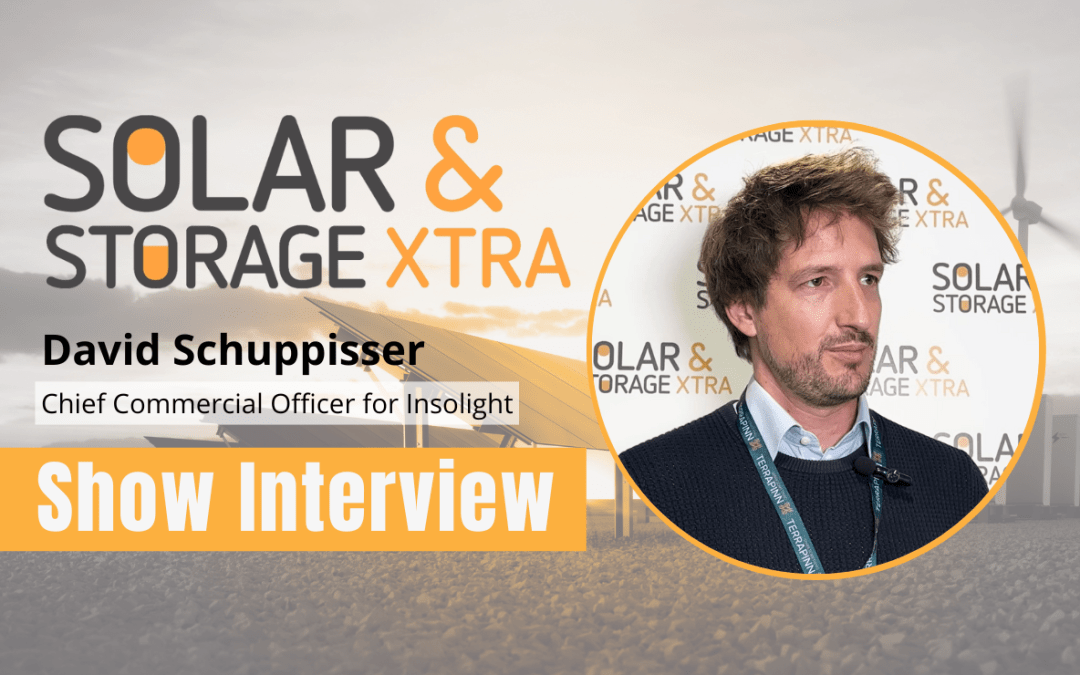
Solar&StorageXtra spoke to David Schuppisser, Chief Commercial Officer for Insolight, at Solar & Storage Live Zurich in September.
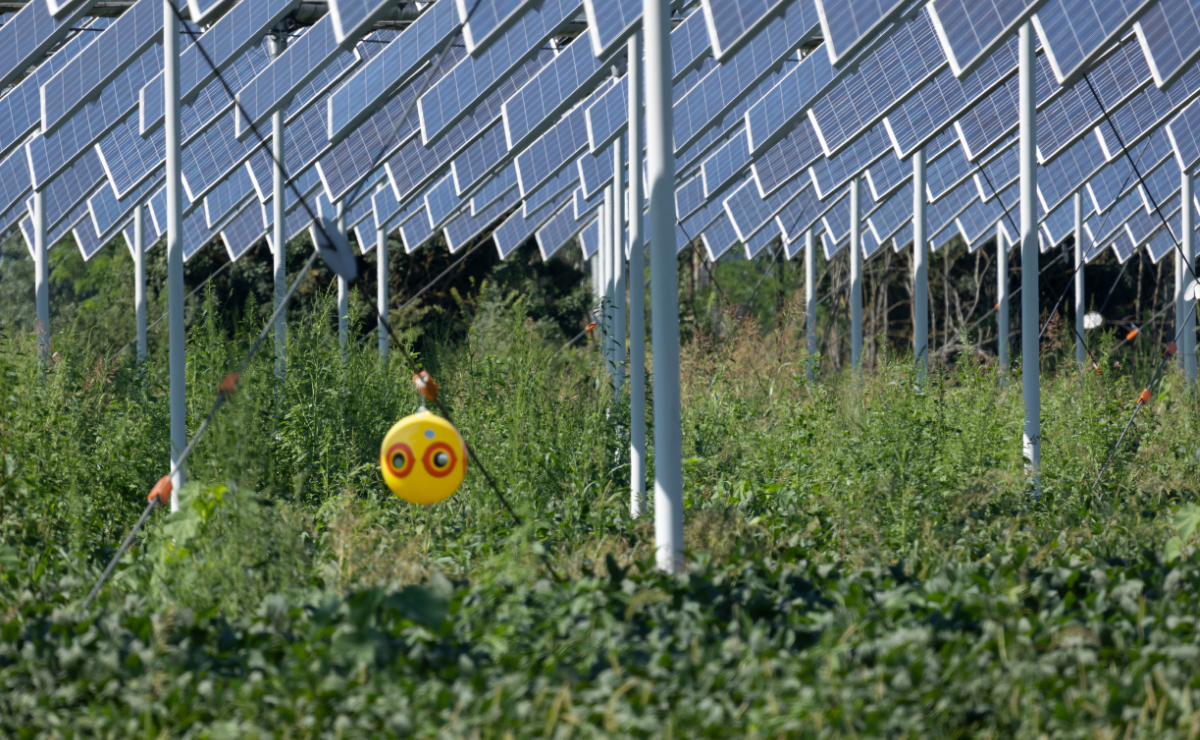
Representing a company at the forefront of agrivoltaics technology, David discussed how the solar industry can help address environmental and agricultural concerns for solar sites, the challenges agrivoltaics currently faces, and the changes needed for international support.
Interview with David Schuppisser, CCO for Insolight
“To address concerns from farming and environmental organisations, the industry needs to build solid references and provide data about these projects.”
Xtra: Can you explain Insolight’s mission in the industry?
David: Our mission is to enable massive CO2 savings by opening up photovoltaic systems on agricultural land – preserving agricultural activity whilst generating electricity.
Xtra: What policy changes are needed to support the growth of agrivoltaics internationally?
David: To support the growth of agrivoltaics, policymakers should first define what agrivoltaics means in their country and then outline the conditions required to maintain agricultural activity after the agrivoltaic installation is in place.
Additionally, for agrivoltaics to be competitive with alternative solutions, there need to be either restrictions on ground-mounted solar installations or subsidised agrivoltaics.
Xtra: How can the industry address concerns from both the farming and environmental communities against agrivoltaics?
David: To address concerns from farming and environmental organisations, the industry needs to build solid references and provide data about these projects.
It’s also important to involve environmental and farming organisations in the project development process to incorporate their point of view.
Xtra: How can the industry address concerns from the broader public?
David: At Insolight, communicating with the broader public is very important for us. We’ve partnered with organisations such as food retailers, who then sell agrivoltaic energy-positive products to end consumers. We are (also) actively engaging in campaigns to bring this information to the end consumer.
The idea is that every individual consumer can consume better-quality produce while also helping reduce carbon emissions at the same time. For example, when you eat one kilo of strawberries, you’re actually saving 90 kilos of CO2. Isn’t that great?
Xtra: What are the key technological challenges in optimising solar panel placement and design for agrivoltaics installations?
David: There are technical challenges in optimising the soil for agrivoltaics. Typically, you want to ensure that agricultural production continues, which means designing installations that maintain a good microclimate for crops.
Another challenge is ensuring that the installations are compatible with agricultural machinery. And, as with all solar projects, you want to be in locations where there is good access to the grid, which can sometimes be a challenge.
Xtra: What benefits can companies and visitors gain from attending Solar & Storage Live Zurich?
David: At this show, solar and storage companies can benefit by learning about the cutting-edge technologies and business models being implemented today, as well as forming partnerships with complementary companies.
Missed out on Solar & Storage Live Zurich, or want to come back for more? Don’t miss the Barcelona edition from 13-14 November.