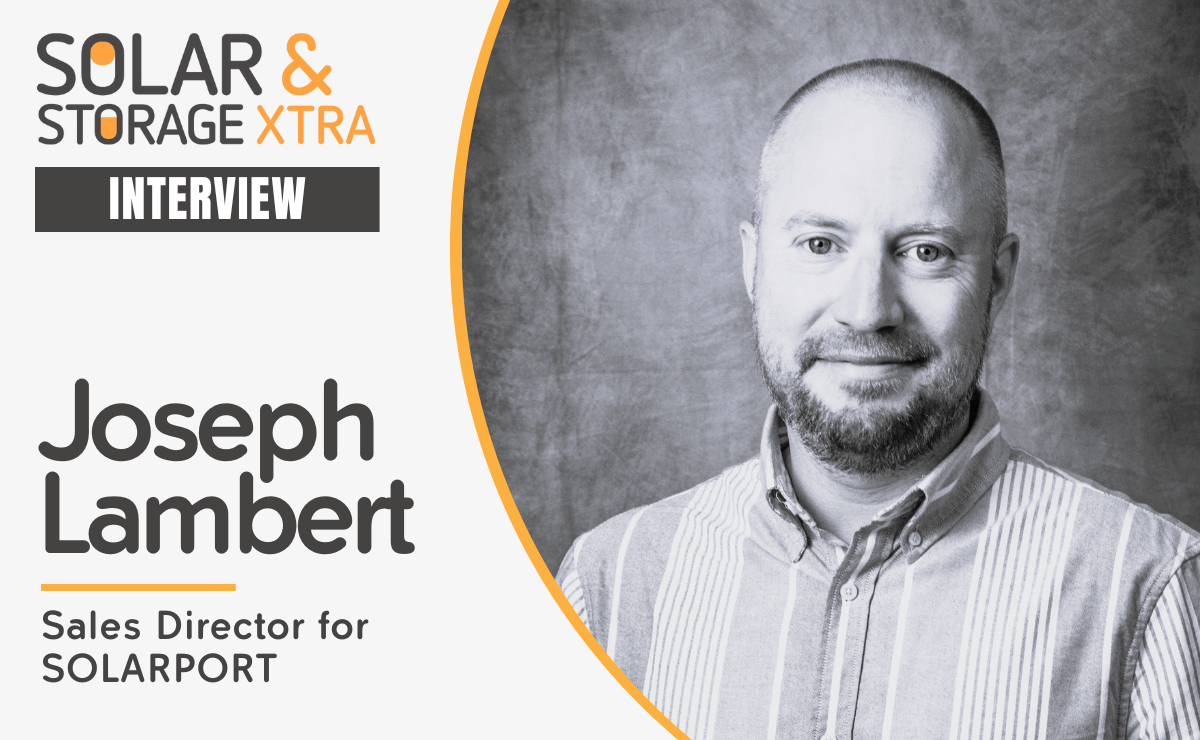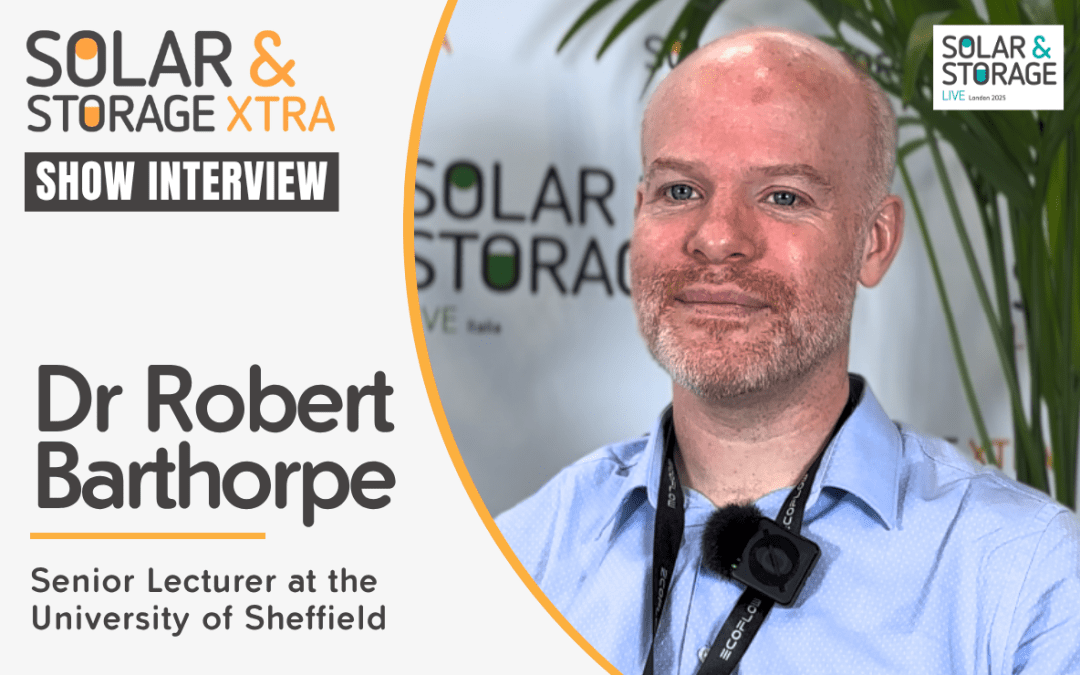
At Solar & Storage Live in London, Solar&StorageXtra interviewed the University of Sheffield’s Dr Robert Barthorpe, who specialises in the impact of distributed thermal and electrical energy storage.
In this interview, Dr Barthorpe shares insights from recent research projects, highlights the challenges of public perception around thermal storage, and outlines key policy changes needed to support the energy transition.
With a strong belief in bridging the gap between academia and industry, he explains why events like Solar & Storage Live are essential for sparking collaboration and bringing emerging ideas into the mainstream.
“Hot water tanks have been around for ages and worked really well. But people also remember less positive experiences, like old storage heaters, and those associations can hold us back.”
What brought you to Solar & Storage Live in London?
Robert: My department is part of the University of Sheffield and part of the Russell Group association of public research universities, so alongside teaching, we carry out a lot of research.
One of our key focus areas is energy – understanding what the future energy system looks like and how we can contribute to achieving that from different angles.
I’ve just come from a panel session on technologies and materials for longer-duration energy storage. It was a fantastic experience – really well attended and informative.
What was discussed on the panel?
Robert: We had a real mix of perspectives, with representatives from across the industry. We looked at various thermal storage technologies, vanadium flow batteries for large-scale, long-duration grid storage, and more.
It was great to have someone from DESNZ (the Department for Energy Security and Net Zero) there to speak to the policy side of things. I contributed by talking about distributed thermal energy storage and what we can do within homes to help build flexibility into the wider grid.
We’ve just wrapped up a DESNZ-funded project, so we took the opportunity to discuss some of our outcomes.
Attending and speaking at events is fantastic for sharing what we’ve learned through our research and hearing new ideas. They help us understand how our work fits into the market.
As an academic, you can sometimes end up talking only to people in your own peer group at conferences. That risks becoming a bit disconnected from the real world. It’s refreshing to attend events like this and hear firsthand how ideas land – or don’t – when challenged by others in the industry.
As an academic, are there any challenges in the industry you’d like to bring attention to?
Robert: One of the big ones is overcoming preconceptions, especially with distributed thermal storage.
Hot water tanks have been around for ages and have worked well. I think they’ll make a comeback. But people also remember less positive experiences, like old storage heaters, and those associations can hold us back. When people hear “thermal storage in homes,” that’s often what they picture.
We need to reframe that thinking, especially because thermal storage will be crucial to decarbonising heat.
There’s a lot of support for heat pumps, which is great, but there’s also plenty of scepticism. That creates a dual challenge: moving towards unfamiliar technologies and making space, both literally and conceptually, for thermal storage as part of the solution.
It’s a tough but exciting space to be in.
What policies or initiatives to aid the rollout of renewable energy would you like to see enacted?
Robert: We’re in the middle of a major heat pump rollout, and the Boiler Upgrade Scheme has been a success, with tens of thousands of installations each year.
From a policy perspective, I’d like to see thermal storage included more explicitly in the mix. Could we offer capital support to help people build in flexibility from the start, rather than retrofitting it later?
There’s also a question of how we value flexibility more broadly. Whether it’s electrical batteries or thermal storage, tools like SAP (Standard Assessment Procedure) for new builds need to recognise the benefits of integrating flexibility into developments.
All these pieces need to align if we want policy to truly support the energy transition.
Why did you choose to speak at Solar & Storage Live?
Robert: The audience here is brilliant for us. It’s a chance to share ideas – whether people are hearing them for the first time or are already engaged – and to start conversations with key players.
As I mentioned, it’s about stepping outside academia and talking directly to installers, policymakers, and future manufacturers. Getting those ideas into the ecosystem early is vital, and events like this are a great platform to do that.
Solar & Storage Live in Birmingham is on the horizon, so don’t miss out on your free ticket to the UK’s largest solar and storage show. Or, find a Solar & Storage Live event near you.