(Image Credit: Nesta)
Nesta, a registered charity focused on supporting innovation in the UK, have collaborated with Kensa to explore and deliver different models for delivering Networked Heat Pumps as a part of decarbonising UK homes.
What are Networked Heat Pumps?
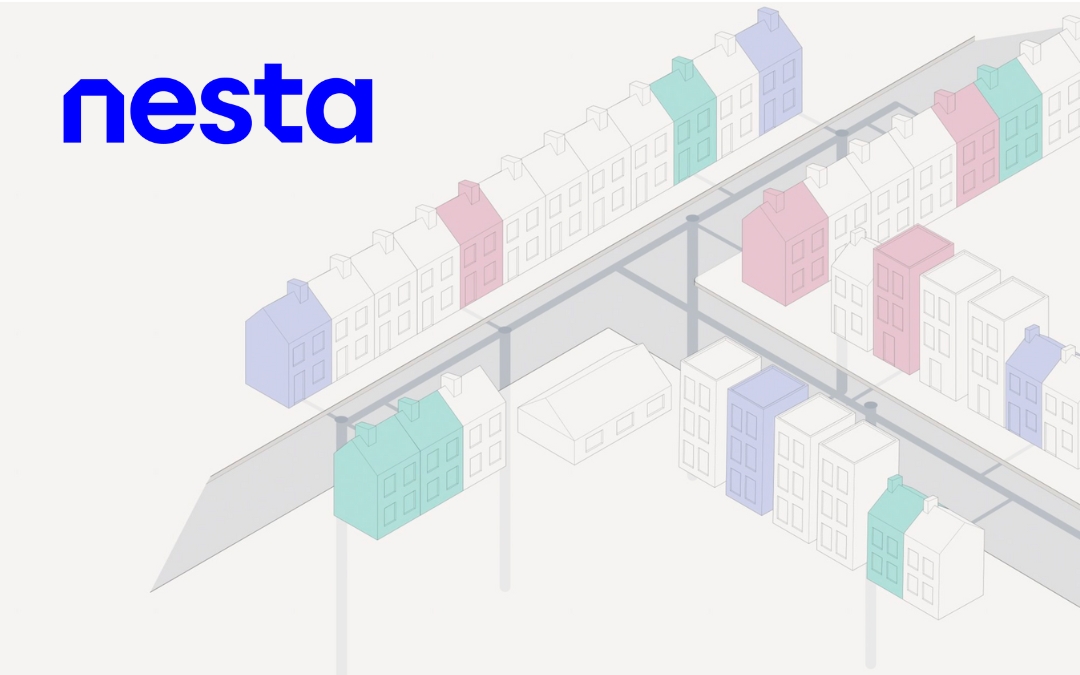
The technology is focused on switching streets to low carbon heat, installing low temperature heat networks with a shared infrastructure in a road that is connected to an individual heat pump in each home.
This is also known as a ‘shared loop heat pump network’.
Kensa have already carried out the UK’s first in-road networked heat pump installation as a part of their Heat the Streets initiative.
The scheme replaced an upfront cost with a fixed standard charge for households. The initiative was supported by the European Regional Development Fund.
Nesta have explained that tenements, terraced streets and other homes in medium density are most suited to this project. Any building where heat pumps are difficult to install or where district heating schemes have not been built.
For Networked Heat Pumps projects to be successful, appropriate individual household decision making and planning must be coordinated with government policy.
Nesta have established three models that can help deliver Networked Heat Pump projects:
Number One: The Coordinated Commitment model
This model involves multiple homes, thirty at a minimum, working together to get infrastructure installed on their street. Once the model is in place, more homes can connect.
Number Two: The Infrastructure Led model
The Infrastructure Led model involves the infrastructure being installed into streets in anticipation for the use of networked heat pumps, like installing broadband ahead of homes using it.
Households can then connect their new heat pump to the network at their convenience. The already built infrastructure will be sufficient until more homes are added and targets are met.
Once this has happened, a planned system upgrade will then occur.
Number Three: The Hybrid model
The Networked Heat Pump project only needs a small number of homes to commit the initiative to commit to the start.
It can be facilitated by a single property. These homes act as ‘anchor properties’ allowing for the initial installation of required infrastructure.
After that, homes can connect at their own pace.
Read Nesta’s full press release here.
For more interviews from Solar&StorageXtra and to keep up to date with all NEW content, subscribe to the Solar&StorageXtra YouTube channel and Newsletter!
Our next event is Solar and Storage Live London, April 29-30 2024!
To enquire about interviews, submit news and press releases please contact our Editor, Regan Slaymaker, regan.slaymaker@terrapinn.com.
For sponsorship and exhibition enquires please contact Tom Moon, tom.moon@terrapinn.com.