The 2025 Pride in Energy survey, released on 3 September, has found widespread concern that political debates around diversity are threatening progress on inclusion in the UK energy sector.
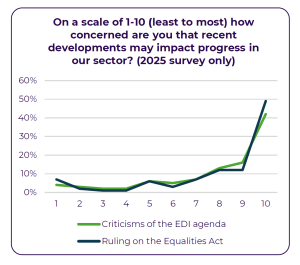
According to the report – titled Defending Inclusion – 71% of respondents said they were worried that criticism of equity, diversity and inclusion (EDI) by political figures could undermine workplace progress.
Joshua Atkins, founder and chair of Pride in Energy, noted:
“Many of our hard-won rights and protections are under fresh assault. Not only do this year’s findings suggest discrimination is still concerningly high but there is also deep concern from many of our respondents about the permissive impact of anti-inclusion rhetoric on progress in UK energy workplaces.”
He added: “The charged social and political context reinforces the need for all of us to redraw lines in the sand, and to be loud and proud in defending inclusion.”
Discrimination remains high
The survey, now in its fifth year, received 243 responses from staff across the sector, including engineers and corporate employees.
 It found that 42% of respondents had experienced or witnessed LGBTQIA+ discrimination in the past five years, with 18% reporting such incidents in the last year alone.
While 68% rated their own employer as very inclusive, only 24% felt the wider industry deserved the same description. This “perception gap,” which the report warns could affect recruitment, has persisted since the survey began in 2021.
Examples of workplace issues highlighted in the report included casual homophobia, derogatory responses to LGBTQIA+ content on internal platforms, and a lack of facilities for transgender staff.
“There’s still a boys’ club/’bloke’ culture among a lot of field staff which needs updating,” a respondent said.
“Consideration is needed, much as there already is with women, as to the barriers to the LGBTQIA community and why they do not feel motivated to pursue careers in our field.”
Impact on trans colleagues
Transgender protections emerged as a key concern. Following the UK Supreme Court ruling on the definition of sex in the Equality Act, 73% of respondents expressed strong concern about the implications for trans employees.
Some respondents reported that their colleagues are feeling fear about the future of human rights: “The community in my workplace are really scared. Which rights will be taken away next?”
Driving change
Networks and support
 Almost three-quarters (73%) of respondents said their organisation had an LGBTQIA+ network. However, experiences of their effectiveness varied, with some describing a strong advocacy and others citing limited resources and a lack of engagement from management.
The report notes that a robust LGBTQIA+ network offers avenues for support and change within the workplace:
“Where discrimination happens, (our) network is very good at catching it, escalating as appropriate, and safeguarding community members going forward,” one respondent said.
Calls for leadership
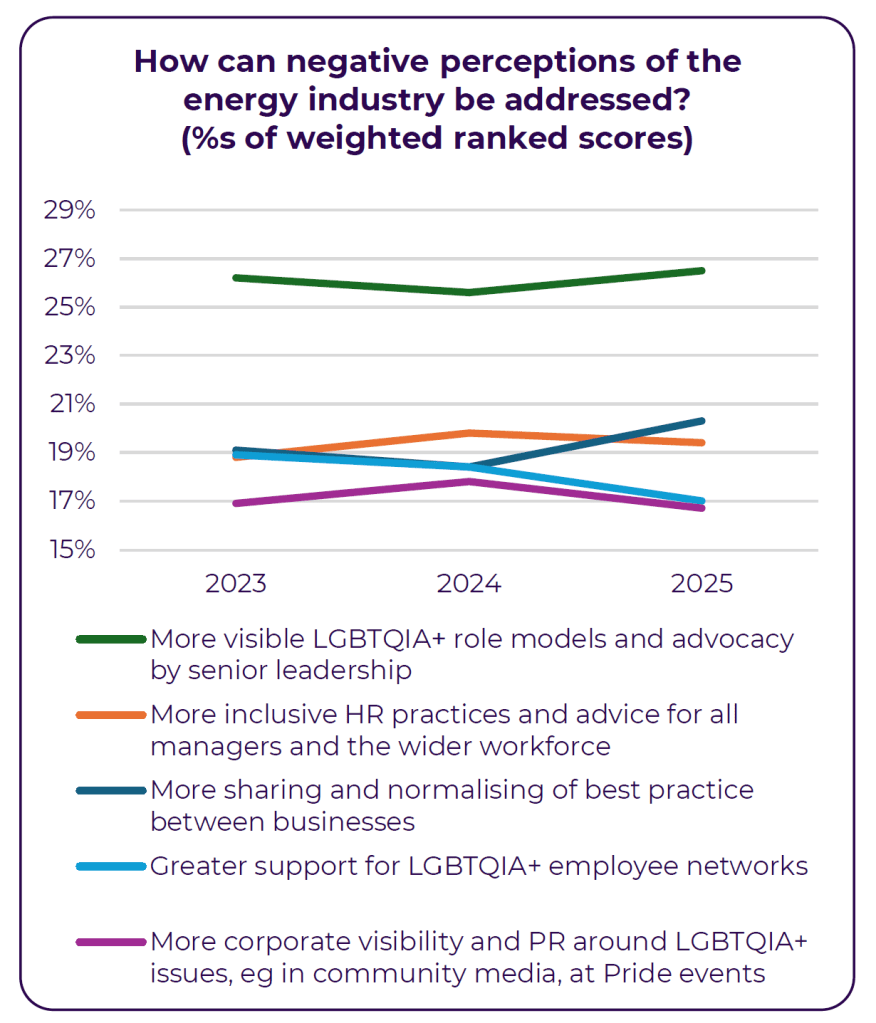
Respondents identified visible advocacy from senior leaders as the most important factor in improving perceptions of the sector. Yet 20% said they had no visible role models or allies at senior levels in their organisation.
Atkins stressed that leadership visibility was essential: “An inclusive, welcoming and safe workplace is essential to a fulfilling working life and for businesses means they can attract and retain the best employees.”
Overall, the report concludes that defending inclusion in the energy sector requires action at all levels – from senior leadership to grassroots employee networks.
Solar & Storage Live in Birmingham is on the horizon, so don’t miss out on your free ticket to the UK’s largest solar and storage show. Or, find a Solar & Storage Live event near you.