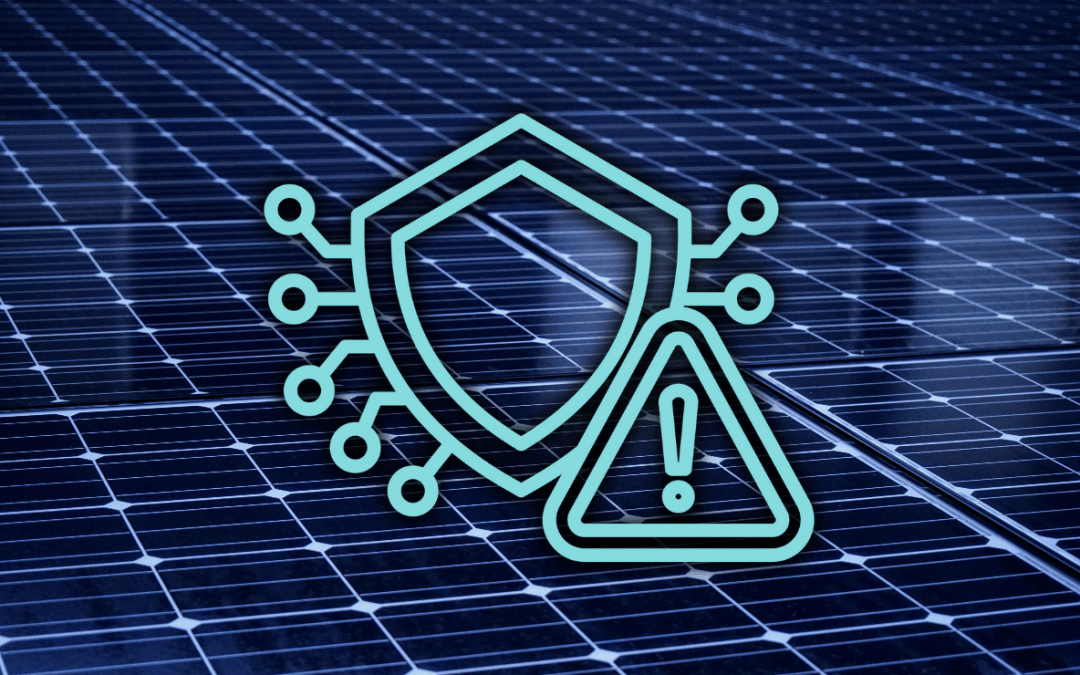
Cybersecurity firm Secura has reported that a large European solar power grid is currently vulnerable to attacks on its system.
The report highlights the Netherlands having a “significant area of attack in the solar power industry”, while the case study additionally identifies protections European countries should put into place.
To investigate points of vulnerability, Secura spent six months with researchers studying hacker forums and interviewing energy sector experts. Through this, the researchers were able to identify the most common cyber threats faced by the Netherlands’ solar energy industry both current and predicted.
Findings
Although particularly focused on the Netherlands, the report’s findings offer an insight into the possible attacks and solutions other countries should be aware of.
A “malicious actor” may want to target the Dutch solar system because of its large share of the country’s energy mix. The report highlights that such a hijacking could be used by the malicious party to negotiate.
It additionally identifies that the load-baring central and high-voltage grid would be most impacted by a cyberattack, noting: “A strategic dependency arises for the Netherlands (in that scenario) because it can affect vital infrastructure.”
However, this type of attack is unlikely, according to the researchers, as the same grid is used by other European countries – making the Netherlands too difficult to target independently.
In an attack, manipulating the tipping point of panel inverters could generate an excess of solar energy that becomes the alternating current energy used by the grid. Doing so could lead to local power outages. If this is done via a small solar panel on its own, the report states that the damage would be easy to fix.
Overall, an attack would most likely cause financial losses to the targeted country, which could vary based on how much equipment suffers physical damage – especially in combination with attacks on other forms of renewable energy.
The report explains that, at an extreme level, prolonged power outages could cause civil unrest due to a lack of communication options and resources.
Future-proofing Europe
In a July statement, Dries Acke, Deputy CEO of SolarPower Europe, said that there are “clear steps” going forward:
“We’re a future-looking sector, on our way to providing the majority of Europe’s electricity. We take that responsibility seriously.”
Furthermore, Acke requested that an EU-level monitoring group be formed to closely watch for threats to installations as the industry continues to evolve.
The report notes that industry stakeholders have called for PV panels to be considered “critical products” – thereby giving them a more robust infrastructure for cybersecurity measures.
In July, an EU report from its own cybersecurity agency argued that the union is not prepared for large attacks on the block’s infrastructure. Solar was included in this assessment.
To address this, the EU’s report called for the European Commission to analyse solar’s supply chain vulnerabilities and invest in cyber protection for PV technology across every part of that chain.
The Netherlands
According to PV trade association SolarPower Europe, the Netherlands produces the most solar power per capita (while Germany produces the most solar power overall in Europe).
The country has more than three million solar installations which produce 17-20GW per annum that goes into the Netherlands’ national grid.
This makes the Dutch solar market crucial to the European industry.
Considering the country’s robust agrivoltaics industry and strong government investment through subsidy schemes and international partnerships, safeguarding the Netherlands’ solar industry is vital.
The nation is currently aiming to achieve 100% renewable energy by 2025 – making a substantial contribution to creating a green future.
Solar & Storage Live Amsterdam will be held 15-16 October 2025 at RAI Amsterdam – don’t miss the chance to experience one of Europe’s largest solar markets first-hand.