The UK’s solar power and battery energy storage sectors are projected to nearly triple their annual economic contribution to £5.1bn by 2035, according to a new report by BiGGAR Economics.
The findings, commissioned by Solar Energy UK, were launched at this year’s Solar & Storage Live London event, which took place from 2 to 3 April.
The sectors support around 20,000 jobs and contributed £1.9bn in gross value added (GVA) to the UK economy in 2024.
The industry also provided £321m to the Exchequer. On average, each job across the solar and storage supply chain generated nearly £90,000 in GVA – over 40% higher than the UK average.
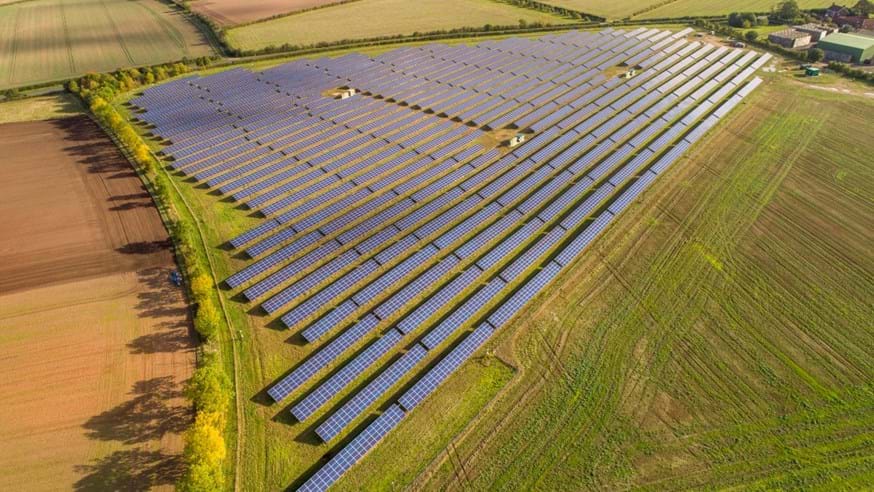
Installed solar capacity in the UK was estimated at 20GW by the end of 2024, with contributions from residential (4.2GW), commercial (4.2GW), and ground-mounted (11.5GW) systems. Battery energy storage systems (BESS) reached a combined capacity of 7.5GW across all scales.
Looking ahead to 2035, solar capacity is expected to rise to 90GW, with residential and commercial installations each at 15.3GW, and utility-scale farms at 59.3GW.
BESS installations are projected to reach 49.9 GW in total, including significant increases in home and grid-scale deployments.
“This report highlights that as well as contributing to renewable energy targets, the solar and storage sector is having a substantial and growing impact on the UK economy,” said Graeme Blackett, Managing Director of BiGGAR Economics. “The diversity of the impacts is striking.”
The report also notes that solar farms provided UK farmers with £61m in income last year, a figure expected to exceed £300m by 2035.
Gemma Grimes, Director of Policy and Delivery at Solar Energy UK, added: “The report makes clear that the sectors are already a significant economic player, with their anticipated growth making them a massive stimulus within the next ten years.”