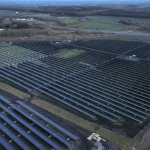
Solar Energy UK has released Solar Habitat 2025, the latest edition of its annual biodiversity report, revealing that solar farms – when managed with nature in mind – can significantly support and enhance wildlife across the UK.
The report is a collaboration between Solar Energy UK, Lancaster University, Clarkson & Woods, Wychwood Biodiversity, and, for the first time, ecological consultant Envance.
Found in the field of study
Based on ecological monitoring conducted at 124 sites in 2024 (11% of the UK’s solar farms) the report reflects the largest dataset yet compiled under the Standardised Approach to Monitoring Biodiversity on Solar Farms.
“The trends identified suggest that well-managed solar farms can support biodiversity and are in line with previous Solar Habitat reports,” the report notes.
Monitoring data included surveys of botany, birds, invertebrates, soils, and hedgerows. Sites were also categorised based on their biodiversity management, ranging from minimal to optimal.
The findings are clear: greater ecological focus results in higher biodiversity.
Key findings:
Botany
314 plant species were recorded from over 2,000 quadrats, with species richness highest in areas specifically enhanced for biodiversity.
“Enhanced areas contained the highest number of plant species, followed by those in outside areas, margins, between the rows of panels and under the solar panels.”
Birds
Surveys across 63 farms counted over 7,400 individual birds from 94 species. Of these, 28% were Amber Listed and 20% were Red Listed. The nightingale and cirl bunting, both Red Listed, were observed at solar farms.
“On average, 24 species were sighted at solar farms in Category 2, 21 species at sites in Category 3 and 17 species at solar farms assigned to Category 4.”
Invertebrates
Nearly 3,000 butterflies and bumblebees were counted, comprising 29 species. Butterflies were ten times more abundant than bumblebees. The vulnerable small heath butterfly was recorded at 15 sites.
Hedgerows
At 29 farms, 44 woody plant species were recorded, with richness correlating with biodiversity-focused management.
“Most hedgerows were noted as being in good condition.”
Soils
Samples taken from 35 sites provided data to inform future management strategies. Soil quality plays a vital role in supporting plant health and, by extension, wider ecological outcomes.
Mammals
Though not formally surveyed, eight mammal species were incidentally observed, including the water vole, which is endangered in the UK.
Case study
The report also explores practical approaches such as the “cut and collect” method of grassland management, which removes biomass to encourage wildflower growth.
The report includes a case study on West Raynham Solar Farm, which achieved Wild Power Gold Certification in 2024, to highlight the value of strategic biodiversity management.
The 91-hectare site now hosts 40 acres of wildflowers and various habitat enhancements, including tree planting and species monitoring.
To read the full case study and explore all of Solar Energy UK’s findings, the full report is available at: solarenergyuk.org/resource/solar-habitat-2025.
[Image credit: Solar Energy UK]