Press Release
A new paper from SolarPower Europe and The Nature Conservancy shows that nature-inclusive solar parks can help not only mitigate the impacts of climate change but also help go the extra mile to restore nature.
A new, cross-sectorial EU policy framework is needed.
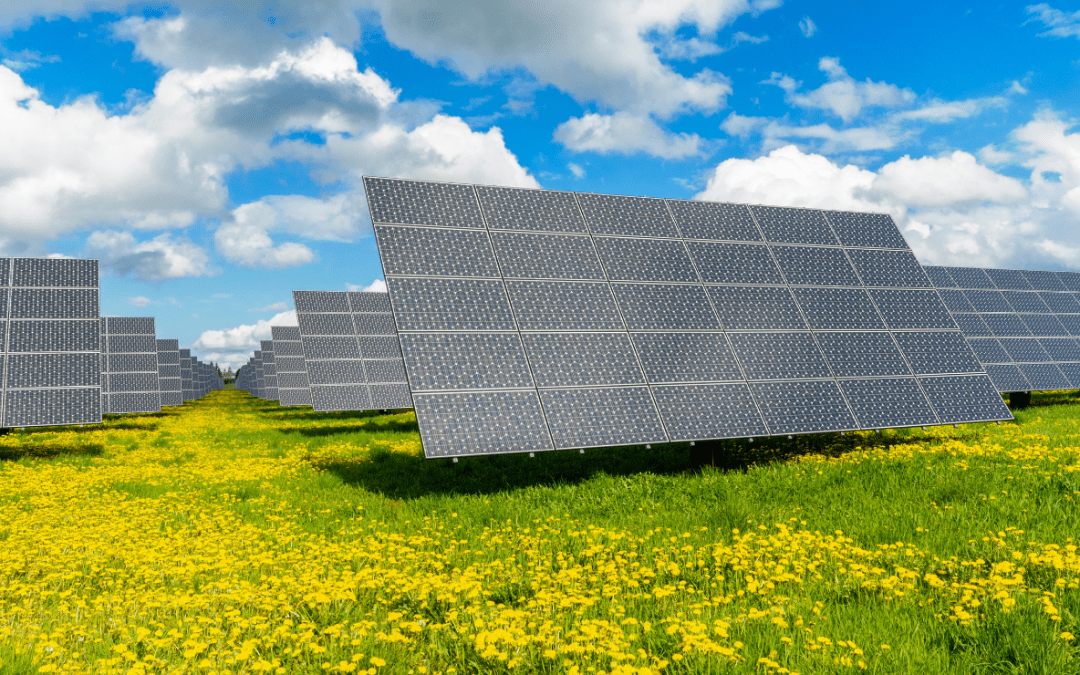
Nature-inclusive solar parks are solar installations designed to not only produce renewable energy, but also enhance local biodiversity, combining restoration, conservation, and energy production on the same plot of land.
In this model, solar parks are strategically located to minimise negative impacts on native habitats, flora, and fauna, while being designed to maximise benefits for the local ecosystem and local communities.
Lina Dubina, Policy Advisor for Sustainability at SolarPower Europe, (she/her) said:
“The Nature Conservancy and SolarPower Europe are calling for a coherent EU-wide policy framework that defines nature-inclusive solar, aligns with existing EU policies, and incorporates a monitoring and evaluation system.
“This kind of framework could simplify and standardise practices across EU countries, helping nature-friendly solar parks become more widespread and effective.”
In a landmark collaborative policy paper, SolarPower Europe and The Nature Conservancy explore how solar parks can support the EU’s nature protection and restoration goals while creating a win-win for renewable energy and biodiversity.
Rebecca Humphries, Head of Climate Policy Europe for The Nature Conservancy, (she/ her) commented:
“Well-designed and sited solar parks, following the mitigation hierarchy can lead to win-win solutions for both climate and nature. With this report, we explore how solar can contribute to protecting and restoring nature and the policy and financial incentives needed in order to scale up such projects.
“Policymakers now have a window of opportunity to use existing frameworks, such as the Nature Restoration Law or non-price criteria, as well as develop further tools to put in place credible definitions and indicators, in order to drive more investment into solar parks that protect and restore nature.”
Despite solar parks occupying a relatively small portion of land – only 0,3% of the EU’s total land would be needed for current and future solar projects (European Environmental Bureau, 2024) – the strategic siting and design of these facilities are crucial.
The policy paper, drafted by Metabolic on behalf of SolarPower Europe and The Nature Conservancy, outlines how nature-inclusive solar parks can significantly contribute to the EU’s ambitious Nature Restoration Law, which aims to restore at least 20% of degraded land and sea by 2030 and all degraded ecosystems by 2050.
As the concept of nature-inclusive solar gains traction across the EU, there is a need now for clear policies to help define, incentivise and scale up.
This can create a positive momentum towards developing more solar parks with truly nature-inclusive designs while supporting renewable energy deployment and engaging with local communities at an early stage.
To ensure that solar development creates a positive impact on biodiversity, creating an enabling policy framework is key. The paper highlights a significant policy gap within the EU.
While some countries have incentive schemes for nature-inclusive solar, few have established a science-based method for these policies. The lack of a unified approach risks creating misalignment and uncertainty for developers and other involved stakeholders.
The policy paper makes a number of policy recommendations:
- Create a common, clear and ambitious definition of nature-inclusive solar parks at the EU level.
- Provide solar park development guidance to avoid and minimise biodiversity loss in planning during and after the construction phase, alongside practices to restore, offset, and/or add (net gain) biodiversity.
- Develop and implement a robust monitoring and evaluation system.
Rewarding and incentivising nature-inclusive solar through EU policy
Create a common, clear and ambitious definition of nature-inclusive solar parks at the EU level. Provide solar park development guidance to avoid and minimise biodiversity loss in planning during and after the construction phase. Develop and implement a robust monitoring and evaluation system.