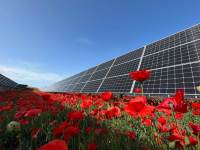
A large solar park in Alhendín, near Granada, Spain, marks the country’s first Agri-PV installation, supplying electricity to the local grid.
This facility, operational through a Power Purchase Agreement (PPA) with BayWa r.e. and VELUX, connects to the Spanish electricity grid, providing green power to homes and businesses throughout the region.
The 54 MW photovoltaic (PV) park combines renewable electricity production with agriculture and biodiversity, contributing to VELUX’s goal of achieving 100% renewable electricity.
Agri-PV enables dual land use for energy generation and agriculture, enhancing resource efficiency. For example, PV panels can protect crops from pests and climate events, provide shade for viticulture, and support arboriculture.
The Alhendín Agri-PV park, with over 85,000 solar panels, produces 96.8GWh of electricity annually, enough to power 24,700 homes. To support sustainable agricultural practices, a tenth of the facility allows farming machinery to pass between the rows of solar panels, maintaining its Agri-PV status and preserving the natural environment.
A second facility in Gerena, near Seville, is expected to be completed in 2025, with a projected capacity of about 60 MWp.
“The completion of the Alhendín solar park and its connection to the Spanish electricity grid is a significant achievement, enabling VELUX to meet its renewable electricity targets,” said Kim Jonas, Energy and Climate Director of The VELUX Group.
“The agricultural and biodiversity aspects of the project align with our focus on climate action and biodiversity enhancement. Partnering with BayWa r.e., we are implementing the concept of Solar Plant Symbiosis to integrate solar parks with nature and communities for mutual benefits.”
Daniel Gäfke, Global Director of Projects and Executive Board Member at BayWa r.e., added: “We are pleased to support VELUX in achieving its goal of 100% renewable electricity for its European operations.
“This milestone is pivotal for BayWa r.e.’s commitment to advancing the corporate energy transition necessary for meeting global climate targets. Our collaboration with VELUX allows us to implement innovative elements like Agri-PV, enhance biodiversity, and foster community engagement for maximum local value creation.”