by Catie Owen | Sep 22, 2025 | Europe, Market Reports, Storage
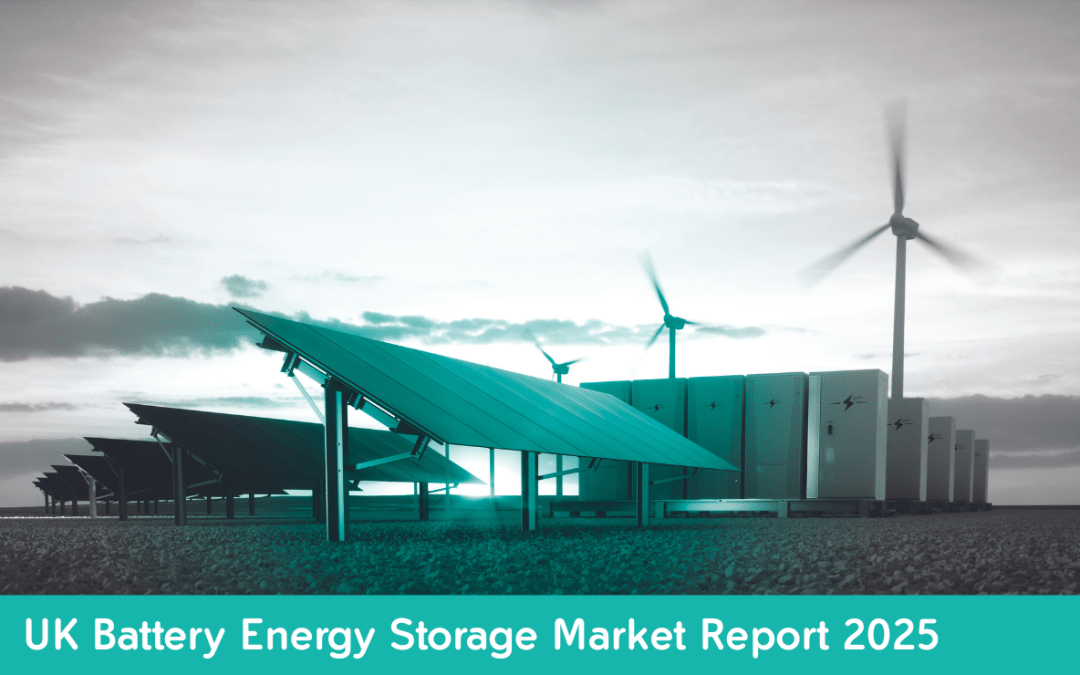
Discover the future of UK battery storage with the UK Battery Energy Storage Market Report 2025.
This essential guide charts the sector’s growth from early hurdles to over 440GWh of pipeline capacity and 22,000 new household systems installed last year.
It highlights market leaders, policy reforms, investment trends, and revenue opportunities across residential, commercial, and utility projects.
With analysis of planning, grid, and adoption challenges, plus forecasts on how storage underpins the UK’s net-zero ambitions, the report delivers actionable insight for investors, developers, policymakers, and suppliers.
Stay ahead in a rapidly maturing market – download the report and power your strategy today.
Download the Report
Don’t miss out on your free ticket to Solar & Storage Live London – the capital’s most exciting solar event. Or, find a Solar & Storage Live event near you.
by Catie Owen | Sep 12, 2025 | Europe, Storage
EDF has signed an agreement with Fidra Energy to manage and optimise two battery storage units at the Thorpe Marsh project in Yorkshire.
The partnership will see EDF provide route-to-market services for the assets, which will have a combined capacity of 560MW.
Thorpe Marsh is planned to be the UK’s largest battery storage site, and among the biggest in Europe, with an overall capacity of 1.4GW (2.9GWh).
Developed by Fidra Energy on the site of a former coal power station, the project sits next to a major National Grid substation.
Once operational, it is expected to store renewable energy from wind and solar, supplying up to 785,000 homes at peak times and helping to balance the electricity network.
The two batteries covered by the deal are scheduled to come online in 2027. EDF will use its in-house Powershift platform to optimise their operation and ensure they provide value across energy markets, as well as fast-response support to the National Electricity System Operator (NESO).
Fidra Energy, launched by investment firm EIG in 2024, has rapidly expanded its presence in the UK energy sector.
EDF and EIG have previously worked together on route-to-market services for the West Burton B gas-fired power station.
Stuart Fenner, Wholesale Market Services, Commercial Director at EDF, said: “Battery storage is vital for a flexible and reliable electricity system. Thorpe Marsh will help the UK make better use of renewable energy and reduce reliance on fossil fuels.
Our Powershift platform is designed to unlock the full value of battery assets while supporting the stability of the grid. Working with Fidra on a project of this scale shows what can be achieved when industry leaders join forces.”
Chris Elder, Fidra Energy’s CEO, said: “Thorpe Marsh is a landmark project for Fidra and for the UK energy system. Transforming a former coal site into the country’s largest battery shows how the energy transition can deliver real change.
“With EDF’s expertise, we can ensure these batteries provide maximum value for the grid, for consumers and for the UK’s net zero goals.”
Solar & Storage Live in Birmingham is on the horizon, so don’t miss out on your free ticket to the UK’s largest solar and storage show. Or, find a Solar & Storage Live event near you.
by Catie Owen | Aug 28, 2025 | Oceania, Storage
Pacific Energy has completed a 26MW off-grid power system for Tronox’s Atlas-Campaspe mineral sands operation near Hatfield in southwest New South Wales (NSW).
The hybrid system comprises an 11MW solar farm, a 3MW/6MWh battery energy storage system, 12MW of diesel generation, and 13km of high-voltage transmission lines. The project has consolidated power supply into a single location, reducing the number of diesel generators on site from 41 to six.
Delivered under a 10-year build-own-operate power purchase agreement, the facility is now fully operational following successful testing on the mine’s processing plant.
In a statement on its social media channels, Pacific Energy said the system incorporates a “hydrocarbons off” function and will “provide up to 40% renewable energy to the mine’s total power supply, reducing annual carbon emissions by approximately 13,000 tonnes and displacing nearly five million litres of diesel per year.”
The project is Pacific Energy’s first power generation facility in NSW and forms part of its expansion into eastern Australia. Future developments include a 30MW hybrid system for Iluka Resources’ Balranald mineral sands project, also in southwest NSW.
The Atlas-Campaspe site is the latest in a series of renewable energy projects delivered by the Western Australia-based developer.
Earlier this year, Pacific commissioned a 61MW hybrid renewable system for the Tropicana gold mine in Western Australia, combining a 24MW solar farm, four 6MW wind turbines, and a 13MW grid-forming battery alongside an existing 54MW gas-fired power station.
The company has also secured agreements to deliver a 35MW solar project for Gold Fields’ St Ives mine and a 20-year power purchase agreement with Horizon Power to supply the Exmouth region with 80% renewable energy.
Pacific Energy, owned by Queensland government investment manager QIC, currently manages 946MW of contracted capacity across 48 sites nationwide.
[Image credit: Pacific Energy]
by Catie Owen | Aug 26, 2025 | Europe, Storage
National Grid has connected the UK’s largest battery energy storage system (BESS) to its transmission network at Tilbury substation in Essex.
The 300MW Thurrock Storage project, developed by Statera Energy, is now energised and supplying flexible electricity to the network across London and the South East.
With a total capacity of 600MWh, the facility can power up to 680,000 homes.
It will help balance supply and demand by absorbing surplus renewable energy and discharging it instantaneously when needed.
Tilbury substation previously served the coal-fired Tilbury A and B power stations before their demolition.
Powering the energy transition
To accommodate Thurrock Storage, National Grid reinforced the site with new protection and control systems, ensuring the network can safely carry the battery’s additional load. The connection marks a symbolic transition from coal to clean energy at the site.
John Twomey, Director of Customer and Network Development at National Grid Electricity Transmission, said:
“Battery storage plays a vital role in Britain’s clean energy transition. Connecting Thurrock Storage, the UK’s biggest battery, to our transmission network marks a significant step on that journey.
“Our Tilbury substation once served a coal plant, and with battery connections like this, it’s today helping to power a more sustainable future for the region and the country.”
Tom Vernon, Statera Energy CEO and founder, added:
“We are delighted that Thurrock Storage is now energised, following its successful connection to the grid by National Grid Electricity Transmission.
“Increasing BESS capacity is essential for supporting the grid when renewable generation, such as solar and wind, is low or changes quickly. It ensures that energy can be stored efficiently and returned to the grid whenever it’s needed.”
Work is also continuing at Tilbury substation to connect Statera’s 450MW Thurrock Flexible Generation facility, which is set to further support regional energy needs.
The milestone follows the July energisation of the 373MW Cleve Hill Solar Park in Kent, which is the UK’s largest solar plant, connected to the adjacent Cleve Hill substation.
[Image caption: Thurrock Storage. Image credit: Statera Energy]
Solar & Storage Live in Birmingham is on the horizon, so don’t miss out on your free ticket to the UK’s largest solar and storage show. Or, find a Solar & Storage Live event near you.
by Catie Owen | Aug 22, 2025 | Europe, Storage
Harmony Energy has energised the Cheviré battery project, now the largest BESS in France.
The 100MW / 200MWh facility, located in the port of Nantes Saint-Nazaire Harbour, is the country’s first large-scale, two-hour duration storage project.
Built on the site of the former Cheviré fossil fuel power plant, which operated between 1954 and 1986, the system is positioned next to the grid operator’s substation.
Equipped with Tesla’s Megapack and Autobidder technologies, the project will provide balancing services to the national grid.
With the capacity to power about 170,000 homes for two hours, Harmony Energy said the facility will support grid resilience, reduce carbon emissions, and help cut energy costs and volatility.
Andy Symonds, CEO of Harmony Energy France, said: “The Cheviré battery project is a landmark achievement for the wider energy transition in France.
It shows how disused industrial sites can be repurposed to enable a more sustainable electrification of our power systems.
This project strengthens energy security, supports affordability, and helps pave the way for a cleaner energy system which is less reliant on burning fossil fuels.
“We began construction on site in summer 2024 and have just achieved energisation, one year later, showcasing how expertise, skill and productive collaboration between teams working on a shared goal can accelerate the transition to net zero.”
Harmony Energy added that the project includes biodiversity initiatives and a community benefit fund, alongside commitments to social and environmental causes.
[Image caption: Harmony Energy Parc de Chevire Andy Symonds Clement Girard. Image credit: Harmony Energy]
Are you involved in France’s solar market, or looking to get a foothold? Explore the benefits of attending Solar & Storage Live Paris – taking place 5-6 November 2025.
by Catie Owen | Aug 18, 2025 | Europe, Storage
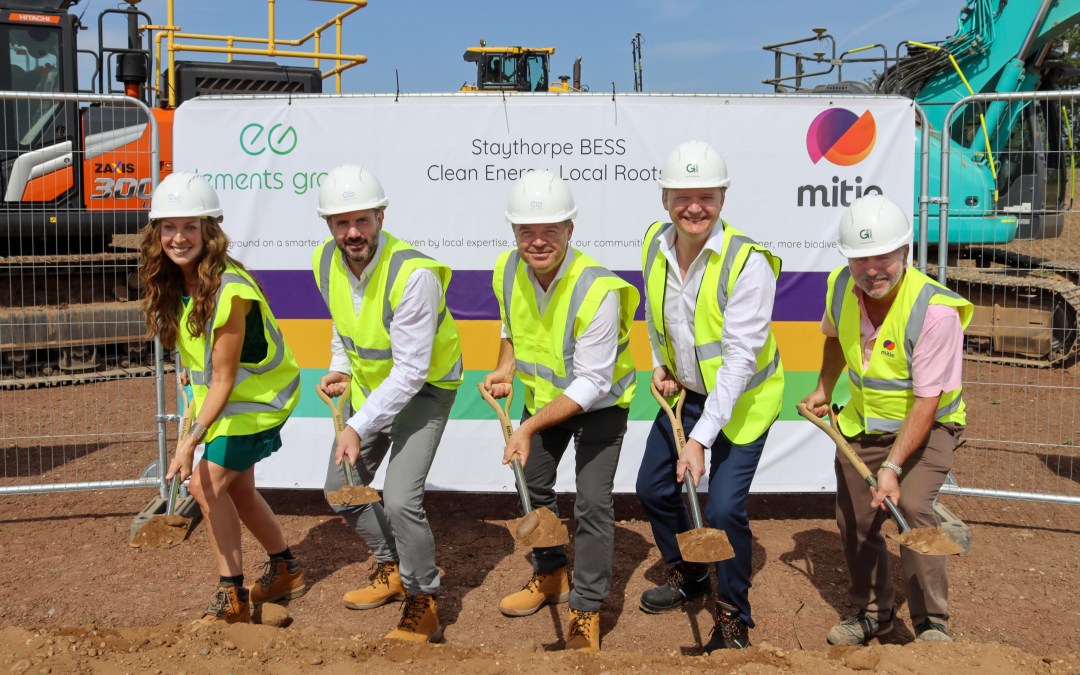
Work has begun on one of Europe’s largest battery storage facilities, as Mitie Power & Grid and renewable energy developer Elements Green kicked off construction on the Staythorpe BESS in Nottinghamshire, UK.
The £71.5 million project will deliver a 360MW/720MWh facility and 400kV grid substation, designed and built by Mitie Power & Grid through G2 Energy.
Once complete in mid-2027, the system will be capable of storing enough renewable energy to power more than 95,000 homes for a day. Around 60 jobs are expected to be created during the build, with the site designed to operate for 40 years.
Mark Caskey, Managing Director of Mitie Projects, said: “We’re proud to be delivering one of the UK’s most significant energy storage projects.
“Our partnership with Elements Green also creates real value for local communities – from jobs and education to biodiversity and beyond.
“We’re committed to supporting our customers on their journeys towards net zero to help achieve the UK Government’s clean energy goals and creating better places and thriving communities.”
Community and environmental commitments are being led by Elements Green, which has pledged a 25.7% Biodiversity Net Gain. This includes 12 acres of new woodland and wildflower meadow, alongside the planting of more than 120 trees.
Rasmus Friis, CEO of Elements Green, said the partnership “combines leading technical expertise with a shared commitment to biodiversity, education, local jobs and supporting the community – creating a project that works for both people and planet.”
Minister for Energy Consumers Miatta Fahnbulleh welcomed the development, saying: “Battery storage facilities like this will help protect homes and businesses from energy price shocks by unlocking our renewable power potential, while creating good jobs here in the East Midlands.
“Our mission to deliver clean power by 2030 will scale up battery storage across Great Britain, so excess renewable energy can be stored to use later, instead of wasted.”
[Image caption: Mitie and Elements Green break ground at Staythorpe BESS to support a cleaner Britain. Image credit: Mitie]
by Catie Owen | Aug 7, 2025 | Americas, Storage
US-based SolarMax Technology Inc has announced plans to broaden its operations beyond residential solar with a new utility-scale battery storage project in Texas.
The company’s subsidiary, SolarMax Renewable Energy Provider Inc, has signed an engineering, procurement and construction (EPC) contract with Longfellow BESS I LLC for a 430MWh battery energy storage system in Pecos County.
The agreement includes full EPC services, covering design, installation, testing, start-up and commissioning.
The project is expected to generate around $127.3m in revenue. SolarMax also confirmed it will acquire an 8% equity interest in Longfellow BESS I LLC.
“This contract represents a key step in scaling our commercial footprint in the United States and validates our strategy to diversify beyond residential solar into commercial-scale EPC services,” said David Hsu, CEO of SolarMax.
The Longfellow BESS I project forms part of the portfolio of Infinite Grid Capital (IGC), an energy storage investment fund. It is being co-developed at the Gas Century Processing Plant owned by Mitchell Malone’s Longfellow Ranch Partners.
The battery system will be integrated with the existing natural gas facility, with plans for future additions including solar generation and an AI-powered data centre.
by Catie Owen | Jul 22, 2025 | Press Release, Storage
Press Release
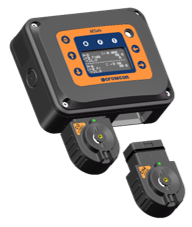
Crowcon Detection Instruments, a global leader in gas safety solutions, has launched BESafe, a dual-channel gas detector specifically engineered to meet the growing safety demands of battery energy storage systems (BESS) and backup power installations.
Crowcon developed BESafe to provide fast, accurate detection of hydrogen (H₂), carbon monoxide (CO), and methane (CH₄) – three critical gases linked to thermal runaway and fire risk in battery environments.
These gas releases can escalate rapidly, making early detection vital for protecting people, assets and uptime.
“BESafe was developed in direct response to the challenges faced by operators in energy storage environments,” said Yasin Yehya, Crowcon Product Manager, Fixed Systems. “These systems require early warning, minimal maintenance, and maximum flexibility. BESafe delivers all three.”
Unique in its category, BESafe enables simultaneous detection of two gases in a single unit, reducing the number of detectors required and minimising installation footprint.
The device uses smart sensors that come pre-calibrated, removing the need for periodic on-site calibration and reducing servicing costs over the life of the sensor (5-10 years depending on gas type).
BESafe delivers real-time, local alerts and integrates seamlessly into wider safety infrastructures, ensuring continuous protection even in space-constrained or hard-to-reach installations.
To meet the needs of modern battery installations, BESafe supports remote sensor mounting up to 15 metres from the main unit. This is ideal for modular energy storage cabinets, where space is limited or structural modifications are restricted.
Additional features include:
- OLED display for gas concentration readouts and device status
- 85dB sounder and multicolour LED indicators for clear local alarms
- RS485 Modbus RTU, relay, and 4–20mA analogue outputs for easy system integration
- Durable IP65-rated polycarbonate enclosure, suitable for both indoor and outdoor installations.
“The energy sector is undergoing major transformation,” said Michael Vaux, Product Director at Crowcon. “As battery storage technology becomes central to decarbonisation and grid resilience, solutions like BESafe provide the real-time, dependable gas monitoring essential to safe operation at scale.”
Crowcon brings more than five decades of experience in gas detection to the launch of BESafe. Its focus on innovation ensures BESafe meets both the technical and operational demands of today’s rapidly evolving energy infrastructure.
BESafe is available now through Crowcon’s global distributor network. For more information, visit: www.crowcon.com/products/besafe
Want to publish a press release? Submit your content here for review by our editorial team.
by Catie Owen | Jul 22, 2025 | Americas, Commercial & Industrial Solar, Everything Installer, Storage
The Solar Energy Industries Association (SEIA) has released a new roadmap to promote circular economy principles across the US solar and storage sector.
The plan sets out a vision to manage the growing volume of clean energy equipment reaching the end of its service life, while fostering economic and environmental benefits.
Titled “A Vision for Implementing the Circular Economy in the Solar and Storage Industry,” the roadmap outlines how the sector can reduce waste, improve supply chain resilience, and extend the lifespan of solar and storage products.
Abigail Ross Hopper, SEIA president and CEO, explained:
“As the industry continues to expand, it’s important that we implement strategies that extend the life of our products while reducing waste to unlock economic opportunities and a healthier environment. That’s what the circular economy is all about.”
“This roadmap outlines the everyday solutions for turning our vision into reality – by providing a concrete action plan to develop national standards, create demand for recovered and recycled materials, and reduce waste in landfills.”
The circular economy approach seeks to decouple economic growth from raw material use, aiming to make the industry more sustainable and cost-efficient. By recovering valuable materials and supporting reuse, the initiative also aims to enhance US energy security and bolster local economies.
The roadmap includes a wide-ranging action plan, which involves developing national recycling and decommissioning standards, providing support to manufacturers, creating guidelines for recycling facilities, and convening a dedicated industry sustainability conference.
It also calls for policies that make resource recovery more accessible than landfill disposal.
A timeline for implementation is included, with key standards expected by 2026. SEIA plans to collaborate with industry stakeholders, all levels of government, academia, and other partners to execute the strategy.
The full roadmap is available at www.seia.org/circulareconomy.
by Catie Owen | Jul 16, 2025 | Europe, Storage
Germany’s Federal Court of Justice has ruled that BESS projects can be subject to the country’s Baukostenzuschuss (BKZ) construction fee.
This decision may significantly increase development costs for energy storage projects.
The BKZ is a fee imposed on any grid-connected resource with the potential to draw large amounts of electricity, payable to distribution or transmission system operators (DSOs or TSOs).
The charge is intended to help cover the cost of necessary grid infrastructure and can reach as high as €140,000 (US$162,800) per megawatt. It is typically applied early in a project’s development, posing challenges particularly for smaller developers.
Unlike generation-only assets such as coal, gas, or renewable power plants, BESS facilities are considered grid consumers under this framework.
However, many in the industry have contested this classification. A case was brought before the court by stakeholders challenging the inclusion of BESS, arguing that their grid usage patterns are more aligned with generation assets than with end consumers.
In its 15 July 2025 decision (Resolution EnVR 1/24), the Federal Court of Justice upheld the application of BKZ to BESS. While acknowledging the industry’s argument, the court concluded:
“The equal treatment of grid-connected battery storage systems and other end consumers is nevertheless objectively justified given the spirit and purpose of the construction cost subsidy. The grid operator obliged to connect has discretion in this regard.”
Though not named in the ruling, the case likely involved Kyon Energy, a key player in Germany’s BESS sector and a subsidiary of TotalEnergies. Kyon’s regulatory affairs head, Benedikt Deuchert, recently discussed the issue at Solar Media’s Energy Storage Summit Germany.
Despite the BKZ fee, Germany’s BESS market has seen significant growth and is projected to be Europe’s largest. Still, developers argue the fee restricts the sector’s full potential.
The BKZ is separate from operational grid fees, from which BESS assets are currently exempt until 2029. A long-term policy on these charges is under review, following a whitepaper issued in May by the Bundesnetzagentur.
by Catie Owen | Jul 15, 2025 | Commercial & Industrial Solar, Oceania, Storage
Australian renewable energy developer Edify Energy has submitted plans for a 300MWac solar-plus-storage project in Victoria under the Environment Protection and Biodiversity Conservation (EPBC) Act.
The proposed Nowingi Solar Power Station would be located 47km south of Mildura, near the New South Wales border. The project comprises a 300MWac solar PV plant and a BESS of up to 300MW/2,400MWh, with an 8-hour discharge duration.
Spanning 637 hectares in a farming zone managed by the Mildura Rural City Council, the site is currently used for agricultural purposes. Edify aims to maintain this usage through agrivoltaics – also used in its Peninsula (80MW) and Muskerry (250MW) solar projects in Victoria.
According to EPBC documents, the project will connect to the National Electricity Market via an existing 220kV transmission line owned by Ausnet, running between Red Cliffs and Horsham.
Construction is expected to take around 18 months, employing about 250 people at its peak, with five full-time roles once operational.
 In Queensland, Zen Energy has secured EPBC Act approval for a 100MW solar-plus-storage project in partnership with Taiwan’s HD Renewable Energy under the ZEBRE joint venture.
The co-located BESS will be a 200MW system with a duration of 4–8 hours (800–1,600MWh). The project will be developed on 267 hectares of mostly cleared land near Woolooga in the Gympie Region.
“This was made possible because the 267-hectare project site was designed so its environmental impacts were minimised,” said Environment Minister Murray Watt.
“It will be located on predominantly cleared land… demonstrating once again that there’s ways for renewables and agriculture to work together.”
[Image credit: Edify Energy]
by Catie Owen | Jul 14, 2025 | Large Scale Utility Solar, Oceania, Storage
Ingeteam will provide technology for a hybrid solar and battery energy storage project in New South Wales, Australia.
The project, owned by clean energy company Gentari, will combine 243MWp of solar PV capacity with a 172MW/2.4-hour battery energy storage system (BESS).
Gentari has issued a notice to proceed, allowing PCL Solar to begin engineering, procurement, and construction (EPC) work.
Ingeteam said it is the first DC-coupled solar-plus-storage hybrid plant being developed in eastern Australia.
As part of its agreement, Ingeteam will supply 32 power stations with 61 central PV inverters and 488 DC-DC storage converters rated at 430kW each.
It will also deliver a hybrid plant controller to manage nearly 400,000 solar panels and 122 battery containers on site.
The project will use DC coupling, enabling batteries to charge directly from solar panels without converting electricity from DC to AC.
Ingeteam said this method reduces energy loss, improves efficiency, and extends the solar farm’s operating range by storing energy during low-price periods and discharging it during peak demand.
Ana Goyén, Ingeteam’s solar PV and BESS director, said, “We are delighted to continue contributing our technology to decarbonising the energy mix of the Australian National Electricity Market.”
She added, “Projects integrating solar and storage technology aim to balance sustainability and energy security, while offering greater potential for managing the solar resource and generating energy much more efficiently.”
The plant will have a maximum export capacity of 172MW and is expected to generate over 520GWh of clean energy annually, enough to power around 82,000 homes and avoid nearly 412,000 tonnes of carbon dioxide emissions.
It is due to begin operation in Q2 2027.
by Catie Owen | Jul 2, 2025 | Innovation, Oceania, Storage
Press Release
Queensland’s TAFE Centres of Excellence are leading the way in Australia, becoming the first to open competitive applied research grants.
TAFE Queensland spearheads the TAFE Centre of Excellence Clean Energy Batteries, and the
TAFE Centre of Excellence Health Care and Support, joint initiatives between the Australian and Queensland Governments, through to 2028.
Funding of $1m is available in the TAFE Centre of Excellence Clean Energy Batteries’ first round of applied research grant opportunities, closing 31 July 2025.
TAFE Queensland Chief Executive Officer John Tucker said the grants will aid the development of innovative training solutions to address industry-identified challenges.
“As Australia progresses towards its Net Zero emissions target, Queensland’s energy transformation alone is predicted to support up to 100,000 direct and indirect new jobs by 2040,” Mr Tucker said.
“With strong future job growth predicted, the Centre’s applied research grants will support the development of targeted training to build a skilled clean energy battery workforce, ensuring the long-term growth and sustainability of this vital industry,” he said.
Applied research investigates solutions to everyday problems, bridging the gap between theory and practice with evidence-based insights that drive innovative solutions.
In the first round of grant opportunities, being offered nationally, the Centre is calling for proposals across a range of clean energy battery focus areas.
These include accessible education and training models for people in rural, regional and remote areas, culturally appropriate and safe training, and workforce participation.
“With $1m in grant funding available, we anticipate a highly competitive first round, and look forward to collaborating with researchers, universities, industry, and community groups to find real solutions to industry challenges,” Mr Tucker said.
Since 2024, 12 TAFE Centres of Excellence have been announced across the country and the Centres at TAFE Queensland are the first to launch grants, with several funding rounds planned over the coming years.
For more information about the TAFE Centre of Excellence Clean Energy Batteries’ first round of applied research grant opportunities, visit the TAFE Queensland website tafeqld.edu.au/tce-grants and apply before the application portal closes on 31 July 2025.
[Image credit: TAFE Centres of Excellence. Image caption: TAFE Queensland applied research grants]
Want to publish a press release? Submit your content here for review by our editorial team.
by Catie Owen | Jul 1, 2025 | Europe, Storage
SolarPower Europe has launched the Battery Storage Europe Platform, a new initiative aimed at strengthening the policy and investment framework for battery storage across the EU.
The Platform will advocate for the sector at the EU level, with a focus on policy engagement and improving legislative and investment conditions for battery storage deployment and manufacturing.
It is designed to fill a gap in EU-level representation for battery storage companies.
Juhi Dion Sud, newly appointed Head of the Platform, said: “Battery storage is no longer optional – it is essential. Without urgent action, the EU risks stalling its energy transition. We are calling for a tenfold increase in battery storage by 2030.
“This is vital to sustain the rapid growth of solar and other renewables, and to ensure the EU’s energy security, resilience and competitiveness.”
The Platform builds on SolarPower Europe’s existing work, including its annual European Market Outlook for Battery Storage. The organisation aims to align solar and storage development through its established industry network.
Dion Sud added: “The EU currently has just over 50GWh of battery energy storage systems (BESS). To stay on track for the 2030 renewables targets, this must increase to between 500 and 780GWh. Our core ask: 10X more battery storage in 5 years.”
The Platform launched with support from founding strategic partners including Renewable Energy Insurance Broker, Statkraft, and SUNOTEC.
Over 50 representatives joined the hybrid kick-off strategy day in Brussels.
Walburga Hemetsberger, CEO of SolarPower Europe, said: “Solar and storage are the perfect pair. As solar installations soar across Europe, battery storage must grow at the same pace.”
[Image credit: SolarPower Europe]
by Manas Sahu | May 21, 2025 | Storage
Norwegian energy firm Statkraft has received environmental approval for its latest storage initiative in Spain—a 23.97-MW lithium iron phosphate (LFP) battery system planned for development in the Extremadura region.
The approved battery energy storage system (BESS) will be co-located with the existing Talayuela II solar farm, which generates 44.5 MW. With a two-hour storage capacity of 47.74 MWh, the facility is designed to enhance grid stability and optimise the performance of the solar plant.
By integrating storage with renewable generation, the project supports Spain’s broader ambitions for clean energy expansion and improved energy security.
José Miguel Ferrer, Statkraft’s General Manager for Spain and Portugal, highlighted the strategic importance of such technology:
“Renewable energy is essential to tackling climate change and reducing energy price volatility. But to maximise its potential, we must pair it with storage systems that ensure reliability and long-term sustainability.”
This project is part of Statkraft’s wider commitment to modernising energy infrastructure and accelerating the transition to a greener, more resilient energy system in Spain.
To find out more about solar and storage projects in Spain for residential solar, commercial and industrial solar and storage, attend Solar & Storage Live Espana, 25-26 June, Feria Valencia, Valencia and join over 3,000 solar industry professionals. Get free tickets
by Catie Owen | Apr 1, 2025 | Americas, Large Scale Utility Solar
Enlight Renewable Energy has secured debt financing for the Country Acres solar and energy storage project in California.
Located near Sacramento, the project includes 403MW of solar capacity and 688MWh of energy storage. Construction on the 966-acre site is already underway, with all procurement contracts in place.
The financing package totals $773m in construction loans, arranged through Enlight’s subsidiary, Clenera Holdings LLC.
Once the project begins commercial operations, expected for Q3-Q4 of 2026, the loan is expected to convert into a $376m term loan.
The project has long-term power purchase agreements (PPAs) with the Sacramento Municipal Utility District – 30 years for solar generation and 20 years for energy storage.
The facility is projected to generate enough clean electricity to power approximately 80,000 Californian households.
Renewed relationship
Adam Pishl, president and CEO of Clenera, says: “We are grateful to once again be partnering with leading banks on one of our largest projects.
“The American-generated, reliable energy produced at Country Acres will be fuelling the homes and businesses in central California for decades to come.”
Country Acres is part of Enlight and Clenera’s expanding U.S. portfolio, including Quail Ranch (128 MW/400 MWh) and Roadrunner (290 MW/940 MWh).
“This is the second financial closing we have accomplished with the same group of lenders in the past three months,” adds Enlight USA general manager Ilan Goren.
“We look forward to further deepening this relationship as Enlight and Clenera continue the build-out of our large U.S. project portfolio.”
Upcoming projects include Snowflake (600 MW/1900 MWh) and CO Bar (1211 MW/824 MWh), both nearing the end of their development phase with construction set to begin soon.
Each will feature a 1 GW grid connection, among the largest in the US.
by Manas Sahu | Mar 19, 2025 | Storage
Scottish ministers have approved plans for a 456MW battery energy storage system (BESS) in southern Scotland. The project will be developed by a subsidiary of Gresham House.
The Scottish government’s Energy Consents Unit confirmed the decision on 17 March, following an application submitted by Gresham House Devco Pipeline Ltd in April 2024.
Planning documents indicate that Dumfries and Galloway Council’s Planning Applications Committee did not raise any concerns about the proposal.
Located south of the Gretna 400kV substation, the facility will be developed by Gresham House New Energy, the renewable energy division of Gresham House, the UK’s largest owner of battery storage assets.
The site spans 13 hectares near the England-Scotland border and will be split into two sections: one housing a 56MW battery enclosure and the other a 400MW battery enclosure, each featuring a 132kV substation. This layout accommodates an existing watercourse running through the area.
According to the Energy Consents Unit’s decision letter, there was no opposition from the public. As required by Scotland’s National Planning Framework, the project needed ministerial approval, which was granted unanimously.
The Gretna Green BESS website states that the facility is expected to be operational by late 2025.
by Catie Owen | Mar 6, 2025 | Storage
Quinbrook Infrastructure Partners has partnered with CATL, a leading battery energy storage system (BESS) manufacturer, to develop an 8-hour battery storage solution – doubling the current industry standard, according to a joint release.
Developed in collaboration with CATL and Quinbrook affiliate Private Energy Partners, the system will be deployed across multiple sites in Australia.
Quinbrook plans to roll out over 3 GW of long-duration storage capacity for industrial customers.
Advancing renewable reliability
The innovation aims to extend solar power availability, reducing reliance on traditional energy sources. “Projects in high year-round solar locations can already produce power for up to 14 hours a day. Doubling the storage duration improves cost competitiveness to a significant degree,” the company stated.
The system enables industrial customers to run two 8-hour shifts entirely on solar power while lowering grid costs and reducing strain on baseload plants.
“This exciting advance brings us one step closer to 24/7 renewable power,” said David Scaysbrook, Quinbrook Co-founder and Managing Partner.
“We believe we are on the cusp of a solution enabling our Future Made in Australia ambitions.”
Deployment and grid impact
Initial deployment sites include Quinbrook’s Supernode site in Brisbane, Australia’s largest BESS campus, along with locations near heavy industry in Gladstone and the Lansdown Eco-Industrial Precinct in Townsville.
The system is expected to enhance grid stability and reduce power costs.
Quinbrook will also integrate its Quintrace platform to optimise carbon emissions. “Quintrace enables carbon emissions impact to be factored into operational decision-making,” said Brian Restall, Quinbrook Managing Director for APAC.
Quinbrook sees this as a step toward making Australia a leader in clean energy. “Whoever controls critical minerals, controls the energy transition,” said Scaysbrook.
“Australia is well placed to leverage its cost advantages and resource wealth to become a leading host nation for new export industries.”
CATL expressed enthusiasm for the collaboration. “By combining our cutting-edge battery technology with Quinbrook’s vision, we aim to accelerate the global transition to reliable, low-carbon power,” said Tan Libin, CATL Chief Customer Officer.
Quinbrook aims to support Australia’s green energy ambitions while advancing the economic feasibility of renewable energy-powered industrial growth.
[Image credit: Quinbrook and CATL]
Solar & Storage Live Queensland is on the horizon! Don’t miss your free ticket to the Brisbane event on 26-27 March. Or, find a Solar & Storage Live event near you.
by Catie Owen | Jan 23, 2025 | Storage
Press Release
ESA, a leading innovator in clean energy solutions, has announced the successful permitting of the Salzburg Battery Storage Project, a 150 MW / 600 MWh standalone battery energy storage system (BESS) in Midland Township, Michigan, USA.
Located on a 15-acre site in northwest Midland Township, the Salzburg Battery Storage Project is designed to deliver critical grid services, including peak shaving, load shifting, and regulation.
Unlike traditional peaker plants, the battery system offers instantaneous response without the need for ramp-up time, increasing efficiency and reducing emissions. The project is uniquely positioned as a standalone asset, to be equipped with a dedicated substation to connect directly to Michigan’s transmission system.
This project exemplifies our commitment to energy solutions that benefit local communities and strengthen the grid.
“The Salzburg Project exemplifies our commitment to delivering innovative energy solutions that benefit local communities and strengthen the electric grid,” said Lindsay Latre, Chief Executive Officer at ESA.
“This milestone is the culmination of years of work, showcasing our team’s ability to navigate rigorous state and local permitting processes. We are proud to lead the way in Michigan and lay the groundwork for future standalone energy systems in the region.”
Key Highlights:
- Capacity: 150 MW / 600 MWh, enough to power 30,000 homes for about four hours (assuming an average home uses 5 kW of power and consumes 20 kWh per day).
- Location: 15-acre site in Midland Township, Michigan.
- Technology: Standalone BESS with no reliance on solar or wind facilities.
- Grid Benefits: Provides peak shaving, load shifting, black start capabilities, and energy arbitrage, significantly enhancing grid reliability.
The permitting process involved close collaboration with Midland Township, state regulators, and ESA’s public relations and entitlement teams, resulting in a first-of-its-kind approval.
The Salzburg Project demonstrates ESA’s leadership in advancing sustainable energy solutions in challenging regulatory environments.
The project is currently in the Midcontinental Independent System Operator (MISO) 2023 Study Cycle and expects to complete the study process by 2026. The next steps include completing the interconnection process, finalising engineering, procurement, and construction (EPC) contracts, and securing financial notices to proceed.
Once operational, the Salzburg Project will be managed as a long-term asset with a lifecycle of up to 30 years, followed by environmentally responsible decommissioning.
by Catie Owen | Nov 20, 2024 | Large Scale Utility Solar
India’s solar energy capacity is projected to reach 250 GW by March 2026, up from 201 GW in September 2024, according to Indian credit rating agency ICRA.
This growth is supported by an 80 GW project pipeline and improved tendering activity in 2024.
Solar energy will play a key role, with capacity expected to rise from 91 GW in September 2024 to 132 GW by March 2026, driven by annual additions of 22 GW in 2025 and 27.5 GW in 2026.
“Strong project pipelines and favourable solar module prices will drive renewable capacity additions, particularly ahead of the June 2025 end of inter-state transmission waivers,” said Girishkumar Kadam, Senior Vice President at ICRA.
However, challenges such as delays in land acquisition and transmission connectivity may hinder progress.
India’s renewable and large hydro energy share in electricity generation is expected to rise from 21% in 2024 to over 35% by 2030. To integrate this growth, ICRA estimates the country will need 50 GW of energy storage by 2030, supported by battery energy storage and pumped hydro projects.
Kadam noted a decline in battery prices has significantly reduced tariffs for battery energy storage systems (BESS) over the past eight months, boosting adoption.
To address intermittency issues, central agencies are prioritising renewable energy projects offering round-the-clock, dispatchable power, often through hybrids with storage.
Auctions for nearly 14 GW of projects have been completed, with competitive tariffs ranging from INR 4.0 to INR 5.0 per kWh, compared to over INR 6.0 per kWh for coal-based power.
These hybrid projects may also generate surplus power for merchant markets due to their oversizing, ICRA stated.



 The device uses smart sensors that come pre-calibrated, removing the need for periodic on-site calibration and reducing servicing costs over the life of the sensor (5-10 years depending on gas type).



 Applied research investigates solutions to everyday problems, bridging the gap between theory and practice with evidence-based insights that drive innovative solutions.