by Catie Owen | Dec 3, 2025 | Asia, Commercial & Industrial Solar, Electric Vehicles
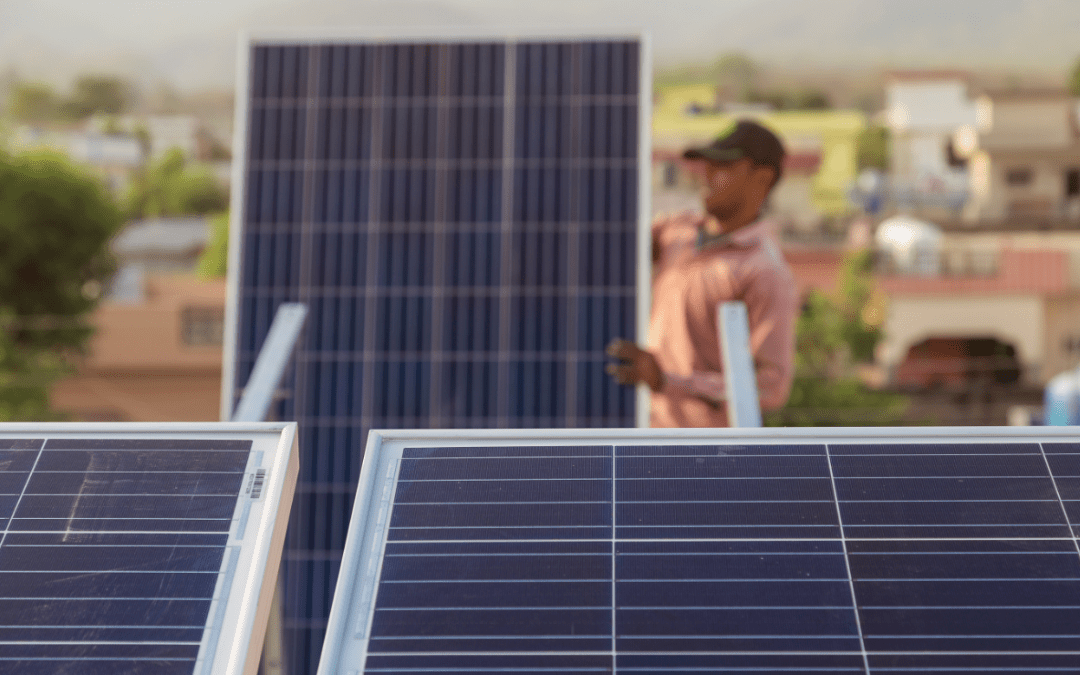
Octillion has announced the successful conversion of one of its three Indian battery system manufacturing factories to facility-wide solar energy, establishing a site that now operates entirely on carbon-free power.
This achievement anchors a larger initiative to make all the company’s India-based facilities carbon neutral via solar power generation by 2027.
Global President of Octillion, Paul Beach, commented on the commitment: “India’s electric vehicle market is accelerating rapidly, and we’re committed to ensuring this growth is truly sustainable.
“By converting our manufacturing to solar power, we’re closing the loop – producing the clean energy storage solutions of tomorrow, using clean energy today. This is just the beginning of our journey toward our goal of carbon-neutral operations across all our India facilities by 2027.”
The Pune facility, which spans approximately 8,200 square meters, generates 3GWh of total annual battery capacity.
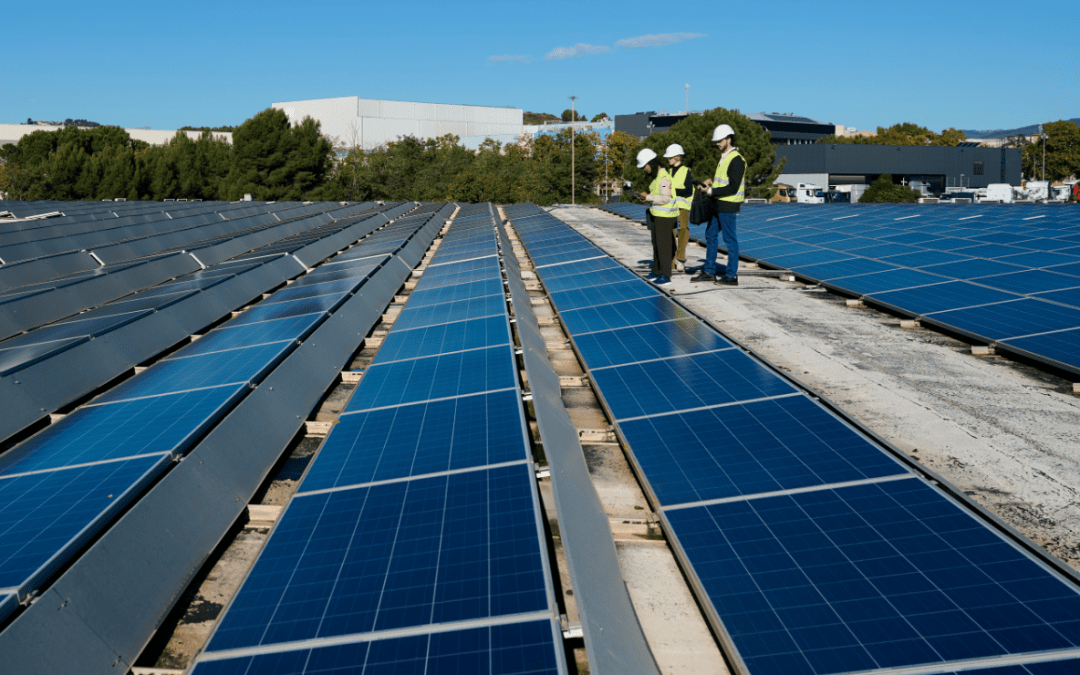
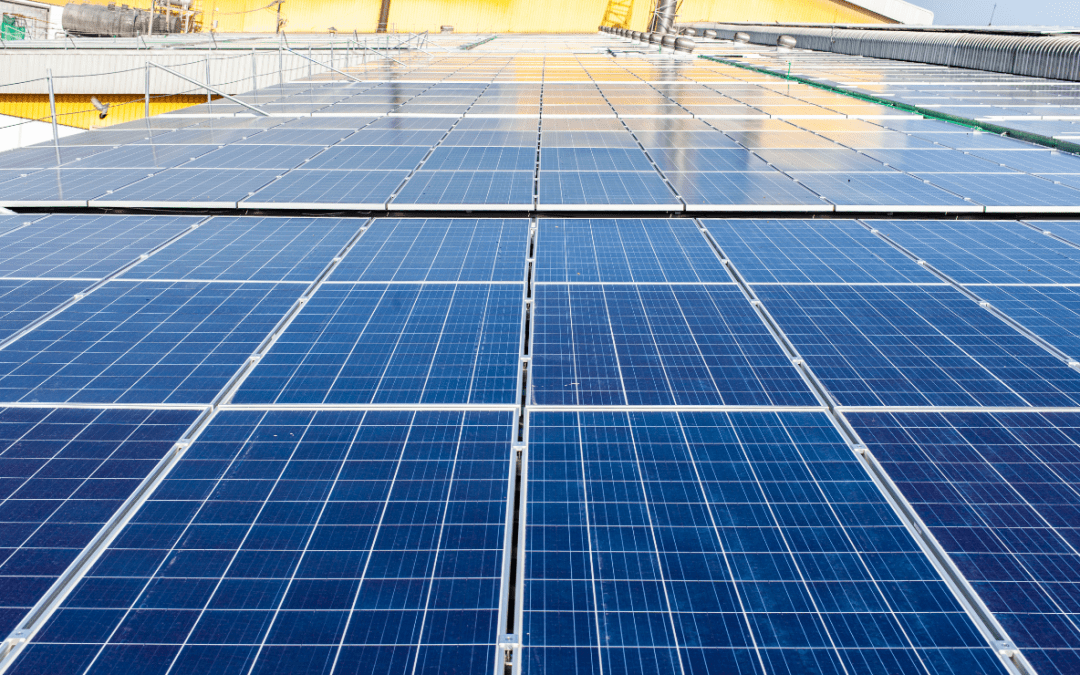
Its new rooftop solar installation is set to provide approximately 545MWh of dedicated clean energy annually, fully covering the factory’s entire power requirements. The conversion began in June 2024 and achieved full operational status by July 2025.
Nikhil Parchure, Senior Vice President at Octillion, noted the company’s role: “Accelerating cleaner, more efficient transportation in India is central to our mission as a global battery company.
“With three large-scale battery manufacturing facilities in India… Octillion is uniquely positioned to serve the fast-growing needs of India’s electric vehicle sector… We will continue to advance our efforts in India and globally by providing cutting-edge, safe battery systems, working to leave the least environmental impact possible in the transportation sector.”
by Catie Owen | Sep 15, 2025 | Asia, Commercial & Industrial Solar, Europe
Statkraft, Europe’s largest producer of renewable energy, has signed an agreement to sell part of its Indian renewable energy portfolio to Serentica Renewables.
The deal covers around 1.5 GWp of capacity in Rajasthan, including the 445MWp Khidrat solar plant, which began operating earlier this year, as well as a pipeline of solar and wind projects under development with an estimated capacity of 1,000MWp.
The transaction is subject to conditions precedent and any necessary regulatory approvals.
Fernando de Lapuerta, Executive Vice President International at Statkraft, commented:
“We are very pleased with this transaction. Serentica Renewables is a fast-growing renewable energy company with high ambitions. We are confident that they will continue to operate and develop these assets with competence and commitment, contributing to India’s green energy transition.”
Pratik Agarwal, Chairman of Serentica Renewables, said: “This acquisition accelerates Serentica’s journey in becoming a leading contributor to India’s renewable energy transition.
“By integrating Statkraft’s high-quality assets with our growth platform, we are strengthening our ability to deliver round-the-clock green power at scale and unlocking long-term value for all our stakeholders.”
Statkraft announced plans to divest its Indian portfolio in 2024 as part of a strategy to concentrate investments in Europe and South America, aiming to build scale and enhance competitiveness. “Statkraft remains committed to play a significant role in the global energy transition.
By reallocating capital to core markets in Europe and South America, we are positioning ourselves to deliver even greater value creation and impact,” de Lapuerta added.
The Norwegian state-owned company entered India in 2004 via a stake in joint venture SN Power, the first foreign investor in the country’s hydropower sector.
Over two decades, Statkraft developed a mix of solar, wind, and hydro assets, along with power trading operations across several states.
Founded in 2022, Serentica Renewables focuses on providing firm, dispatchable renewable energy to decarbonise hard-to-abate industries and recently surpassed 1,000MW of capacity.
by Catie Owen | Aug 29, 2025 | Americas, Asia, Everything Installer
High US tariffs and possible anti-dumping duties on Indian solar panel exports are set to deepen a supply glut in India next year as domestic project bidding slows, industry officials and analysts said.
US President Donald Trump’s 50% tariffs on Indian shipments will restrict sales to its largest overseas market, which accounts for 90% of exports.
The situation could worsen if the US Commerce Department imposes anti-dumping duties following a 17 July petition from American solar companies targeting imports from India, Indonesia and Laos.
“The 50% tariff will squeeze margins, and potential anti-dumping duties will make competing in the US even tougher,” said Raj Prabhu, CEO of consultancy Mercom Capital.
India’s awards of new solar projects slowed sharply in the June quarter. “We expect that India will enter overcapacity stage already in 2026, which will feel even worse with the loss of the US market,” said Wood Mackenzie analyst Yana Hryshko.
Government incentives have doubled annual module capacity to 74 gigawatts by March, with forecasts of 190 GW by 2027. Yet factories are running at only 25% utilisation on average, said Vinay Rustagi of Premier Energies.
“Some companies are running at 80%-85% like us, others are running at much lower capacity,” he added.
Finding new export markets will be difficult. Indian modules using Chinese cells are 48% more expensive than Chinese modules, while those made with Indian cells are 143% costlier, Mercom data shows.
India plans to mandate domestic cell use from June 2026, though these are more than three times the cost of Chinese alternatives, said Rystad Energy analyst Fei Chen.
Analysts expect a short-term surge in Chinese imports before the rules take effect.
“Reliance on cell imports is likely to increase in the short term, potentially leading to stockpiling, price spikes, and supply chain pressures,” Prabhu said.
India has seen a solar success in recent months, with the country announcing in July that 50% of its installed capacity now comes from renewable sources – five years ahead of target.
by Catie Owen | Aug 12, 2025 | Asia, Everything Installer
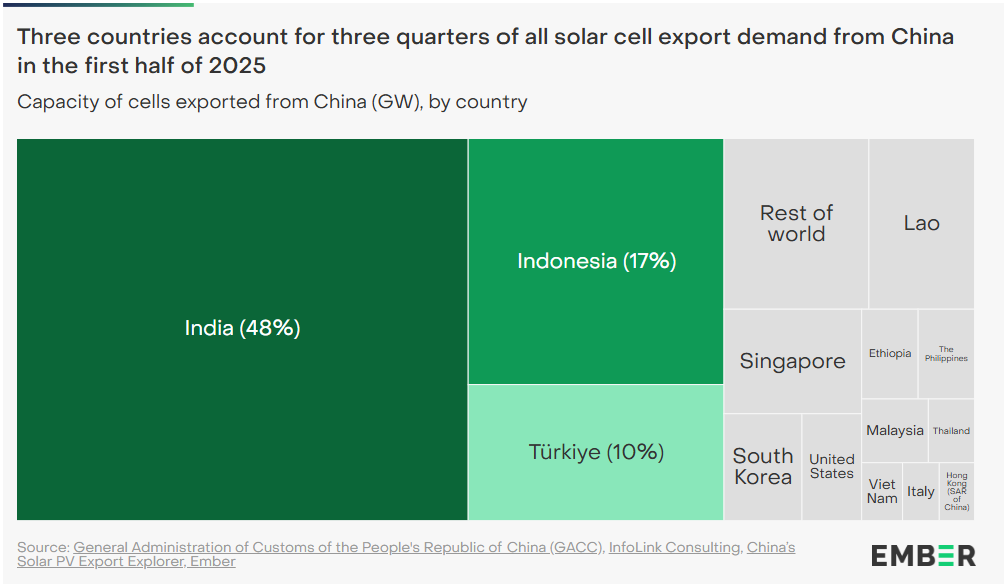
China’s solar cell exports rose by 73% in the first half of 2025, driven largely by demand from India, according to new analysis by energy think tank Ember.
Cells and wafers together made up over 40% of China’s solar product exports during the period – for the first time, cells have overtaken wafers in share – while panel exports fell by 5.2% year-on-year.
Ember said cell exports grew by 76% (+19GW) and wafer exports by 26% (+8.6GW), offsetting panel market stagnation caused by stockpile drawdowns and slower installations in Europe and Brazil.
“Cell and wafer exports are more than making up for the stagnation in Chinese solar panel exports so far in 2025,” said Matt Ewen, Energy Systems Analyst at Ember.
“India is driving growth in cell exports, whilst panels must now find new markets to go to.”
India, Indonesia, and Türkiye accounted for 75% of Chinese cell exports in 2025, with India alone responsible for 52% of the year-on-year growth.
India’s panel manufacturing capacity has outpaced its cell capacity, prompting a near doubling of cell imports from China to 21GW in the first six months of the year. The country aims for 65 GW of domestic cell capacity by 2030.
Global price trends have played a significant role. Cell prices have fallen by 82% since late 2022, contributing to a 63% reduction in panel prices.
Since August 2022, cell prices have dropped from $0.19/W to $0.03/W, and panel prices from $0.29/W to $0.09/W.
More than half the raw cost of Chinese panels now comes from non-cell components such as glass and aluminium frames.
While Asia imported 114GW of Chinese solar products in the first half of 2025 – more than twice Europe’s 54GW – some established markets have contracted.
Panel imports from China to the Netherlands fell 30%, while Brazil’s were down 42%. Ember noted that EU solar capacity additions are expected to fall for the first time since 2016.
China remains dominant across the supply chain, producing 98% of global wafers, 92% of cells, and 85% of panels in 2023, according to the International Energy Agency.
In June 2025, India reached a record 50% of energy capacity from clean sources for the first time, and solar now accounts for 24% of the country’s total capacity.
“With solar capacity set to double in many states by 2030-35, India’s development of local industry underpins its commitment to clean power,” the report concludes.
[Graph credit: Ember]
by Catie Owen | Jul 16, 2025 | Asia, Large Scale Utility Solar
India has reached a significant milestone in its energy transition, announcing that 50% of its installed electricity capacity now comes from non-fossil fuel sources.
This is five years ahead of its 2030 target under the Paris Agreement.
As of June 30, 2025, the country’s total installed power capacity stood at 484.82GW, with 242.8GW sourced from non-fossil fuels. This includes 8,780 MW from nuclear, 49,378.16 MW from hydro, and 184,621.04 MW from renewables.
Within the renewable segment, solar power leads with 116,247.83 MW, followed by 51,674.85 MW of wind, 11,596.31 MW of bio power, and 5,102.05 MW of small hydro.
“In a world seeking climate solutions, India is showing the way,” said Minister of New and Renewable Energy Pralhad Joshi. “Achieving 50% non-fossil fuel capacity five years ahead of the 2030 target is a proud moment for every Indian.”
This progress comes as India’s renewable energy output rose at its fastest pace since 2022 during the first half of 2025.
The country added nearly 28GW of solar and wind capacity in 2024 and 16.3 GW more in the first five months of 2025 alone.
Despite this momentum, fossil fuels still accounted for over two-thirds of the increase in total power generation last year. India also plans to expand coal-fired power by 80GW by 2032 to meet rising electricity demand.
The government remains committed to its clean energy goals, targeting 500GW of non-fossil capacity by 2030.
It is also promoting battery storage, green hydrogen, and circularity in solar and wind components to support deeper decarbonisation.
by Catie Owen | Jun 11, 2025 | Asia, Commercial & Industrial Solar, Large Scale Utility Solar
India has seen a drop in fossil fuel power generation in 2025, driven by a sharp rise in solar electricity output.
New Data from energy think tank Ember shows a 32.4% year-on-year increase in solar generation from January to April, supporting overall electricity supply while holding coal-fired output steady and cutting gas-fired power by 27%.
Solar power generation reached a record 57.8 TWh in the first four months of 2025 – nearly a third higher than the same period in 2024.
This growth followed a 30% rise in installed solar capacity over the past year. In March and April, solar contributed 10% of India’s electricity mix, up from a 2024 average of 7%.
Overall, clean energy generation rose by 23% year-on-year between January and April, accounting for a record 23.3% of total electricity production. This allowed utilities to reduce fossil fuel output by around 0.5%.
While modest, such a decline is uncommon given India’s fast-growing energy demand. The last similar drop occurred in 2020 during COVID-19 lockdowns.
Coal remains the dominant energy source, powering roughly 75% of the grid. However, India’s clean energy supply has grown by about 10% annually since 2020. During times of lower demand, this expansion gives room to scale back fossil fuel use.
Hydropower may further reduce coal dependence in the coming months. “Above-average” monsoon rainfall, forecast at 6% above normal, is expected to boost hydro output.
Combined with ongoing solar growth, this may prompt deeper cuts in coal generation and potentially lead to the first annual drop in coal use since 2020.
by Catie Owen | Apr 29, 2025 | Asia, Everything Installer, Large Scale Utility Solar
According to the Institute for Energy Economics and Financial Analysis (IEEFA), India installed 7.8GW of solar capacity in Q1 of 2025.
This is the country’s second-highest quarterly total for the last 13 quarters.
Q1 saw India install 7,782 of solar power capacity which, according to figures from IEEFA, is an 8.4% decrease from the highest record, which was set during the same period in 2024.
Overall, India’s total installed capacity rose 106GW.
The states of Rajasthan and Gujarat installed the most renewable energy during Q1 2025, acquiring 1,973 and 1,910 respectively.
The states of Maharashtra and Karnataka added 1,780MW and 1,316MW, respectively, and Andhra Pradesh added 940MW after introducing its Integrated Clean Energy Policy in October 2024.
“While total tendered capacity increased to 40 GW in 2018 and 2019 (and dipped during Covid-19 years), it crossed 50 GW in 2023 and 2024, tendered capacity has been increasing since 2023,” explained the IEEFA in its findings.
“(This has been) driven by India’s ambition to add about 50 GW of non-fossil fuel power capacity every year from 2023 to achieve 500GW of the said capacity by 2030.
“However, delays in signing power supply agreements and in receiving permits and approvals, and hurdles in gaining grid connectivity continue to hinder capacity installations.”
by Catie Owen | Apr 28, 2025 | Asia, Commercial & Industrial Solar, Everything Installer
Reliance Industries Ltd has commissioned its first gigawatt-scale solar module production line, the company announced following its FY25 earnings.
The fully automated line, located in Jamnagar, India, produces HJT panels with up to 720 W output and is certified by the Bureau of Indian Standards (BIS).
“We have commissioned the first gigawatt-scale solar module manufacturing panels that can generate 720 W at peak”, said V Srikanth Venkatachari, Chief Financial Officer of Reliance. “It is possibly the largest panel that we have.”
The facility is initially designed for 10 GW annual capacity, with a modular setup enabling expansion to 20 GW.
“Overall, in each [stage] on the entire solar chain, the engineering is complete, the long lead items and procurements are complete, and construction is going on in full swing,” Reliance said at a recent analyst meeting.
The company aims to create a fully vertically integrated production line covering the manufacturing of polysilicon, ingot, wafer, cell, panel, glass, and polyolefin elastomer (POE).
Reliance is also pursuing 30 GWh of battery manufacturing capacity and has started solar farm development in Gujarat’s Kutch region.
It is building a 2,000-acre green hydrogen ecosystem in Kandla, with electrolyser production through partnerships, including one with Norway’s Nel ASA.
All initiatives support Reliance’s $10bn plan, announced in 2021, to drive renewable energy, storage, and hydrogen growth as it targets net zero emissions by 2035.
According to the firm, domestic solar manufacturing will help India meet its target of 500 GW of renewable energy capacity by 2030.
by Catie Owen | Apr 11, 2025 | Asia, Europe, Large Scale Utility Solar
SolarPower Europe and the National Solar Energy Federation of India (NSEFI) have signed a Memorandum of Understanding (MoU) aimed at strengthening collaboration between the EU and India on solar manufacturing and supply chain diversification.
India, one of the world’s most dynamic solar markets, hosts a growing presence of European solar firms offering technical support and high-performance solutions.
Meanwhile, India continues to expand its own domestic solar manufacturing base.
The new agreement sets out plans to identify business and financing opportunities for joint manufacturing projects and promote knowledge sharing and capacity building.
Both organisations will also work to address regulatory barriers to solar equipment market access and facilitate engagement with policymakers to support cooperation.
The MoU aligns with the goals of the India-EU Clean Energy and Climate Partnership (CECP) and follows a recent pledge by Indian Prime Minister Narendra Modi and European Commission President Ursula von der Leyen to strengthen collaboration on clean energy and supply chains.
“The EU and India are important partners in clean tech,” said Máté Heisz, Chief Operating Officer at SolarPower Europe. “Our renewed partnership with NSEFI will help unlock market opportunities for European companies… and support India in delivering on its solar growth goals.”
Subrahmanyam Pulipaka, CEO of NSEFI, added: “India and the EU are natural allies in the global clean energy journey… Our strengthened partnership with SolarPower Europe will unlock new pathways for innovation, cross-border investment, and resilient value chains.”
This renewed partnership builds on SolarPower Europe’s International Solar Manufacturing Initiative (ISMI), designed to promote cooperation between EU-based solar manufacturers and partners such as India.
by Catie Owen | Jan 28, 2025 | Everything Installer, Large Scale Utility Solar
Press Release
Enfinity Global, a global leader in renewable energy, has secured connectivity for 2 GW of utility-scale solar PV and wind projects in the states of Rajasthan, Uttar Pradesh, Maharashtra, and Karnataka in India.
This strategic development represents a key advancement in the company’s efforts to expand its renewable energy portfolio and contribute to India’s energy transition.
The combined capacity of this 2 GW portfolio is expected to produce electricity equivalent to powering approximately 4.7 million households and avoiding 49 million metric tons of CO2 annually.
The power generated from these projects is earmarked to cater to government utilities, as well as commercial and industrial (C&I) customers.
“This milestone underscores our commitment to accelerating India’s renewable energy transition, with the aim of contributing to its ambitious goal of deploying 500 GW of non-fossil fuel energy capacity by 2030,” said Carlos Domenech, CEO of Enfinity Global.
“Our global presence enables us to create capital and operational synergies, and when combined with our local capabilities, it positions us as a strategic and reliable partner for the long-term energy needs of our customers in India.”
With over 1 GW of projects expected to enter the construction phase this year, including those in Maharashtra and Karnataka starting in Q1 2025, Enfinity Global’s renewable energy portfolio in India now totals ~3.3 GW in various stages.
This includes 240 MW already operational, 2 GW with granted connectivity, and an additional 1 GW of solar PV, wind, and energy storage projects in development. The company recently awarded a 300 MW Solar-Wind Hybrid project through SJVN’s competitive bidding process in Q4 2024.
Over the next 3 years, Enfinity intends to develop and commission renewable power plants to supply over 5 GWh of renewable electricity annually, including through Power Purchase Agreements (PPAs) with C&I customers.
The company is also taking significant steps to align the necessary capital to execute its portfolio in India through collaboration with national and international financial partners.
In May 2024, it closed a $135 million junior financing agreement with the Canada Pension Plan Investment Board (CPP Investments) to support the development and construction of solar and wind projects across the country.
by Catie Owen | Dec 10, 2024 | Commercial & Industrial Solar
Indian renewable energy producer Juniper Green Energy has signed a deal with First Solar to receive 1 GW of thin film PV modules over the next two years.
The agreement is one of the largest for domestically produced modules within India, as the modules will be reliably sourced from First Solar’s manufacturing plant in Chennai.
Regarding securing a domestic supply, Naresh Mansukhani, CEO of Juniper Green Energy, explained that acquiring the modules from First Solar aligns with the company’s domestic content strategy.
Meanwhile, Georges Antoun, Chief Commercial Officer of First Solar, said that Juniper Green Energy’s selection of an American manufacturer will strengthen India’s supply chain by improving the country’s reliable and stable access to high-quality modules.
The future
Juniper Green Energy plans to deploy the modules across its projects in the states of Gujarat, Rajasthan, and Maharashtra in the next fiscal year.
By acquiring modules from American manufacturer First Solar, Juniper Green Energy will reduce its reliance on China’s controversial supply chains and supply of crystalline silicon.
Furthermore, the modules will be tailor-made for India’s ground-mounted solar market. According to the companies, benefits will include ALMM enlistment, DCR eligibility, and BIS compliance and help lower India’s levelized cost of electricity (LCOE) for projects.
by Catie Owen | Nov 20, 2024 | Large Scale Utility Solar
India’s solar energy capacity is projected to reach 250 GW by March 2026, up from 201 GW in September 2024, according to Indian credit rating agency ICRA.
This growth is supported by an 80 GW project pipeline and improved tendering activity in 2024.
Solar energy will play a key role, with capacity expected to rise from 91 GW in September 2024 to 132 GW by March 2026, driven by annual additions of 22 GW in 2025 and 27.5 GW in 2026.
“Strong project pipelines and favourable solar module prices will drive renewable capacity additions, particularly ahead of the June 2025 end of inter-state transmission waivers,” said Girishkumar Kadam, Senior Vice President at ICRA.
However, challenges such as delays in land acquisition and transmission connectivity may hinder progress.
India’s renewable and large hydro energy share in electricity generation is expected to rise from 21% in 2024 to over 35% by 2030. To integrate this growth, ICRA estimates the country will need 50 GW of energy storage by 2030, supported by battery energy storage and pumped hydro projects.
Kadam noted a decline in battery prices has significantly reduced tariffs for battery energy storage systems (BESS) over the past eight months, boosting adoption.
To address intermittency issues, central agencies are prioritising renewable energy projects offering round-the-clock, dispatchable power, often through hybrids with storage.
Auctions for nearly 14 GW of projects have been completed, with competitive tariffs ranging from INR 4.0 to INR 5.0 per kWh, compared to over INR 6.0 per kWh for coal-based power.
These hybrid projects may also generate surplus power for merchant markets due to their oversizing, ICRA stated.
by Catie Owen | Nov 11, 2024 | Commercial & Industrial Solar
India exported around $2bn worth of photovoltaic (PV) modules in fiscal year (FY) 2024, a more than 23-fold increase from FY2022, according to a report by IEEFA and JMK Research.
The United States is the largest destination for Indian PV exports, receiving 97% and 99% of the exports in FY2023 and FY2024, respectively. India also exports PV products to South Africa, Kenya, the UAE, Afghanistan, Nepal, and Bangladesh.
Despite higher logistics costs, Indian manufacturers can earn 40-60% higher profit margins on exports to developed nations like the US compared to domestic sales.
Factors contributing to the export surge include a delay in the implementation of India’s Approved List of Models and Manufacturers in April 2024, and countries seeking alternatives to China through the “China Plus One” strategy.
With the US imposing tariffs on Chinese PV products and considering extending these to Southeast Asia, India has the potential to become a leading PV exporter to the US.
The report suggests that India should balance export and domestic market demands, particularly for segments like residential rooftop solar, to avoid price volatility.
In FY2024, India exported over 5.8 GW of PV modules, a threefold increase from FY2023. Major exporters included Waaree Energies, Adani Solar, and Vikram Solar.
Other companies like Grew Energy and Navitas are also exploring export opportunities. Waaree and Vikram are planning to set up PV manufacturing in the US to benefit from Inflation Reduction Act incentives.
by Catie Owen | Oct 28, 2024 | Innovation
Press Release
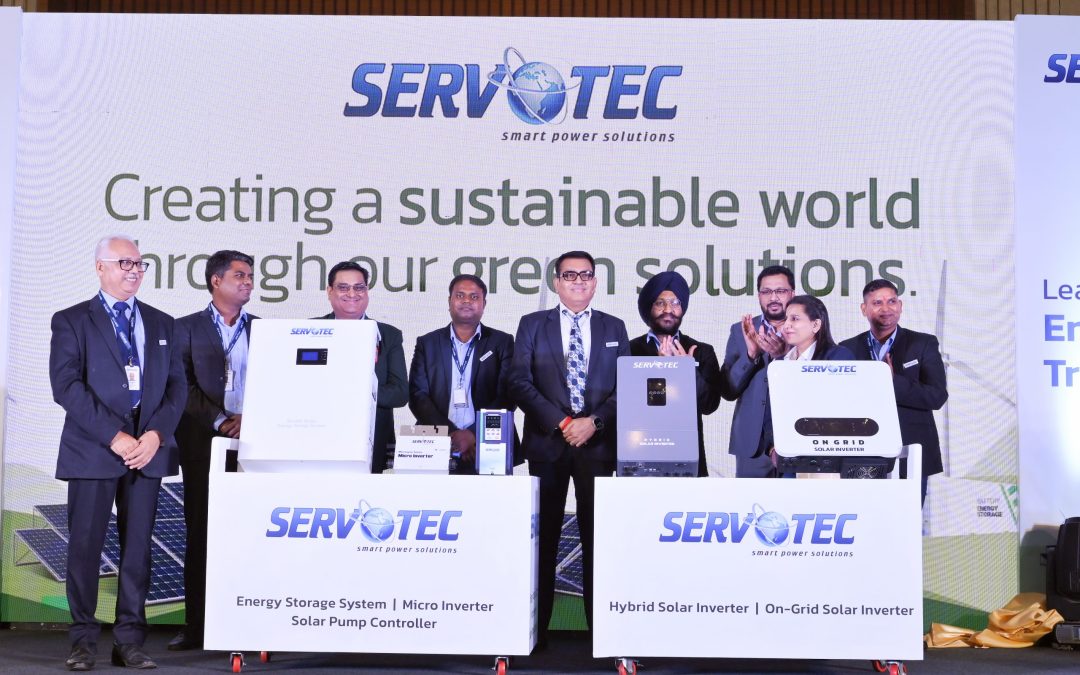
Servotech Power Systems Ltd., a leading manufacturer of renewable energy solutions, organised a product launch ceremony for its new series of innovative and high-tech products.
These include:
- Solar on‐grid inverters
- Solar hybrid inverters
- Solar microinverters
- BESS
- Solar Pump controllers
These products are in alignment with India’s central government schemes like PM Surya Ghar Muft Bijli Yojana and PM‐KUSUM Scheme for residential and commercial rooftops and empower farmers to harness solar energy and promote sustainable farming practices
These cutting-edge solutions will work in harmony to provide a more efficient, reliable, and readily available solution for domestic and commercial applications. They are designed to meet the growing demand for clean energy and reduce dependency on conventional power sources.
Speaking at the launch, Raman Bhatia, Founder and Managing Director stated, “We are thrilled to introduce our solar solutions to the market. These solutions not only help individuals and businesses reduce their carbon footprint but also drive sustainable growth.
“As a global leader in the renewable energy sector, we are at the forefront of accelerating a more productive and sustainable future. We continuously push the boundaries of technology to deliver energy-efficient, decarbonising, and circular solutions that benefit customers, industries, and societies.
“With our digitally enabled and advanced solutions, we empower our customers and partners to achieve greater performance, safety, and reliability in their operations.”
[Image credit: Servotech Power Systems]
by Catie Owen | Oct 17, 2024 | Commercial & Industrial Solar
Waaree Energies Ltd., an India-based integrated renewable energy company, is expanding its global solar energy operations ahead of its initial public offering (IPO).
Currently focusing on the US, where it is establishing a 3-gigawatt (GW) solar module manufacturing plant, the company plans to extend its reach to the European Union and the Middle East.
“We expect 1.6-GW module capacity to be operational before March 2025,” said CEO Amit Paithankar, with the potential to increase the facility’s capacity to 5 GW depending on market demand.
To meet global renewable energy needs, Waaree is leveraging its 13.3 GW solar module manufacturing capacity in India, which it plans to expand to 21 GW by 2027.
Paithankar highlighted the company’s plans for international growth, saying, “We are looking at international geographies as well, especially in the European Union and Middle East. We have already opened an office in Dubai.”
In addition to module production, Waaree is boosting its solar cell capacity. It expects to commission 5.4 GW of solar cell manufacturing in Chikhli, Gujarat, by March 2025, and aims to reach 11 GW of cell capacity and 6 GW of ingot and wafer capacity by 2027.
A new 6 GW integrated solar ingot, wafer, cell, and module manufacturing plant is also under development in Odisha, with a Rs 9,000 crore investment over the next two years.
The IPO will provide Rs 2,775 crore toward this project, with the remainder funded through internal accruals and Rs 5,000 crore debt from SBI, according to Chief Financial Officer Sonal Shrivastava.
With this expansion, Waaree aims to meet the rising global demand for solar energy and strengthen its international presence.
by Catie Owen | Sep 23, 2024 | Large Scale Utility Solar
India and the U.S. are partnering on a $1b initiative to strengthen India’s clean energy supply chain.
The funding, provided through the International Bank for Reconstruction and Development (IBRD), will focus on expanding the manufacturing of key green technologies such as solar panels, wind turbines, batteries, and energy-efficient products like air conditioners and ceiling fans.
This collaboration aims to accelerate the adoption of clean energy, create jobs, and help meet climate goals.
Both nations are enhancing technical, financial, and policy support to boost their capacity for producing and distributing clean energy technologies. In addition to working domestically, the U.S. and India plan to collaborate in other regions, particularly Africa, to support clean energy projects.
After discussions between Indian Prime Minister Narendra Modi and U.S. President Joe Biden at the QUAD summit, both governments agreed to work with industry leaders to identify immediate investment opportunities.
These efforts will focus on increasing production in areas such as solar wafer production, advanced solar cells, wind turbine parts, and energy storage solutions. There is also a focus on partnering with the private sector for projects, including initiatives in Africa.
One key element of the agreement is a plan to work with African countries on clean energy development, particularly solar power and battery storage technologies.
India and the U.S. will collaborate with local manufacturers and governments to implement these projects.
The U.S. International Development Finance Corporation (DFC) and the U.S. Agency for International Development (USAID) will work alongside India’s International Solar Alliance. Through this partnership, they will set up solar power and electric vehicle (EV) charging stations near healthcare centres in Africa, improving energy access and public health.
This partnership reflects the joint efforts of India and the U.S. to drive global clean energy transitions, with Africa seen as a key region for future investment.
by Catie Owen | Sep 2, 2024 | Large Scale Utility Solar, Storage
Reliance Industries, an Indian multinational conglomerate, is set to open solar and battery storage production facilities by the end of 2024 and 2025.
Chairman and Managing Director Mukesh Ambani announced at the company’s 47th AGM in Mumbai that solar PV module production will begin by year-end, while the battery gigafactory will commence operations in the second half of next year.
Ambani highlighted these developments as part of Reliance’s broader strategy to advance in deep-tech sectors and advanced manufacturing, contributing to a developed India (Viksit Bharat).
Known primarily for its oil and gas ventures, Reliance has diversified into various sectors, including telecoms, financial services, and renewable energy.
Reliance’s New Energy subsidiary is constructing a $7.2bn green energy manufacturing complex in Jamnagar, Gujarat. This site will include solar PV, battery storage, electrolysers, and semiconductor production facilities, along with an R&D centre.
The company acquired REC Silicon in 2021, leveraging its technology for integrated solar production. The initial 10GW production capacity is expected to come online in 2024. Ambani confirmed that the facility will produce heterojunction PV modules with efficiency exceeding 26% by the end of this year.
“Our gigafactory is designed for modular expansion at minimal cost and in the shortest time possible,” said Ambani.
Battery production will begin in Jamnagar next year with a 30GWh capacity, initially focusing on BESS and battery packs for various markets.
“Progressively, over the next few quarters, we will integrate backward to cell manufacturing and eventually to battery chemicals production,” Ambani stated, aiming to create “the world’s only fully integrated battery gigafactory.”
Reliance has also invested in companies like LithiumWerks and UK-based Faradion, and is looking to expand its battery portfolio further.
by Catie Owen | Aug 28, 2024 | Commercial & Industrial Solar
Since October, almost $43m worth of electronics equipment from India has been detained by the US Customs and Border Protection (CBP). They have been detained under a 2022 law banning imports of goods made with forced labour.
No electronics shipments from India had been detained in previous years.
The electronics detained have not been described but likely include polysilicon, which is identified as a “high priority” under the Uyghur Forced Labor Prevention Act (UFLPA). As a raw material used in solar panels, the panels usually make up most of detained electronics shipments.
The UFLPA primarily targets China’s Xinjiang region, which is suspected to have established labour camps under government stewardship for ethnic Uyghur and other Muslim groups. China, however, has denied the allegations.
Almost a third of shipments of electronics from India were refused, compared to 5.4% of US solar shipments from Southeast Asia. Overall, $3b of electronics had been denied at the border by CBP in the last two years.
As Indian producers begin to position themselves as an option for solar project developers without navigating the tariffs and UFLPA enforcement delays that come with Chinese goods, this is a step back for their efforts.
Tim Brightbill, a trade attorney with Wiley Rein LLP, comments: “If the solar cells for Indian panels are coming from China, then there is likely a good reason why detentions of Indian products may be increasing.
“My sense is that Customs and Border Protection did not realize for a while that many Indian solar panels contained Chinese solar cells, and therefore the UFLPA risks were (and are) high.”
The news seems to follow UFLPA being expanded further than China’s producers, as trade officials suspect that the Chinese industry’s biggest players have swapped their local polysilicon providers with American and European sources to circumvent UFLPA delays and detention.
Stats
- Solar imports from India hit a new height of $2.3b in 2023
- In Q2 of 2024, 11% of panel imports to the USA came from India
- This was over double the figure from Q1
by Catie Owen | Jul 29, 2024 | Large Scale Utility Solar
The Solar Energy Corporation of India Limited (SECI) has issued a tender for the design, engineering, supply, construction, erection, testing, commissioning, and operation and maintenance (O&M) of a 12MW solar PV power plant in Phey, Leh, Union Territory of Ladakh, India.
The deadline for bid submissions is August 16, 2024, with interested contractors requiring an Earnest Money Deposit (EMD) of ₹17.8m and a Performance Bank Guarantee (PBG) equivalent to 5% of the contract value.
Additionally, the project must be completed within 24 months from the date of the contract signing as bids from qualified contractors have been invited for the full execution of the solar power plant project, including comprehensive O&M for five years post-commissioning.
The detailed scope of work includes supplying and storing all mandatory spare parts, consumables, and conducting any necessary repairs or replacements of broken equipment.
The tender (linked above) covers the entirety of the solar PV project as the chosen contractor will manage every phase. This covers from initial design to long-term maintenance. The contractor must demonstrate the plant’s performance and ensure its efficient and reliable operation over the five-year period.
SECI has additionally provided comprehensive technical specifications to outline the project’s requirements and expectations.
The project underscores ongoing efforts to promote renewable energy in India, especially in regions like Ladakh which are well-suited for solar projects.
Furthermore, SECI’s intends for the project to increase clean energy use and reduce dependence on fossil fuels, enhancing India’s energy security and environmental sustainability.
by Catie Owen | Jul 9, 2024 | Large Scale Utility Solar
Indian multinational conglomerate Larsen & Toubro (L&T) has announced the competition of two contracts with a Middle Eastern developer to build two gigawatt-scale solar PV plants.
Together, the plants will have a total capacity of 3.5GW.
Explaining the value of the Middle East to L&T’s portfolio, S. N. Subrahmanyan, Chairman and Managing Director, L&T, comments:
“The Middle East is far ahead in creating sustainable energy infrastructure and in providing a smart lifestyle. These orders are welcome additions to our green portfolio, as we build the company of the future with next-generation technologies”
The additional plants will increase L&T’s international portfolio, primarily located in India, to a total of 22GWp capacity – including both solar and wind projects.
According to L&T, the contracts will include pooling substations and overhead transmission lines, with engineering and construction work kicking off in the imminent future.
Madhava Das, Whole-time Director and Senior Executive Vice President (Utilities), L&T, adds: “The successive order wins stand testimony to our proven engineering and project management capabilities to meet the requirements in terms of plant performance, workforce mobilisation, safety, quality and timeline.
“We cherish this level of customer trust.”