by Catie Owen | Jun 9, 2025 | Americas, Europe, Storage
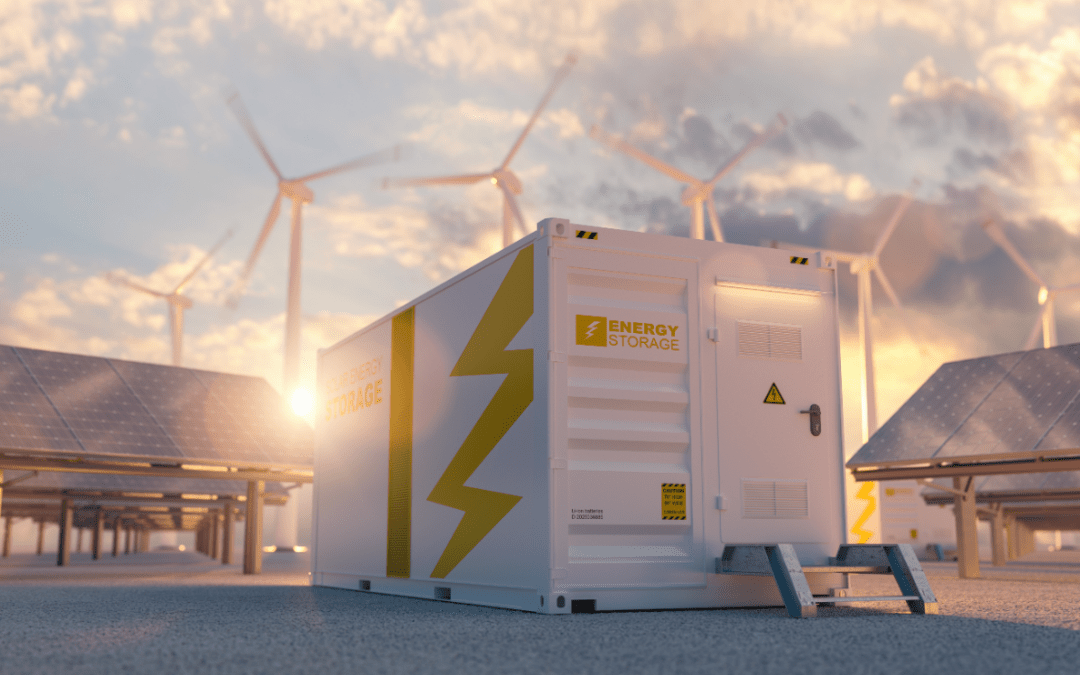
Daiwa Energy & Infrastructure (DEI) has acquired a minority stake in two BESS projects developed by Enfinity Global, an independent power producer.
Announced on 4 June, the deal gives DEI a 49% equity interest in 380MW of BESS developments.
These include a 250MW/500MWh project located in the ERCOT market in Texas, US, and a 130MW/520MWh project in Veneto, northeast Italy.
As reported in February, Enfinity’s two Texas projects are due to begin construction in the second and fourth quarters of 2025. The Italian project is expected to come online in Q4 of 2027.
Founded in 2018 by Japanese investment bank Daiwa Securities, invests in infrastructure projects such as solar PV, wind, data centres and battery storage.
The company entered the Texas BESS market in April 2024 through a partnership with Stella Energy Solutions to co-develop the 200MW/480MWh Thomas Cameron BESS project, expected to go live in 2026.
DEI has also partnered with Gotion High-Tech, a Chinese battery manufacturer, to pursue 1GWh of BESS projects in Japan.
Enfinity Global was founded in 2019 and manages a 35.5GW global portfolio of operational, in-construction and planned renewable energy and storage projects. This includes 1.1GW of operational capacity.
Interested in Italy’s solar market? Don’t miss your free ticket to Solar & Storage Live Italia – taking place 8-9 October at the Veronafiere exhibition centre.
by Catie Owen | Jun 4, 2025 | Commercial & Industrial Solar, Europe
ALTÉRRA, the United Arab Emirates’ $30bn climate investment platform, has committed €50m via its Acceleration Fund to Absolute Energy, an Italian renewable energy developer.
The investment, made in partnership with global infrastructure manager I Squared Capital, aims to accelerate the buildout of 1.4GW of solar and battery storage projects across Italy.
Absolute Energy specialises in small to medium-scale solar developments, capitalising on Italy’s favourable regulatory environment, which includes streamlined permitting and guaranteed grid access.
This initiative supports Italy’s national goal to add 46GW of solar capacity by 2030, enhancing energy security, reducing import reliance, and supporting net-zero ambitions.
“With a strong pipeline and deep sector expertise, the company will help drive Italy’s clean energy future,” said H.E. Majid Al Suwaidi, CEO of ALTÉRRA. “ALTÉRRA invests to accelerate the climate transition through innovative approaches and partnerships.”
Sadek Wahba, Chairman and Managing Partner of I Squared Capital, added, “Their investment underscores the strength of the platform and the scale of the opportunity in accelerating Italy’s energy transition.”
Beyond the initial 1.4GW rollout, Absolute Energy has a wider pipeline exceeding 6GW. ALTÉRRA estimates that the first phase alone could eliminate up to 380,000 metric tons of CO₂ equivalent emissions annually.
“This partnership is a powerful endorsement of Absolute Energy’s innovative model and I Squared’s long-standing approach to building transformational infrastructure businesses in critical sectors around the world,” Wahba said.
This deal underscores Italy’s potential in solar infrastructure, driven by high irradiation and strong policy support. It also marks another milestone in ALTÉRRA’s global strategy to catalyse climate-positive projects through co-investments.
by Manas Sahu | Mar 21, 2025 | Commercial & Industrial Solar
Prysmian, a global leader in cable systems, has partnered with Edison Energia to secure a long-term supply of 100% renewable energy.
Under the agreement, Edison Energia will provide approximately 25% of Prysmian’s annual electricity consumption in Italy. The energy will come from a new 150 MWp photovoltaic plant in Viterbo province.
This partnership aligns with Prysmian’s broader sustainability strategy, which focuses on reducing carbon emissions and promoting renewable energy adoption. By securing a stable supply of clean energy, the company aims to mitigate environmental impact while ensuring energy efficiency. The collaboration also highlights the growing importance of corporate renewable energy agreements in supporting the energy transition and achieving climate goals.
The European solar PPA market has seen increased corporate demand, with businesses seeking long-term renewable energy agreements to stabilise costs and reduce emissions. Italy, in particular, has experienced significant growth in utility-scale solar projects, reinforcing the country’s commitment to clean energy expansion.
Maria Cristina Bifulco, Chief Investor Relations, Sustainability and Communication Officer at Prysmian, stated: “This agreement is an important milestone in our journey in reducing our CO2 emissions.”
Laura Colli, Chief Purchasing Officer at Prysmian, added: “This agreement is a key component of Prysmian’s sourcing strategy, which emphasises building partnerships with a sustainable supplier base. By securing clean energy sources, we not only ensure a reliable supply chain but also make a positive impact on the environment, contributing to a greener and more sustainable future for the new generations”
by Catie Owen | Mar 3, 2025 | Storage
Aurora Energy Research has released the latest edition of its European Battery Markets Attractiveness Report (BatMAR), ranking Italy, Great Britain, and Germany as the most attractive markets for BESS investment.
The report, covering 28 European countries, also examines market trends and regulatory changes.
Italy tops the ranking, supported by its 50 GWh battery capacity target for 2030 and the opening of ancillary markets to BESS.
The UK follows, with a strong installed capacity of 4.3 GW, projected to more than double to 10.6 GW, and attractive revenue opportunities.
Germany ranks third, overtaking Ireland’s I-SEM, due to its strong market outlook and ambitious renewable energy goals.
Other markets
Beyond these leading markets, Belgium, Hungary, and Greece are emerging as key opportunities, particularly for smaller investors or those with a higher risk appetite, according to Aurora Energy Research.
Europe’s grid-scale BESS capacity, which stood at 10.3 GW as of October 2024, is forecast to grow fivefold to 55 GW by 2030 and reach 126 GW by 2050. These additions represent a €100 billion investment opportunity through 2050, including repowering projects.
“The grid-scale energy storage market continues to be strong, with investment pipelines growing due to promising opportunities,” said Eva Zimmermann, Senior Associate Flexible Energy, Pan European Power Markets at Aurora Energy Research.
However, she noted that market entry varies, as Italy presents greenfield opportunities while Great Britain’s pipeline is already well-developed.
Jörn Richstein, Research Lead at Aurora Energy Research, discussed the importance of flexibility in the energy transition, noting that evolving revenue opportunities make the market complex and require a deep understanding of local power developments.
by Catie Owen | Dec 20, 2024 | Commercial & Industrial Solar
The European Investment Bank (EIB) and Iberdrola have signed a €100m green loan agreement to fund a new photovoltaic plant in Sicily, Italy.
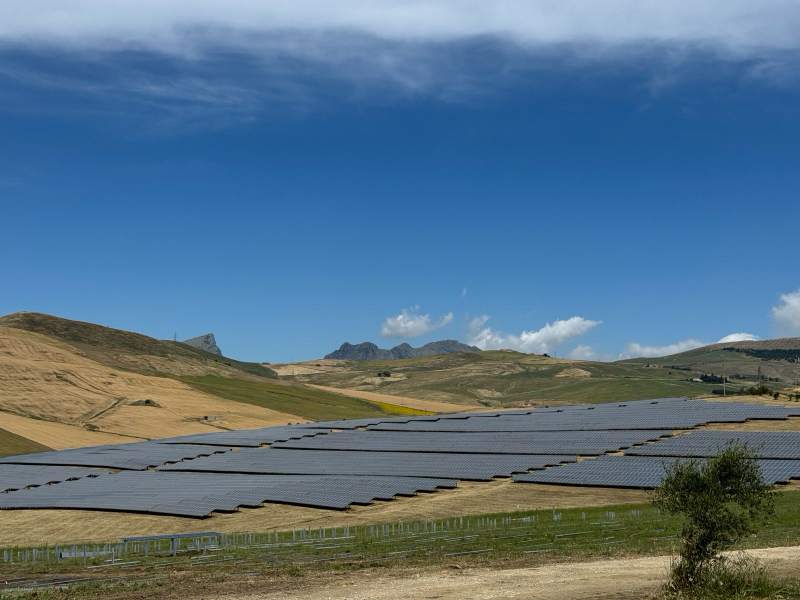
Set to be operational in 2025, the plant will be located in the provinces of Enna and Catania. It will have a renewable energy generation capacity of 242.78 MWp, sufficient to meet the annual energy needs of around 154,000 households in Italy.
The financing is 70% backed by SACE’s Archimede Guarantee, which offers market-based guarantees for financings and bonds of up to 25 years, aimed at boosting national competitiveness.
EIB Vice-President Gelsomina Vigliotti stated: “The EIB remains a key partner for Italy in the renewable energy sector. The EIB plays a crucial role in attracting foreign investors to the country with the aim of promoting environmental sustainability, social cohesion and economic growth.”
SACE CEO Alessandra Ricci commented: “We are proud to partner with EIB alongside Iberdrola for this paramount investment in Sicily in the renewable sector, a project that will boost productivity, and competitiveness and will create new job opportunities.
“With this aim, since the start of Garanzia Archimede operations last June we have approved over €4.9bn transactions to enhance Italy’s growth potential.”
Valerio Faccenda, CEO of Iberdrola Italy, added: “Thanks to this EIB loan and SACE’s support at Iberdrola, we will continue to make progress in Italy’s energy transition, with this new renewable project that will allow us to produce clean energy equivalent to the consumption of 154,000 homes.”
Stay in the loop with Italy’s solar market by attending Solar & Storage Live Italia, 8-9 October 2025.
by Manas Sahu | Aug 16, 2024 | Market Reports
Italy installed approximately 3.34 GW of new PV capacity in the first six months of 2024, according to a new report by the Italian PV association Italia Solare.
During the same period in 2023, the country deployed around 2.3 GW of solar power. Over the full year of 2023, the total new PV capacity reached 5.23 GW, compared to 2.48 GW in 2022 and 0.94 GW in 2021.
The country’s cumulative PV capacity stood at 33.62 GW by the end of June.
The newly installed capacity in the first half of the year includes 29% (985 MW) from residential PV systems under 20 kW and 35% (1,155 MW) from commercial and industrial (C&I) systems between 20 kW and 200 kW. The remaining 36% (1,201 MW) was contributed by utility-scale plants exceeding 1 MW.
This increase was driven by the connection of 17 plants with a power output greater than 10 MW, totalling 540 MW. These facilities were installed in Lombardy (18 MW), Lazio (215 MW), Friuli-Venezia Giulia (24 MW), Sicily (65 MW), Sardinia (177 MW), and Puglia (38 MW).
“The data demonstrate how the utility-scale sector is finally growing, and the authorisations granted are beginning to translate into plants built and connected to the grid,” said Paolo Rocco Viscontini, president of Italia Solare, while also emphasising that the process remains exceedingly lengthy.
There was significant growth in connections of plants between 1 MW and 10 MW, with capacity increasing by 122%, from 297 MW in the first half of 2023 to 661 MW in the first six months of 2024. Six regions – Lombardy, Lazio, Veneto, Emilia-Romagna, Piedmont, and Sardinia – accounted for 63% of the newly installed capacity this year.
These six regions have installed 63% of this year’s newly installed capacity: Lombardy (554 MW), Lazio (426 MW), Veneto (329 MW), Emilia-Romagna (304 MW), Piedmont (257 MW), and Sardinia (242 MW).
“In these regions, during the first six months of 2024, 2.11 GW was connected, of which 24% (515 MW) is attributable to the residential sector, 34% (717 MW) is attributable to the C&I sector, and 42% (880 MW) is related to the utility-scale sector,” said the association.
by Manas Sahu | Aug 9, 2024 | Large Scale Utility Solar
Austrian energy utility Verbund has acquired a 110MW solar portfolio located in Lazio, central Italy, from Ke-Reninvestment, a subsidiary of Turkish investor Kinesis Enerji. The financial details of the transaction were not disclosed.
The portfolio comprises two solar projects that are described by Verbund as being at an “advanced stage of development” and sharing a common substation. This acquisition is part of Verbund’s strategy to diversify its renewable energy mix, which has traditionally been dominated by hydropower.
Verbund is a major player in renewable energy, with approximately 95% of its power generation coming from renewable sources, primarily hydropower. The company, which has an installed hydropower capacity of around 8.2GW, has been actively investing in solar and wind energy projects in recent years to broaden its renewable energy portfolio.
Italy’s solar sector has seen significant growth and investment throughout the year. In June, Spanish firm Elawan Energy announced a joint venture aimed at adding 2GW of new solar capacity. Furthermore, for the first time in Italian history, renewable energy generation exceeded fossil fuel generation in the first half of the year, driven largely by a 14.6% year-on-year increase in solar and wind energy output.
Despite this progress, the Italian government has banned the development of new agrivoltaics (agriPV) projects earlier this year, a move criticised by experts who see significant potential in combining agriculture and solar power to boost Europe’s renewable energy capacity.
by Catie Owen | Jul 29, 2024 | Commercial & Industrial Solar, Storage
Canadian Solar Inc., a global solar and energy storage company, has announced that its subsidiary, Recurrent Energy, has secured a 5-year €50m loan from the European Investment Bank (EIB) to support the development and construction of solar energy projects in Italy.
This funding aligns with the EIB’s commitment to Renewable Energy, Climate Action, and Social and Economic Cohesion, and will enhance Recurrent Energy’s contribution to Italy’s clean energy transition. The goal behind the loan is also to support Europe’s goals of reducing emissions and improving energy independence.
Ismael Guerrero, CEO of Recurrent Energy, said: “We are excited to extend our banking relationship with the EIB. This transaction is a significant milestone in our goal to become one of the largest Independent Power Producers (IPPs) globally.
It reflects our commitment to fostering a more sustainable economy in Europe and beyond. We look forward to a long-term partnership with the EIB to advance our mutual goals.”
Recurrent Energy’s progress since expanding into Italy in 2017 has included the recent launch of its 51 MW solar PV project in Anguillara, Marsala, Sicily.
The company’s European portfolio now includes 10.3GW of solar PV and 32.8GWh of battery energy storage.
by Catie Owen | Jul 25, 2024 | Commercial & Industrial Solar
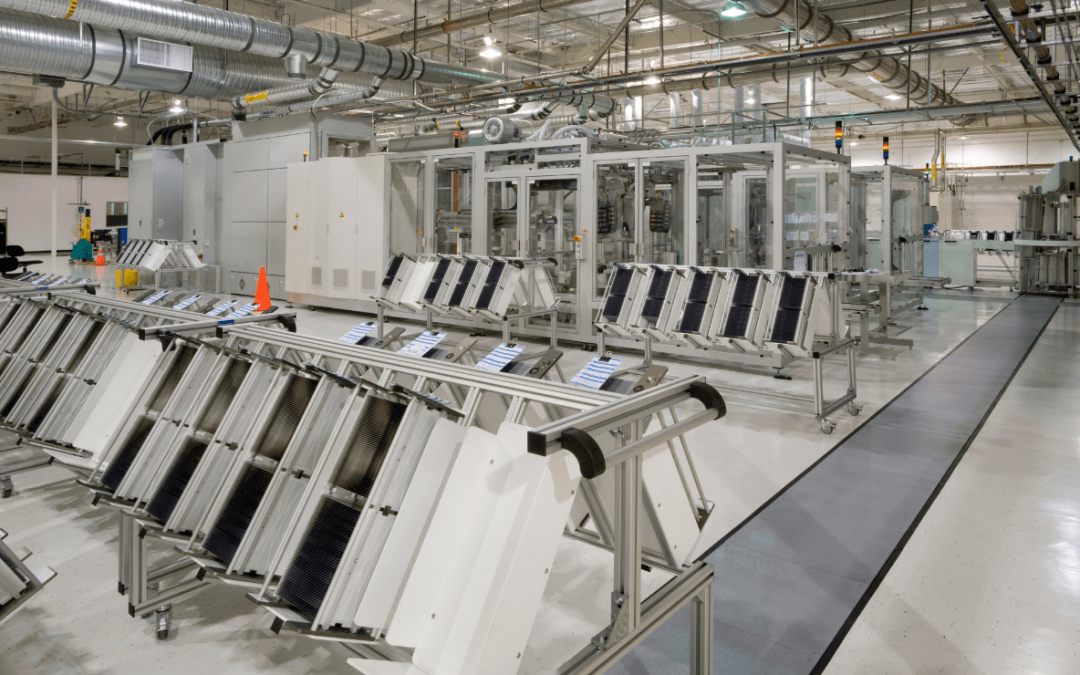
Comal SpA, an Italian engineering company, has announced plans to build a 500MW solar module assembly facility in Italy’s L’Aquila province.
An industrial building has been selected for the €16m project, with production due to start in 2025. According to Comal SpA, the facility’s products will be “innovative and high efficiency”.
The company has explained that Abruzzo region’s Next Appennino Misura B1.2 – B3.3 incentive program will fund the plan in conjunction with Mediocredito Centrale, an Italian bank.
Additionally, a solar “Tracker Sun Hunter” factory in Montalto di Castro, Viterbo, is in Comal SpA’s pipeline. It will cover 30,000sqm in Enel’s Montalto di Castro power plant which is no longer in use for generating electricity.
by Catie Owen | Jul 1, 2024 | Large Scale Utility Solar
Following Pope Francis’s announcement of a new solar plant, Vatican City is on track to become the eighth country in the world to generate 100% of its electricity from renewable energy.
This project will be built on 424 hectares of Vatican-owned property outside Rome, adding to the existing solar installations within the city-state.
In an apostolic letter titled Fratello Sole (Brother Sun), Pope Francis emphasised the need for a transition towards sustainable development to reduce greenhouse gas emissions and achieve climate neutrality:
“Humanity has the technological means necessary to face this environmental transformation.”
This initiative will make Vatican City, the smallest country by land mass, entirely energy independent, meeting all its electricity needs with solar power.
In competition, Vatican City will join Albania, Bhutan, Nepal, Paraguay, Ethiopia, Iceland, and Congo as countries generating more than 99.7% of their electricity from renewables, according to data from Stanford University Professor Mark Z. Jacobson.
Additionally, 40 other countries generate at least 50% of their electricity from renewable sources like geothermal, hydro, solar, or wind.
Environmental stewardship has been a central focus for Pope Francis. In 2015, he identified human-induced climate change as a major concern for the planet’s future.
Having joined the UN Framework Convention on Climate Change in 2022, Vatican City is partaking in the initiative’s goal of addressing “dangerous human interference with the climate system.”
by Catie Owen | Jun 17, 2024 | Large Scale Utility Solar
ContourGlobal, a British power generation company, has announced that its “major” upgrades to its Italian solar PV installations are underway.
The company adds that the project has spun up over 20 active construction sites employing over 100 workers.
Through the project, ContourGlobal focuses on “revamping and repowering” 35 out of its 71 PV plants in Italy – giving the modernised plants a 43% increase in installed capacity.
Improvements
With land use for solar farms being a hot topic in Italy, the company explains that these upgrades will enhance the modules without taking up extra land. Additional benefits include taking advantage of the increased power density of the more recent modules installed in the local area, and Italy’s grid hosting capacity.
To improve the sustainability of the process, end-of-life modules are processed to recover 97% of their precious materials such as copper, silver, aluminium, glass, and crystalline silicon.
Modern single-axis trackers will replace the old steel ground mounts, and the old inverters are also subject to upgrades.
ContourGlobal’s aim is that the results speak for themselves, predicting a boost to the company’s total solar capacity in the country to 113MW.
Once all 71 plants have their capacities upgraded, the company’s solar power supply will be able to power over 70,000 homes in Italy over 12 months.
The future
The ambitious project is supported by an increased version of its €202m infrastructure financing, which the company explains won “Refinance Deal of the Year” by Infrastructure Journal. Total commitments can now be uplifted to €264m.
Appetite and enthusiasm for the project are leading ContourGlobal to explore more options for integrating energy storage at some of its solar sites – intending to harness renewables’ full potential through this hybrid approach of batteries and generation plants.
[Image: Ferrante PV plant, Palermo, Italy. Image Credit: ContourGlobal]
by Catie Owen | May 8, 2024 | Commercial & Industrial Solar
On Monday, Italy’s coalition government passed new regulations to restrict the placement of solar panels on agricultural land. The move has drawn criticism for potentially hindering Rome’s efforts to reduce carbon emissions.
Among the new regulations, which are part of a larger set of measures to safeguard farming and fisheries, is a prohibition on installing ground-mounted photovoltaic systems in agricultural areas.
Speaking at a press conference, Agriculture Minister Francesco Lollobrigida said: “We are putting an end to the uncontrolled installation of ground-mounted photovoltaic panels.”
Agricultural lobbies have advocated for restrictions on solar panels, arguing that they are incompatible with farming activities. In response to the restrictions, environmental organisations have accused the government of undermining its green objectives – as established with the G7 nations.
The impact
Italian government officials state that the new regulations will not impede their target of installing approximately 38GW of photovoltaic capacity by 2030.
They asserted that the regulations will not single out agri-voltaic projects: solar panels installed above fields and vineyards for both energy production and crop cultivation.
Restrictions on solar installations could adversely affect energy companies that have expansion plans in the solar sector. Alternatively, slowing down solar capacity development could benefit power generators who face pricing pressure if solar energy production accelerates.
Italy added nearly 6GW of renewable energy capacity last year, primarily through new small solar plants, with wind projects contributing only 8% to the new green capacity.
by Regan Slaymaker | Feb 29, 2024 | Innovation
Spanish utility company Iberdrola and solar developer IB Vogt have signed an agreement to build a 245MW Solar park in Sicily, Italy.
The Fenix solar plant is expected to begin construction in March and is, according to Iberdrola, to be Italy’s largest solar park once fully operational.
Once built, the project has the potential to generate enough clean electricity for 140,000 homes.
Italy only has 60 solar farms that have more than a 10MW capacity, with the average project equalling 26MW.
The Fenix solar site is a significant indicator of Italy’s commitment to net zero targets. Once operational the site will consist of 424,638 solar panels and will generate 400GwH of electricity per year, preventing 119,000 tonnes of CO2 being omitted.
There are even plans in place to have an additional 60MW of capacity added to the project, bringing the total capacity to 305MW.
The project is not only set to help Italy secure its energy security through home-grown solar but will also improve the countries employment rate.