by Manas Sahu | Apr 18, 2024 | Innovation
In the evolving landscape of sustainable energy storage, PowerPanel has emerged as a game-changer with its holistic approach to harvesting solar power. This innovative company is currently captivating the solar industry with its integrated photovoltaic and thermal storage solution, which elevates the efficiency and ease of managing hot water systems by leveraging progressive thermoplastic technology and ingenious design principles.
The recent uptick in interest toward alternatives to conventional batteries – due in part to considerations surrounding efficiency, longevity, and recyclability – has spotlighted thermal technology. This method of energy storage, drawn from both photovoltaic systems and other energy sources, is fast becoming a heated topic of discussion within the solar community.
Historically, solar array designers and installers have utilized hot water tanks as repositories for surplus electricity generated via photovoltaic means, albeit not without the added complexity and expense of supplementary plumbing systems and dedicated tanks.
Amidst cutting-edge storage solutions in the pipeline, such as thermal batteries utilizing molten metals or hot silicon and thermo-chemical processes, many still linger in developmental phases or face practical implementation hurdles given the current state of technology.
Navigating through these challenges, PowerPanel opts for a different tact by incorporating straightforward, secure hot water management with avant-garde thermoplastic designs. This approach effectively addresses both the limitations of traditional steel tanks and the complexities associated with emerging thermal storage methods.
Established in 2007 by Garth Schultz and Rob Kornahrens in Oxford, Michigan, PowerPanel’s raison d’être is to perfect and peddle their hybrid PVT technology. Schultz, who boasts a history of working on clean vehicle innovations with automotive giants and agricultural sustainability in Canada, oversees manufacturing and engineering at their Michigan plant. CEO Kornahrens, with prior experience at thin-film solar enterprise Advanced Green Technologies, shares in this vision of eco-friendly progress.
The company’s Gen 20 thermal storage tank reimagines the archetypal steel water tank, favouring a robust, reliable, and recyclable thermal plastic alternative. The result? A lightweight, effortlessly transportable thermal storage solution that boasts a long, maintenance-free life span.
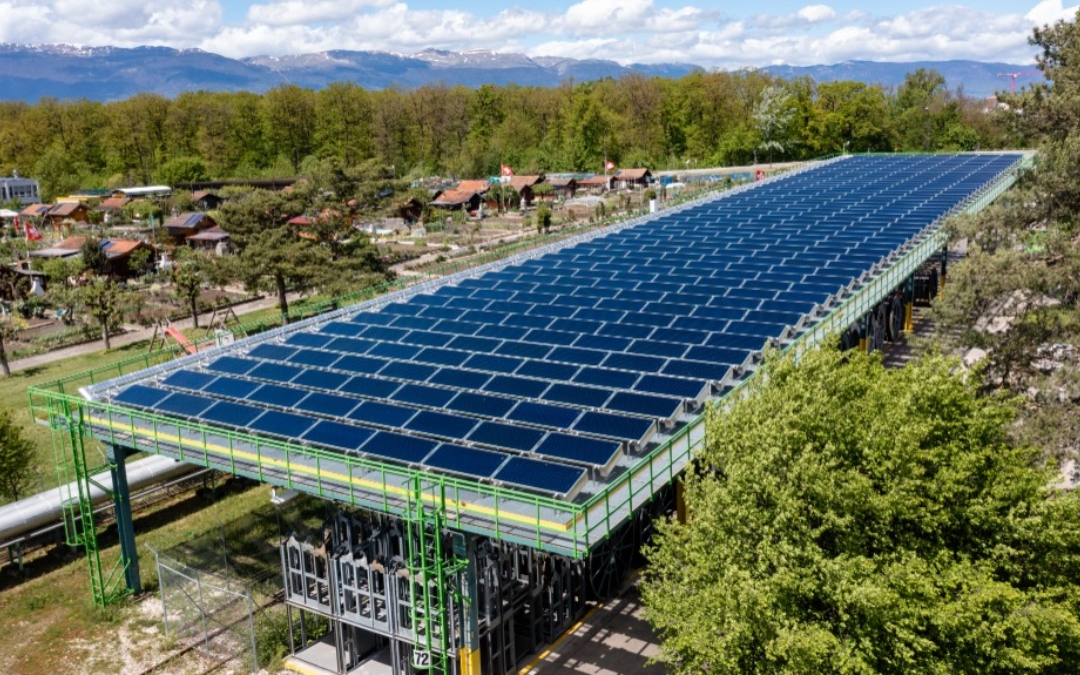
PowerPanel’s breakthrough pertains to the integration of solar photovoltaic panels with a thermal unit. Though Photovoltaic Thermal (PVT) systems have been trialed in various forms before, PowerPanel’s novel methodology involves a seamless blend of the thermal system with the photovoltaic elements. Specialized materials developed exclusively for PowerPanel encase the photovoltaic insert within a thermal collector cum circulatory framework.
This innovation doesn’t just harness heat; it also augments the cooling and overall efficiency of the PV module when it comes to generating electricity. A PVT panel uniquely outputs an energy production ratio skewed towards thermal generation, achieved at an efficacy significantly surpassing singular photovoltaic or thermal panels.
The company touts a large PVT array capable of concurrently generating 2.7kW of photovoltaic electricity and 12.7kW of thermal energy. To further solidify its innovative edge, PowerPanel has secured multiple patents guarding its unique foam storage tanks and amalgamated PVT solar collectors.
At the heart of PowerPanel’s advancement lies the strategic replacement of conventional materials with expanded polypropylene foam (EPP). EPP’s standout features include its lightweight nature juxtaposed with remarkable insulation properties, coupled with significant resilience to impacts and chemicals.
The proprietary Gen 20 tank exhibits modular design facilitating not just transportability but brisk on-site assembly as well. Its robust construction, thanks to non-degrading engineered foam and plastics, allows for versatile placement options, be it indoors, outdoors, or even subterranean setups.
For the solar industry professionals looking towards the future, PowerPanel presents an enticing proposition – a solar energy storage innovation that marries sophistication with simplicity and promises to reshape our understanding of sustainable energy solutions.
For more interviews from Solar&StorageXtra and to keep up to date with all NEW content, subscribe to the Solar&StorageXtra YouTube channel and Newsletter!
by Manas Sahu | Apr 18, 2024 | Large Scale Utility Solar
In a landmark event, Hansainvest Real Assets, together with project partner Move On Energy, have recently inaugurated what is currently Europe’s largest solar power plant. Occupying former coal territory near Leipzig, Germany, the Witznitz solar park boasts an impressive 605 MW in peak capacity, with plans to expand further by 45 MW.
The construction of this monumental facility began just 22 months ago under the auspices of Signal Iduna’s investment arm, Hansainvest Real Assets. Demonstrating remarkable efficiency, the Witznitz solar farm is set to enhance the region’s renewable energy portfolio significantly.
The expanding horizon of renewable energy
This new addition to the renewable landscape surpasses Iberdrola’s Francisco Pizarro – completed in 2022 – to claim the title of the biggest solar facility in Europe. Iberdrola’s plant, situated in Spain, currently has a 590 MW peak capacity and 553 MW network connection. While Turkey’s large-scale 1.35 GW project in Karapınar, commissioned just a year ago, might eclipse this, it falls outside of Europe’s geographical span. Elsewhere in Spain, there also exists an 850 MW cluster composed of 17 solar units. Adding to this competition, Iberdrola is now developing a 1.2 GW solar project in Portugal.
Tracking the booming solar investments across Europe is becoming increasingly challenging. A large portion of these projects are emerging in Southeastern Europe, especially within countries such as Romania, Bulgaria, Serbia, and Montenegro. On a global scale, photovoltaics has overtaken hydropower in the last year as the primary segment for nominal electricity generation capacity, signifying a major shift in the energy sector.
A future-proof energy hub
The extensive solar park at Lake Hainer comprises ten segments and 1.1 million solar modules and began its operations in part as early as December. The solar park discontinuously spreads over more than 650 hectares of land, including 500 hectares within the expanse of the former Witznitz 2 open pit coal mine.
Acknowledging the environmental and social aspects of solar development, the Hansainvest and Move On collaboration extends beyond renewable energy production. A total of 13 kilometers of roads featuring cycling and hiking paths have been constructed alongside the plant, providing community benefits and enhancing local biodiversity through strategically placed hedges and forested areas.
In the realm of power purchase agreements, Shell Energy Europe secured a 15-year PPA for 600 MW at Witznitz, and subsequently, Microsoft has also contracted a portion of the plant’s output amounting to 323 MW via a separate agreement.
The investors are exploring the synergy between agriculture and solar production, conducting trials on over five hectares dedicated to agrisolar, also known as agrivoltaics—a process that accommodates both agricultural production and solar power harvesting on the same land.
Conclusion
The continued expansion of renewable energy projects like the Witznitz solar farm represents a pivotal shift towards sustainable power production. For solar industry professionals, the development of such large-scale plants not only marks progress within the renewable sector but also indicates a strong future for energy innovation and environmental stewardship.
For more interviews from Solar&StorageXtra and to keep up to date with all NEW content, subscribe to the Solar&StorageXtra YouTube channel and Newsletter!
by Manas Sahu | Apr 18, 2024 | Storage
In a remarkable breakthrough, TENER has introduced the world’s first energy storage system that promises zero capacity degradation over an impressive five-year period. This innovation stands to considerably extend the lifespan of batteries, which is a boon for energy storage facilities servicing new generation electric power systems.
The ingenuity behind TENER’s enduring battery system stems from the utilisation of biomimetic SEI (solid electrolyte interphase) alongside self-assembled electrolyte technologies. These advancements have been instrumental in eliminating the common obstacles to the smooth passage of lithium ions. The result is an energy storage system that not only retains its power and capacity intact over time but also completely avoids the growth of auxiliary power consumption throughout its lifecycle. CATL terms this the creation of an “ageless” energy storage solution.
Tackling one of the major hazards in battery technology, CATL’s advanced approach has triumphed over the potential dangers posed by the reactive nature of lithium metals. By effectively nullifying the risk of thermal runaway from oxidation reactions, the company has set a new standard for safe, zero-degradation power sources.
Supercharged storage in a compact design
The TENER system embodies impressive energy provision within confined spaces, boasting a capacity of 6.25 MWh housed within a standard 20-foot container. This represents a 30% increase in the energy-per-unit-area available, and a consequential 20% reduction in space requirements. Such advances distinguish TENER as a leader in efficiently packaged, high-density energy storage.
At the heart of TENER’s robust performance lie CATL’s bespoke energy storage cells, which deliver an energy density of 430 Wh/L – an unprecedented figure for LFP batteries within the realm of energy storage use.
Unwavering commitment to safety standards
End-to-end safety has been a foremost priority for CATL, manifesting in the establishment of a comprehensive quality management system. This protocol stretches from technological development to operation oversight, including rigorous proof testing and detailed safety failure analysis. Safety objectives are tailored to respective applications, with innovative security measures engineered accordingly.
To validate and ensure the integrity of these safety technologies, CATL has developed simulation platforms capable of emulating various power grid scenarios. Upon deployment, AI-fuelled monitoring and intelligent predictive systems constantly survey operational status. This allows for the precise calculation of lifecycle failure rates of the TENER products, reaffirming the design’s safety objectives while enabling continual optimisation processes.
By reducing the cell failure rate to the PPB (parts per billion) level, the TENER system not only guarantees operational excellence but also delivers on the promise of reduced operational expenses and an elevated internal rate of return (IRR).
Energising the green transition
Energy storage solutions like TENER are critical to the accelerating shift towards green energy. CATL maintains a resolute dedication to supplying world-leading energy storage solutions to an international customer base. The launch of TENER marks yet another testament to CATL’s unwavering commitment to the energy transition. With eyes fixed on the future, CATL continues to push the boundaries of open innovation and industry collaboration— cementing its position as a champion of progress and a pioneer of cutting-edge technology in the renewable energy sector.
For more interviews from Solar&StorageXtra and to keep up to date with all NEW content, subscribe to the Solar&StorageXtra YouTube channel and Newsletter!
by Manas Sahu | Apr 18, 2024 | Market Reports
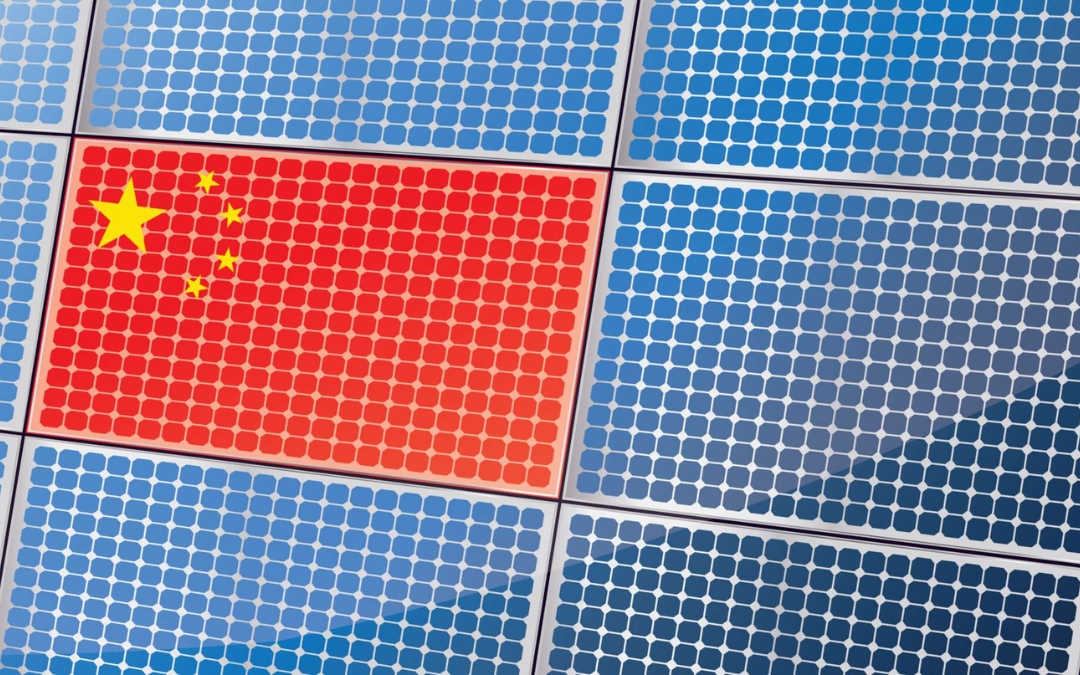
Sinovoltaics, a technical compliance and quality assurance service firm from Hong Kong, recently published an insightful report on PV module manufacturers across the globe. The ranking encompasses a comprehensive list of 52 suppliers and is based on data ranging from June 2020 to December 2023, offering a unique perspective on the temporal stability of the manufacturers’ scores.
Developed using the Altmann Z-score methodology, the report introduces a quantitative measure of a company’s financial health, combining various factors such as profitability, leverage, liquidity, solvency, and activity ratios—all derived from public financial records.
“A surprising find from the report is that some of the leading names in the industry did not fare as well in the rankings, while lesser-known brands have showcased stronger financial health,” commented Niclas Weimar, CTO of Sinovoltaics, speaking to pv magazine.
A key highlight is the Altman Z-Score, a seasoned financial tool that predicts the likelihood of a company facing bankruptcy within two years, with scores below 1.1. Conversely, a score above 2.6 reflects a robust financial standing, positioning a company in good stead for sustainable operations.
At the top of the ranking sits Tainergy from China, followed by First Solar from the US, Eterbright Solar Corporation from Taiwan, and other celebrated names such as Mission Solar and ERA Solar Technology Co., Ltd. from China. Securing the next five spots are TSEC from Taiwan and four Chinese contenders—Longi, Tongwei, DMEGC, and Phono Solar.
The industry’s reception to Sinovoltaics’ rankings over time has been predominantly positive, acknowledged by manufacturers and industry stakeholders, including financial institutions which integrate these reports into their due diligence workflow.
“While our rankings don’t necessarily reflect the end-product quality, they offer invaluable insights into the fiscal robustness of PV manufacturers, which many financiers and buyers weigh heavily when selecting suppliers,” Weimar explained. Given the volatility and complexity of global financial landscapes, such transparency in assessing suppliers’ economic viability becomes crucial for informed decision making in the solar industry.
For more interviews from Solar&StorageXtra and to keep up to date with all NEW content, subscribe to the Solar&StorageXtra YouTube channel and Newsletter!
by Manas Sahu | Apr 18, 2024 | Large Scale Utility Solar
Grand Cayman’s sole electricity provider, CUC, stands at a crossroads, grappling with a burgeoning demand exceeding its current power generation capacity. In the face of rapid population growth, the reliance on leased generators becomes a stop-gap measure as the company aligns with the national vision toward a greener future.
The Cayman Islands, aiming to achieve 70% reliance on renewables by 2037, currently derive a mere 3% of their power from green sources. The transition away from fossil fuels has become imperative for CUC, halting further investment in traditional diesel generators, and fostering resilience against a potential energy supply crunch.
The pivot from conventional power sources invites scrutiny and challenges. CUC has caught the public eye, battling criticism regarding its alleged obstruction of residential efforts to adopt renewable technologies like solar panels and wind turbines.
Despite accusations of bottlenecking the Consumer Owned Renewable Energy (CORE) program (a scheme facilitating home-based renewable energy production sans storage solutions), CUC executives articulate a preference for large-scale solutions. Utility-scale solar, coupled with battery storage, is advocated as a more economically feasible pathway to reduce energy costs and ensure reliability in power supply.
Richard Hew, CUC’s president and CEO, calls attention to the sluggish advancement on a utility-scale project bid, expressing frustration with the regulator—Utility Regulation and Competition Office (OfReg). He stresses the imminent need for a substantial solar farm to actualize the objectives inscribed in the National Energy Policy, mitigate electricity bill surges, and secure uninterrupted power service.
In the interim, CUC shifts gears towards adopting LNG as a lesser evil—cleaner than diesel and more cost-effective in the long run. This transitional move embodies a concession to the current limitation in transitioning directly to 100% green energy sources.
Power continuity within Cayman, accentuated by the recent pandemic, remains a delicate scale that CUC balances precariously. The post-COVID population rebound has pushed generators to their maximum, echoing a clarion call for expedited action towards sustainable generation options.
Meeting the peak demand constitutes a paramount concern for Hew and CUC, pivoting towards self-sufficient prospects on owned land in East End or external bids. However, these plans remain in abeyance, awaiting OfReg’s signal to commence the bidding for the vital solar infrastructure.
Projected to offer energy at prices significantly lower than current rates, the envisioned solar farm could potentially halve customers’ expenses while enriching the island’s renewable energy profile.
Amidst claims of monopolistic tendencies, CUC rebukes such notions, demonstrating its purchase liberty through CORE and DER programs. Nonetheless, these contributions account for only a fraction of CUC’s energy mix.
The Cayman Renewable Energy Association (CREA) points fingers at both CUC and the regulator for stalling the wider deployment of solar solutions, suggesting undue influence over energy stakeholders. Despite recognizing that rooftop solar cannot immediately deliver the economies achieved by larger ventures, CREA underscores its financial and environmental benefits, alongside job creation and industry expansion opportunities.
The call for unshackling home-based renewable initiatives emerges as a concurrent strategy to the solar farm pursuit, advocating diversity in the island’s approach to achieving sustainable energy and stronger commercial horizons.
For those in the solar energy profession, the unfolding scenario in the Cayman Islands exemplifies the intricate dance between present capabilities and aspirational renewable targets—a seesaw between immediate fixes and enduring solutions playing out in a region poised for a cleaner, more sustainable power paradigm.
Don’t miss the opportunity to delve deeper into the future of solar and storage solutions at the Solar & Storage Live USA, where the latest innovations and strategies are showcased to shape the renewable energy landscape.
by Regan Slaymaker | Apr 11, 2024 | Large Scale Utility Solar
Solar generation is on the rise in Egypt
Between 2018 and 2022, The World Bank have committed $5.7bn to develop energy accessibility across Africa, providing power to around 77million people. The $5.7bn pledge has been focused on developing clean energy projects, particularly solar.
Clean energy, for the World Bank, has been highlighted as a solution to further investment, innovation and industry and drive employment across Africa. In Kenya, local businesses operate into evening hours to feel the full benefit of off grid solar energy. In Tanzania, electrical engineers work on solar energy projects at the Arusha Technical College, the hub for renewable energy studies in the region.
A lot of regions in Africa, like Sub-Saharan Africa, do not have efficient or accessible energy access. Cheap, reliable solar power could be the solution in closing ‘the energy gap’ in Africa and deliver the young population in the country more opportunities to drive economic growth. By 2030, the World Bank expect solar mini-grids to bring high quality, uninterrupted power to 280million people.
Solar is fundamental in unlocking efficient and accessible electricity access in Africa. Ethiopia, Niger, and Nigeria are all feeling the benefits of Solar. 75% of Kenya’s population now has access to energy. The World Bank have also launched the ‘Off Grid Solar Access Project for Unreserved Communities’ to bring solar mini-grids to schools, hospitals, and homes. So far, the projects has provided enough electricity for 1.5million people.
The greatest challenge facing accessible electrification across Africa is the West Africa countries. These countries experience the lowest electrification rates but the highest electricity costs across Africa. To combat this Chad, Sierra Leonne, Liberia and Tago have signed onto the Regional Emergency Solar Power Intervention project (RESPITE) to rapidly increase grid connectivity, renewable energy capacity and strengthen regional integration.
Increasing the access to clean, cheap and efficient energy will mean young people across Africa can further their education, develop their skills and begin businesses.
(Image credit: The World Economic Forum)
For more interviews from Solar&StorageXtra and to keep up to date with all NEW content, subscribe to the Solar&StorageXtra YouTube channel and Newsletter!
To enquire about interviews, submit news and press releases please contact our Editor, Regan Slaymaker, regan.slaymaker@terrapinn.com. For sponsorship and exhibition enquires please contact Sara Atwi, sara.atwi@terrapinn.com.
by JaimieF | Apr 10, 2024 | Innovation
Kingdom of Saudi Arabia Solar Market Report
Dubai, UAE 09/04/24 — The Middle East Solar Industry Association (MESIA) is proud to announce the launch of the MESIA Net-Zero Champions Program, a groundbreaking initiative aimed at accelerating the transition to a sustainable, low-carbon future. The launch event, scheduled for April 16th, during the World Future Energy Summit, will bring together industry leaders, policymakers, and stakeholders to celebrate this inauguration.
The MESIA Net-Zero Champions Program seeks to galvanize action on climate change by empowering organizations to commit to achieving net-zero carbon emissions by leveraging solar energy. “At MESIA, we recognize the critical role that the private sector plays in driving the transition to a sustainable energy future,” said Hinde Liepmannsohn, Executive Director at MESIA. “The Net-Zero Solar Champions Program is a call to action for organizations across the Middle East to lead by example and demonstrate their commitment to sustainability.”
Key features of the MESIA Net-Zero Solar Champions Program include:
- Guidance and Support: Participating organizations will receive expert guidance and support to develop and implement robust strategies for achieving net-zero carbon emissions.
- Networking Opportunities: The program will facilitate collaboration and knowledge-sharing among participating organizations, fostering a community of leaders committed to sustainability.
- Recognition and Visibility: Net-Zero Solar Champions will be recognized for their leadership and commitment to sustainability, enhancing their reputation and brand value.
- Measurable Impact: The program will track and measure the carbon emissions reductions achieved by participating organizations, demonstrating tangible progress towards the goal of net-zero emissions.
The launch event, sponsored by Nextracker, JA Solar and Envision will gather over 200 solar professionals for networking and short welcome speeches.
For more information about the MESIA Net-Zero Champions Program and to register for the launch event, please visit http://www.mesia.com
About MESIA:
The Middle East Solar Industry Association (MESIA) is a non-profit, non-governmental organization dedicated to promoting solar energy and sustainability in the Middle East and North Africa.
For questions about this release please contact Hinde Liepmannsohn hinde@mesia.com
For more interviews from Solar&StorageXtra and to keep up to date with all NEW content, subscribe to the Solar&StorageXtra YouTube channel and Newsletter!
To enquire about interviews, submit news and press releases please contact our Editor, Regan Slaymaker, regan.slaymaker@terrapinn.com. For sponsorship and exhibition enquires please contact Sara Atwi, sara.atwi@terrapinn.com.
by Regan Slaymaker | Apr 9, 2024 | Market Reports
The World’s Top 10 Battery and Storage Systems Companies
Solar thermal technology has emerged as a powerful contender in the renewable energy market, offering a clean and efficient way to produce electricity. Advances in the technology have been led by several companies that have not only developed cutting-edge technologies but also are making a significant impact on the industry. This is Solar&StorageXtra’s Top 10 solar thermal companies that are leading the charge toward a greener and more sustainable future.
1. BrightSource Energy
Location: Oakland, California, USA
BrightSource Energy is a leading solar thermal technology company, renowned for its flagship project, the Ivanpah Solar Electric Generating System in the Mojave Desert, which began operation in 2014. The system is the largest of its kind, with a gross capacity of 392MW. This is enough electricity to power 94,400 homes. BrightSource’s tower technology uses tens of thousands of computer-controlled mirrors, called heliostats, to reflect sunlight to the tower’s apex. This intense energy creates steam, which powers a turbine, generating electricity.
BrightSource has developed high-temperature steam cycles and molten salt energy storage, further boosting the system’s efficiency and ability to meet the demands of a modern conventional power plant grid. These developments have made its tower technology a key player in global solar energy solutions.
2. Abengoa Solar
Location: Seville, Spain
Abengoa Solar is a global leader in solar technologies. Their flagship projects include the Solana Generating Station in Arizona, equipped with molten salt energy storage that allows for power production long after the sun sets, and a parabolic trough plant in Gila Bend, Arizona.
Abengoa is renowned for its innovative approach to high-temperature molten salt, which enables it to store the sun’s heat and generate clean electricity on demand, even after dark. This technology has set new industry standards for solar power plant operation and is a significant contributor to the global transition to renewable energy.
3. Siemens
Location: Munich, Germany
Siemens is a global powerhouse when it comes to energy technologies and has a significant presence in the solar thermal sector. The company manufactures essential components for solar power plants, including turbine generators and steam turbines that convert thermal energy into mechanical energy for electricity generation. Siemens’ robust research and development have led to the creation of micro-gen gas turbines, a sustainable solution for decentralized power generation.
Siemens has been at the forefront of integrating solar technology with traditional power systems. Their ground-breaking work in hybrid solar-gas plants allows renewable energy to be dispatched as reliably as fossil fuels, ensuring grid stability and an efficient energy supply.
4. Acciona
Location: Alcobendas, Spain
Acciona is a global renewable energy corporation with a significant presence in solar thermal power. Their solar division, Acciona Energy, has been instrumental in promoting sustainability and clean energy transition. They are noted for projects like the 110 MW Kathu Solar Park in South Africa that uses parabolic trough technology and a six-hour molten-salt storage system.
Acciona has not only excelled in the technological aspect of solar energy but also in its social impact. They focus on community development, offering job opportunities, and providing on-site training to locals for the operation and maintenance of the solar plants.
5. SolarReserve
Location: Santa Monica, California, USA
SolarReserve is a developer, owner, and operator of utility-scale solar power projects with energy storage. Their flagship technology, the solar power tower including molten salt thermal energy storage, delivers dispatchable electricity, on-demand, at any time. The company has made significant strides with the Crescent Dunes Solar Energy Project in Nevada, the first commercial-scale solar power tower in the United States with energy storage.
SolarReserve’s technology is considered to ground-breaking as it can provide energy storage sufficient to deliver a more predictable and manageable generation. This is key to supporting grid stability by effectively matching energy supply with demand.
6. Torresol Energy
Location: Madrid, Spain
Torresol Energy was born from a joint venture between SENER engineering and technology group, and Masdar, Abu Dhabi’s renewable energy company. The result is a company with an exceptional track record of executing innovative projects in the solar thermal sector. Torresol’s Gemasolar solar plant is one of the most significant milestones in the field, using a molten salt receiver in a central tower configuration, able to operate 24/7.
Gemasolar, with its 15-hour energy storage capacity, is a testament to Torresol’s commitment to innovation in energy storage technologies. This project has demonstrated that concentrating solar thermal can indeed compete with conventional energy sources without the unreliability that often plagues other renewable sources.
7. Trivelli Energy
Location: Santiago, Chile
Trivelli Energy is renowned for its extensive expertise in providing renewable energy solutions, particularly in the solar thermal sector. The company has a strong focus on harnessing solar power for industrial applications, such as providing process heat and electricity for mining operations, one of the highest energy-consuming industries.
Trivelli Energy’s tailor-made solutions for high-energy consumption industries are a critical advancement towards reducing CO2 emissions and environmental impact in such sectors.
8. Abors Green Gmbh
Location: Berlin, Germany
Abors Green GmbH is an important player in the solar thermal sector with a focus on sustainable energy solutions for industrial use. The company is known for its expertise in designing and operating Solar PAR holographic mirrors and solar concentrators for applications requiring high-temperature heat, such as industrial process heating, desalination, and energy storage.
Abors Green’s use of Solar PAR holographic mirrors allows for precise focusing of the sunlight onto a narrow target area, significantly increasing the temperature achieved, and thus efficiency, making it a frontrunner in high-temperature industrial applications.
9. Parvolen CSP Technologies
Location: Valparaiso, Chile
Parvolen CSP Technologies specialises in concentrated solar power (CSP) and thermal storage systems. The company’s focus on research and development for next-generation CSP plants and auxiliary equipment has positioned them as a key player in increasing the efficiency and economic competitiveness of solar thermal power systems.
Parvolen’s patented technology, including prefabricated heliostats and integrated thermal storage, has brought down the overall costs of building and operating CSP plants. Their continued innovation in materials science and industrial design ensures their solutions are at the cutting edge of solar thermal technology.
10. Sener
Location: Getxo, Spain
Sener is an engineering and technology group with key businesses in the aerospace, infrastructure, and transport sectors, but its influence in solar thermal energy should not be underestimated. The company has made significant contributions to the solar thermal sector, like the construction of the Gemasolar plant through its joint venture with Masdar, Torresol Energy.
Sener’s emphasis on turning cutting-edge technologies into real industrial applications has been pivotal. They have continuously strived to develop and deploy new breakthroughs in solar thermal, helping refine existing technologies and push the boundaries of what is possible in terms of renewable energy generation.
(Image credit: Solar Impulse Foundation)
For more interviews from Solar&StorageXtra and to keep up to date with all NEW content, subscribe to the Solar&StorageXtra YouTube channel and Newsletter!
To enquire about interviews, submit news and press releases please contact our Editor, Regan Slaymaker, regan.slaymaker@terrapinn.com. For sponsorship and exhibition enquires please contact Tom Moon, tom.moon@terrapinn.com.
by JaimieF | Apr 9, 2024 | Innovation
Background Information:
B6 Rayleigh Energy Pty Ltd is the exclusive distributor of Rayleigh Instruments (UK) for Africa, committed to shaping a future where clean, affordable energy is accessible to all. With a legacy of innovation spanning over five decades, Rayleigh Instruments has been instrumental in revolutionising the energy industry. Now, through B6 Rayleigh Energy, we’re bringing these transformative technologies to your doorstep.
Quality Assurance:
Compliance with European and South African standards underscore B6 Rayleigh Energy’s commitment to quality and safety. Backed by a robust support system from the United Kingdom and a network of qualified installers (http://www.b6energysolutions.com), our products ensure reliability and longevity.
Notably, our LifeP04 battery solutions offer unmatched performance, boasting a remarkable 10,000 lifecycles a 10-year warranty and a discharge percentage of almost 100%.
Smart Metering and Energy Monitoring:
Powered by Rayleighconnect™ energy management software, our commercial solutions offer comprehensive metering capabilities. With cloud-based accessibility and customizable dashboards, users can effortlessly monitor and analyse energy consumption in real time. The platform seamlessly integrates with various meters and devices, making it an ideal choice for residential, commercial, and industrial applications.
Rayleighconnect software is the ideal platform to engage with, Eskom or any other independent power supplier to monitor and control energy usage in residential, commercial, and industrial applications. It can communicate with any meter that has Modbus RS485 or a pulse output. It can be used to generate reports, invoices /billing, or alarms, for Electricity, Gas, Water or Heat consumption. Rayleighconnect™ can also integrate with existing BMS systems or be used as a standalone platform.
Opportunity for Partnerships:
Elevate your business by joining the B6 Rayleigh Energy family as an agent or accredited installer. Whether distributing renewable energy products or specializing in smart metering solutions, seize the opportunity to collaborate with a trusted industry leader. Reach out to info@b6rayleighenergy.com to explore partnership opportunities and empower your clients with top-tier energy solutions.
Conclusion:
B6 Rayleigh Energy remains at the forefront of the renewable energy revolution, offering innovative solutions tailored to meet the evolving needs of our customers. Embrace the future of energy with B6 Rayleigh Energy – where quality meets sustainability.
For more interviews from Solar&StorageXtra and to keep up to date with all NEW content, subscribe to the Solar&StorageXtra YouTube channel and Newsletter!
To enquire about interviews, submit news and press releases please contact our Editor, Regan Slaymaker, regan.slaymaker@terrapinn.com. For sponsorship and exhibition enquires please contact Sara Atwi, sara.atwi@terrapinn.com.
by Regan Slaymaker | Apr 9, 2024 | Market Reports
Kingdom of Saudi Arabia Solar Market Report
Electricity generated from solar based technologies is on a continuous rise in the United States (US). A global decline in cost of solar and supportive government policies have been highlighted as key factors for the rise of solar power in the country. The US Solar market is currently registering a compound annual growth rate of 16.48% with a low market concertation. By the end of 2024, the US’ total solar capacity is expected to reach 164.2GW. By 2029, this is expected to reach 352GW.
US Solar Market Analysis
As mentioned, the global decrease in Solar PV cost has contributed greatly to the increase in Solar power across the US. In the last 10years, the price of Solar PV has dropped by 90%. According to Mordor Intelligence, a combination of techno-economic and geopolitical factors will mean the price of Solar PV will continue to decline gradually in the US.
Since 2010, the US National Renewable Lab has highlighted that the cost of solar for particular industries has shown a continuous decline. Residential Solar has shown a 64% decrease, Commercial Solar registered a 69% decrease and Utility Scale Solar PV with a 82% decrease. Rooftop solar is highlighted as the key technology used by residential and commercial customers to save cost and time.
Supportive government policies are also driving the US Solar market. The Solar Energy Industries Association (SEIA) have explained a combination of domestically produced and imported solar technologies will benefit the US Energy mix. The Biden Administration has been encouraged to prioritise domestic based produce to ensure Solar’s rise in the country despite competition of imports from other regions. The Investment Tax Credit is a federal policy that has been driven by the price of Solar to keep costs on the decline and increase the technologies’ demand.
US Solar Market Trends
Solar continues to become more accessible and cost effective to consumers in the US. The annual growth rate of Solar sat at 8.3% in 2022 with solar installations increasing by 30x with total installed capacity reaching 145.598GwH.
California currently leads installed capacity with the technology becoming more economically competitive with conventional energy sources. The state currently produces 30% of the US’ total solar generation at 7880KwH and, according to the SEIA, are set to add 22,630MW in the next 5 years. Texas is currently the second most successful state regarding solar generation, registering 3086KwH.
Despite experiencing supply constraints in Solar PV, due to issues with imports, Utility Scale Solar installations increased by 66% in the first quarter of 2022 (SEIA). In 2024, Solar PV accounted for 54% of new electricity generating capacity in the US. This is to increase drastically by 2029.
What is happening in the US?
In March 2023, Duke Energy Sustainability Solutions announced they are now operating its largest solar power plant. The Pisgah Ridge Solar Facility in Navarro County, Texas currently registers a solar capacity of 250MW.
In April 2023, Atlas Renewable Energy and Albras announced they have signed a Power Purchase Agreement extending 21 years. Atlas are set to supply Albras with Solar energy via their 902MW solar farm. Abras’ Minas Ceras factory will be operational in 2025 and will be powered by the solar facility.
In the same month, Masdar announced they have increased their share in the US solar market by acquiring a 50% stake in a solar and battery project led by EDF Renewables North America. The Big Beau project is a 128MW solar farm with a 40MW Battery Energy Storage System. This collaboration is 1 project of 8 that Masdar and EDF’s work together on, the total capacity of all projects equal 1.6GW.
Key Players in the US Solar Market
- 8Minute
- Martenson
- First Solar
- NextEra Energy
- Salv Energy
For more interviews from Solar&StorageXtra and to keep up to date with all NEW content, subscribe to the Solar&StorageXtra YouTube channel and Newsletter!
To enquire about interviews, submit news and press releases please contact our Editor, Regan Slaymaker, regan.slaymaker@terrapinn.com. For sponsorship and exhibition enquires please contact Carly Binday, carly.binday@terrapinn.com.
by Regan Slaymaker | Apr 5, 2024 | Video
Interview with Chris Buckland, Global Technical Director at Lightsource BP
It was a pleasure to interview Minister Andrew Bowie, Co-Chair of the UK’s Solar Taskforce and the Minster for Nuclear and Renewable Energy, ahead of their participation at Solar&StorageLive London on the 29-30 of April this year!
Solar&StorageXtra is the new publishing part of the Solar and Storage Live event series where we will be interviewing our esteemed speakers, exhibitors, sponsors and attendees to get their live reactions to the event and the important discussions within the industry.
Minister Bowie joined Solar&StorageXtra to discuss the success of the UK’s Solar Taskforce, the challenges to deploying solar technologies in the UK and the importance of collaboration when achieving the UK’s 70GW solar target.
Whilst the deployment of renewable technologies, especially solar, is consistently on the rise in the UK, there are challenges that can hinder faster deployment. Minister Bowie highlighted some of the key challenges facing the deployment of renewable technologies and the solutions in place to combat them:
The UK’s capacity on the grid, and grid connections in general, is one issue the UK is facing when deploying renewable technologies. The lower the grid capacity, the slower renewable projects can connect to the electricity grid. Minister Bowie explained that the government have put in place reforms to accelerate the construction of network infrastructure and to reform the connection process which will ease and speed up innovative connections to the grid. The skills gap must be assessed to speed up the deployment of renewable projects in the UK. It is essential the right and enough people are being trained to correctly deploy these new and innovative technologies.
Investment, planning and consenting are all being reviewed in order to increase the deployment of solar in the UK. Minister Bowie explained that the UK is ranked 4th in the world for low carbon investment in 2023 behind China, the US, and Germany, the UK government want to improve this and establish the country as a ‘genuine hub for green, clean, technological investment.’ Initiatives for planning and consenting have also been assessed to speed up deployment.
“We should be shouting it from the rooftop just how World leading the UK is when it comes to cutting our carbon emissions, creating new jobs, developing new technologies, driving to net zero and a more secure energy landscape!”
For more interviews from Solar&StorageXtra and to keep up to date with all NEW content, subscribe to the Solar&StorageXtra YouTube channel and Newsletter!
To enquire about interviews, submit news and press releases please contact our Editor, Regan Slaymaker, regan.slaymaker@terrapinn.com. For sponsorship and exhibition enquires please contact Tom Moon, tom.moon@terrapinn.com.
by Regan Slaymaker | Apr 4, 2024 | Large Scale Utility Solar
In China renewable energy generation now surpasses fossil fuels
Between 2021 and 2022, South Korea’s solar energy capacity leaped from 18.16GW to 20.97GW. This substantial increase in solar is linked to the deployment of floating solar facilities in the region. Floating solar facilities are leading generation in Asia because of the lack of land due to mass urban development and agricultural expansion.
Continued deployment of floating solar has led to the commissioning of the Saemangeum Floating Solar Power Project. Located in North Jaella, the facility is expected to be the World’s largest floating solar power plant scaling 11.6squared miles. Construction is expected to begin this year with the facility open for commercial operation in 2025. Once fully operational, the Saemangeum Floating Solar Plant will generate enough electricity for 1million homes. Power from the plant will be supplied to Korea Hydro and Nuclear Power under a Power Purchase Agreement (PPA). The projected offtake capacity will sit at 300MW.
An already operational floating solar facility in South Korea is the Hapcheon Dam Floating Solar Power Project. The 41MW floating solar structure has been operational since 2021 and has 92,000 solar panels installed. What makes the project unique is its community investment, where 1,400 residents contribute to equal to $2.6billion. This investment covers 4% of the total project costs with a 10% annual return over 20years.
Deployment of floating solar in South Korea does not come without its challenges. Floating solar systems are, according to The World Bank, 18% more expansive than land-based projects. This is because of the more advanced technologies needed to cater for the different environments of floating solar.
The decline in solar energy tenders conducted by the Korean Energy Agency is also a big issue with only 1.4GW allocated to buyers of the 2.2GW of capacity available. Stricter land laws and regulation, as well as public opposition, has made it increasingly difficult to identify appropriate locations for floating solar facilities.
The growth of solar in South Korea is impressive but multiple socio-economic issues are underpinning its continued success.
(Image credit: Power Technology)
For more interviews from Solar&StorageXtra and to keep up to date with all NEW content, subscribe to the Solar&StorageXtra YouTube channel and Newsletter!
To enquire about interviews, submit news and press releases please contact our Editor, Regan Slaymaker, regan.slaymaker@terrapinn.com.For sponsorship and exhibition enquires please contact Bastiaan van der Heijden, bastiaan.heijden@terrapinn.com.
by Regan Slaymaker | Apr 4, 2024 | Market Reports, Storage
Unveiling the Top 10 Largest Solar Farms in the World
Where the world’s energy consumption and generation patterns are intermittent, the need for companies to provide cutting-edge storage solutions for renewable energy has never been more important. Without efficient storage systems, the stability and reliability of energy from renewable sources can’t be realized on the scale necessary to promote a full transition to green energy. Here are the leading companies in battery and storage system technology.
1. AMP Nova
At the forefront of the conversation about where we get our energy and how we store it is AMP Nova. They are renowned for their focus on Energy Storage Systems (ESS) that can store energy generated through renewable technologies and release it when necessary. They’re known for their innovation in compact, durable battery units that can be deployed in a variety of environmental conditions, making them a versatile choice for renewable energy projects worldwide.
2. BYD
BYD, has made significant developments in the realm of electric vehicles but their expertise naturally extends to the development of ground-breaking battery storage solutions. Specialising in fully integrated energy storage products, BYD’s batteries are designed for both on-grid and off-grid applications. Their systems are recognized for their longevity, with the capability to maintain performance over thousands of charging cycles.
3. Tesla
When it comes to batteries and energy storage, it’s hard to ignore the name at the forefront of innovation in the space – Tesla. The company’s Powerwall and Powerpack solutions are reshaping how homes and businesses store and use energy. Their approach involves not just creating the storage systems but also building an entire ecosystem that includes solar generation and electric vehicles to ensure end-to-end energy sustainability.
4. Samsung SDI
Samsung SDI has been a pioneer in the storage system industry, realizing that energy storage must be sustainable from a materials sourcing perspective as well. Their batteries use eco-friendly materials that reduce the environmental footprint of their production process. By advocating for renewable and sustainable energy, Samsung SDI is more than just an ESS provider—it’s a company driving an environmental mission.
5. Contemporary Amperex Technology Co. Ltd (CATL)
CATL stands out for its emphasis on lithium-ion batteries and their suitability for a range of energy storage applications. Their innovations in safety, lifespan, and energy density have garnered the attention of the market, leading them to establish partnerships with a wide array of industries, from electric vehicles to stationary storage. CATL isn’t just a supplier; they’re a critical player in advancing ESS technologies globally.
6. LG Chem ltd
Recognized as a global leader in advanced battery technology, LG Chem’s energy storage systems are recognised as game changers. They offer end-to-end solutions ranging from residential to utility scales. The company is praised for its continuous investment in R&D, which has yielded ESS products with high efficiency and long life expectancy. Their commitment to reducing the overall cost of energy storage is setting a new benchmark for the industry.
7. Panasonic Corporation
Panasonic, a household name, has translated its consumer electronics expertise into becoming a major player in battery and energy storage. With a focus on partnerships and collaborations, Panasonic’s approach to ESS is built on synergy. The company have combined their battery technology with the systems and expertise of their partners to create holistic and comprehensive energy storage solutions.
8. Fluence Energy Inc
Fluence, a joint venture of AES Corporation and Siemens, is dedicated to transforming the world’s electricity infrastructure with innovative storage systems. Their focus on grid-scale ESS is reshaping energy management, enabling utilities to deliver a more stable and efficient power supply. With an impressive portfolio of projects worldwide, Fluence is making a significant impact on the global energy landscape.
9. Envision Energy
Envision operates at the intersection of two critical sectors: renewable generation and energy storage. This unique position has allowed them to develop holistic and integrated solutions that harness the potential of wind and solar power through advanced storage technologies. They’re known for their AI-driven operating systems that optimize the storage and release of energy, ensuring maximum efficiency and minimal waste.
10. Total Energies
Total Energies, a major energy provider, has broadened its focus to include renewable energies and storage. Their approach emphasizes integration, developing systems that allow for a smooth and cost-effective transition between different energy sources. By leveraging their extensive experience in the energy sector, Total Energies is poised to be a significant contributor to the deployment of renewable energy with the support of robust storage solutions.
The global transition to sustainable energy requires the ongoing advancement of batteries and storage systems. The companies listed above are driving innovation in the industry and are playing a crucial role in enabling the renewable energy revolution.
(Image Credit: energyacuity)
For more interviews from Solar&StorageXtra and to keep up to date with all NEW content, subscribe to the Solar&StorageXtra YouTube channel and Newsletter!
To enquire about interviews, submit news and press releases please contact our Editor, Regan Slaymaker, regan.slaymaker@terrapinn.com. For sponsorship and exhibition enquires please contact Tom Moon, tom.moon@terrapinn.com.
by Regan Slaymaker | Apr 3, 2024 | Innovation
European countries are not catering for excess solar capacity
O+L Nexentury GmbH announced at the end of March that a 15MW floating solar photovoltaic plant on the Philippsee gravel lake in Western Germany. The Munich based solar developer will deploy 27,160 solar modules on the floating solar facility that will cover 15% of the lake.
The solar park is estimated to generate 16GwH of green electricity per year and will begin construction in the first quarter of 2024. The power generated expected to power the onsite gravel plant.
Excess power will be fed back into Germany’s power grid and help improve the security of the countries power grid.
Key stakeholders, alongside O+L Nexentury GmbH, in the project include:
- Philipp & Co.
- Ohlthaver & List’s European arm O&L Europe SE.
- The German federal state of Baden-Wuerttemberg.
- DKB (as the financing bank).
For more interviews from Solar&StorageXtra and to keep up to date with all NEW content, subscribe to the Solar&StorageXtra YouTube channel and Newsletter!
To enquire about interviews, submit news and press releases please contact our Editor, Regan Slaymaker, regan.slaymaker@terrapinn.com. For sponsorship and exhibition enquires please contact Tom Moon, tom.moon@terrapinn.com.
by Regan Slaymaker | Apr 3, 2024 | Large Scale Utility Solar
US Solar developers claim 30% tax credit for using domestic solar products
One of the largest solar projects in the United States has gained approval for construction.
Ohio’s Power Sting Board approved the Savion Oak Run Solar project. The project will include a 800MW utility scale solar factory alongside a 300MW co-located battery energy storage system (BESS). The Tesla produced BESS is expected to have a 20year lifespan.
Despite the project’s approval, the Sun Oak Run Solar Park has faced a lot of opposition from the local community. The local county board concluded that the solar project’s positive environmental contribution did not out way the requirements of public interest, convenience, or necessity for Ohio’s residents. Arguments around solar damaging the local agricultural industry came into this.
Unfortunately for solar critics, the Sun Oak Run Solar facility is set to benefit Ohio’s local community greatly. In its construction phase, the project will create 3000 jobs for the local community and a further 63 permanent positions. $300mn in funding will also be generated for local schools as a direct result of the project. Landowners will also be able to create more money from solar on their land than agricultural practices (which is predominantly corn farming in Ohio).
Overall, the Sun Oak Run Solar project will provide more opportunities for long-term investment and ensure the country has the appropriate resources to ensure school systems are well funded and create job opportunities.
(Image credit: Meadville Tribune)
For more interviews from Solar&StorageXtra and to keep up to date with all NEW content, subscribe to the Solar&StorageXtra YouTube channel and Newsletter!
To enquire about interviews, submit news and press releases please contact our Editor, Regan Slaymaker, regan.slaymaker@terrapinn.com. For sponsorship and exhibition enquires please contact Carly Binday, carly.binday@terrapinn.com.
by JaimieF | Apr 2, 2024 | Storage
South African launch for GivEnergy
Polar ESS is excited to announce its UK launch. With high-powered systems available at half the usual big-brand price, Polar ESS is on a mission to make energy storage affordable for every household.
Labelled “the affordable energy storage people”, Polar ESS is a new, disruptor home battery brand. The Polar ESS range comprises:
- A 5.12kWh home battery
- A hybrid inverter available in 3.6kW or 6.0kW capacities
- A supporting smartphone app offering remote management and monitoring
- The systems are built with premium LiFePO4 technology and support multiple parallel operations. Amongst other features, the kit ensures safety, longevity, and ready ease of scaling.
Perhaps most exciting, though, is the price point. Where comparable average-sized systems cost circa £4000 (comprising battery and inverter, without the installation), a Polar ESS system comes in at 50-60% of the cost.
Dave Roberts of Polar ESS comments:
“Here at Polar ESS, we’re tearing down the entry barriers to battery storage. We don’t think it’s right that so many billpayers are priced out of the benefits of battery storage. So, we’ve formed Polar ESS as a scrappy challenger brand.
Every single home that uses electricity would be able to run cheaper and greener with an energy storage system – no exceptions. So, home batteries should be readily accessible, and as easy to buy as any other household appliance.
And that’s just why Polar ESS was born – to start making the tech affordable for everyone.”
To support its vision of clean energy storage technology in every home, Polar ESS is making the journey easy for installers. Any qualified electrician can install the kit – without needing extra training.
Roberts adds:
“We believe that installing a home battery for a customer should be as straightforward and as standard a job as wiring in any other electrical system. So, working with Polar ESS systems means quick wins for any qualified electrician. We don’t make electricians obtain extra certifications to install, and our easy-peasy fit and forget systems make for cracking value projects.
Meanwhile, for the billpayer, they’re not forking out a fortune just to access clean, low-cost energy. They’re getting a trusty, high-powered system without having to break the bank. We think that’s exactly how it should be.”
The new Polar ESS technology is affordable, built to last, and in stock at key wholesalers across the UK. To explore, please visit: https://polar-ess.co.uk/.
For more interviews from Solar&StorageXtra and to keep up to date with all NEW content, subscribe to the Solar&StorageXtra YouTube channel and Newsletter!
To enquire about interviews, submit news and press releases please contact our Editor, Regan Slaymaker, regan.slaymaker@terrapinn.com. For sponsorship and exhibition enquires please contact Tom Moon, tom.moon@terrapinn.com.
by Regan Slaymaker | Mar 28, 2024 | Innovation
(Image credit: coalition for a prosperous america)
The importance of battery energy storage systems (BESS) have never been more essential to China’s energy mix.
Through the country’s transition to renewable energy, China has moved away from an adjustable energy source (coal) to two very intermittent sources of renewable energy (wind and solar). The variability of these renewable sources of energy have meant there is no smooth flow of energy.
Intermittent energy sources have complicated China’s electricity grid. The main solution to solve intermittencies in electricity flow is energy storage solutions. BESS systems can store excess renewable energy when production is at its peak and release it back onto the grid at times of high demand.
Now the countries renewable energy generation has surpassed coal, BESS technologies are more important than ever. So much so, the Chinese government have included the upscaling of energy storage systems into their energy policy roadmap.
A part of this policy roadmap has led to the creation of the National Innovation Hub in Guangzhou. International renewable energy leaders in Uzbekistan, Chile and Egypt have visited the facility to encourage collaboration with Chinese firms. Li Yitao, Co-President of the Innovation Hub, explained that international interest in the hub has expanded past business collaboration. International students are actively contacting the Innovation Hub for opportunities in China’s energy sector.
The renewable technologies currently on the rise in China include:
- Gravity Cube System
- Compressed Air Energy Storage Solutions
- Large Scale Battery Installations
For more interviews from Solar&StorageXtra and to keep up to date with all NEW content, subscribe to the Solar&StorageXtra YouTube channel and Newsletter!
To enquire about interviews, submit news and press releases please contact our Editor, Regan Slaymaker, regan.slaymaker@terrapinn.com.For sponsorship and exhibition enquires please contact Bastiaan van der Heijden, bastiaan.heijden@terrapinn.com.
by Regan Slaymaker | Mar 28, 2024 | Commercial & Industrial Solar
(Image credit: Shutterstock)
Solar manufacturers in the United States have begun publicly lobbying for stricter import tariffs to counter the dominance of solar technologies from China.
Two solar manufacturers, Suniva and Heliene, announced a collaboration on March the 27th to establish a domestic solar manufacturing industry and create solar panels in the United States.
Suniva and Heliene’s panels will enable their customers, solar developers in the United States, to collect a new federal subsidy for the United States based clean energy technology. The collaboration has been highlighted by the Biden Administration as evidence of Inflation Reduction Act subsides succeeding in building a domestic solar manufacturing industry to compete with China.
The $400bn collaboration will mean Suniva will supply solar cells to Heliene who will assemble the cells into panels. The products will help contribute to 2GW of energy to solar projects; which is enough clean electricity to power 350,000 homes.
Between 2016 and 2020, 20% of solar manufacturing jobs in the United States were lost. Now, Suniva has begun the process of reopening an old factory to boost domestic based solar production.
Solar project developers that use United States’ produced panels will be able to claim a 10% tax credit for using domestic based solar products. There is also a 30% domestic produce bonus credit for renewable energy facilities. Suniva and Heliene’s collaboration is clear evidence of the effectiveness of the Inflation Reduction Act.
Treasury Secretary, Janet Yellen explained to Thomson Reuters:
“Before the Biden Administration, solar companies in the United States were struggling, now, though there remain significant challenges, the Inflation Reduction Act for tax credits are helping change the game.”
For more interviews from Solar&StorageXtra and to keep up to date with all NEW content, subscribe to the Solar&StorageXtra YouTube channel and Newsletter!
To enquire about interviews, submit news and press releases please contact our Editor, Regan Slaymaker, regan.slaymaker@terrapinn.com. For sponsorship and exhibition enquires please contact Carly Binday, carly.binday@terrapinn.com.
by Regan Slaymaker | Mar 27, 2024 | Market Reports
Previous Top 10 Solar and Storage Start-Ups Revolutionising the Industry
The renewable energy sector is sizzling with innovation and growth, particularly in the realm of solar energy production. With environmental concerns at an all-time high, it’s no wonder that solar farms are popping up across the globe.
Solar&StorageXtra have decided to highlight the top 10 solar farms globally, not just in terms of their sheer size but also in the monumental impact they are having on our energy infrastructure.
1. Gonghe Talatan Solar Park, China
Nestled in the sun-kissed plains of the Qinghai Province, the Gonghe Talatan Solar Park size is monumental with a total size registering 345km2. This sprawling solar kingdom reigns supreme with an astounding power capacity reaching 8430 megawatts (MW). Renowned for its incorporation of cutting-edge solar technology and the meticulous organization of its panels, Gonghe Talatan is a pioneer in efficient solar energy harvesting since its creation in 2022.
2. Bhadla Solar Park, India
The Bhadla Solar Park glistens amid the desert sands of the northwestern Indian state of Rajasthan. The park’s 2245MW capacity is as impressive as the three hundred sunny days it enjoys each year. Bhadla is a central player in India’s push towards energy security. With expansion plans already in place to add an additional 3.5 gigawatts (GW) worth of capacity, the Bhadla Solar park has become a key part of the country’s solar vision.
3. Pavagada Solar Park, India
Pavagada Solar Park paints a vast canvas of solar panels across the arid expanse of Karnataka. With 2050MW at its disposal, Pavagada holds its own amongst the world’s solar giants since its construction in 2019. Pavagada is not just about energy; it’s a catalyst for development in a region that’s about to shine as bright as the sun above it.
4. Mohammed bin Rashid Al Maktoum Solar Park, UAE
This is the highlight of solar in the heart of the United Arab Emirates (UAE). Its 2027MW capacity is the embodiment of Dubai’s commitment to sustainability and future energy security. Constructed in 2022, the Mohammed bin Rashid Al Maktoum Solar Park isn’t just a power station; it’s nurturing an oasis of green innovation in the desert. The solar park is also planning an additional 250MW worth of solar PV.
5. Al Dhafra Solar project, UAE
This ambitious project is carving out a sun-powered future on the UAE’s western flank. With a capacity of 2000MW, Al Dhafra is already recognised as the largest single-site solar park on the planet. A symbol of the UAE’s drive to diversify its energy mix, Al Dhafra is at the focal point of the nation’s clean energy endeavors.
6. Benban Solar Park, Egypt
Benban Solar Park is the jewel of Egypt and is located in the Aswan region generating 3800 gigawatt-hours (GwH) of solar energy. At 1650MW and counting, the Benban solar park is a testimony to Egypt’s considerable solar potential. Not content with its current success, the park is part of Egypt’s wider efforts to turn solar into a foundational element of its energy sector.
7. Tengger Desert Solar Park, China
In the remote Tengger Desert, the Tengger Desert Solar Park emerges with its massive 43km2 size. Clocking in at an impressive 1547MW capacity, this solar park is a testament to China’s prowess in renewable energy growth. The park’s designers take great care to shield the desert’s unique environment, flying the flag for responsible solar development.
8. Sudair Solar PV Project, Saudi Arabia
Saudi Arabia’s vision for a post-oil era finds one of its cornerstones in the Sudair Solar PV Project. With a colossal 1500MW capacity, this project is not just leading the nation, it’s an evolutionary leap in the global solar landscape. Since its creation in 2023, Sudair’s strategic location and size point to a kingdom eager to harness the full potential of solar energy.
9. Kalyon Karapınar Solar Power Plant, Turkey
The Kalyon Karapınar Solar Power Plant is an Anatolian giant treading the fertile plains of Turkey. When fully operational the solar park will reach 1350MW in capacity and has solidified itself as a significant asset in Turkey’s quest to become a significant player in the solar race. Kalyon Karapınar is more than just an energy project; it’s a symbol of bridging cultures and continents in the name of sustainable progress.
10. NP Kunta, India
Nestled in India’s Deccan Plateau, NP Kunta illuminates an expanse that’s abundant in not just history but also sunlight. With 1200MW locked in its panels, NP Kunta’s endeavor is to bring solar energy to the remote corners of the Andhra Pradesh region of India. NP Kunta stands as a beacon of hope, claiming its place in the huge tapestry of India’s renewable energy goals. Once fully operational NP Kunta will have a generational capacity of 1500MW.
In the rapidly evolving world of solar energy, these 10 solar farms represent pinnacle of where solar technology needs to be to secure reliable, renewable and secure energy for each country across the globe.
(Image credit: CGTN)
For more interviews from Solar&StorageXtra and to keep up to date with all NEW content, subscribe to the Solar&StorageXtra YouTube channel and Newsletter!
To enquire about interviews, submit news and press releases please contact our Editor, Regan Slaymaker, regan.slaymaker@terrapinn.com. For sponsorship and exhibition enquires please contact Tom Moon, tom.moon@terrapinn.com.
by Regan Slaymaker | Mar 27, 2024 | Large Scale Utility Solar
(Photo credit: BELGAIMAGE)
Solar in Morocco is reaching new hights!
With the countries total investment reaching $9bn, the Moroccan government’s ambitious plan for solar is being viewed as a pioneer in establishing a secure and sustainable renewable energy supply.
In 2016, Morocco’s solar target was to reach 2000MW by 2020. In 2024, electricity from renewable sources makes up two-fifths of the nations’ total energy generation. Now the government want to increase the amount of renewable technology in its electricity mix to 53% of its total generation by 2030. As it stands, solar makes up 20% of its total electricity mix.
The three main solar technologies used in Morocco include Solar Thermal, Concentrated Solar Power (CSP), and Photovoltaics. All of these technologies are used at the 5 major solar parks in the country. They are:
– Laayoune Solar Park (Located in Sahara)
– Boujdour Solar Park (Located in Western Sahara),
– Tarfaya Solar Park (Located in the South of Agadir),
– Ain Beni Mathar Solar Park (Located in the centre of Morocco)
– Ouarzazate Solar Park (With a 500MW capacity)
Morocco has already established itself as a key player in the Mediterranean Solar Plan and the Desertec Industrial Initiative due to it being the only country to have a power cable link to Europe.
The Ouarzazate Solar Park is seen as the pinnacle of solar generation in Morocco. It was the first solar farm to be implemented under the Morocco solar plan and have received a $23bn investment. It has been operational since 2016 and produces around 1.2TwH a year from solar power. This is approximately enough electricity for 1mn people in the region.
The Noor1 CSP 160MW was the first phase of construction in 2016, receiving funding from the German Investment Bank, European Investment Bank, and the World Bank.
For more interviews from Solar&StorageXtra and to keep up to date with all NEW content, subscribe to the Solar&StorageXtra YouTube channel and Newsletter!
To enquire about interviews, submit news and press releases please contact our Editor, Regan Slaymaker, regan.slaymaker@terrapinn.com. For sponsorship and exhibition enquires please contact Sara Atwi, sara.atwi@terrapinn.com.