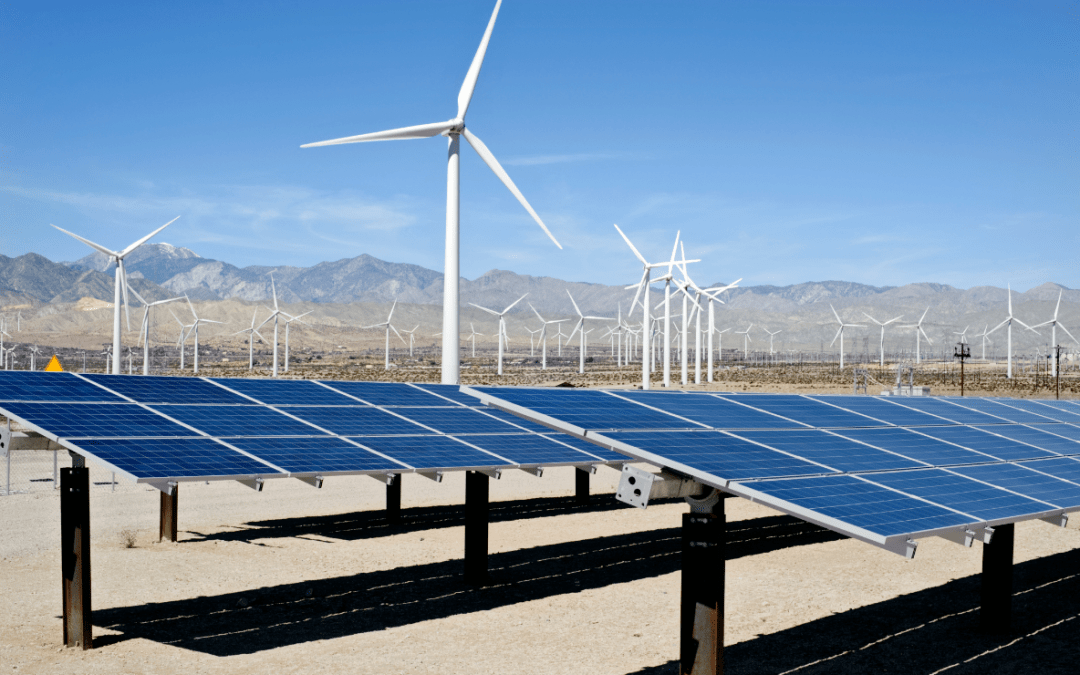
On 7 July, US President Donald Trump signed an executive order instructing federal agencies to implement provisions that scale back tax incentives for solar and wind energy projects.
The “One Big Beautiful Bill Act” calls for the US Treasury Department to oversee the phaseout of renewable energy tax credits, as laid out in the recent budget bill passed by Congress and signed into law by the president.
Additionally, the Interior Department has been tasked with reviewing and revising any existing policies that prioritise renewables over other energy sources.
In the executive order, as reported by Reuters, Trump stated that renewable energy resources are “unreliable, expensive, displaced more dependable energy sources, were dependent on foreign-controlled supply chains and were harmful to the natural environment and electric grid.”
Impact
Under the One Big Beautiful Bill Act, tax credits for renewable energy will effectively cease for projects that have not started construction by the end of 2026.
Projects initiated after this deadline must be completed and operational by the end of 2027 to be eligible for any remaining incentives.
This marks a significant departure from prior legislation, which allowed developers to claim a 30% tax credit for eligible projects through 2032.
Both the Treasury and Interior Departments are required to submit reports to the White House within 45 days, detailing the steps taken to implement the executive order.
Reactions
The changes drew strong reactions from solar Industry groups prior to being signed into law.
The US solar industry, in particular, has voiced opposition to the rollback. As previously reported by Solar&StorageXtra, leading solar companies and trade associations have condemned the legislation, warning that it could slow growth, cost jobs, and stall private investment in clean energy infrastructure.
Many in the sector had hoped to see tax credit extensions or permanent policy support to encourage long-term planning and stability in the future. However, doubts arose in January following Trump’s rollback of environmental legislation made under his predecessor, President Biden.
The administration has emphasised that the policy changes are designed to promote what it describes as energy independence and reliability, despite demonstrating a de-prioritisation of domestic renewable energy generation.