Two former military sites in Central and South-West France have been converted into solar farms by international solar supplier BayWa r.e.
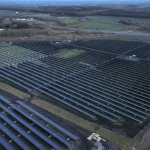
The two sites cover 151 hectares in total and have been equipped with more than 300,000 PV panels across five solar farms. These have a combined capacity of 136MWp.
The former La Martinerie base, located near the city of Châteauroux, now has two solar farms which generate 82GWh of power per annum. This is enough to power around 38,000 residences.
Additionally, the former Fontenet military base has three solar parks which produce 82GWp per annum – also enough to power around 38,000 residences.
Meanwhile, the Greenberry and Blueberry solar farms have recently been switched on – with respective capacities of 40MWp ad 30MWp.
Preserving wildlife and history
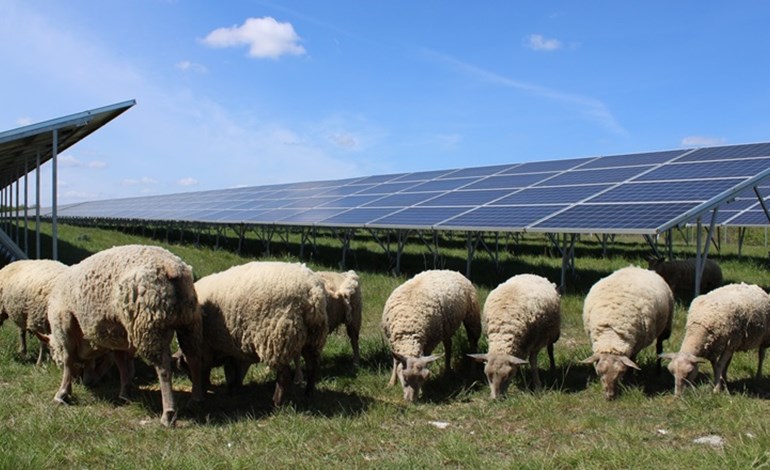
The installations have been designed to allow uninterrupted sheep farming, managed through contracting leases with farmers.
By investing in agrivoltaics and protective measures the farms will maintain the local biodiversity, protect on-site orchids, provide easy passage for local wildlife, and support reptile populations by building shelters.
“This example for land rehabilitation as part of the energy transition represents yet another milestone for our innovative and local approach in France,” says Regional Director of Projects Europe South-West at BayWa r.e Celine Tran.
“With a strong regional footprint, we are committed to creating positive impacts and benefits for the local community. Renewable energies are truly an engine for rural and environmental development.”
In addition to the solar farms, the local community of Fontenet has been supported through BayWa r.e.’s rooftop solar installation on a council building.
By investing in the sites. BayWa r.e.’s developments can potentially help preserve the histories of the military bases. Fontenet was built during the interwar period of the 20th century, and La Martinerie was a pilot school from 1915 and the base of the 3rd Fighter Regiment from 1920.
The sites hosted NATO’s forces from 1951-1969 before closure in the 2000s.
Since then, several historical artefacts have been discovered such as bullet shells and a 250kg explosive – the latter of which was discovered as recently as 2023.
[Image credit: BayWa r.e.]