by Catie Owen | Aug 22, 2024 | Commercial & Industrial Solar, Innovation
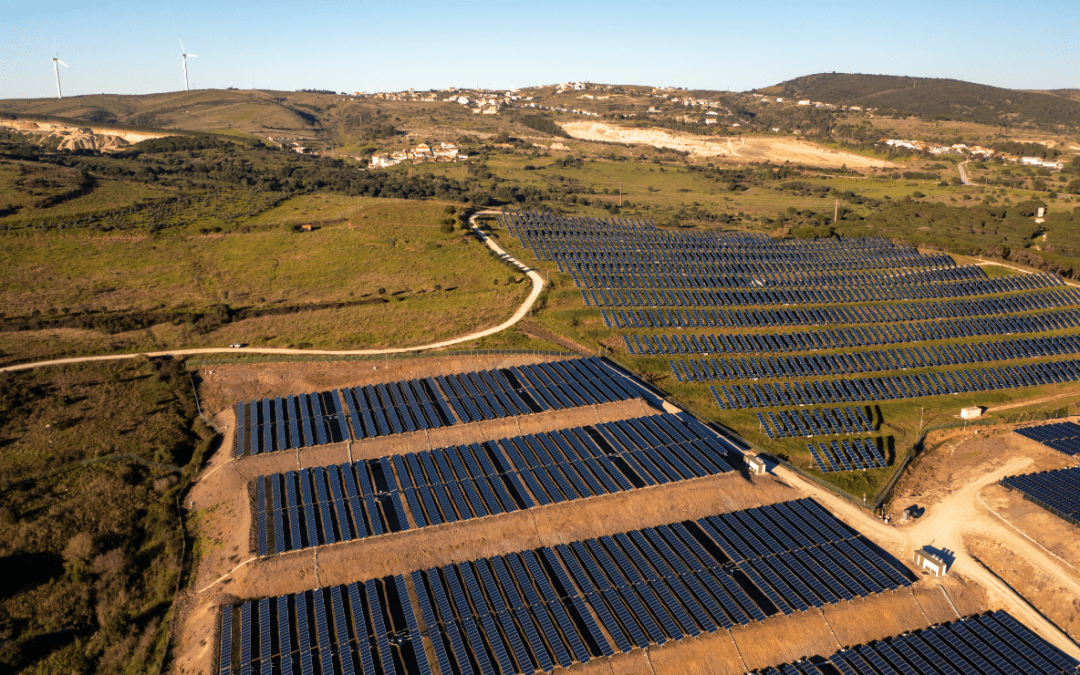
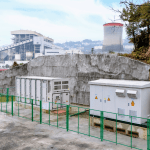
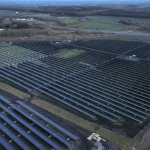
Two former military sites in Central and South-West France have been converted into solar farms by international solar supplier BayWa r.e.
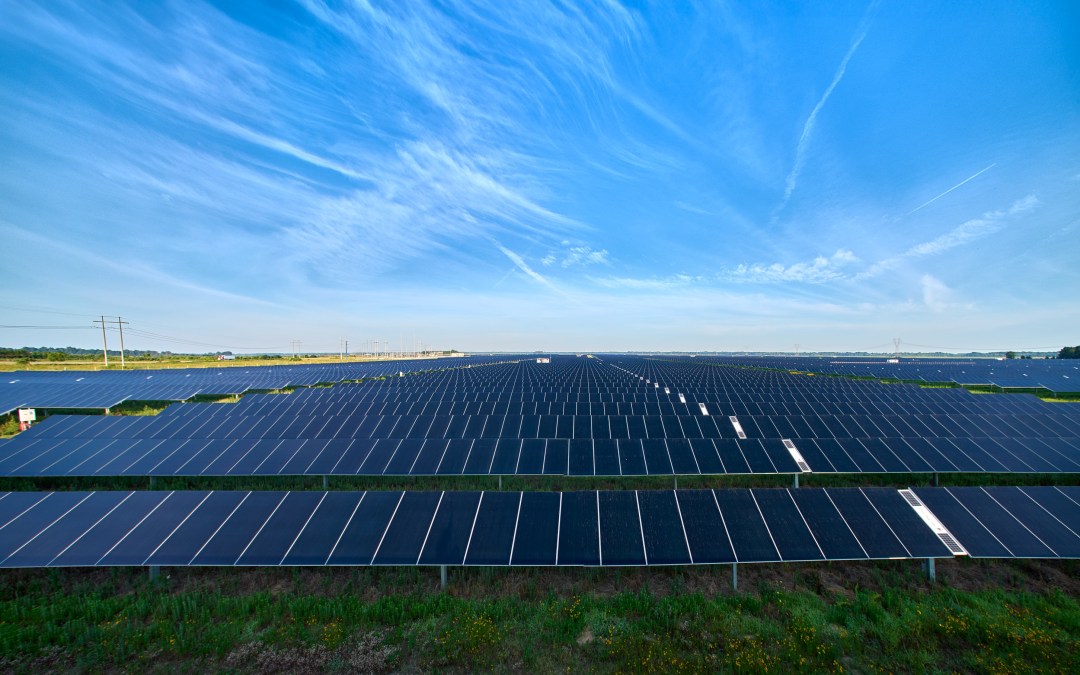
The two sites cover 151 hectares in total and have been equipped with more than 300,000 PV panels across five solar farms. These have a combined capacity of 136MWp.
The former La Martinerie base, located near the city of Châteauroux, now has two solar farms which generate 82GWh of power per annum. This is enough to power around 38,000 residences.
Additionally, the former Fontenet military base has three solar parks which produce 82GWp per annum – also enough to power around 38,000 residences.
Meanwhile, the Greenberry and Blueberry solar farms have recently been switched on – with respective capacities of 40MWp ad 30MWp.
Preserving wildlife and history
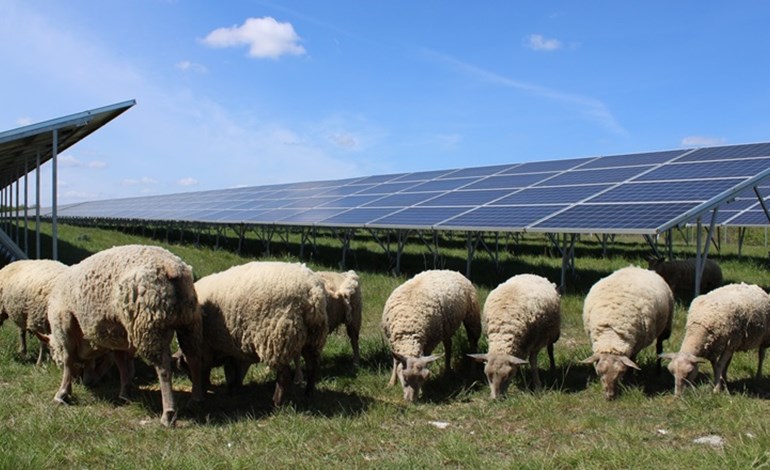
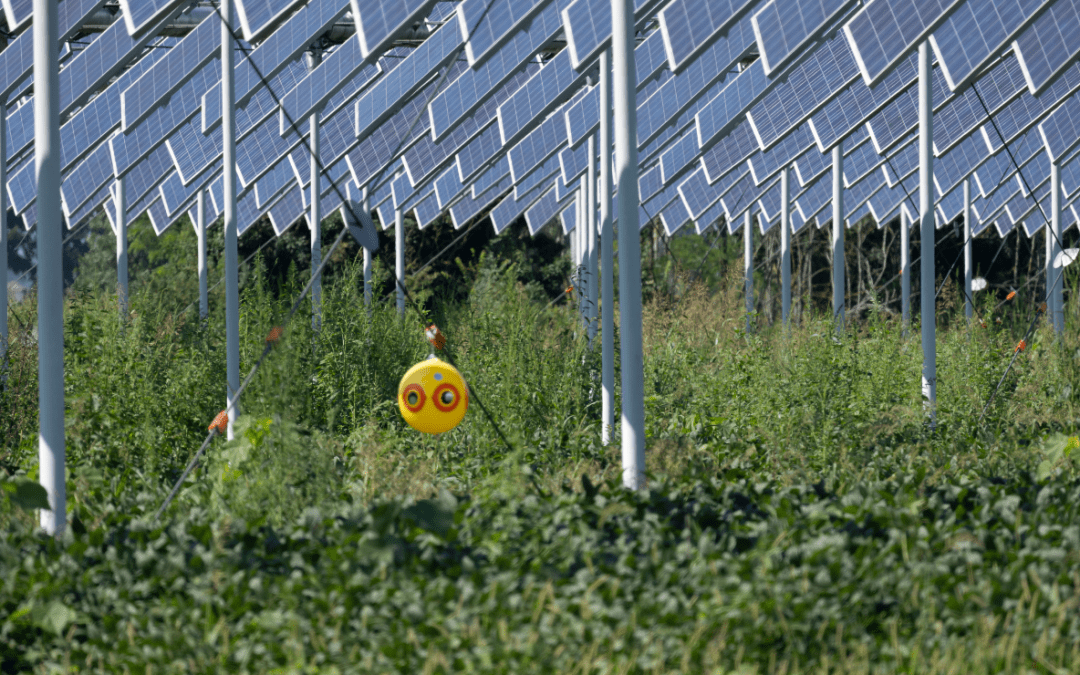
The installations have been designed to allow uninterrupted sheep farming, managed through contracting leases with farmers.
By investing in agrivoltaics and protective measures the farms will maintain the local biodiversity, protect on-site orchids, provide easy passage for local wildlife, and support reptile populations by building shelters.
“This example for land rehabilitation as part of the energy transition represents yet another milestone for our innovative and local approach in France,” says Regional Director of Projects Europe South-West at BayWa r.e Celine Tran.
“With a strong regional footprint, we are committed to creating positive impacts and benefits for the local community. Renewable energies are truly an engine for rural and environmental development.”
In addition to the solar farms, the local community of Fontenet has been supported through BayWa r.e.’s rooftop solar installation on a council building.
By investing in the sites. BayWa r.e.’s developments can potentially help preserve the histories of the military bases. Fontenet was built during the interwar period of the 20th century, and La Martinerie was a pilot school from 1915 and the base of the 3rd Fighter Regiment from 1920.
The sites hosted NATO’s forces from 1951-1969 before closure in the 2000s.
Since then, several historical artefacts have been discovered such as bullet shells and a 250kg explosive – the latter of which was discovered as recently as 2023.
[Image credit: BayWa r.e.]
by Catie Owen | Aug 21, 2024 | Commercial & Industrial Solar, Storage
A new regulatory basis has been published by the Spanish Ministry of Ecological Transition (MITECO) for a €750m incentive scheme for manufacturing renewables and energy storage.
Spain’s recovery and resilience plan (PRTR) will provide funds, aimed at incentivising manufacturers to make materials and equipment for solar panels, and batteries, amongst other technologies.
As solar panels and BESS are included in the plan, it will address the manufacturing and building of solar panels, and the manufacturing and building of non-EV batteries, battery packs, and battery cells.
The programme will be under the care of the Institute for Diversification and Energy Saving (DAE), with its auction taking place soon but with no announced date so far. MITECO has also noted that future rounds of the scheme could result in adding more parts to the supply chain.
Funding will be location-dependent, providing a maximum of €150m (15%) of the project’s cost (as is the case with all projects). This is based on Article 107, part 3 of the Treaty on the Functioning of the European Union (TFUE).
On June 29th 2024, the Net Zero Industry Act began, which requires EU member states to build a yearly manufacturing capacity for net zero products that meets 40% or over of the members’ required deployment to meet 2030 targets.
If solar in Spain and beyond is relevant to you, register for a free place at Solar & Storage Live Barcelona – taking place 13-14 November.
by Catie Owen | Aug 20, 2024 | Commercial & Industrial Solar
Electric vehicle manufacturer General Motors (GM) has announced the signing of a 15-year renewable energy purchase agreement with NorthStar Clean Energy.
The agreement outlines that the 180MW-capacity Newport Solar project in Arkansas, run by NorthStar, will provide electricity to three GM assembly plants. The Newport Solar project generates enough annual electricity to power more than 30,000 homes.
The plants involved in the power purchase agreement are Lansing Delta Township Assembly and Lansing Grand River Assembly in Michigan, and the Wentzville Assembly site in Missouri.
According to GM’s announcement, the power purchase agreement with NorthStar Clean Energy is the manufacturer’s largest deal so far, and a “milestone in our goal to be carbon neutral by 2040”.
Rob Threlkeld, GM Director of Global Energy Strategy, comments in the statement: “By expanding our renewable electricity portfolio, we are taking a major step forward in reducing our carbon footprint and advancing our broader sustainability goals.
“This facility not only supports our renewable electricity strategy, but also demonstrates our dedication to a sustainable future for all.”
The company also announced in 2022 that it had finalised the energy sourcing agreements needed to lock down 100% of the energy required to power its sites across the USA. As of the statement’s release, GM states that they have sourcing agreements in place from 17 renewable energy plants across 11 states in the USA.
[Image: NorthStar’s Newport Solar project in Arkansas. Image credit: GM and NorthStar Clean Energy]
by Catie Owen | Aug 19, 2024 | Commercial & Industrial Solar
Swedish state forest owner Sveaskog has teamed up with developer Alight in a strategic partnership to develop 2GW of solar power capacity over the next five years.
The initial projects under this collaboration include a solar park spanning approximately 150 hectares in central Sweden and another covering 70 hectares in the southern region.
These projects are located in the electricity areas SE3 and SE4, regions with significant electricity deficits and a high demand for renewable energy expansion.
As part of this long-term partnership, Alight will take on the role of developer, builder, and co-owner of the solar arrays on Sveaskog’s land. Sveaskog, in turn, will co-invest in the solar parks, contributing between 30% and 49% of the capital.
Sveaskog’s Chief Executive, Erik Brandsma, says: “Sveaskog’s mission is to create value from forest and land.
“Investing in solar power on our land is natural for us as a large landowner and a way to contribute to the energy transition and the future need for fossil-free energy sources. Alight will be a stable partner for us in this work.”
Sveaskog holds ownership of 14% of Sweden’s forests, totalling around 3.4m hectares, of which 3m hectares are productive forest land.
Converting 10,000 hectares of Sveaskog’s land—equivalent to 0.2% of its total holdings, or 0.04% of Sweden’s total forest land—into solar parks could potentially generate approximately 5GW of renewable energy, more than doubling Sweden’s current installed solar capacity.
“Solar power is a fast and affordable solution to combat the climate crisis, especially given Sweden’s increasing demand for renewable electricity,” comments Alight’s chief executive, Harald Överholm.
“We are impressed by Sveaskog’s high ambitions in sustainability and look forward to jointly build and manage solar projects that strive for the best balance between ecological, economic and social values.”
by Catie Owen | Aug 15, 2024 | Commercial & Industrial Solar
China Energy Engineering Corp (CEEC) has signed a ¥6.98bn Engineering, Procurement and Construction (EPC) contract to build a solar PV plant in Saudi Arabia.
The solar PV plant will be 2GW, developed jointly between the China Energy Engineering consortium and their Saudi Arabian partners over 31 months.
The partners include the Kingdom’s sovereign wealth fund, the Public Investment Fund (PIF), ACWA Power and Saudi Aramco Power Company.
CEEC further explained that the PV plant’s site will be in Saudi Arabia’s Makkah province, and development by Special Purchase Vehicle (SPV) Buraiq Renewable Energy Company is currently underway.
The project is another addition to the relationship between Saudi Arabia and China’s respective solar industries, prompting several projects throughout 2024 as well as the launch of JinkoSolar’s N-Type plant.
by Catie Owen | Aug 15, 2024 | Commercial & Industrial Solar, Everything Installer
President Joe Biden has issued a proclamation designed to reinforce the USA’s solar industry, by expanding the current tariff-rate quota (TRQ) for imports of crystalline silicon photovoltaic (CSPV) cells.
With the change taking place on August 1st 2024, the TRQ on imports has been increased from 5GW to 12.5GW per annum. This increase is designed to protect the USA’s solar industry by decreasing the competitiveness of international imports.
The tariff increase is on trend with other changes implemented by President Biden’s administration. In May, new tariffs on double-sided solar panel imports were introduced.
Benefits
By increasing the volume of CSPV cell imports and bypassing additional safeguard tariffs, USA solar module manufacturers are expected to benefit from easier access to the cells as they are difficult to create domestically.
Easier access to supply is hoped to decrease international imports by making the prices of domestic products more competitive, while also meeting the USA’s increasing demand for solar panels.
With a stabilised domestic solar market through the TRQ’s expansion, the USA’s PV industry could see a growth surge – which could bring more investment. This could lead to the construction of new manufacturing plants in the country.
“This move provides an important bridge for module producers to access the supply they need while the United States continues to progress on solar cell manufacturing,” says Abigail Ross Hopper, President and CEO of the Solar Energy Industries Association (SEIA).
Concerns
When new tariffs were introduced in May, Solar&StorageXtra reported on comments a senior executive from one of China’s largest solar equipment groups made to the Financial Times.
The executive urged Western governments to “let the best technology win”, explaining that protectionist measures from the USA and Europe could hurt the global solar industry.
Trade barriers were cited as unfairly harming solar manufacturers, however, international companies have alternatively cited excess Chinese output and “dumped” overstock as the volatile market’s source.
Stay in the loop with all things USA solar by attending Solar & Storage Live USA, taking place in Philadelphia in 2025.
by Catie Owen | Aug 15, 2024 | Commercial & Industrial Solar, Storage
The Philippines Board of Investments (BOI) has granted a “green lane certificate” for a solar and storage project set to be the world’s largest.
This certificate will help facilitate quicker construction of the Terra Solar project, which plans to combine 3,500MW of solar PV with a BESS of 4,500MWh. As such, the completion of phase 1 is targeted for February 2025, but the expected size at this date has not been released.
Phase 2’s completion is set for 2026.
Further details
Terra Solar’s site will be located in the Bulacan and Nueva Ecija provinces, over 3,500 hectares of land, and cost USD$3.2bn – earning it the reputation of the world’s largest joint solar and storage project by capacity.’
The project has also received a Certificate of Energy Project of National Significance (CEPNS), awarded to any project in the Philippines worth over USD$59m.
The BOI has approved several other renewable energy initiatives, such as PHP263m worth of rooftop solar projects, a PHP114.7bn offshore wind projects, and a PHP297bn hydroelectric power project.
Terra Solar is under the stewardship of independent power producer (IPP) Terra Solar Philippines, co-owned by utility company Manila Electric Company (Meralco) and SP New Energy Corporation.
Emmanuel Rubio, Mearlco subsidiary MGen president and CEO, collected the certificate.
Solar & Storage Live Philippines will take place in Manila in 2025. Don’t miss out on your chance to exhibit – register here.
by Catie Owen | Aug 14, 2024 | Commercial & Industrial Solar, Everything Installer
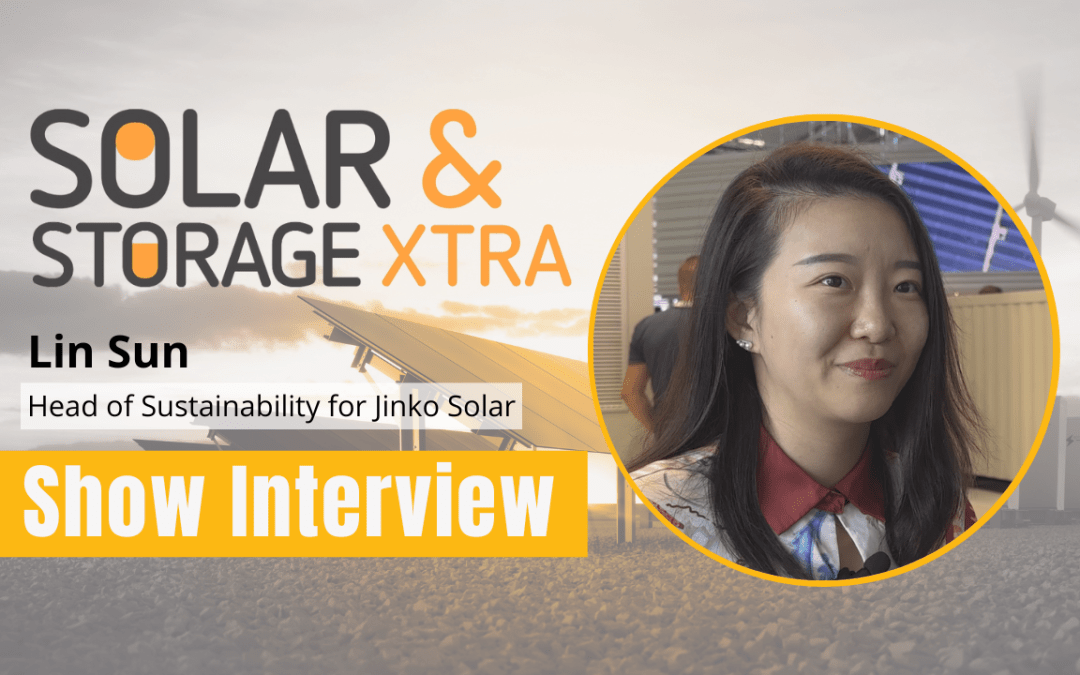
At Intersolar 2024, Solar & Storage Xtra met Lin Sun, Head of Sustainability for Jinko Solar.
Lin Sun filled us in on the exciting projects taking place at Jinko, the benefits of international trade shows, and her talk on ESG and Jinko’s sustainability journey.
Interview with Lin Sun, Head of Sustainability for Jinko Solar
“We recognise it’s important to attend Europe’s largest solar shows. For us, it’s a great opportunity to be here and get close with our European clients.”
Xtra: Are there any exciting projects or collaborations in the pipeline that you can share with us?
Lin Sun: This year we have our booth designed into two different areas. One is for PV as Jinko Solar is a well-known PV module manufacturer.
[Here] we have new products called New Breeze, which we call the “green modules”, and we also have our ESS booth. This is our commercial, residential, and also utility projects and ESS products.
Xtra: Are there any issues that you think Jinko provides solutions to within the solar field?
Lin Sun: We know many countries want to develop their own strategies for renewables. These energy transitions will give all of us a big target to achieve, meaning [that] Jinko, like all renewable players, wants to offer solutions for our partners.
These are not only for big utility projects but also for distributor and individual residential solutions which fit the bill.
For example, before we usually just provided our services as a PV module supplier, so for residential we can install modules for rooftops.
Right now, we consider this a really nice combination of storage solutions on top of solar solutions. That would be solar plus storage solutions, which should be considered a very promising business as well.
We are starting to build up our pipeline across the globe for our projects in China, Asia Pacific, and Europe as well; you may notice some of our big news and news releases on our big and exciting signing projects in Europe.
Xtra: Why is it important to attend international solar events, and what are the benefits?
Lin Sun: Going to solar events, we recognise it’s important to attend Europe’s largest solar shows. For us, it’s a great opportunity to be here and get close with our European clients.
For Jinko, we are really proud of our globalisation and networks, in Europe and in other regions as well.
I’m from [Jinko] headquarters (located in Shanghai, China), so [Intersolar] is a great show for people from China, for Chinese manufacturers to come back to the regions to see our friends – sometimes we call clients friends because we have already built close relationships with them – then we can celebrate the big milestones of our technology.
We can create new contracts and have big, exciting moments. This is the key element.
The second top element is being here to absorb and learn from other peers. We understand this is a booming industry, so you can observe many other good players coming to the market to showcase their products.
There will also be time for us to share some industry information exchange so we can always be the leader of the industry trying to make a solution for the world.
Xtra: What kind of people have you been meeting on your stand at Intersolar?
Lin Sun: My role is Head of Sustainability, and I also joined another panel where I gave a speech on ESG and our sustainability journey.
At this particular panel, I had a chance to talk about our company’s ESG practice where I met many potential buyers, which makes me very excited.
They wanted to come in and say: “I hear ESG, I hear Jinko, we wanted to buy your products”, – they want to know you. The first category [of people] are the potential buyers. I also invite some of our potential buyers to come to visit our booth.
The second group are actually our clients, who we have organised meetings with. We have always had long-term partnerships with our clients, [so here] they come and do updates and discuss some of the details of our ongoing contracts, and future pipeline.
The third category is multi-stakeholders and shareholders with whom we have contact and conversations with, such as European associations.
We also have the chance to have a conversation with the Global Solar Council, now that we are a member. We have conversations with international organizations, commercial banks, etc.
We also organise meetings with other industry players: we’ll have a one-on-one meeting to understand their technology and their new things as well.
Xtra: How do you see your company’s role in the energy sector evolving over the next decade?
Lin Sun: Jinko will always be the industry leader not only in technology and our globalisation service but also in our ESG and sustainability competitiveness.
That is my role, and why I’m always so excited to always be present at different regional fairs, including Intersolar.
So last week I was in SNEC in Shanghai: one of the world’s largest shows. Being with Jinko is a very exciting journey.
I believe that Jinko in the future will, not only in solar but also in ESS and many other topics around solar, will make sure to deliver a good solar experience for our lovely partners.
by Catie Owen | Aug 14, 2024 | Commercial & Industrial Solar, Everything Installer
The European Bank for Reconstruction and Development (EBRD) has released details about a €25m loan to Polinas Plastik, a flexible packaging producer in Türkiye.
Polinas Plastik will use the loan to enhance the energy efficiency of its production line. This will include the installation of solar panels.
A new production line for biaxially oriented polypropylene (BOPP) film will be included in the funding, alongside new machinery. To help power these investments, the fund will also contribute to Polinas Plastik’s integration of solar solutions into its operations.
In doing so, the company hopes to reduce its carbon emissions and increase its reliance on renewable energy.
EBRD’s announcement also notes that the solar initiative and funding will enable Polinas Plastik to produce fully recyclable packaging materials, via both recycled and bio-based content, reducing the company’s carbon footprint even further.
Polinas Plastik currently exports BOPP and other products to over 50 countries, who will have access to a product with reduced carbon cost.
by Catie Owen | Aug 14, 2024 | Commercial & Industrial Solar
The third largest energy company in the USA, RWE, has signed two long-term power purchase agreements (PPA) with Meta.
The PPAs will cover two solar farms in the US which are currently under construction and aims to meet the increasing demand for renewable energy on its US portfolio.
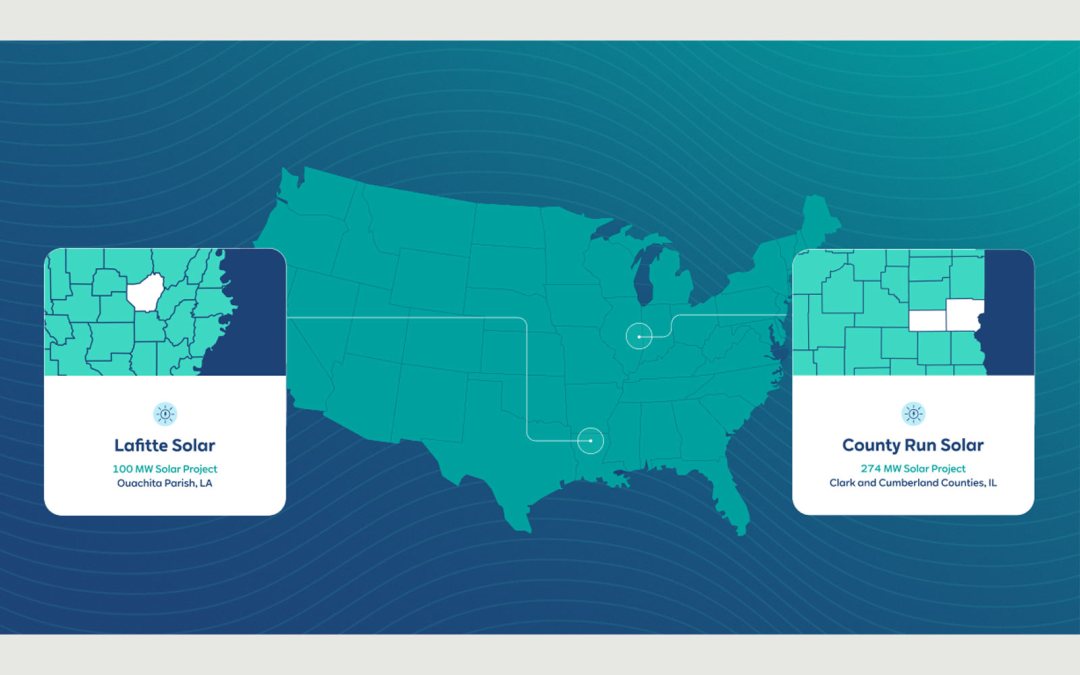
RWE’s two solar farms are in Illinois and Louisiana, set to generate 274MW and 110MW respectively. Commissioning for both sites is due in late 2025.
On the announcement of the PPEs, Andrew Flanagan, CEO of RWE Clean Energy said in a statement: “RWE’s continued investment in the U.S. renewables market is underpinned by new opportunities to partner with leading technology companies like Meta, which are driving demand for clean energy to support their operations.
“Today, we are able to meet this moment and generate impact with our rapidly scaling U.S. renewables platform to drive decarbonisation across all industries, while fuelling economic growth and job creation in those communities where we own and operate these facilities.”
In the same statement, RWE explained that the contracts with Meta are part of the company’s ongoing strategy to collaborate with tech leaders like Meta. In doing so, the company hopes to support the increasing demand for clean energy.
A spokesperson for Meta, Urvi Parekh, Head of Renewable Energy, added: “Partnering with renewable energy providers like RWE to bring new solar energy projects online is an important part of our approach to energy procurement.
“We are excited to scale our renewable energy contracts, and this collaboration is an important demonstration of those efforts and our commitment to match 100% of the electricity use of our data centres and offices with renewable energy.”
Visit Solar & Storage Live in Philidelphia in April 2025 to see the latest in the USA’s solar technology.
by Catie Owen | Aug 13, 2024 | Commercial & Industrial Solar, Large Scale Utility Solar
The RESPONDENT project, part of the European Union’s Horizon Europe initiative, is gearing up for a pilot demonstration of its new solar generation forecasting technology in Athens, Greece, in October.
This event, the first of two public demonstrations, will take place at KIEFER’s solar photovoltaic (PV) park in Artemida, near Athens, which features a capacity of 20 kWp and an annual output of 1.4 MWh/KWp over a 5000m² area.
The pilot will test an advanced AI/ML-based forecasting algorithm developed by the RESPONDENT project partners, and is designed to improve the accuracy of solar power generation predictions – which is essential for optimising renewable energy use under the European Green Deal.
A key feature of the pilot is the integration of IoT-based weather stations provided by project coordinator Future Intelligence Ltd (FINT). These stations have been strategically installed across the solar park to provide real-time weather data, which is vital for refining the AI/ML algorithm’s predictions.
The use of accurate, real-time data aims to enhance the reliability of solar power output forecasts under varying weather conditions.
The pilot will also incorporate the Copernicus Earth Observation (EO) Climate and Atmosphere Monitoring Service (CAMS) data. This European space technology will supply critical atmospheric information, further boosting the precision of the forecasting models.
By leveraging these advanced technologies, the pilot aims to demonstrate the significant role European space capabilities can play in advancing renewable energy forecasting.
“This pilot is a pivotal moment for RESPONDENT; it allows us to showcase the advanced technology that we’ve been working on and developing since November of 2023, not to mention its potential to contribute to the EU Green Deal’s ambitious goals,” said Project Coordinator Effie Makri.
“By improving the accuracy of solar power generation forecasts, we can enhance the integration of renewable energy sources in the energy grid and reduce Europe’s reliance on fossil fuels.”
The event will gather project partners, stakeholders, and industry leaders, both in-person and online, with any interested parties invited to join via the company’s website.
by Catie Owen | Aug 13, 2024 | Commercial & Industrial Solar, Storage
Infraland, a UK-based low-carbon developer, and London real estate company Boultbee Brooks have launched Infrabee, a joint venture to produce and supply renewable energy.
This initiative aims to develop solar and battery sites across the UK and Europe, leveraging the companies’ five-year partnership and “shared vision for the future of renewables.”
Nick Barber, co-director of Infrabee, stressed the urgency of renewable energy investment: “Renewable energy is not something we can leave until tomorrow. We must invest in and develop the infrastructure we need today – so that together we can secure the future of our planet – before it really is too late.”
Henry Brown, another Infrabee director, highlighted the benefits of uniting their efforts: “Consolidating our joint effort and investment under one stronger brand identity will enable us to continue and further our work in developing and delivering green energy.”
Infrabee has 25 sites in the UK that are under development or ready to break ground, with five expected to be operational within the next year. Their total portfolio includes 40 projects across the UK, Croatia, and the Netherlands, with 635MW of solar capacity and 2.6GW of battery storage.
Notable projects include an 11MW solar and 8MW battery development in North Yorkshire and a 22MW solar and 4MW battery project in Suffolk, both set for connection in 2024.
Infrabee will cover all costs associated with land leasing, including planning and permitting, and will manage the facilities throughout their lifespan.
The projects are designed to provide a “long-term, predictable and index-linked” revenue stream, resilient to market fluctuations and weather changes.
Boultbee Brooks, which invests in residential and commercial properties, is also moving towards a circular model where its renewable energy investments directly power its properties and data centres. The company is partnered with SUB1, a data centre design firm, and Power Sync Technologies, a battery storage company.
Infraland’s portfolio includes 165MW of ground-mounted solar, 49MW of battery storage, and 134MW of low-carbon generation assets, including projects developed in partnership with Boultbee Brooks before Infrabee’s formation.
Stay up-to-date with the UK’s solar market by attending Solar & Storage Live in Birmingham this September.
by Catie Owen | Aug 12, 2024 | Commercial & Industrial Solar
The European Investment Bank (EIB) is set to lend a €50m loan to Matrix Renewables to develop five solar photovoltaic plants in Spain.
These plants, located in Castilla y León and Extremadura, will have a combined installed capacity of 240MW.
The EIB, Europe’s climate bank, is committed to supporting €1tn in green investments by 2030. This will be a dedication of at least half of its annual climate and sustainability financing.
Alessandro Izzo, EIB Director of Equity, Growth Capital, and Project Finance, comments:
“With this operation, the EIB continues to accelerate the energy transition in Spain by increasing renewable energy generation capacity. We are also delighted to support Independent Power Producers (IPP) in their development and deployment efforts, fundamental to accelerating renewable generation investments.
“The project is part of the EIB contribution to a more sustainable and independent energy model for Europe.”
The EIB emphasised that this project aligns with the decarbonisation goals of the European Green Deal.
It is additionally part of the EIB’s efforts to support REPowerEU, an EU initiative aimed at reducing dependency on fossil fuel imports by enhancing energy efficiency and expanding renewable energy production.
The EIB also notes that the project benefits from support through InvestEU, the EU’s flagship program designed to mobilize over €372bn in additional investments from public and private sector funds between 2021 and 2027 to advance EU policy objectives.
Matrix Renewables CFO Nicolás Navas concludes: “We are thrilled to partner with the EIB in this significant project that not only advances our mission of sustainable energy development but also contributes to Spain’s and Europe’s broader energy transition goals.”
Don’t miss your chance to attend Solar & Storage Live Barcelona this November, where you can rub shoulders with the best and brightest of Europe’s solar industry.
by Manas Sahu | Aug 9, 2024 | Commercial & Industrial Solar, Large Scale Utility Solar
The UK and Poland have provided a €249 million loan guarantee, facilitated by Standard Chartered Bank, to support Kalyon Enerji, a Turkish renewable energy firm. This funding will be directed towards the development of Turkey’s second-largest solar power project.
The project involves constructing and operating solar power plants across seven different locations, with a total generating capacity of 390 MWp. These sites are distributed across the provinces of Bor-Nigde, Gaziantep, and Sanliurfa-Viransehir.
The solar power project is expected to produce enough renewable electricity to power more than 65,000 Turkish households annually.
This project marks a significant boost to Turkey’s renewable energy sector. The new solar power plants will further enhance the country’s renewable energy availability.
by Catie Owen | Aug 2, 2024 | Commercial & Industrial Solar, Everything Installer
Brazil has achieved a milestone in the solar energy sector, surpassing 45 GW of installed solar photovoltaic (PV) capacity.
This includes both large and small-scale plants, with solar power now accounting for 19% of the country’s total energy mix, according to data from the local solar association Absolar.
The market has seen 30.7 GW installed across distributed generation (DG) systems, making solar the leading choice for self-consumption systems in Brazil. Currently, solar technology is utilised in 99.9% of all on-site DG arrays in the country. Large-scale solar power plants contribute the remaining 14.8 GW.
The expansion of solar energy in Brazil has attracted investments totalling BRL 211.7bn (USD $37.3bn), creating approximately 1.4 million local jobs, as noted by Absolar.
by Catie Owen | Aug 1, 2024 | Commercial & Industrial Solar
JinkoSolar, a solar module manufacturer based in Shanghai, China, has announced that its manufacturing plant in Saudi Arabia is set to begin operations in early 2026.
The module production facility will be the largest globally that only manufactures N-type solar cells, generating 10GW production capacity per annum.
JinkoSolar has three similar international plants, based in the USA, Vietnam, and Malaysia. Constructing the Saudi Arabian plant will cost around USD $1bn – the company’s largest international investment to date and a key player in its global expansion.
Qian Jing, vice-president of JinkoSolar, comments: The Saudi Arabian market enjoys better credit, sufficient financing resources, stable conditions, policy support … and has become one of the fastest-growing regions for new energy development in the Middle East.
“Its robust industrial foundation makes it an excellent choice for Chinese photovoltaic companies looking to expand overseas.”
Qian adds that JinkoSolar has a large market share in the Middle East already, boasting a 70% market share. Saudi Arabia is increasing its relevancy in the renewable sector due to its high potential for solar PV: coming in at around 2,000kWh/m2
Li Xiande, Chairman of JinkoSolar, adds that its plant in Saudi Arabia demonstrates the company’s commitment to international collaborations, while also improving its infrastructure, competitiveness, and the worldwide presence of Chinese solar companies.
This increased presence of Chinese companies could also be due to low-end capacity being phased out in China, leading to JinkoSolar anticipating an international market share increase to 20% in 2024 compared to 2023.
Qian concludes that solar power will not be fully competitive until the combined cost of solar and storage has dropped below or matches coal-fired power – despite coal already having fallen behind solar alone.
by Catie Owen | Jul 30, 2024 | Commercial & Industrial Solar
First Solar, America’s largest solar manufacturer, launched the USA’s biggest solar research facility in Ohio in early July. Through the facility, First Solar is racing China to the solar industry’s next breakthrough – according to a report from the Financial Times (FT).
The coverage notes a belief that the US must “innovate rather than replicate China” to stay competitive in clean technologies. “We’re not going to follow this race to the bottom on pricing,” said Mark Widmar, First Solar’s chief executive to the FT.
The company is investing in the research facility to the tune of USD $500m including a pilot line for the promising but unproven perovskite technology.
First Solar’s push into research contrasts sharply with other US solar manufacturers, who have recently cancelled or delayed projects due to China’s overproduction of panels, which has driven prices to concerning record lows over the last year.
This has resulted in tariffs against Chinese solar products from a range of countries, especially following a petition from US manufacturers (including First Solar) against Chinese companies potentially dumping solar cells in south-east Asia.
First Solar investment
First Solar has steadily invested $2.4bn in manufacturing, boosted by the subsidies from President Joe Biden’s Inflation Reduction Act (IRA), which provides ten-year subsidies for producers.
Data shows that these incentives have nearly doubled the company’s share price since the IRA’s enactment, though some industry members worry that First Solar may lobby for protectionist policies that could increase costs for consumers.
Despite challenges, First Solar remains a major player by a large margin, having survived the offshoring and bankruptcies that affected the US solar industry in the 2010s. Its survival is partly due to its reliance on cadmium telluride technology and a largely domestic supply chain, avoiding dependence on China.
The company’s robust research and development efforts, which saw a 35% increase in investment to $152 million in 2023, are essential for maintaining its technological edge.
However, data from the International Renewable Energy Agency shows that the US still lags behind China in solar innovation, with China filing over 9,000 solar patents last year compared to less than 350 by the US.
First Solar’s panels were less efficient and above $0.30 per watt, while the imported Chinese panels were under $0.16 per watt.
Market conditions
Market conditions need to improve for further innovation, as high costs and inefficiencies in US-made panels remain a challenge.
First Solar’s influence and the potential for job creation in the green energy sector will be tested in the upcoming US elections, particularly in Ohio, a critical state for solar manufacturing.
The outcome could impact the IRA’s future, with Trump’s running mate JD Vance threatening to “terminate” it, potentially resulting in significant implications for the domestic solar industry.
“This is an inflection point for this industry. If we are unable to establish a domestic industry under the IRA programme right now, I don’t think it ever happens,” Widmar concludes.
Solar & Storage Live USA is the place to catch up with the American and global solar industry. Register for free here.
by Catie Owen | Jul 30, 2024 | Commercial & Industrial Solar
Spanish utility company Iberdrola has installed a solar array at Spain’s Guggenheim Museum Bilbao, totalling 80kW. Having begun construction in January, the building’s 300 solar panels will allow it to self-consume 80MWh of power per annum.
This will result in the museum saving about 5% of its electricity consumption, and an average of 30% of the building’s total demand, equating to enough power to light all of the museum’s exhibition halls. FuturaSun, an Italian solar module manufacturer, has provided the panels.
The PV project was funded by Basque Energy Agency’s European NextGenerationUE.
In line with the trend of incorporating solar panels into a building’s architecture, the panels on the museum’s two largest roofs have been installed so that they blend into the existing building’s design.
This means that the installation needed to take the building’s architecture into account during conception and construction.
The panels were designed to match the other roofing elements such as skylights, impacting the panels’ design and colour, using FuturaSun’s FU 360 M Silk Plus Silver 360 W model to implement maximum chromatic integration.
The array was signed off by the building’s architect, Frank Gehry, and the Bilbao City Council.
Sustainability plan
The Guggenheim Museum Bilbao’s 2024-2025 environmental sustainability plan includes initiatives such as installing the solar array as part of its mission to reach carbon neutrality by 2030.
To that end, 100% of the museum’s supplied electricity has been renewable since June 1st 2024, seeing a reduction of over ¼ the building’s carbon footprint.
Additionally, the museum’s gas consumption has declined by 35% and electricity by 6% since climate and humidity controls were made more efficient in 2022.
Solar & Storage Live Barcelona in November is the place to be to stay up to date with Spain’s solar market. Register for your free ticket here.
by Catie Owen | Jul 29, 2024 | Commercial & Industrial Solar
The Department of Climate Action, Food and Rural Agenda (DACC) in Catalonia, Spain, has issued new guidelines for implementing agrivoltaic solar farms.
This marks Spain’s first official definition of agrivoltaics, though there is no national consensus on the term as seen in Germany, France, and Italy.
“Agrivoltaics is a hybrid system that combines agriculture and electricity in the same area,” the DACC stated.
The guidelines establish both general and specific criteria related to land use, crop yields, and the different types of mounting systems required for these facilities.
The new rules mandate the continuation of agricultural activities alongside power generation. For example, they stipulate that the agricultural crop yield must remain at least 60% of the total yield across the project area after the installation of agrivoltaic systems.
To compare, France requires a 90% yield retention while Germany mandates approximately 70%.
The guidelines also prohibit installations that disrupt or degrade the natural soil structure, except at transformer stations. Additionally, they limit the loss of usable agricultural land to 15% or 20% of the total project area, depending on the height of the PV panels.
Visit Solar & Storage Live in Barcelona this November to keep up-to-date with everything solar Spain.
by Catie Owen | Jul 29, 2024 | Commercial & Industrial Solar, Storage
Canadian Solar Inc., a global solar and energy storage company, has announced that its subsidiary, Recurrent Energy, has secured a 5-year €50m loan from the European Investment Bank (EIB) to support the development and construction of solar energy projects in Italy.
This funding aligns with the EIB’s commitment to Renewable Energy, Climate Action, and Social and Economic Cohesion, and will enhance Recurrent Energy’s contribution to Italy’s clean energy transition. The goal behind the loan is also to support Europe’s goals of reducing emissions and improving energy independence.
Ismael Guerrero, CEO of Recurrent Energy, said: “We are excited to extend our banking relationship with the EIB. This transaction is a significant milestone in our goal to become one of the largest Independent Power Producers (IPPs) globally.
It reflects our commitment to fostering a more sustainable economy in Europe and beyond. We look forward to a long-term partnership with the EIB to advance our mutual goals.”
Recurrent Energy’s progress since expanding into Italy in 2017 has included the recent launch of its 51 MW solar PV project in Anguillara, Marsala, Sicily.
The company’s European portfolio now includes 10.3GW of solar PV and 32.8GWh of battery energy storage.