by Catie Owen | May 12, 2025 | Asia, Commercial & Industrial Solar, Europe, Everything Installer
The European Solar Manufacturing Council (ESMC) has raised concerns about the cybersecurity risks associated with internet-connected photovoltaic (PV) inverters, particularly those supplied by non-European manufacturers.
The organisation points to a recent study by DNV, commissioned by SolarPower Europe, which highlights potential vulnerabilities in the current approach to inverter security.
“Today, over 200GW of European PV capacity is already linked to inverters manufactured in China – the equivalent of more than 200 nuclear power plants,” said Christoph Podewils, Secretary General of the ESMC.
“This means Europe has effectively surrendered remote control of a vast portion of its electricity infrastructure.”
Modern PV inverters are typically connected to the internet to provide grid services and interact with energy markets.
These connections also allow for remote software updates, which can be used to adjust performance. However, the DNV report notes that this functionality introduces potential cybersecurity risks, including the possibility of coordinated disruptions.
Listed concerns
The ESMC flagged several points from the DNV paper, including the reported statistic that 70% of inverters installed in Europe in 2023 were from Chinese companies.
Two manufacturers currently have remote access to 168GW of European capacity, with projections indicating this could rise to over 400GW by 2030.
In response, the ESMC has proposed an EU “Inverter Security Toolbox,” based on the existing 5G Security Toolbox.
Recommendations include mandatory risk assessments for inverter manufacturers, restrictions on remote access by high-risk vendors, and consideration of national legislation such as Lithuania’s ban on certain inverters.
These calls align with recent recommendations from SolarPower Europe, which has advocated for harmonised EU-level cybersecurity rules for solar systems above 50kW.
“We support the European Commission’s upcoming assessment of cybersecurity risks in the solar value chain and are ready to contribute our expertise,” Podewils concluded.
by Catie Owen | May 9, 2025 | Asia, Commercial & Industrial Solar, Everything Installer
Reuters reports that Chinese-backed solar panel manufacturers in Indonesia and Laos have rapidly increased their share of the US market following the imposition of steep tariffs on imports from Vietnam, Malaysia, Thailand, and Cambodia.
The US finalised additional duties in April after two earlier rounds in June and November 2024, aimed at curbing what it described as unfair trade practices by mostly Chinese-owned factories in those four Southeast Asian countries.
In response, Chinese firms ramped up production in Indonesia and Laos, significantly boosting exports to the US.
According to Reuters’ analysis of US trade data, Indonesia’s and Laos’ combined market share rose from under 1% in 2023 to 29% in the three months after the latest tariffs.
Yana Hryshko, head of global solar supply chain research at Wood Mackenzie, comments:
“All solar manufacturing capacity in the four Southeast Asian countries hit with high tariffs would now likely be shut down or reduced dramatically.”
Dropping imports
US imports from the penalised nations dropped 33% in the nine months following the initial June tariffs, while imports from Indonesia and Laos grew eightfold.
Overall, solar panel imports to the US have declined by 26%, with the share from the four affected countries dropping from 82% in 2024 to 54% after the November measures.
Despite rising import costs, US solar cell imports have tripled. Cells from Indonesia and Laos alone have surged by 17 times, making up 28% of imports since June, up from 6.5% in 2023.
Fei Chen of Rystad Energy cites concerns that tariffs could expand:
“Several solar manufacturers plan to set up production bases in non-Southeast Asia regions such as Turkiye, Oman, Saudi Arabia, UAE, Ethiopia,” says
Meanwhile, Chinese exports have shifted toward Asia and Africa. Asia now accounts for 37% of Chinese solar exports, up from 25.4% in 2024, while Europe’s share has dropped to 34%, according to Ember.
by Catie Owen | May 8, 2025 | Europe, Everything Installer, Video
At Solar & Storage Live London, Solar&StorageXtra spoke with Dave Klammer, Pre-Sales Engineer at EcoFlow.
Dave discussed the company’s latest innovations in solar and energy storage, and the crucial points that set their technology apart.
He also highlights EcoFlow’s new product launches, their focus on AI-driven home energy systems, and shares why the company continues to return to the Solar & Storage Live shows.
“We’re helping bridge the gap between installers and manufacturers, ensuring that installers face fewer distribution issues. This makes sales easier and builds greater confidence in manufacturers like us.”
Can you tell us about EcoFlow’s role in the solar and storage industry?
Dave: EcoFlow is at the forefront of innovation in the solar and storage industry. We’re setting a new standard with products that incorporate AI, dynamic tariff integration, and home energy management systems – also known as HEMS.
All of this is interoperable through our PowerInsight tablet, and it connects seamlessly with our PowerOcean series and our universal, streamlined LFP PowerOcean battery.
The battery is compatible with both our single-phase and three-phase systems, as well as our DC retrofit solution.
We’re helping bridge the gap between installers and manufacturers, ensuring that installers face fewer distribution issues. This makes sales easier and builds greater confidence in manufacturers like us.
Talk to us about EcoFlow’s latest launch.
Dave: We’ve just launched our new PowerPulse Version 2 EV charger. On single-phase, it delivers 7.4KW, and on three-phase, it goes up to 22KW.
We’ve also rolled out dynamic tariff integration with Octopus, along with AI integration for our HEMS platform.
What have reactions been like to the launch?
Dave: The response from installers has been really positive. They appreciate the ease of installation, the long warranty, and our strong service support.
We’re helping bridge the gap between installers and manufacturers, ensuring that installers face fewer distribution issues. This makes sales easier and builds greater confidence in manufacturers like us.
What products have you brought to the show that you’d like to highlight?
Dave: I’m especially excited about our PowerOcean Plus – our new three-phase series. It offers full home backup and ranges from 15KW to 29.9.
At the higher end, with our 25 and 29.9KW inverters, it can handle up to 40KW of PV input through four MPPTs.
EcoFlow is a repeat exhibitor – what keeps bringing you back to the Solar & Storage Live shows?
Dave: We’re proud to be a repeat exhibitor – but this time we’re also as the lanyard sponsor!
London is at the heart of the renewable energy division and industry, so the show is a great opportunity to connect with other industry leaders and showcase innovations, like our AI HEMS system. Overall, staying visible at events like this helps us remain at the cutting edge of the industry.
Missed out on Solar & Storage Live London, or want to come back for more? Find a Solar & Storage Live event near you.
by Catie Owen | May 7, 2025 | Europe, Everything Installer, Innovation
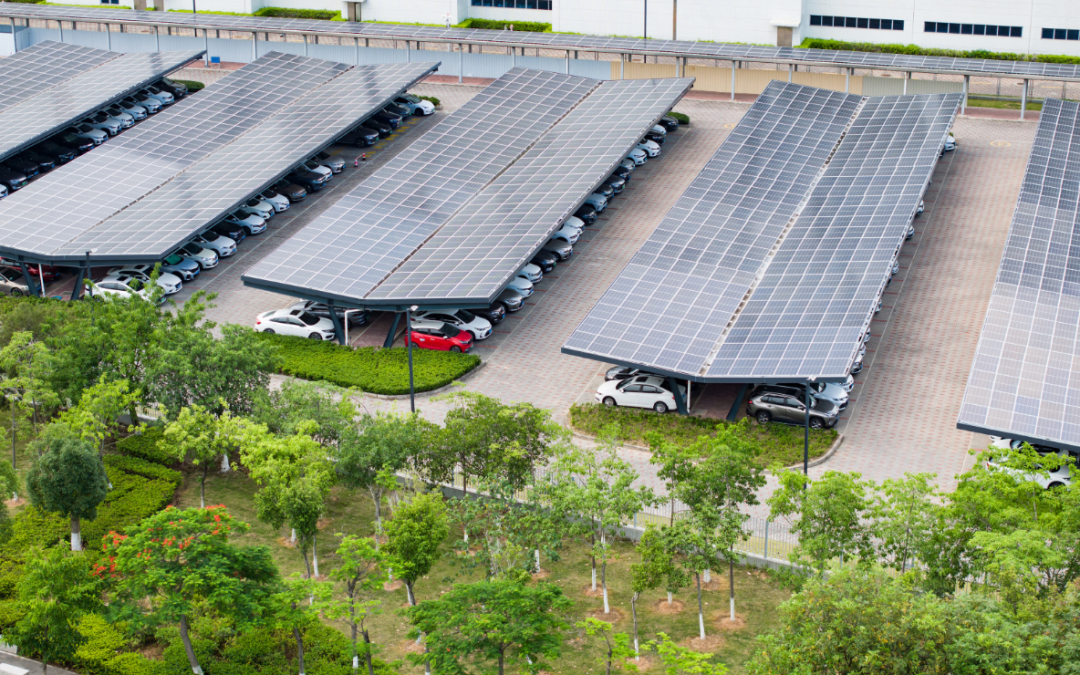
The UK government has launched a call for evidence on installing solar canopies in car parks across England, Wales, and Northern Ireland as part of its Plan for Change.
The move aims to cut electricity costs for drivers, businesses, and public services, while supporting the country’s clean energy targets.
The Department for Energy Security & Net Zero says supermarkets, retail parks and office buildings could save up to £28,000 a year by turning car parks into “solar carports.”
Motorists could also benefit from lower charging costs as solar power helps to supply EV infrastructure.
Energy Secretary Ed Miliband said:
“Right now, the sun is shining on hundreds of thousands of car parking spaces across the country which could be used to power our homes and businesses.
“We want to work with businesses and car park operators to turn our car parks into solar carports to save families and businesses money with clean, homegrown British energy through our Plan for Change.”
The proposal complements the government’s Fuel Finder scheme, which now moves into its first delivery phase.
The scheme will require petrol stations to share price changes within 30 minutes, aiming to save motorists 1 to 6p per litre.
Future of Roads Minister Lilian Greenwood said the government is “harnessing the net zero transition to give drivers more choice and help them get around with greater peace of mind.”
Ben Cox, Director at Sovereign Centros from CBRE, welcomed the move:” We have already taken great steps to secure a more sustainable future… We welcome the Department for Energy Security & Net Zero’s call for evidence which will allow us to invest further.”
Solar carports are already mandatory in parts of Europe and have been successfully implemented in the UK, including at Bentley Motors, Eastbourne Hospital, and the Metrocentre in Gateshead.
by Catie Owen | May 6, 2025 | Everything Installer, Podcast, Storage
Where are developers going wrong in their solar contracts?
In this episode of Solar&StorageXtra’s podcast, guest host Ken Davies speaks with Rhiannon Morgan-Williams, Partner at Ashfords LLP and a leading legal expert in renewable energy development.
With over a decade of experience advising developers and funders in solar and battery projects, Rhiannon shares her insider perspective on the evolving legal landscape around landowner agreements, option contracts, and the complexities developers face – from initial negotiation to grid connection.
Rhiannon and Ken also dive into emerging legal implications of agrivoltaics and the challenges of integrating agriculture and energy generation on shared land.
“There are a lot of things that could have been picked up by just future-proofing some of the documents at earlier stages. One thing that is always missed off is the consideration given to the ultimate needs of the parties who are likely going to own these projects in the future.”
– Rhiannon Morgan-Williams
From contract tips to agrivoltaics insights, this episode is essential listening for developers, landowners, and legal professionals in clean energy.
Check out the first episode of the Solar&StorageXtra Podcast on Spotify, Apple Podcasts, or Amazon Music, and start listening!
by Catie Owen | May 6, 2025 | Americas, Everything Installer, Storage
Panasonic has announced it will discontinue its solar and battery storage business in North America, marking the end of a decades-long presence in the solar sector.
In a letter sent to installation partners on April 28 and shared publicly, Naoki Kamo, president of Panasonic Eco Systems North America, said,
“This was a strategic decision – not a reflection of the technology’s performance or the commitment of our partners like you. While we continue to believe in the potential of solar and energy storage, it is no longer the right business fit for us at this time.”
Panasonic will continue to support customers, pledging to honour all warranties – including for systems not yet fully installed – and provide guidance for third-party warranty coverage.
“We are still very much in business and remain committed to supporting our partners, customers, and installer base,” the company added.
Panasonic entered the solar industry through its Sanyo acquisition in 2009. Sanyo pioneered HIT (Heterojunction with Intrinsic Thin-layer) technology, launching the world’s first commercially available HJT panels in 1997.
These modules, known for high efficiency and performance in real-world conditions, were rebranded under Panasonic in 2011 and expanded to include Evervolt battery systems.
Despite its strong technology, Panasonic began transitioning away from in-house manufacturing in favour of OEM partnerships amid intensifying price competition, especially from Chinese manufacturers. It officially exited panel manufacturing in 2021.
While stepping away from residential solar and storage, Panasonic will continue investing in clean energy technologies, including EV batteries and heat pumps. Its $4bn EV battery plant in Kansas is on track to open in the first half of 2025.
[Image credit: Panasonic]
by Catie Owen | May 1, 2025 | Europe, Everything Installer, Innovation
At Solar & Storage Live in London, we spoke with Aaron James Darvill, Senior Sales Manager, UK and Ireland, for Anker Solix.
Aaron covered the company’s evolution spanning the entire electronics sector – from consumer tech to residential energy storage.
He also shared Anker Solix’s latest product launches and how the brand is responding to industry trends – while keeping installers, communities, and future regulations firmly in mind.
Tell us about Anker Solix’s mission in the industry.
Aaron: We’ve been around since 2011 – we haven’t just popped up out of nowhere – and started with small products under the Anker Innovations brand.
We developed portable phone chargers, then we developed USB-C fast charging cables, and launched Anker eufy: our indoor and outdoor security camera line.
We also created portable power systems, which are now sold through retailers like Argos, Currys, Costco, and on Amazon.
These products are now in the hands of more than 200m users across 146 countries and regions.
From there, we decided to dive deeper into residential storage. We’re not aiming for the C&I scale; we want our products to fit into everyday lifestyles, offering good design, quality, and peace of mind.
That’s how the Anker Solix X1 came to life three years ago – that’s the product I now lead.
What is Anker Solix showcasing at Solar & Storage Live in London?
Aaron: Yesterday (2 April), we held our distribution agreement signings with Segen UK and Ireland, Callidus Wholesale, and Western Solar Ireland.
From an innovation standpoint, we’ve launched our three-phase system. While the UK domestic market is mostly single-phase, much of Europe is heavily three-phase.
We wanted to move into that early commercial stage – not full commercial, though. We don’t classify our battery as commercial. We see it as a community product.
It’s about supporting spaces like rugby clubs, football clubs, bowling greens, and parish churches. These are places that need three-phase systems in 8, 10, or 12 kilowatts, with up to 180 kilowatt-hours of capacity. That’s what we launched yesterday.
What current industry trends is Anker Solix keeping an eye on?
Aaron: For us, it’s about changing the narrative and protecting both distributors and installers.
You’ll find a lot of products with pricing displayed on e-commerce platforms, which becomes a race to the bottom. This approach protects our installers, because they’re the ones truly representing our brand. We’re just one part of the chain.
Another key area is regulation. At the moment, there’s only guidance suggesting batteries should be installed outdoors for safety and reliability. We’ve gone a step further.
Our battery is IP66 rated, operates down to -20°C at 100% depth of discharge, and is the only battery globally with a C5 anti-corrosion rating. No one talks about corrosion resistance, but when outdoor installation becomes mandatory, it’ll matter.
Our product is designed to be installed in built-up areas and pathways – it’s slim enough to allow a wheelie bin to pass or for a child to ride their bike without obstruction.
What myths about battery storage should we be busting?
Aaron: A lot of brands out there aren’t giving people the full picture. I think education has been lost, and we need to bring that back into the industry.
For installers, especially, it’s essential to do a deep dive on warranties. That’s what ultimately supports the end users.
There are loads of batteries on the market, at all sorts of price points. But what about longevity? What’s the brand’s history? How long have they been around, and will they still be around for the length of their warranty, or beyond?
Those are the questions I’d be asking if I were an installer.
Why has Anker Solix chosen to attend the London edition of Solar & Storage Live?
Aaron: I’ve attended Solar & Storage shows all over the world, and this was always the best event globally because it’s a great opportunity to connect with new installers, distributors, and even end users.
We’re seeing more end users attending now, and we need to listen to their needs and understand what they’re looking for. People are much more informed now.
It’s no longer a case of one battery fitting all. We’re looking ahead – to EV chargers, air source heat pumps, and all kinds of renewable energy systems. You’ll find all of that here under one roof. That’s why it’s worth coming.
Missed out on Solar & Storage Live London, or want to come back for more? Find a Solar & Storage Live event near you.
by Catie Owen | Apr 29, 2025 | Everything Installer, Innovation, Storage
At Solar & Storage Live in London, Solar&StorageXtra sat down with Francesca Shirley, Sustainable Business Development Manager at VEST Energy.
Francesca shared how the company is helping businesses unlock the full value of battery storage through smart optimisation and trading.
She highlights VEST’s Green Battery innovation, the importance of intelligent software, and why combining solar with storage is key to accelerating the UK’s net zero goals.
Can you give a brief introduction to VEST Energy and its core mission?
Francesca: At VEST, our mission is simple: to accelerate the energy transition by unlocking the full value of battery storage.
We specialise in smart trading and optimisation for batteries, helping businesses maximise performance, revenue, and carbon savings.
Our latest innovation, Green Battery, combines cutting-edge battery intelligence with measurable carbon savings – offered with no upfront costs. It makes it easier than ever for businesses to decarbonise while boosting returns.
Are there any recent projects that highlight the company’s impact in the solar sector?
Francesca: One standout project involved a UK-based manufacturer looking to decarbonise and reduce operational costs.
They already had solar installed, which was great – so we added battery storage and optimised it.
The results were immediate: we reduced peak energy charges, improved site resilience, and enhanced ESG reporting. It’s a great example of how solar and storage together can deliver real, measurable impact.
What technological advancements are needed to make off-grid battery storage more efficient?
Francesca: Efficiency comes from intelligence.
While hardware continues to improve, the real leap forward lies in smart software – things like predictive analytics, AI-driven optimisation, and real-time market response. Green Battery is designed to meet this need.
It continuously analyses site data, weather patterns, and energy markets to ensure batteries charge and discharge at the most optimal times.
This means greater performance, reduced carbon emissions, and lower costs.
How can investing in battery storage improve the effectiveness of the UK’s solar rollout?
Francesca: Solar alone can’t meet our energy needs 24/7 – it’s intermittent, as we all know. But when paired with battery storage, solar becomes much more powerful.
Storage smooths out solar’s variability, ensuring power is available even when the sun isn’t shining.
With Green Battery, you don’t just store excess energy—you optimise it, monetise it, and track its carbon impact in real time.
That’s how we turn solar from a daytime solution into a round-the-clock asset and accelerate the UK’s journey to net zero.
Why is it important for VEST Energy to attend Solar & Storage Live in London?
Francesca: We love this event! It’s the heartbeat of the UK’s clean energy movement. It’s a chance to showcase what’s possible with innovations like Green Battery, and to meet the solar installers, tech developers, and energy users driving real change.
We’re here to collaborate, learn, and lead the conversation on how battery intelligence can transform the way we generate, store, and use clean power.
Missed out on Solar & Storage Live London, or want to come back for more? find a Solar & Storage Live event near you.
by Catie Owen | Apr 29, 2025 | Asia, Everything Installer, Large Scale Utility Solar
According to the Institute for Energy Economics and Financial Analysis (IEEFA), India installed 7.8GW of solar capacity in Q1 of 2025.
This is the country’s second-highest quarterly total for the last 13 quarters.
Q1 saw India install 7,782 of solar power capacity which, according to figures from IEEFA, is an 8.4% decrease from the highest record, which was set during the same period in 2024.
Overall, India’s total installed capacity rose 106GW.
The states of Rajasthan and Gujarat installed the most renewable energy during Q1 2025, acquiring 1,973 and 1,910 respectively.
The states of Maharashtra and Karnataka added 1,780MW and 1,316MW, respectively, and Andhra Pradesh added 940MW after introducing its Integrated Clean Energy Policy in October 2024.
“While total tendered capacity increased to 40 GW in 2018 and 2019 (and dipped during Covid-19 years), it crossed 50 GW in 2023 and 2024, tendered capacity has been increasing since 2023,” explained the IEEFA in its findings.
“(This has been) driven by India’s ambition to add about 50 GW of non-fossil fuel power capacity every year from 2023 to achieve 500GW of the said capacity by 2030.
“However, delays in signing power supply agreements and in receiving permits and approvals, and hurdles in gaining grid connectivity continue to hinder capacity installations.”
by Catie Owen | Apr 28, 2025 | Asia, Commercial & Industrial Solar, Everything Installer
Reliance Industries Ltd has commissioned its first gigawatt-scale solar module production line, the company announced following its FY25 earnings.
The fully automated line, located in Jamnagar, India, produces HJT panels with up to 720 W output and is certified by the Bureau of Indian Standards (BIS).
“We have commissioned the first gigawatt-scale solar module manufacturing panels that can generate 720 W at peak”, said V Srikanth Venkatachari, Chief Financial Officer of Reliance. “It is possibly the largest panel that we have.”
The facility is initially designed for 10 GW annual capacity, with a modular setup enabling expansion to 20 GW.
“Overall, in each [stage] on the entire solar chain, the engineering is complete, the long lead items and procurements are complete, and construction is going on in full swing,” Reliance said at a recent analyst meeting.
The company aims to create a fully vertically integrated production line covering the manufacturing of polysilicon, ingot, wafer, cell, panel, glass, and polyolefin elastomer (POE).
Reliance is also pursuing 30 GWh of battery manufacturing capacity and has started solar farm development in Gujarat’s Kutch region.
It is building a 2,000-acre green hydrogen ecosystem in Kandla, with electrolyser production through partnerships, including one with Norway’s Nel ASA.
All initiatives support Reliance’s $10bn plan, announced in 2021, to drive renewable energy, storage, and hydrogen growth as it targets net zero emissions by 2035.
According to the firm, domestic solar manufacturing will help India meet its target of 500 GW of renewable energy capacity by 2030.
by Catie Owen | Apr 25, 2025 | Commercial & Industrial Solar, Everything Installer
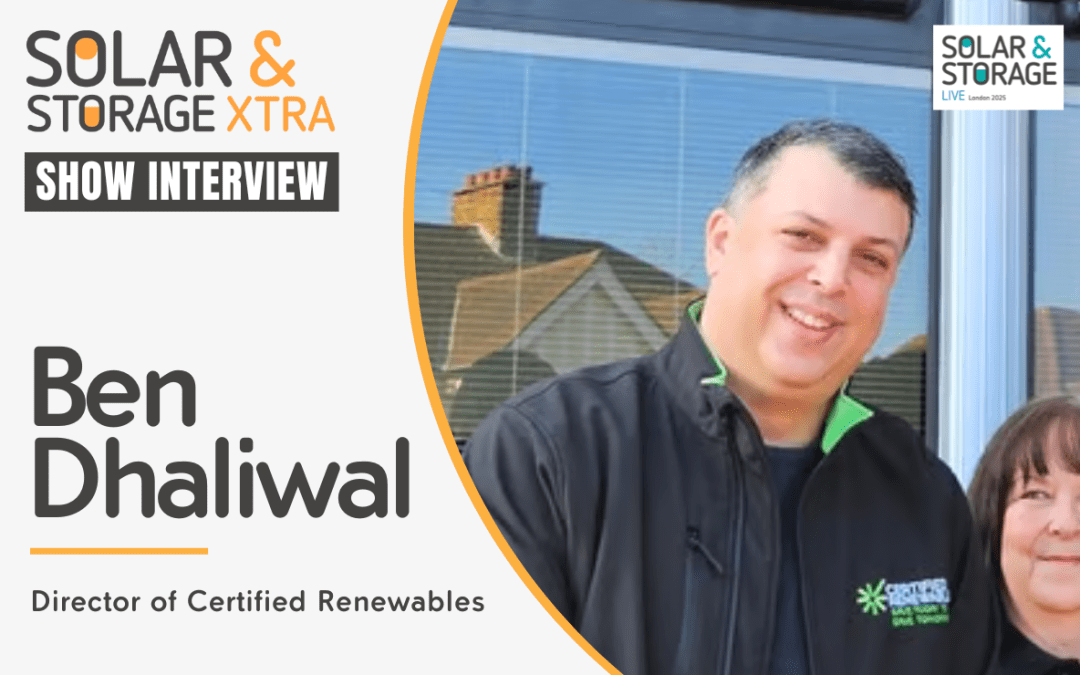
At Solar & Storage Live London 2025, Solar&StorageXtra sat down with Ben Dhaliwal, Director of Certified Renewables.
In this interview, Ben shares his thoughts on the challenges installers face with current funding schemes and regulations, and explains why AI will play a central role in the industry’s future.
He also discusses the potential benefits of streamlined government schemes and explains how Certified Renewables is working to help consumers and installers alike navigate an increasingly complex market.
What is Certified Renewables’ mission in the industry?
Ben: We’re just starting out as an installation company, focusing on renewable solutions like solar, heat pumps, underfloor heating, mechanical ventilation, and car charging. What sets us apart is our deep integration of AI into these products.
Over the next year, we’re releasing some innovative features that I can’t reveal just yet – sorry about that! But we’re excited about it.
One service we currently offer is called Certified Flipper, which automatically switches your energy bills. It’s perfect for those who are not familiar with energy price switching, and it’s available for a small fee – discounted if you’re a Certified Renewables client.
The energy market is always evolving, with different players like Octopus and Tomato offering varying rates, and we want to make sure it’s easy for customers to navigate.
What trends or challenges are on Certified Renewables’ radar?
Ben: First, the regulatory landscape is intense, especially for heat pumps. The paperwork is overwhelming for installers, which detracts from time spent on-site. You want to spend your time installing, not chasing paperwork.
We’re looking into automating some of this, and with MCF-affiliated team developments, we hope to ease some of that burden.
From a homeowner’s perspective, the biggest challenge is trust. With so many options in the market, it can be confusing to find an installer you can rely on.
Additionally, funding for these projects is fragmented, with multiple schemes like Eco4 and others. These often change or take time to pay out, which makes it tough for installers to keep a team intact and stay cash positive.
The complexity of installing heat pumps also plays a part. It’s not just about fitting a unit; the process is highly detailed, requiring extensive surveys to ensure efficiency.
The challenge for consumers is that they don’t understand the complexity – they expect the process to be as simple as replacing a gas boiler, but it’s far more involved.
I’ve been in this industry for 15 years, and we’re still talking about the same issues – energy bills, regulation, and getting people on board with renewable solutions. But we’re making progress.
The future looks bright, and the technology is only going to get better. It’s an exciting time to be in this space.
What policies or government interventions would benefit the industry?
Ben: Simplifying the funding schemes is critical. Whether it’s RHI (Renewable Heat Incentive), feed-in tariffs, or others, if we could streamline these into one scheme, it would make everything easier – for the customer, the installer, and the regulator.
Right now, there are too many pots of funding, and the paperwork involved is overwhelming.
A single, straightforward scheme would help the industry move forward. It would allow businesses to scale and offer stable, long-term employment while ensuring high-quality installations.
Additionally, the integration of AI could make the process smoother, improving everything from energy usage monitoring to system efficiency.
AI experts on our team are already looking into integrating this technology, which could make a huge difference in the industry.
What benefits are there to attending Solar & Storage Live in London?
Ben: While I’ve attended the Birmingham event before, this is my first time at the London event – and it’s been fantastic.
The best part is seeing the latest technologies, meeting suppliers, and networking with like-minded individuals.
As an installer, it’s valuable to stay up to date on emerging trends and innovations. Events like these are also a great way to learn from others and build connections that help you grow your business.
Attending these events is vital for staying ahead of the curve, and I’m excited to return next year with our team. There’s a lot more to do, and we’re only scratching the surface of what we can achieve in the renewable energy sector.
[Image credit: Certified Renewables]
Missed out on Solar & Storage Live London, or want to come back for more? find a Solar & Storage Live event near you.
by Catie Owen | Apr 23, 2025 | Asia, Commercial & Industrial Solar, Europe, Everything Installer
Britain’s state-owned energy company, GB Energy, will no longer be permitted to use solar panels, wind turbines, or batteries linked to slave labour, following a significant policy reversal by the government.
Energy Secretary Ed Miliband will introduce a legislative amendment to ensure that all supply chains involved in clean energy infrastructure are free from slavery and human trafficking.
The move comes after Labour MPs previously blocked a similar amendment to the Great British Energy Bill. Although none voted against the party line, 92 MPs abstained, prompting what a government source described as a “recognition of the strength of feeling.”
Concerns have mounted over the use of polysilicon – an essential material in solar panel production – that is largely sourced from China’s Xinjiang region.
This area has faced international scrutiny for alleged human rights abuses against the Uyghur Muslim population.
Reports suggest up to 97% of solar panels sold in the UK include materials from Xinjiang, placing around 40% of Britain’s solar panel industry at risk of being linked to forced labour.
Campaigners had prepared case studies showing such panels being installed on public buildings. In response, ministers are said to be convinced that GB Energy “needs to be an industry leader” in ethical sourcing.
One government source stated: “We are committed to ensuring Great British Energy is a sector leader in this area, developing resilient, home-grown supply chains free from forced labour.”
While the decision has been welcomed by human rights advocates, it has raised concerns about its impact on the UK’s environmental targets.
Andrew Bowie, acting Shadow Energy Secretary, warned The Times that the policy would cause a “real slowdown in the deployment of solar in the United Kingdom,” and questioned whether Labour’s clean energy goals could still be met.
John Flesher, deputy director of the Conservative Environment Network, called the shift “long overdue,” but stressed: “The government must now act to ensure that this knee-jerk U-turn doesn’t damage our environmental goals and the solar industry.”
Luke de Pulford of the Inter-Parliamentary Alliance on China echoed campaigners’ support, saying: “We cannot build a just transition on the backs of Uyghur slaves.”
[Image credit: Lauren Hurley / DESNZ]
by Catie Owen | Apr 16, 2025 | Europe, Everything Installer
The Valencia Science Museum has created a 553 kWp photovoltaic installation as part of a broader project to upgrade its air conditioning system.
Installed by Valencian company Yomee, the system integrates 7,664 photovoltaic glass tiles supplied by Ávila-based manufacturer Onyx Solar. The company explained to pv magazine that the tiles, made from crystalline silicon cells, deliver a power output of 129 Wp/m² with an efficiency of 12.9%.
A representative noted that around 6,000 m² of photovoltaic glass tiles in various sizes were produced to fit the building’s structure, with the most common panel measuring 750 mm x 750 mm and weighing 23 kg.
The tiles also offer a visible light transmission of 28% and an external reflection index of 8%. Installed on both the northern and southern cantilevers of the museum, the tiles are designed for minimal visual impact while maximising available space.
The electricity generated will be used for self-consumption, directly feeding the museum’s electrical grid to reduce reliance on external energy sources.
According to the museum, the solar system’s peak production conveniently aligns with its highest air conditioning demand, especially during event schedules.
The installation is expected to generate around 744,823 kWh annually, covering an average of 10% of the museum’s energy needs, with occasional peaks of up to 55%.
In addition, the museum will soon begin work on a geothermal plant, which will connect to the building’s air conditioning system through a closed-loop water circuit using natural aquifers.
Designed with 32 wells, this facility will be the largest of its kind in the Valencian Community, with a thermal capacity of 4,050 kW.
Combined with lighting upgrades and water efficiency measures, the €16m initiative is projected to cut the museum’s non-renewable primary energy consumption by 30%.
With Spain’s solar market remaining a crucial topic, don’t miss your free ticket for Solar & Storage Live España in Valencia 25-26 June 2025.
by Catie Owen | Apr 15, 2025 | Commercial & Industrial Solar, Europe, Everything Installer
At Solar & Storage Live in London, 2-3 April, Solar&StorageXtra talked to Mike Gadd, Director of Renewables and Total Waste Solutions at CEF.
In his interview with Solar&StorageXtra, Mike shares insights into CEF’s proactive approach to tackling the industry’s skills shortage, the importance of supply chain sustainability, and how the business is evolving its product offering to support the transition to net zero.
As the renewables sector faces new challenges and opportunities, CEF is taking a practical, proactive approach while focusing on building skills that help drive the market forward.
Tell us a bit about CEF’s mission.
Mike: We strive to be known for great service, fantastic customer support, and accessibility through our branch network.
More specifically, when it comes to renewables, one of the major challenges we’re facing is a skills shortage in the industry. CEF recognises the need to go further – to actively drive more training opportunities and apprenticeships, and help address the skills gap that’s affecting the sector.
How can the industry encourage upskilling and attract fresh talent?
Mike: Firstly, we need to acknowledge that this challenge is far bigger than any single distributor, manufacturer, or installer. We’ve recognised that through our partnerships with organisations like the Electrical Distributors’ Association and Solar Energy UK.
We all need to train as many people as possible, in a cost-effective way, time-efficient for businesses, and with honesty about what lies ahead. While training is vital, the hard work begins afterwards – building a business in this industry.
We also need greater government support to make apprenticeships more attractive and to shift perceptions; the renewables sector offers a huge variety of roles.
It’s our job as an industry to work with government and education providers to change those perceptions and show younger generations that renewables can offer a fulfilling, future-focused career, with a niche for everyone.
How does CEF plan to address rising challenges and trends in the solar and EV industries?
Mike: Our strategy is to be proactive. That means staying ahead of trends and challenges to protect our business and keep our customers informed. We are transparent in sharing insights and issues with our clients early so we can help them manage and mitigate those challenges.
One of the biggest challenges is traceability and sustainability. We can’t promote environmentally friendly products if they’re produced in ways that harm human rights or working conditions.
We’ve invested in a fantastic in-house sustainability and supply chain team, who’ve led many of our manufacturers through sustainability scoring and transparent reporting. We insist on the right credentials before onboarding suppliers – and certainly before offering them to customers.
Another ongoing challenge is pricing and availability. We’ve experienced significant deflation over the past 18-24 months, but we’re now seeing stock shortages and inflation.
What products are you presenting at the show, and what makes them unique?
Mike: We’ve got a strong mix on the stand: solar PV panels, energy storage systems, EV charging solutions, an air source heat pump, and even thermal energy storage to complement the heat pump.
What sets us apart isn’t just the products themselves – many suppliers can offer similar ranges – but the overall package we provide.
CEF excels at bundling these products together so we can deliver a full electrical and renewables package. We handle specification and design, and we’ve got 416 branches across the UK and Ireland, plus multiple project centres for delivery.
Our team is filled with industry experts from the recycling, power infrastructure, and heating sectors. The idea is to offer a true one-stop shop, giving customers not just the products, but the knowledge, specification, design support, and the full product journey.
What are the benefits of attending Solar & Storage Live London for solar professionals?
Mike: For us, the show is a brilliant opportunity to expand our brand’s reach.
We’re often still seen purely as an electrical wholesaler – people tell us they’ve seen our vans or assumed we just sell light fittings. This show lets us have valuable, face-to-face conversations about what we do and how we can support businesses and installation departments.
It’s also a rare chance to see new brands and products, with so many people from the sector in one place.
Beyond that, it’s about showing industry solidarity. The challenges we face – particularly net zero targets – are bigger than any single business. Currently, as a sector, we’re not doing a great job of hitting those targets. Events like this give us a platform to unify, collaborate, and collectively drive the industry forward.
Missed out on Solar & Storage Live London, or want to come back for more? find a Solar & Storage Live event near you.
by Catie Owen | Apr 14, 2025 | Asia, Commercial & Industrial Solar, Everything Installer, Large Scale Utility Solar, Press Release
Press Release
As one of the fastest-growing regions in renewable energy adoption, Southeast Asia – and Malaysia in particular – represents a key strategic market for Deye.
With increasing demand for reliable power and a strong push toward clean energy, this region offers immense opportunities for advanced solar and storage solutions. That’s why Deye was proud to participate in Solar & Storage Live Malaysia 2025, held from April 9-10 at MITEC, Kuala Lumpur.
At Booth K02, the Deye team welcomed a constant stream of visitors. The booth buzzed with interest, especially around our Commercial & Industrial (C&I) energy storage offerings, such as the 80kW Hybrid Inverter and 100kW–2.5MW energy storage solution.
Many attendees – including installers, developers, and EPCs(especially) —were eager to learn how our solutions could support factories, office parks, remote islands, and data centres in reducing grid dependency and enhancing energy resilience.
Flagship Solutions on Display Among the highlights of the exhibition were:
100kW–2.5MW Energy Storage Solution: This modular and scalable solution is built for C&I and utility-scale projects, featuring Deye’s powerful PCS (Power Conversion System) and flexible BOS-B battery integration.
With multi-machine parallel support, and both on-grid and off-grid modes, it ensures seamless performance even in complex energy environments. Ideal for peak shaving, backup power, load shifting, and microgrid applications, it’s a smart investment in long-term energy independence.
Deye Wireless Energy Management System: Our intelligent energy management system enables real-time data tracking, automatic load adjustment, and efficient energy usage across homes and businesses.
Compatible with Deye smart plugs, switches, CT, TX, and EV chargers, this system makes smart energy control accessible and scalable—whether you’re managing a small household or a multi-site enterprise.
Off-grid Inverter + RW-L5.1 Battery Solution: Perfect for rural areas, remote sites, and backup power scenarios, this solution delivers stable, off-grid power supply with high efficiency and safety.
The RW-L5.1 battery features IP65 protection, >6000 cycle life, 10-year warranty period and Max. 32 units in parallel in terms of scalability, making it easy to integrate and expand based on different user needs.
L430 Solution Series – Coming Soon: During our brief on-site presentation, we also introduced the L430 solution series, a flexible and integrated approach to residential and small commercial storage. Its modular design allows easy adaptation to various usage scenarios – from villas to community centres – ensuring both scalability and cost-effectiveness.
Our participation in this exhibition not only showcased Deye’s cutting-edge technology but also reaffirmed our commitment to empowering the Southeast Asian market with practical, reliable, and intelligent energy solutions.
The enthusiastic response from attendees proves that demand for clean and decentralised energy is growing rapidly, and Deye is ready to meet that demand.
We thank every visitor, partner, and friend who joined us in Kuala Lumpur. If you missed the show or want to dive deeper into our solutions, feel free to reach out Deye official media platforms – we’d love to connect and support your energy transition journey.
Missed Solar & Storage Live Malaysia 2025, or want to attend an event closer to home? Check out the global range of Solar & Storage Live shows
Want to publish a press release? Submit your content here for review by our editorial team.
by Catie Owen | Apr 10, 2025 | Commercial & Industrial Solar, Europe, Everything Installer
At last week’s Solar & Storage Live in London, Solar&StorageXtra caught up with Clare Bottle, CEO of the UK Warehousing Association (UKWA).
In this interview, Clare shares her thoughts on the untapped potential of warehouse rooftops for solar energy, the complexities of retrofitting, and the policy and infrastructure changes needed to accelerate progress.
As warehousing electrifies and energy demand rises, Clare explains how this overlooked space could play a crucial role in the UK’s renewable energy future.
Can you tell us about your presentation at Solar & Storage Live?
Clare: I talked about some of the challenges involved in retrofitting solar panels on warehouse rooftops.
Firstly, it’s important to have public support. Generally, people are in favour of renewable energy. But when it comes to solar farms, especially those near residential areas, there can be local opposition.
One way to help win people over is by demonstrating that we’re also making better use of other types of real estate – like warehouse rooftops.
Now, only around 5% of warehouses have solar panels installed – which is incredibly low. If we don’t address that we risk turning people off the broader idea of renewables.
Then there’s stakeholder complexity. There’s rarely a single decision-maker who can say, “Yes, let’s install solar panels on this warehouse.” Most warehouses are leased properties; you have both a landlord and a tenant to consider.
Then there are additional stakeholders: insurers, mortgage holders, roofing warranty providers, local authorities, and sometimes even nearby residents. Getting alignment from all these parties can be difficult.
On top of that, our electricity grid is under-invested. When you’re installing larger systems – two or three megawatts are typical for a warehouse – you need permission from the Distribution Network Operator (DNO).
That’s not an issue for smaller domestic rooftops, but it is for warehouses. Unfortunately, DNOs are often risk-averse, partly for safety reasons, which is fair, but also because of a cautious culture that can slow progress. That’s a big barrier to scaling up retrofits.
If warehouse rooftops were fully utilised for solar, what kind of impact could that have on the UK’s energy grid and carbon reduction targets?
Clare: The impact could be phenomenal. Back in 2022, we commissioned a study that found using just a small proportion of suitable warehouse rooftops could double the UK’s solar capacity. Since then, even more warehouses have been built – so the opportunity is bigger than ever.
Are there any existing incentives or policies that help, or do you see gaps in current government support?
Clare: There is some support in place. For instance, depending on how you finance a rooftop solar installation, you may be eligible for a corporation tax deduction. That’s part of a broader policy on capital investment, not just solar.
In England, there’s also a helpful policy on business rates – your rates don’t immediately increase just because your property value has gone up due to solar installation. Unfortunately, that doesn’t apply across the devolved nations, which is disappointing.
Returning to the grid issue, we’re very reliant on government action to improve how the grid and DNOs operate. Ofgem is the main route the government uses to influence those improvements, but I’d like to see Ofgem given more power to accelerate progress.
Do you think the warehousing sector is fully aware of the financial and environmental benefits of solar retrofitting?
Clare: Awareness is growing, particularly thanks to our trade association’s efforts. Energy costs are rising, and energy demand in warehouses is increasing too.
When I started, warehouses commonly used natural gas-powered forklifts. But now there’s a shift toward battery-powered alternatives. At the same time, automation is on the rise – conveyors, robotics, AI systems – all of which require electricity. The demand within the building is going up.
Looking ahead, as we transition to electric vehicles – including HGVs – that demand will grow even more, particularly at distribution hubs.
Additionally, we generate a lot of wind energy here in the UK but much of that power must travel long distances and some of the energy is lost along the way. One of the great advantages of warehouse rooftop solar is that the energy is used right there on site, which means much lower transmission losses.
What benefits have you seen from attending Solar & Storage Live?
Clare: When I first investigated getting more solar panels on warehouse rooftops, I reached out to the trade body and quickly built a relationship with the team at Solar Energy UK.
They’ve been incredibly supportive, and we’ve since collaborated on several shared objectives. Through that collaboration, I found out about Solar & Storage Live, and I’m really glad to be here.
There are loads of great exhibitors, and as someone who’s outside the core solar industry, it’s a fantastic way to learn more about the parts of the sector that are relevant to warehousing.
Missed out on Solar & Storage Live London, or want to come back for more? find a Solar & Storage Live event near you.
by Catie Owen | Apr 2, 2025 | Europe, Everything Installer
EcoFlow is proud to unveil its AI-Powered Home Energy Ecosystem at Solar & Storage Live London, set to take place on April 2 -3, 2025.
The launch promises to redefine home energy management with innovative solutions aimed at enhancing energy savings, maximising solar power, and integrating cutting-edge technologies. Visitors will find EcoFlow at Stand B21.
EcoFlow AI-Powered Home Energy Ecosystem – revolutionising energy management
EcoFlow’s AI-powered ecosystem introduces a comprehensive portfolio that caters to both residential customers and energy professionals, offering cutting-edge solutions designed to deliver unprecedented energy efficiency.
EcoFlow’s AI-powered Home Energy Ecosystem brings a suite of smart features designed to improve energy efficiency through predictive analysis and automation.
POU (Price of Use)
Launching in May 2025, this new feature automates battery charge/discharge based on dynamic electricity prices.
By setting a target price, users can ensure their systems operate according to the most cost-effective times, automatically charging or discharging based on real-time grid prices.
AI-optimised solar power
The AI system predicts solar generation and consumption patterns to deliver personalised energy-saving suggestions. It maximises solar power utilisation, helping users reduce reliance on grid power and optimise their savings.
Predictable power backup
The EcoFlow system can predict severe weather events 24 hours in advance, ensuring a fully charged backup battery when required. Users can set their desired backup ratio to maintain energy security during power outages, making sure they’re always prepared for unexpected situations.
Open ecosystem & third-party integrations
EcoFlow’s open ecosystem now offers seamless integration with third-party systems, including Octopus Energy, allowing users to tailor their energy management systems according to their needs. This integration enhances flexibility, enabling users to optimise their energy consumption and production, whether through solar, grid, or backup power.
PowerPulse 2 launch
The latest evolution of EcoFlow’s EV charging solutions, PowerPulse 2, also launches at Solar & Storage Live 2025.
Fully integrated into the EcoFlow ecosystem, PowerPulse 2 offers intelligent charging capabilities that prioritise PV charging and optimise grid energy usage based on cost-efficiency.
This ensures customers enjoy a seamless, smart charging experience while saving on electricity bills.
EcoFlow’s UK & I.E Country Manager, Craig Bilboe, commented: “The launch of our AI-powered home energy ecosystem marks a significant step forward in how homeowners and energy professionals can optimise energy use.
By integrating smart automation and predictive insights, we’re empowering users to take control of their energy consumption, reduce costs, and enhance sustainability.”
Find out more here!
Join us at Solar & Storage Live London this week! Don’t miss out on your free ticket by securing your place here.
Want to publish a press release? Submit your content here for review by our editorial team.
by Catie Owen | Mar 27, 2025 | Everything Installer
IKEA, a global “household name” furniture brand, and solar manufacturer Iberdrola Portugal have partnered to provide clean energy solutions to customers.
The collaboration will see ‘IKEA Family’ members receive exclusive discounts on Iberdrola’s products, aimed at helping customers lower their energy costs in Portugal.
In a statement, Iberdrola explains that its mission is to provide an ecosystem of energy solutions that use 100% renewable sources.
As such, the company currently offers clean electricity plans, solar energy solutions, electric mobility and additional assistance and maintenance services.
IKEA has also released a statement outlining the company’s reason for choosing a partnership with Iberdrola, explaining: “We ensure compliance with the IKEA standards and we do not compromise in our choice of partnerships.”
As examples, IKEA has highlighted the solar manufacturer’s expertise in the sector, product quality and guarantees, affordability, the company’s integrity, and the benefits the partnership allows IKEA to provide.
This move is the most recent in Iberdrola’s retail partnerships, with the manufacturer having signed a 10-year solar PPA with Italian retailer Pam Panorama earlier this month.
[Image credit: Iberdrola]
by Catie Owen | Mar 24, 2025 | Everything Installer, Innovation, Press Release
Press Release: Solar Energy UK and Terrapinn
Immediate release
LONDON, UK, 24 March 2025 – The Solar Roadmap, Warm Homes Fund and REMA to headline the presentations at Solar & Storage Live London, featuring more than 150 global solar and storage suppliers.
Solar & Storage Live, the UK’s largest event dedicated to solar and energy storage, returns to London on 2–3 April 2025.
This highly anticipated, free-to-attend event will bring together 10,000 industry leaders, policymakers and innovators to explore the latest developments in the renewable energy sector and drive the transition to a net zero future.
Solar & Storage Live London will showcase more than 150 exhibitors who will display cutting-edge technology and solutions in solar and energy storage, including leading names such as GivEnergy, Segen, JA Solar, Sunsynk, LONGi, British Solar Renewables, AIKO and Huawei.
The show-floor agenda will feature over 60 hours of presentations addressing key challenges and opportunities such as the UK Solar Roadmap, the Warm Homes Fund and the Review of Electricity Market Arrangements (REMA). Highlights include keynote addresses from:
- Bill Esterson MP, Chair of the Energy Security and Net Zero Committee, who will discuss the policy landscape and future of the UK’s energy transition.
- Mete Coban MBE, Deputy Mayor of London for Energy and Environment, providing insights into London’s renewable energy strategy and the role of solar in the capital’s net zero goals.
- Ian Brown, Head of Banking at the National Wealth Fund, speaking on funding opportunities and financial support for large-scale renewable projects.
- Dan McGrail, new interim CEO of Great British Energy, sharing perspectives on building a resilient and sustainable energy infrastructure.
Attendees will have the opportunity to explore the latest advancements in solar panels, inverters, battery storage, and smart energy solutions, with live product demonstrations and expert advice available on the exhibition floor.
New for 2025, this year’s event introduces some innovative features designed to support and accelerate solar and storage projects:
- Meet the Installers Zone – Leading UK-based installers will be available to offer insights and advice, including DCL Renewables, Greenvolt Next, Kimble Solar, Perfect Sense Energy, Preserve First, AI Solar, Harvest Green Developments, and Ampergia.
- The Installer Training Hub – Hands-on training in Solar PV Module and Mounting, Battery Storage, and Inverter Installation & Commissioning will be available, with sessions led by industry leaders including GoodWe, GSE Integration, and JA Solar.
- Professional Services – Connect with solar project advisors, insurers, banks, and legal firms, including Greenhearth Energy, Triodos Bank, Two Blues Solar, Net Zero Asset Finance, PowerfulTechnology, Solar Tree, Instinctif Partners, PNR Consult, Qualitymark Protection, C&C Insurance Group, Willis, Miller Insurance, Sturdy Edwards Insurance Brokers, and Michelmores.
- The Recruitment Zone – Focusing on attracting new talent into the industry, with companies including British Solar Renewables, Clarke Energy, Net Zero Careers Accelerator, HDM Solar, and NextEnergy Group showcasing job opportunities and hosting screening meetings.
- Networking Opportunities – Free networking events facilitated by key industry associations including the Global Solar Council, Solar Nation, London & Partners, SolarAid, POWERful Women, and WiSEu.
Solar and Storage Live London, in partnership with Solar Energy UK, will provide a platform for industry collaboration, knowledge sharing and deal-making across the energy, finance, construction, and public sectors.
“This second edition of Solar and Storage Live in London will showcase the incredible innovation and leadership driving the UK’s renewable energy sector,” said Rebecca Sloan, General Manager, Solar and Storage Live London at Terrapinn.
“With a strong line-up of exhibitors and speakers, including government policy makers, the event plays a pivotal role in shaping the future of solar and storage in the UK.”
“The Solar and Storage Live events are the highlight of the solar industry’s calendar. That’s even more so this year, with the industry gearing up for unprecedented expansion and the Solar Roadmap just around the corner,” said Chris Hewett, Chief Executive of Solar Energy UK.
“Aside from being the number one networking opportunity for the year for those already in our fast-growing sector, it’s also a great way to join via our Recruitment Zone and gain new skills at the Installer Training Hub.”
– ENDS –
Editor’s notes
Solar & Storage Live London: Design, install & operate solar projects
Join us at Solar & Storage Live London taking place 2-3 April 2025 at ExCeL London, as we spearhead the revolution towards a brighter, greener future! Our mission is to accelerate the adoption of solar energy propelling us towards a global landscape powered by clean, renewable energy sources.
We do this by bringing together the titans of solar and storage manufacturing alongside dynamic local players and distributors. The event attracts a large local audience of installers, commercial and industrial users, property owners, landowners and utility companies. All eager to source solar and storage solutions to drive a change in their community.
Solar and Storage Live London is part of the leading global series of Solar & Storage Live events taking place in 20 destinations and organised by Terrapinn. The trade exhibition is free to attend for business professionals.
Opening times:
Wednesday 2nd April: 09:30 – 18:00
Thursday 3rd April: 09:30 – 16:00
Venue: ExCeL, London
Quick links:
For more information and to register, click here
To view the general website, click here
To view the Exhibitor directory, click here
To view the full agenda, click here
Logo and images: here
Press enquires:
To request a free press pass and for general enquiries, please get in touch with: roney.chan@terrapinn.com
Onsite contact (2-3 April 2025): katie.devaney@terrapinn.com or visit Solar & Storage Live, Stand G27
Want to publish a press release? Submit your content here for review by our editorial team.
by Catie Owen | Mar 6, 2025 | Everything Installer
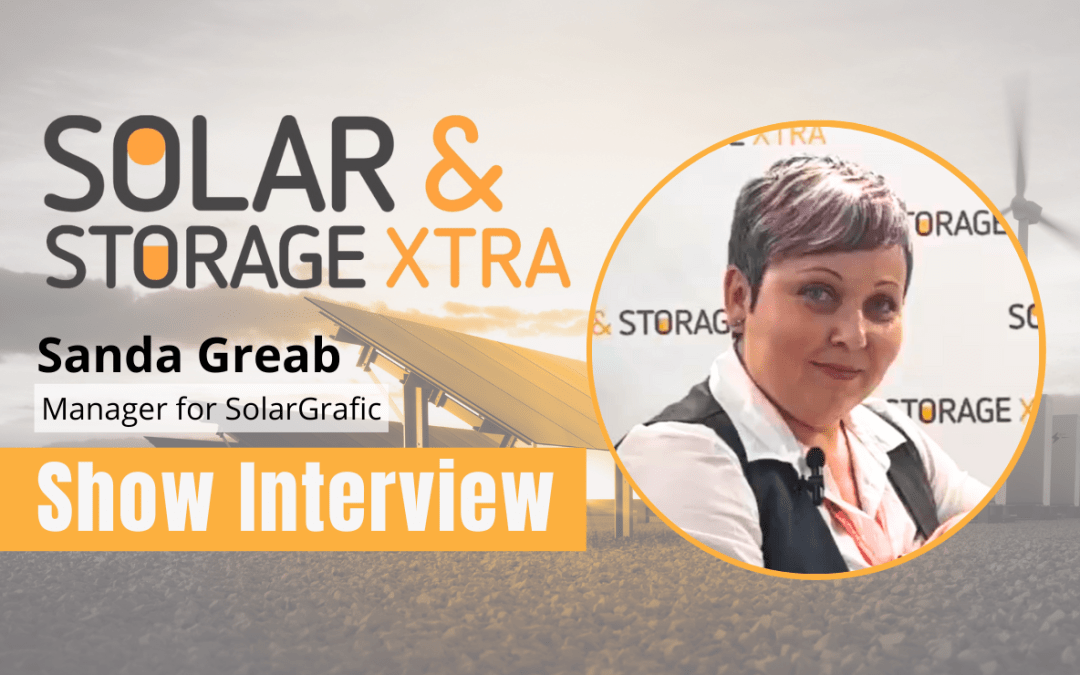
At the 2024 edition of Solar & Storage Live España Solar&StorageXtra chatted to Sanda Greab, Manager for SolarGrafic.
Sanda discussed the need for better diversity and inclusion in the industry, the growing demand for trained professionals, and the challenges of solar panel maintenance and recycling.
Interview with Sanda Greab, Manager for SolarGrafic
“No matter how much theory someone learns, true understanding comes from hands-on work.”
Xtra: What is SolarGrafic and the Solar Academy’s mission?
Sanda: At SolarGrafic and the Solar Academy, our mission is to prepare individuals for integration into the industry. There is a clear demand for installers, and everywhere we go, we hear the same concern: there is a shortage of qualified professionals.
Part of the problem lies with institutions, as until recently, there were no specialised courses in photovoltaic and renewable energy. We need trained professionals, but there hasn’t been a structured place to provide that training.
That’s why we created the Solar Academy – to address this gap.
We work with a diverse team and ensure they receive proper preparation. The first step is safety training, specifically in labour risk prevention. We collaborate with the Forintec Training Centre, which handles all aspects of workplace safety.
However, practical experience is crucial. No matter how much theory someone learns, true understanding comes from hands-on work. Our next project involves working hands-on with solar structures from manufacturers like Schletter and Selec, which need to be assembled in a specific way.
Xtra: How do you think the industry, particularly for installers, could improve?
Sanda: There is still a lot of work to do, but the landscape is evolving. We are seeing more and more women entering the field.
Of course, there have always been female directors in large companies, but now we’re also seeing more women as installers, engineers, and technicians, excelling in their roles.
We need better representation of women in the industry. Encouraging companies to support women in the field is essential. If businesses were given incentives – through tax benefits or subsidies – for inclusivity, it could make a real difference.
Representation is also key. Women from diverse backgrounds need visibility as role models in the sector. Another important issue is wage equity and transparency. Salary equality should be non-negotiable.
Why should a woman earn less than a man for doing the same job? There must be fairness and clarity in pay structures.
We are committed to inclusion and diversity, working with people of all ages and backgrounds. For example, we have team members aged 55–57 actively working with us.
Last year, we welcomed people from Ukraine, some of whom are now permanent employees. We believe in fostering diversity – it shouldn’t be about “you” or “me” but about working together.
Xtra: What are some challenges that SolarGrafic and Solar Academy have faced in their projects?
Sanda: The first challenge, following from my previous point, is for women to be taken seriously and treated equally. Inclusion and diversity remain significant challenges, and it’s something we should discuss further.
Another challenge is raising awareness about the full scope of solar panel projects. Everyone understands the need for installation, but maintenance and cleaning are often overlooked – they’re essential for long-term efficiency. However, many people still don’t see the necessity of these services.
Another major challenge on the horizon is solar panel recycling. In the coming years, the first generation of installed solar panels will reach the end of their lifespan. Panels last about 20–25 years, but what happens after that?
We are not currently prepared for large-scale solar panel recycling. As of now, there is no solar panel recycling plant in Catalonia, though one will be needed. We are developing a project to secure governmental support and establish a recycling plant.
Xtra: What are the benefits of attending Solar & Storage Live in Barcelona?
Sanda: Honestly, it has been a pleasant surprise. We made a last-minute decision – just two or three weeks ago – to attend.
At this event we’ve made some valuable contacts and identified great new opportunities for collaboration. Plus, this event’s international scope has opened doors for us beyond Spain, which is incredibly beneficial.
[This interview has been translated from Spanish into English.]
With the London edition of Solar & Storage Live only weeks away, don’t forget to register for your free ticket and join us at the London ExCeL from 2-3 April 2025 – or find a Solar & Storage Live event closer to home.