by Catie Owen | Jul 25, 2025 | Commercial & Industrial Solar, Europe, Large Scale Utility Solar
The UK government has published its Clean Flexibility Roadmap, a joint initiative with Ofgem and the National Energy System Operator (NESO) to unlock a more flexible, low-carbon electricity system.
Flexibility – the ability to shift electricity demand and supply across time and location – is central to the government’s goal of achieving clean power by 2030 and net zero by 2050.
The roadmap outlines specific, time-bound actions for DESNZ, Ofgem, NESO and industry to reduce reliance on fossil fuels, cut consumer bills, and improve energy security.
“We are on a mission to speed up the transition away from fossil fuels and deliver clean power by 2030 and net zero by 2050,” said Energy Minister Michael Shanks in the Roadmap.
“The Clean Flexibility Roadmap sets out the government’s vision for flexibility and how we will deliver it.”
Technologies including consumer-led flexibility, battery storage, and interconnectors are expected to play a key role.
“If we can enable households and businesses to use electricity when it is abundant… they will save money because it will be cheaper,” said Ofgem CEO Jonathan Brearley.
“Working together, we can ensure that people do not miss out on what can be a big win for customers and the energy system they rely on.”
NESO CEO Fintan Slye highlighted the scale of ambition required: “Clean power by 2030 will require industry, government and regulators to work in new and innovative ways… This Clean Flexibility Roadmap is the starting point.”
The roadmap establishes a governance framework to track progress and hold stakeholders accountable, with an annual forum and quarterly workshops to review delivery and increase ambition.
“This publication marks the beginning of the journey to clean energy flexibility, not the end,” Shanks added.
The Clean Flexability Roadmap is another step in the UK’s march towards a renewables-focused future, with the government additionally backing the Solar Roadmap designed by the Solar Taskforce, as reported earlier this month.
by Catie Owen | Jul 23, 2025 | Africa, Large Scale Utility Solar
Scatec ASA has been chosen as the preferred bidder for an 846 MW solar project in South Africa, as part of the Department of Electricity and Energy’s (DEE) latest renewable energy tender, known as Bid Window 7 of the REIPPPP.
The award follows a reallocation of capacity from onshore wind to solar PV.
The Kroonstad PV cluster, located in the Free State province, will consist of three solar power plants: Oslaagte Solar 2 and Oslaagte Solar 3 (each 293 MW), and Leeuwspruit Solar (260 MW).
The project is valued at approximately ZAR 13bn, with up to 90% financed through non-recourse project debt and the remainder through equity from project owners.
“It excites me to announce another important milestone for Scatec in South Africa and for the country’s renewable energy transition,” said Scatec CEO Terje Pilskog.
“Being selected once again under the REIPPPP reaffirms our role as a trusted partner and a leading developer in the region.”
Scatec will own 50.9% of the project, with Stanlib’s Greenstreet platform and Redstreet holding 46.5%, and a Community Trust owning 2.6%. The company will also deliver EPC, O&M, and asset management services.
“I am proud to announce Scatec’s largest megawatt award to date in South Africa, which is a testament of our organisation’s strong track record, capabilities and competitive edge,” said Alberto Gambacorta, EVP and GM for Sub-Saharan Africa.
“We are now looking forward to reaching financial close and start construction of the PV cluster during 2026.”
Once operational, the cluster will supply clean, reliable power under 20-year power purchase agreements.
[Image credit: Scatec]
by Catie Owen | Jul 23, 2025 | Commercial & Industrial Solar, Europe, Everything Installer, Large Scale Utility Solar
Registration is now open for Solar & Storage Live Italia 2025 – Italy’s most exciting new exhibition for solar energy, battery storage, and smart energy solutions.
Taking place in Verona on 8-9 October 2025, the event is free to attend.
Designed specifically for installers, solar professionals, and large energy users operating within the Italian market, Solar & Storage Live Italia is the go-to event for connecting with the key players driving the country’s energy transition.
More than 100 exhibitors, including established brands and innovative startups, will be showcasing the latest technologies and services.
Among them are event sponsors Contact Italia and Sunman, both at the forefront of innovation in the sector.
Attendees will also have access to a comprehensive two-day conference programme featuring 150 expert speakers from across the solar, storage, and energy management industries. The event will be officially opened with a keynote address from the Mayor of Verona.
Solar & Storage Live Italia 2025 is proud to be working in partnership with AINE Federazione, Kyoto Club, and Legacoop – organisations committed to advancing the clean energy agenda across the country.
Whether you’re looking to expand your network, stay ahead of market trends, or discover the latest breakthroughs in solar and storage, this is the must-attend event for Italy’s clean energy professionals.
Don’t miss your chance to attend – register for free here.
Interested in Italy’s solar market? Don’t miss your free ticket to Solar & Storage Live Italia – taking place 8-9 October at the Veronafiere exhibition centre.
by Catie Owen | Jul 21, 2025 | Americas, Large Scale Utility Solar
The US Department of the Interior has announced it will no longer offer preferential treatment to wind and solar energy developments on public lands.
The decision follows the signing of Executive Order 14315, Ending Market Distorting Subsidies for Unreliable, Foreign-Controlled Energy Sources, and the implementation of the One Big Beautiful Bill Act.
Under the new policy, all decisions related to wind and solar facilities – including leases, rights-of-way, construction and operational plans, and environmental consultations – will be subject to increased scrutiny by the Office of the Secretary.
The Department states this oversight will ensure “thorough and deliberative” evaluations.
“Today’s actions further deliver on President Trump’s promise to tackle the Green New Scam and protect the American taxpayers’ dollars,” said Acting Assistant Secretary for Lands and Minerals Management Adam Suess.
“American Energy Dominance is driven by US-based production of reliable baseload energy, not regulatory favouritism towards unreliable energy projects that are solely dependent on taxpayer subsidies and foreign-sourced equipment.”
Policy changes
As part of the policy shift, the Department plans to eliminate longstanding fee discounts for wind and solar developers. These include right-of-way and capacity fee reductions that have historically supported renewable energy projects on federal lands.
According to the Department, the move aims to level the playing field for other energy sources such as domestic natural gas and clean coal.
Officials argue that ending these subsidies will promote energy security, grid stability, and job creation by supporting “dispatchable, cost-effective and secure” energy technologies.
This marks a new milestone in the administration’s ongoing changes to federal energy policy, reversing support for renewable energy development seen under previous administrations.
The US solar industry spoke out against the initial executive order, signed 7 July, which threatened to undermine the domestic renewables sector in favour of fossil fuels. In Trump’s inaugural speech, the phrase “we will drill, baby, drill” indicated his preference for the already thriving oil industry.
by Catie Owen | Jul 18, 2025 | Africa, Americas, Asia, Europe, Large Scale Utility Solar, Middle East, Oceania
Global renewable energy capacity grew by more than 15% in 2024, according to the Renewable Energy Statistics 2025 report released by the International Renewable Energy Agency (IRENA) this week.
However, the agency warns that regional disparities in growth are widening.
Asia accounted for 71% of new capacity additions, maintaining its lead for a second consecutive year. Europe and North America followed, contributing 12.3% and 7.8% respectively.
In contrast, Africa, Eurasia, Central America, and the Caribbean together made up just 2.8% of global additions. Despite its potential, Africa’s renewable capacity increased by only 7.2%.
IRENA Director-General Francesco La Camera said: “The renewable energy boom is transforming global energy markets, driving economies and creating vast investment opportunities.
“However, the growing regional divide highlights that not everyone is benefiting equally from this transition.”
He added: “Bridging the divide and closing the investment gap between countries and regions is critical. It requires targeted policies, international financing, and partnerships that unlock capital and technology where they are needed most.”
UN Climate Change Executive Secretary Simon Stiell echoed these concerns, saying: “The global shift to renewables is increasingly inevitable, but its massive human and economic benefits are not yet being shared across all countries and regions.”
“To deliver on the global agreement at COP28 to triple renewables by 2030, we need to move much further and faster… The investments required will pay huge dividends – cutting emissions, driving economic growth, creating jobs, and supporting affordable, secure energy for all.”
Despite a record-breaking 582 GW being added last year, IRENA notes that the world remains off track to meet the 11.2 TW target needed by 2030.
by Catie Owen | Jul 17, 2025 | Commercial & Industrial Solar, Electric Vehicles, Europe, Large Scale Utility Solar, Storage
The Solar & Storage Live Awards return this year to celebrate the innovation, excellence and progress driving the renewable energy transition.
Taking place on 23 September 2025 at The Vox, Birmingham, the ceremony will recognise the very best individuals, companies, and projects making a tangible impact in the solar and storage space.
With record-breaking numbers of nominations submitted, competition was fierce. This year’s shortlist highlights not just technical ingenuity but also deep-rooted commitment to sustainability, community benefit, and policy innovation.
Each category has been judged by a panel of independent experts, with the final shortlist showcasing the industry’s most forward-thinking, socially conscious, and technically impressive entries across 13 diverse categories.
Shortlist categories
- Contractor of the Year
- Commercial Project of the Year
- Diversity & Inclusivity Impact Award
- EV Infrastructure Project of the Year
- The Lucy Aitchison Women in Energy Award
- Innovation Award
- Operations and Management Award
- Residential Project of the Year
- Rising Star Award
- Alan Clark Award for Local/Community Energy
- Utility-Scale Project of the Year
- Wholesaler/Distributor of the Year
- Lifetime Achievement Award
The full 2025 shortlist of nominees can be found here.
Book your table
Celebrate the achievements of your peers and network with the industry’s best at the Solar & Storage Live Awards – held in tandem with the UK’s leading solar and storage event, Solar & Storage Live.
Tables are selling quickly; make sure to secure your place now to avoid missing out on this industry-defining event.
An unforgettable evening
The 2025 Solar & Storage Live Awards promise an unforgettable evening and are made possible by our sponsors. Their support ensures we can continue to spotlight the people and projects transforming the energy landscape.
- Trina Solar – Headline Sponsor
- Jinko Solar – Awards Drinks Sponsorship
- Rexel – Contractor of the Year Sponsor
- EcoFlow – Residential Project of the Year Sponsor
- GivEnergy – Wholesaler/Distributor of the Year Sponsor
- GoodWe – Rising Star Award Sponsor
- InstaGroup – Commercial Project of the Year Award Sponsor
- Segen – Innovation Award Sponsor
- Solaraid – Charity Partner
Whether you’re shortlisted, supporting colleagues, or simply celebrating industry progress, join us at The Vox on 23 September to raise a glass to the future of clean energy.
Solar & Storage Live in Birmingham is on the horizon, so don’t miss out on your free ticket to the UK’s largest solar and storage show. Or, find a Solar & Storage Live event near you.
by Catie Owen | Jul 16, 2025 | Asia, Large Scale Utility Solar
India has reached a significant milestone in its energy transition, announcing that 50% of its installed electricity capacity now comes from non-fossil fuel sources.
This is five years ahead of its 2030 target under the Paris Agreement.
As of June 30, 2025, the country’s total installed power capacity stood at 484.82GW, with 242.8GW sourced from non-fossil fuels. This includes 8,780 MW from nuclear, 49,378.16 MW from hydro, and 184,621.04 MW from renewables.
Within the renewable segment, solar power leads with 116,247.83 MW, followed by 51,674.85 MW of wind, 11,596.31 MW of bio power, and 5,102.05 MW of small hydro.
“In a world seeking climate solutions, India is showing the way,” said Minister of New and Renewable Energy Pralhad Joshi. “Achieving 50% non-fossil fuel capacity five years ahead of the 2030 target is a proud moment for every Indian.”
This progress comes as India’s renewable energy output rose at its fastest pace since 2022 during the first half of 2025.
The country added nearly 28GW of solar and wind capacity in 2024 and 16.3 GW more in the first five months of 2025 alone.
Despite this momentum, fossil fuels still accounted for over two-thirds of the increase in total power generation last year. India also plans to expand coal-fired power by 80GW by 2032 to meet rising electricity demand.
The government remains committed to its clean energy goals, targeting 500GW of non-fossil capacity by 2030.
It is also promoting battery storage, green hydrogen, and circularity in solar and wind components to support deeper decarbonisation.
by Catie Owen | Jul 15, 2025 | Europe, Large Scale Utility Solar
METLEN has completed construction of the San Severo solar park in Italy’s Puglia region.
The 12 MWp project is expected to generate 21.97GWh of electricity annually, meeting the energy needs of approximately 7,846 households.
The company delivered the project under its Asset Rotation Model, managing Engineering, Procurement, and Construction (EPC).
The site uses bifacial solar panels, which METLEN describes as “some of the most advanced technologies currently available in the renewable energy sector.”
METLEN credited the successful delivery to both its technical expertise and support from local partners. “Close collaboration with local partners in Puglia” played a key role, the company said, “actively contributing to the regional economy and community development.”
The new park adds to METLEN’s growing presence in Italy, where it oversees a portfolio of 130 projects. These total approximately 3GW of capacity and are scheduled for completion within the next four years.
Earlier in 2025, METLEN completed the Carcarello and Tarquinia solar parks in Lazio. Combined, those projects supply 89GWh annually – enough to power 24,700 households.
“Italy remains a strategic pillar of METLEN’s European growth strategy,” the company said, citing the country’s strong renewables sector and supportive regulatory landscape.
METLEN added that it is continuing to “invest in innovative solutions that accelerate the energy transition toward a sustainable and resilient future.”
Interested in Italy’s solar market? Don’t miss your free ticket to Solar & Storage Live Italia – taking place 8-9 October at the Veronafiere exhibition centre.
by Catie Owen | Jul 14, 2025 | Europe, Large Scale Utility Solar
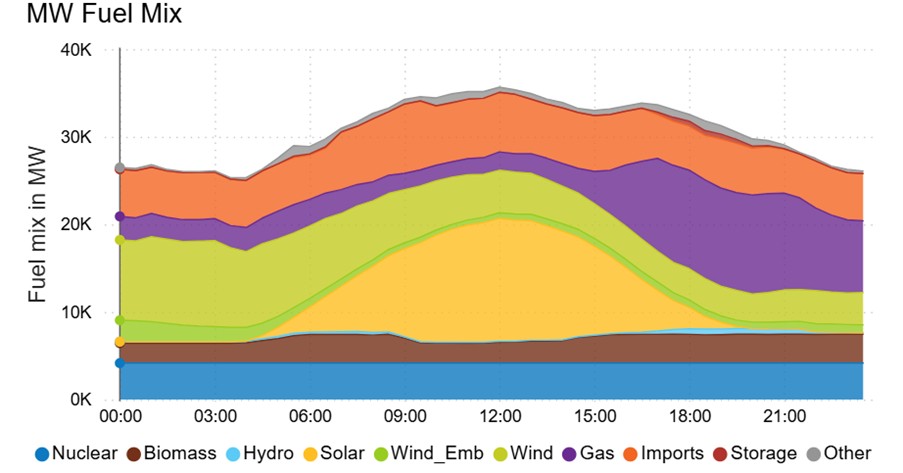
UK solar power set a new peak generation record of 14GW at 12:30 BST on 8 July, according to Solar Energy UK, citing data from the University of Sheffield.
At that time, solar was supplying 39% of the country’s electricity demand.
The previous record, set on 6 April, has now been revised to 13.8 GW. Solar Energy UK noted that such peaks usually occur in spring, when clear skies coincide with cooler temperatures, but recent weather and the sector’s rapid expansion have shifted expectations.
A similar milestone was reached in France on 10 July. At 14:00 local time, solar generation exceeded 19.5GW, meeting nearly 40% of national demand and temporarily pushing energy prices below zero.
“The new records underline just how quickly the solar sector is growing, both at home and abroad,” said Chris Hewett, Chief Executive of Solar Energy UK.
“We estimate that well over 21.5GW of capacity is now in place in the UK, a figure expected to more than double by the end of the decade, delivering secure, clean, green and – crucially – cheap power for us all.”
The UK government recently released its Solar Roadmap, outlining plans to increase installed capacity to 45–47GW by 2030, with potential to reach around 57 GW.
[Image credit: Solar Energy UK]
Solar & Storage Live in Birmingham is on the horizon, so don’t miss out on your free ticket to the UK’s largest solar and storage show. Or, find a Solar & Storage Live event near you.
by Catie Owen | Jul 14, 2025 | Large Scale Utility Solar, Oceania, Storage
Ingeteam will provide technology for a hybrid solar and battery energy storage project in New South Wales, Australia.
The project, owned by clean energy company Gentari, will combine 243MWp of solar PV capacity with a 172MW/2.4-hour battery energy storage system (BESS).
Gentari has issued a notice to proceed, allowing PCL Solar to begin engineering, procurement, and construction (EPC) work.
Ingeteam said it is the first DC-coupled solar-plus-storage hybrid plant being developed in eastern Australia.
As part of its agreement, Ingeteam will supply 32 power stations with 61 central PV inverters and 488 DC-DC storage converters rated at 430kW each.
It will also deliver a hybrid plant controller to manage nearly 400,000 solar panels and 122 battery containers on site.
The project will use DC coupling, enabling batteries to charge directly from solar panels without converting electricity from DC to AC.
Ingeteam said this method reduces energy loss, improves efficiency, and extends the solar farm’s operating range by storing energy during low-price periods and discharging it during peak demand.
Ana Goyén, Ingeteam’s solar PV and BESS director, said, “We are delighted to continue contributing our technology to decarbonising the energy mix of the Australian National Electricity Market.”
She added, “Projects integrating solar and storage technology aim to balance sustainability and energy security, while offering greater potential for managing the solar resource and generating energy much more efficiently.”
The plant will have a maximum export capacity of 172MW and is expected to generate over 520GWh of clean energy annually, enough to power around 82,000 homes and avoid nearly 412,000 tonnes of carbon dioxide emissions.
It is due to begin operation in Q2 2027.
by Catie Owen | Jul 11, 2025 | Europe, Innovation, Large Scale Utility Solar
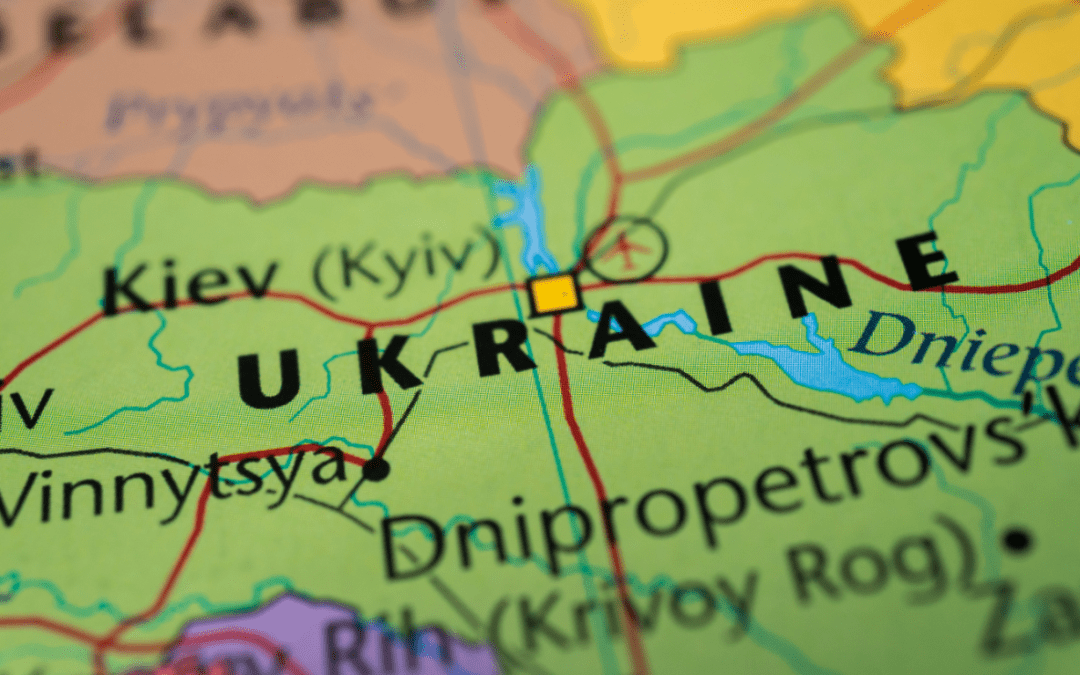
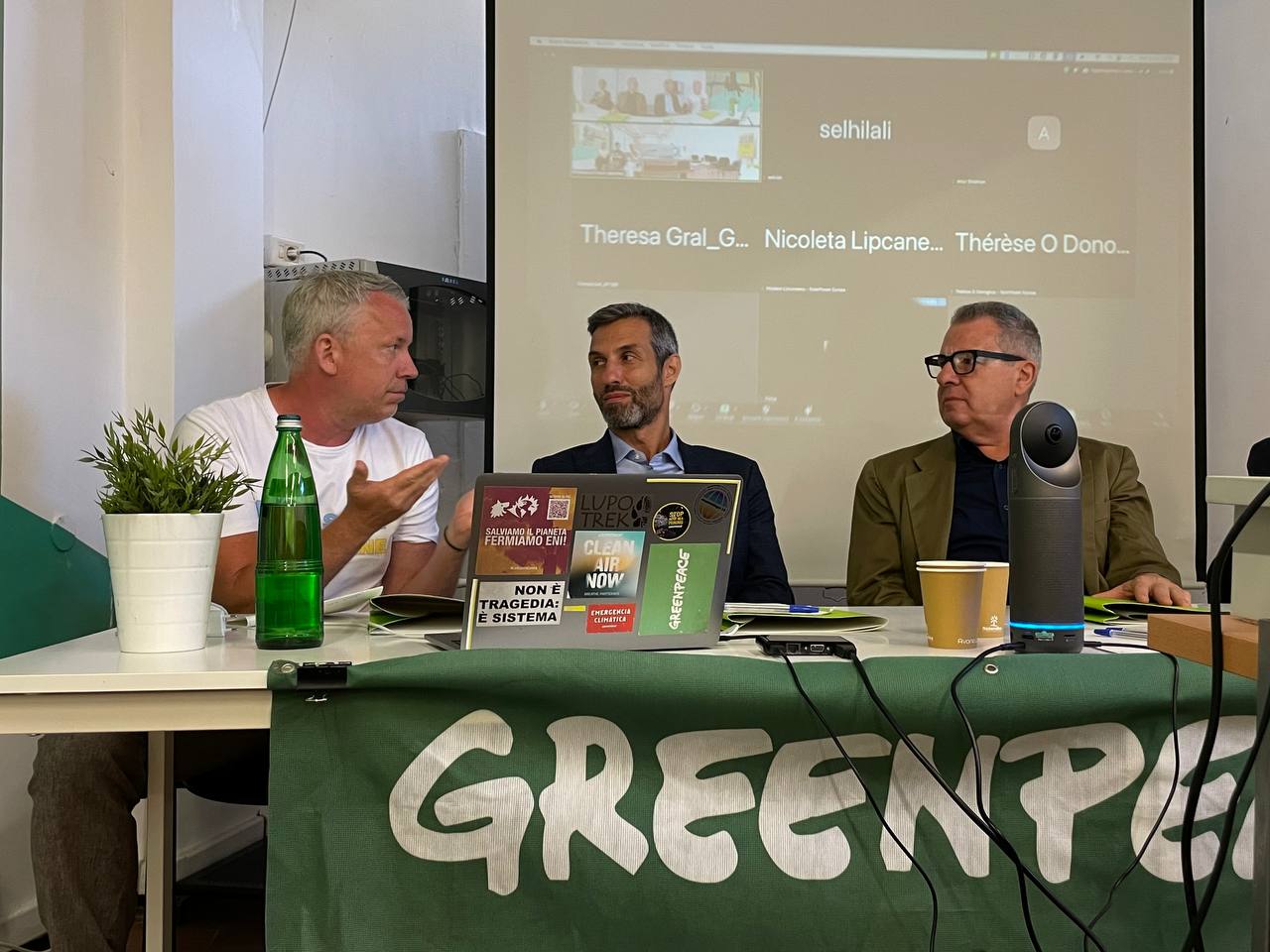
On the eve of the Ukraine Recovery Conference 2025 in Rome, Greenpeace and SolarPower Europe co-hosted a high-level side event to discuss how solar energy could help shape Ukraine’s post-war green recovery.
Bringing together policymakers, investors, and energy experts, the session explored how Ukraine could emerge as a major solar power hub, despite the ongoing conflict.
Key topics included improving conditions for solar PV and storage investment, reducing investor risk, and leveraging financial instruments such as the EU’s Ukraine Facility.
“The transition to solar energy is not just about cleaner power – it’s about building energy independence, resilience, and hope for Ukraine,” Andree Boehling, European Co-Lead of the Green Reconstruction of Ukraine project at Greenpeace, said in the organisation’s official statement.
“Last year in Berlin, we presented the Marshall Plan for Solar – a document with step-by-step actions and calculations on how to increase Ukraine’s solar potential by 5 times. This year in Rome, we’re discussing how to make it real.”
Speakers included Inna Sovsun, Member of the Ukrainian Parliament and Energy Committee; Adil Hanif, Head of Sustainable Markets at the EBRD; and Gianluca Gramegna, Head of ESG at ERG Italy.
They all agreed that solar power, when supported by storage and smart grid solutions, must be central to rebuilding Ukraine’s energy system.
To achieve this, they emphasised the need to mitigate financial risks and strengthen international cooperation.
This side event builds on the partnership between Greenpeace Ukraine and SolarPower Europe, launched in March 2025 to support the widespread rollout of solar systems as part of Ukraine’s sustainable future.
[Image credit: Greenpeace]
by Catie Owen | Jul 11, 2025 | Europe, Large Scale Utility Solar
Solar energy became the European Union’s largest single source of electricity for the first time in June 2025, according to analysis from energy think tank Ember.
Solar provided 22.1% of the EU’s electricity that month, surpassing all other sources. This milestone was supported by a combination of expanded solar capacity and sunny weather, with 13 EU countries recording their highest-ever solar generation.
The Netherlands led the way with solar energy covering 40.5% of its electricity needs, followed by Greece at 35.1%.
“Europe is becoming a solar powerhouse. Non-stop records are not just the result of sunny weather, but also from new solar being built every year,” said Chris Rosslowe, energy analyst at Ember.
The increase in solar helped meet demand during a late-June heatwave. Wind energy also reached new highs, providing 15.8% of EU electricity in June and 16.6% in May.
At the same time, coal generation dropped to a record monthly low of 6.1%, down from 8.8% in June 2024. This decline reflects the growth of renewable energy sources.
Overall, fossil fuel use accounted for 23.6% of electricity generation, slightly above the all-time low of 22.9% set in May 2024.
Germany and Poland, the EU’s top coal users, reached new lows at 12.4% and 42.9% respectively. Czechia (17.9%), Bulgaria (16.7%), Denmark (3.3%) and Spain (0.6%) also recorded historic lows.
Spain is approaching a complete coal phase-out, while Ireland shut its last coal plant on 20 June.
Ten EU countries used no coal at all during the month, reflecting ongoing efforts to reduce fossil fuel reliance.
by Catie Owen | Jul 8, 2025 | Commercial & Industrial Solar, Innovation, Large Scale Utility Solar
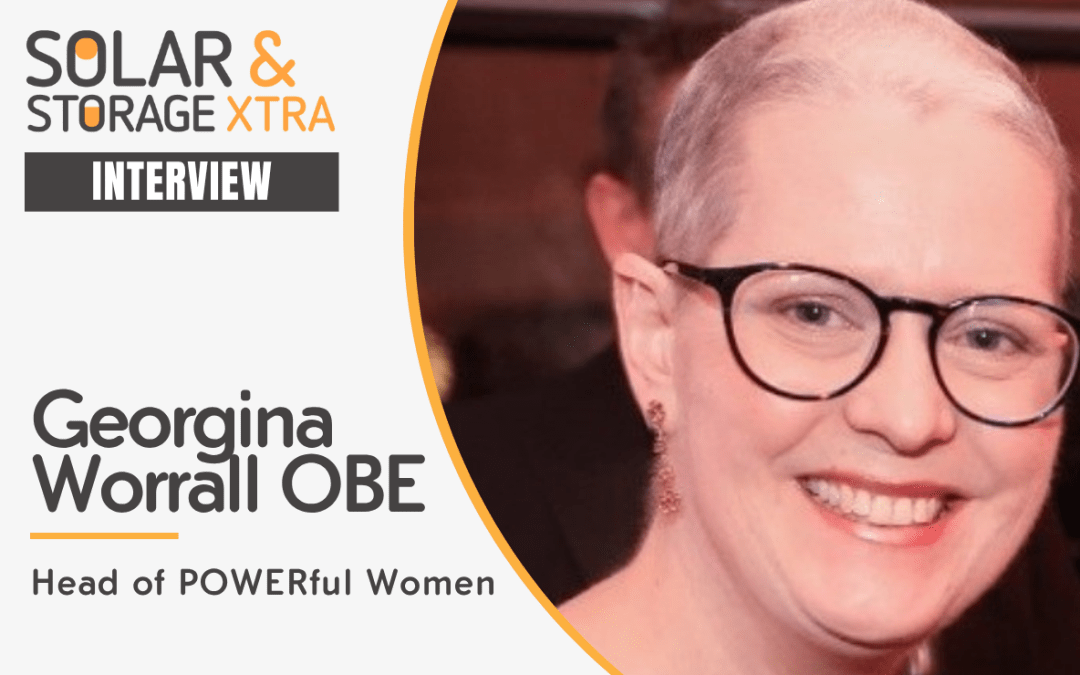
Georgina Worrall OBE is a leading voice in advancing gender diversity in the energy sector, heading up POWERful Women: a professional initiative working to advance gender diversity and inclusion across the UK energy sector.
With a background in events and a passion for equitable leadership, Georgina is committed to driving meaningful change in a traditionally male-dominated industry.
Fresh off the back of her recent honour, she shares her thoughts on inclusive leadership, the sector’s challenges, and what to expect from her keynote at Solar & Storage Live in Birmingham this September.
“If you want to change the dial, look below the C-suite. Support and progress women into those roles so they have the opportunity to thrive and lead – if that’s what they choose to do.”
You were honoured with an OBE, which you collected recently. What does this recognition mean to you personally, and how does it reflect your work with POWERful Women?
Georgina: As I’m sure you can appreciate, it’s a real privilege to be recognised for something you’re passionate about. But I feel it shouldn’t just be about me – it’s really a recognition for everyone who has shaped who I am and the values I hold.
It’s also really exciting for POWERful Women to be acknowledged for our work in shifting the gender dial in such a male-dominated sector like energy.
With Monica Collings also receiving an OBE for her work in diversity and inclusion, it feels like a powerful time for our organisation.
There are now two women at the helm, both eager to challenge the sector and push for faster progress.
Which moments in your career sparked your passion for DE&I, and how do they continue to shape your approach today?
Georgina: Two main areas have influenced me. I used to run events, and conference conveners often brought me all-male panels. That was frustrating because I knew there were competent female speakers – it just required a bit more effort to find them.
Also, I have two neurodivergent children, and I want them to feel the world is their oyster and that their neurodiversity isn’t a limitation.
I try to be as inclusive as I can, whether as a D&I professional, a team leader, or a mother – I want everyone to feel valued.
Where do you see the greatest opportunities to accelerate gender diversity in the energy sector, and what benefits would the industry see?
Georgina: There’s extensive research from McKinsey, Credit Suisse, BCG, and others that quantifies the value of diverse teams.
For example, a Credit Suisse report found 50% higher profitability in companies where women make up at least 15% of Senior Managers, compared to those with less than 10%.
Our State of the Nation report, published on 11 June, found that in 2025 there are still only eight female CEOs among the UK’s top 100 energy companies.
My call to those companies is: what are you doing to support women into “Chief of” roles – like CFO, CCO, or CTO? Those are the stepping stones to CEO roles.
If you want to change the dial, look below the C-suite. Support and progress women into those roles so they have the opportunity to thrive and lead – if that’s what they choose to do.
The pinch point is really middle management – that’s where future leaders come from. If companies don’t support women with flexible working policies that work in practice and clear career development plans, they risk losing valuable talent.
When women feel supported, they stay – and the company benefits.
Recent political shifts internationally have led to the rollback of both renewable energy policies and DE&I initiatives. What impact do you foresee, and what can be done to protect the industry’s long-term vision?
Georgina: I’m really encouraged by what I’m hearing from energy companies in the POWERful Women network. Most are continuing with business as usual for their D&I policies – they’re pushing forward with their initiatives.
There was initial nervousness, particularly around Donald Trump’s comments, but that’s shifted.
Many now feel comfortable maintaining their policies – they’re just adjusting the language for the US market. Instead of “diversity” or “equity,” they use terms like “belonging,” “fairness,” and “respect.” It’s the same message, just delivered differently.
Ultimately, I hope that every employee wants to work for a fair company, so therefore diversity and inclusion matters to them.
You’re set to appear on a keynote panel at Solar & Storage Live in Birmingham this September – can you give us a preview of the key themes or challenges you’ll be exploring?
Georgina: I’ll be sitting on a keynote panel on 24 September titled Driving Innovation and Talent Through Inclusive Leadership, alongside Carmen Madrid, founder of Women in Solar Europe.
We’ll be discussing how inclusive leadership fosters creativity and collaboration, and sharing strategies for attracting and retaining diverse talent. We’ll also bring in real-life examples and case studies.
If anyone is attending Solar & Storage Live, I encourage them to come along, join the conversation, and challenge us – I welcome that.
Solar & Storage Live in Birmingham is on the horizon, so don’t miss out on your free ticket to the UK’s largest solar and storage show. Or, find a Solar & Storage Live event near you.
by Catie Owen | Jul 8, 2025 | Commercial & Industrial Solar, Europe, Large Scale Utility Solar
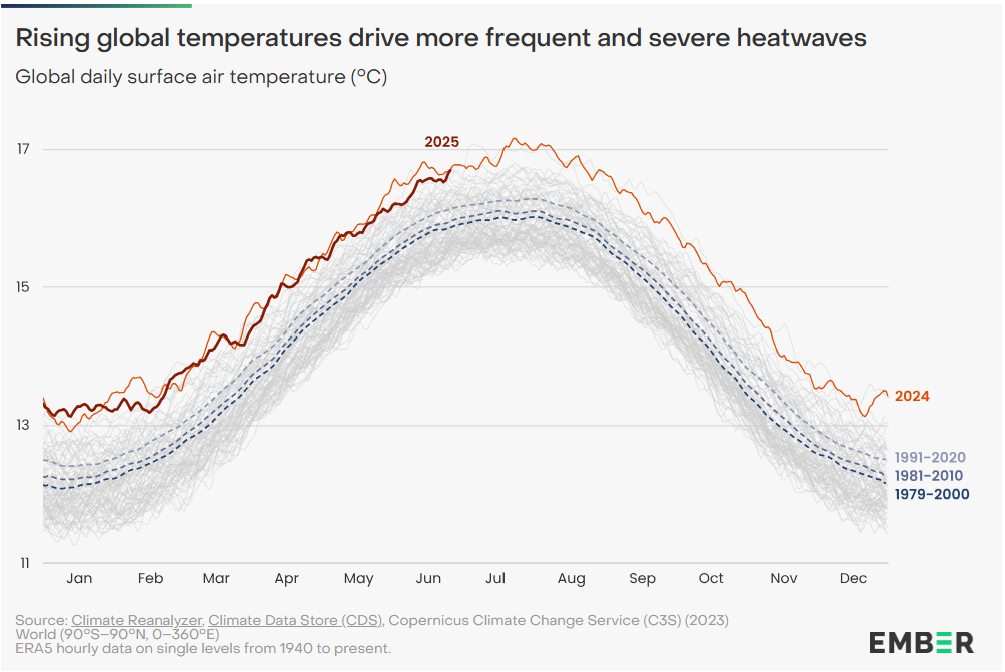
According to a new report from energy think tank Ember, the heatwave that swept across Europe in June and early July 2025 pushed electricity systems to their limits.
Temperatures exceeded 40°C in some regions, triggering record-high power demand and prices.
The report notes that, despite these challenges, high levels of solar generation helped maintain grid stability.
Temperature on the rise
The spike in temperature, measured up to 9°C higher than the week prior in Germany, caused electricity demand to rise by as much as 14% in Spain, 9% in France, and 6% in Germany.
France and Spain also saw a 12% and 15% increase in peak demand, respectively.
This surge coincided with outages at thermal power plants, contributing to a sharp increase in prices.
Compared to June 24, average daily electricity prices more than doubled in Poland and France and nearly tripled in Germany, where prices exceeded €400/MWh during peak hours.
“The 2025 heatwave increased the daily power demand by up to 14%. Combined with thermal power plant outages, this led to a 2–3 times increase in average daily power prices,” the report states.
Compounding the issue were heat-related reductions in nuclear output. In France, 17 of 18 nuclear power stations were impacted, with plants along the Garonne, Loire and Rhône rivers especially affected.
Ember found that up to 15% of France’s nuclear capacity may have been offline due to the heat.
Solar saves the day
Yet, record levels of solar energy played a crucial stabilising role. June 2025 marked the highest solar generation month in EU history at 45 TWh.
In Germany, solar provided up to 50 GW during the heatwave, accounting for up to 39% of daily electricity generation.
“Heatwaves will not go away – they will only get more severe in the future,” comments Ember’s Europe Programme Director, Pawel Czyzak.
“Solutions that can help mitigate their impacts, such as battery storage, interconnection, demand flexibility and dynamic tariffs, should become a key part of grid planning and power market design.”
The widening gap between daytime and evening electricity prices (spreads exceeding €400/MWh) overall highlighted the value of energy storage and flexible demand.
Grid operators across Europe are now exploring measures to better prepare for extreme weather, including dynamic pricing, grid-forming technologies, and better integration of distributed energy sources.
The full report can be found here.
[Graph credit: Ember]
by Catie Owen | Jul 7, 2025 | Asia, Commercial & Industrial Solar, Large Scale Utility Solar
China’s Ministry of Industry and Information Technology (MIIT) held a high-level meeting with solar industry leaders last week to discuss stabilising the sector and implementing recent directives from the Central Financial and Economic Affairs Commission.
The government aims to address what it calls “disorderly” competition and guide the industry toward more sustainable growth.
Chaired by MIIT Minister Li Lecheng, the meeting brought together 14 major companies, including Longi, Trina, JA Solar, Tongwei, and Sungrow, alongside the China Photovoltaic Industry Association (CPIA).
It followed a July 1 economic policy session where officials called for tackling “irrational” pricing, phasing out outdated capacity, and improving industrial quality.
The MIIT said the industry must “firmly implement the central government’s decisions, resolutely crack down on low-price disorderly competition, and promote the orderly exit of outdated capacity.”
Li also urged companies to maintain “self-discipline” and emphasised the importance of innovation and long-term competitiveness.
The meeting took place amid growing public and official concern over excessive competition, often referred to in China as “involution.”
In the days leading up to it, the state-run People’s Daily published a front-page editorial criticising price wars and calling for structural reform.
Some parts of the supply chain have already begun adjusting. Ten glass producers, including Xinyi Solar and Flat Glass, plan to cut output by 30% in July.
In the polysilicon segment, companies like GCL Technology and Daqo New Energy have indicated that mergers and acquisitions are under consideration.
Despite investor optimism – solar stocks rose sharply after the meeting—analysts remain cautious. Overcapacity persists across the value chain, and structural changes may take time to materialise.
by Catie Owen | Jul 4, 2025 | Europe, Large Scale Utility Solar, Storage
The UK’s National Energy System Operator (NESO) has launched a public consultation on its long-term vision for the UK’s energy infrastructure, including the expansion of solar energy and battery storage capacity.
The Centralised Strategic Network Plan (CSNP) aims to provide a 25-year roadmap for upgrading the UK’s electricity, gas, and hydrogen transmission networks, with the first full plan due in December 2027.
It will be reviewed every three years and is designed to support clean, reliable and affordable energy through coordinated, long-term infrastructure planning.
Commissioned in October 2024 by UK, Scottish and Welsh energy ministers, the CSNP is being developed in tandem with the Strategic Spatial Energy Plan (SSNP).
Additionally in October 2024, National Grid ESO transitioned into NESO. At Solar & Storage Live in London this spring Matthew Vickers, Director of Connections Reform at the NESO, explained:
“Our goal is to take a whole-system approach, ensuring energy security, supporting the transition to net zero, and keeping bills as low as possible for consumers, businesses, and communities.”
NESO published its initial methodology for the CSNP in December 2024 and will align its approach with wider public policies, the SSNP, and Regional Energy Strategic Plans (RESPs).
A key focus of the CSNP is the expansion of renewable technologies, particularly solar power and battery energy storage systems (BESS).
The plan will evaluate what network upgrades are required to better integrate these technologies, accounting for supply, demand, weather patterns and market dynamics.
The CSNP will also consider whether it’s more appropriate to manage future energy flows using current infrastructure, upgrade existing components, or build new transmission systems. Each option will be assessed on a site-specific basis.
According to NESO, the CSNP will “enable investment in clean, reliable and affordable energy” by providing robust, transparent data and accelerating decision-making.
Julian Leslie, Director of Strategic Energy Planning at NESO, said: “Taking a coordinated approach to infrastructure planning is vital – not only to help drive investment decisions, but also to ensure everyone has access to reliable, clean and affordable energy.”
The consultation closes on 1 August 2025. A draft plan will be published in June 2027, with detailed network data expected in June 2026.
Solar & Storage Live in Birmingham is on the horizon, so don’t miss out on your free ticket to the UK’s largest solar and storage show. Or, find a Solar & Storage Live event near you.
by Catie Owen | Jul 3, 2025 | Europe, Large Scale Utility Solar
At Solar & Storage Live in London earlier this year, connections reform was a key topic.
Matthew Vickers, Director of Connections Reform at the National Energy System Operator (NESO), spoke about the organisation’s role in improving how new projects connect to the grid.
In this interview, Vickers outlines why reform is needed, what changes are planned, and what they could mean for the solar and storage sector.
“Reform helps by clearing out slow or speculative projects that are clogging the queue. That gives investors and developers clearer signals and a better chance of timely connection.”
What is NESO, and why was it created as a new public organisation?
Matthew: NESO was created in October last year under the Energy Act. We came into being under the current government and have several key responsibilities.
We manage and direct the flow of electricity across Great Britain’s electricity system, offer independent advice to the government and Ofgem, and undertake strategic planning of both the electricity and gas systems.
Our goal is to take a whole-system approach, ensuring energy security, supporting the transition to net zero, and keeping bills as low as possible for consumers, businesses, and communities.
What’s your role in connections reform, and why did the process need to change?
Matthew: When we transitioned from being National Grid ESO to NESO, we gained responsibility for reforming the connections process.
That means making sure the new generation and demand connections – essential for growth – can access a system that works. And frankly, the old system didn’t.
Connections used to be rare – our chief engineer recalled one year when there were only 11. Recently, we processed 300 in 48 hours.
The queue now stands at around 800GW – twice what’s needed for 2050 – and includes many stalled or unviable projects, which block progress. Some applicants are being offered connection dates in the late 2030s.
We’re moving away from the outdated first-come, first-served model. The new approach is based on project readiness and alignment with the government’s Clean Power Plan. We’ve worked closely with industry through consultations to design a reform package that’s ambitious and realistic.
We’re now awaiting Ofgem’s sign-off, which we expect within a few weeks. Then we can begin reordering the queue and making space for the clean energy growth needed by 2030.
What does this mean for the solar and storage sector?
Matthew: It’s a really exciting time. Just 15 years ago, there were only 26MW of solar on the system, and storage wasn’t even considered mainstream. Now we’re targeting 47GW of solar and 27GW of storage by 2030.
Reform helps by clearing out slow or speculative projects that are clogging the queue. That gives investors and developers clearer signals and a better chance of timely connection.
It also helps network operators understand what to build, where, and how quickly – essential for keeping costs down while building a secure, diverse, and modern energy system.
What’s next in the process, and are you confident the reforms will work?
Matthew: Ofgem has already consulted on its decision, and we expect a final ruling in the next couple of weeks. After that, we’ll move into implementation, working just as collaboratively as we did during reform. Listening is key.
We’re already holding events – like our Connections Conference in Edinburgh—to help projects understand what they need to be in the queue and what to expect.
We’re also working with networks to deliver reordering and new offers as quickly as possible. We know certainty is important, so that’s our focus.
In parallel, we’re also looking at raising the threshold for transmission impact assessments from 1MW to 5MW. That’s great news for smaller solar projects, as it means a more proportionate process and faster progress for those developments.
You were a speaker at Solar & Storage Live in London – what were the key audience takeaways?
Matthew: First, just how much opportunity there is for solar and storage. The sector has come a long way in 15 years, and it’s only going to grow. On 1 April, we hit a new record – 12.2GW of solar on the system.
Storage is also vital – not just for balancing supply and demand, but for maintaining system stability. As the shape of the energy system evolves, storage will play an increasingly important role.
Connections reform is a key enabler. It clears the path for projects that can make a real difference. I also spoke about how essential collaboration has been throughout the reform process – and how it will remain so during implementation.
Finally, we’re not pretending we know exactly what the world will look like in 5, 10, or 15 years, so we’ve built in flexibility.
The Clean Power Plan is evolving, and with tools like spatial and regional energy planning, we’ll be able to adjust and optimise the system as we go.
In short: there’s huge potential ahead, and we’re committed to helping the industry realise it.
Solar & Storage Live in Birmingham is on the horizon, so don’t miss out on your free ticket to the UK’s largest solar and storage show. Or, find a Solar & Storage Live event near you.
by Catie Owen | Jul 1, 2025 | Europe, Large Scale Utility Solar
The UK solar industry has received a major boost with the release of the long-awaited Solar Roadmap – a government-industry strategy to accelerate solar deployment, cut emissions, and create skilled jobs.
Developed over two years and under two governments, the roadmap sets out practical measures to expand solar capacity, support local manufacturing, and ease regulatory barriers.
The plan was developed by the Solar Taskforce, co-chaired by the Secretary of State for Energy Security and Net Zero Ed Miliband and Solar Energy UK Chief Executive Chris Hewett. Oversight will now pass to the new Solar Council, which will guide the roadmap’s implementation.
“This is an incredibly exciting time for solar in our country,” said Miliband. “More than 1.5m homes across Britain now have solar installed, and since this Government came to office my department has consented almost 3GW of nationally significant solar projects – nearly three times as much as the previous 14 years combined.
“But we know we need to go further to deliver our goals for clean power by 2030 and beyond.”
The roadmap outlines a future where up to nine million small-scale rooftop systems are installed by 2030, up from 1.8m today, supporting an estimated 35,000 jobs – almost double the current number.
“Solar energy is among the lowest cost, and most popular, forms of power generation in the UK,” said Hewett.
“Unlocking its potential will increase Britain’s energy security, drive down bills as well as be a major contributor to preventing dangerous climate change.”
Rooftop access and consumer awareness
Despite falling costs, upfront investment remains a key barrier to rooftop adoption. To address this, the government will work with the Green Finance Institute, the financial sector, and consumer groups to improve access to finance.
Public awareness is also an issue. To combat this, the government will update its Energy Efficient Home website, and the UK Warehousing Association will produce a commercial-scale solar toolkit and address issues such as leasing and grid access.
Additional actions include revising how solar is reflected in energy performance certificates, encouraging social housing installations, and reviewing consumer protections for retrofits.
Schools, community energy schemes, and local authority projects will receive added support through GB Energy and the National Wealth Fund.
Grid reform
To tackle long grid connection delays, the roadmap proposes procedural reforms to prioritise projects most likely to proceed.
The requirement for residential systems above 3.68 kilowatts to gain distribution network operator approval will also be reviewed.
Other grid-related issues include reforming how battery storage is treated in planning and changing how transformer costs are shared, which the roadmap describes as a “postcode lottery.”
Strengthening the solar supply chain
While large-scale domestic panel manufacturing is unlikely, the roadmap sees opportunities in producing related equipment such as inverters, transformers, and mounting systems.
It also supports R&D in lightweight and perovskite solar technologies. The government is considering support for firms looking to scale up production.
The roadmap confirms government backing for the Solar Stewardship Initiative, which aims to prevent forced labour in supply chains. “The UK Government is clear that there should be no procurement of solar panels where there is evidence of forced labour,” it says.
Workforce development
With the sector expected to grow by up to 17% this year, the roadmap warns of potential skills shortages and calls for a coordinated response. Solar Energy UK has launched Solar Careers UK to help workers understand the skills needed and pathways into the sector.
The roadmap includes 11 skills-based actions, including improving training provision, linking businesses with colleges, and creating materials for schools.
Planning improvements
Though planning reforms have eased some barriers, the roadmap highlights the need for more support – particularly for floating solar projects.
Solar Energy UK has announced that it will produce guidance for planners and councillors and work to ensure training is fit for purpose.
The roadmap concludes by recognising the contributions of the Solar Taskforce’s members and reaffirming the government’s aim of making the UK a clean energy superpower.
[Image credit: Solar Energy UK]
by Catie Owen | Jun 30, 2025 | Europe, Large Scale Utility Solar
The European Solar Manufacturing Council (ESMC) has welcomed the European Parliament’s recent resolution on the Clean Industrial Deal, which calls for urgent measures to support Europe’s clean technology sectors.
This includes solar photovoltaic (PV) manufacturing.
Christoph Podewils, Secretary General of ESMC, described the resolution as a “very important signal” for the future of European solar production.
“It is very positive that the Parliament highlights the unfair competition and industrial overcapacity dumping from third countries and calls for immediate action. This is an existential matter for European solar manufacturing,” he said.
The resolution stresses the need for a strong industrial policy, greater investment in clean technologies, and improved access to capital. It also urges the European Commission to develop new policy tools to boost demand for EU-made clean tech products.
Podewils highlighted the Parliament’s support for local content requirements, including a proposed “Made in Europe” standard for technologies such as solar PV.
He said this would support domestic manufacturing and protect Europe’s clean energy ambitions from external market pressures.
The resolution also advocates for a dedicated clean tech action plan to help scale up industrial production across the continent.
“We welcome the European Parliament’s leadership on clean tech. It’s now up to the European Commission and the Member States to take action and rebuild solar PV and other clean tech industries in Europe,” Podewils concluded.
The ESMC’s statement reflects growing concern among European industry stakeholders over international competition and the need for cohesive policy to strengthen the region’s clean energy capabilities.
by Catie Owen | Jun 23, 2025 | Asia, Commercial & Industrial Solar, Large Scale Utility Solar
The Energy Transitions Commission (ETC) has released a new briefing note, Global Trade in the Energy Transition: Principles for Clean Energy Supply Chains and Carbon Pricing, outlining key policy guidance to support a faster and fairer global energy transition.
The cost of key clean energy technologies has fallen dramatically over the last decade, with solar PV module prices down 94% since 2011 and lithium-ion battery prices dropping over 92% since 2010, while doubling in energy density.
The report shows that China has led this progress and now dominates global markets in several clean technologies.
The ETC attributes this to “strategic vision, low capital costs, technological innovation and dynamic entrepreneurship,” rather than just low labour costs.
Supply chain considerations
China’s dominance has prompted other countries to reconsider the resilience of their supply chains. In response, many governments are pursuing nearshoring strategies to improve energy security and boost domestic employment.
The ETC warns that poorly designed policies could increase the cost of the energy transition and has proposed six guiding principles to help policymakers avoid inefficiencies.
“The world is entering a new industrial era powered by clean energy,” said Faustine Delasalle, ETC Vice-Chair. “Well-designed policies, including carbon pricing, supply-side financial incentives, and demand-side regulations, are essential to make projects viable.”
The policies include avoiding total self-reliance, tailoring nearshoring efforts to technologies with domestic potential, and ensuring tariffs comply with WTO rules.
The ETC also emphasises the importance of collaboration with China to accelerate clean energy deployment in low-income countries.
“In an ideal world, free from geopolitical tensions or supply chain risks, China’s stunning technological progress and cost reduction would be welcomed as enabling a faster and cheaper energy transition worldwide,” said Adair Turner, Chair of the ETC.
“But there are economic and security-related reasons for seeking to develop domestic supply chains.”